
The fastest way to win more conversions in 2026 is to stop guessing and copy what works, then improve it. This competitor ad spy tool approach only works if your research connects straight to creation and launch, not just screenshots.
You need a clear, fast path from “What are rivals running?” to “Ship better ads now.” That means a tool with a large, reliable, multi-platform ad database, great filters, and a short hop from insight to live creative. If those parts break, you pay for it in higher CPCs, lower ROAS, and lost time.
However, most stacks still rely on manual checks across scattered ad libraries. As a result, ad reviews stretch into a weekly chore and never shape your next creative test on time. You end up with the same three hooks, stale angles, and a media plan held together with notes and screenshots.
In this guide, you’ll learn what matters when you pick a research workflow, how database size and search quality impact ROI, and why going from spy to ship in minutes is the new edge for ecommerce teams. We’ll also show how AdsGPT links a 500M+ ad database across 9+ platforms to instant creative production, so you can turn what you learn into conversions the same day.
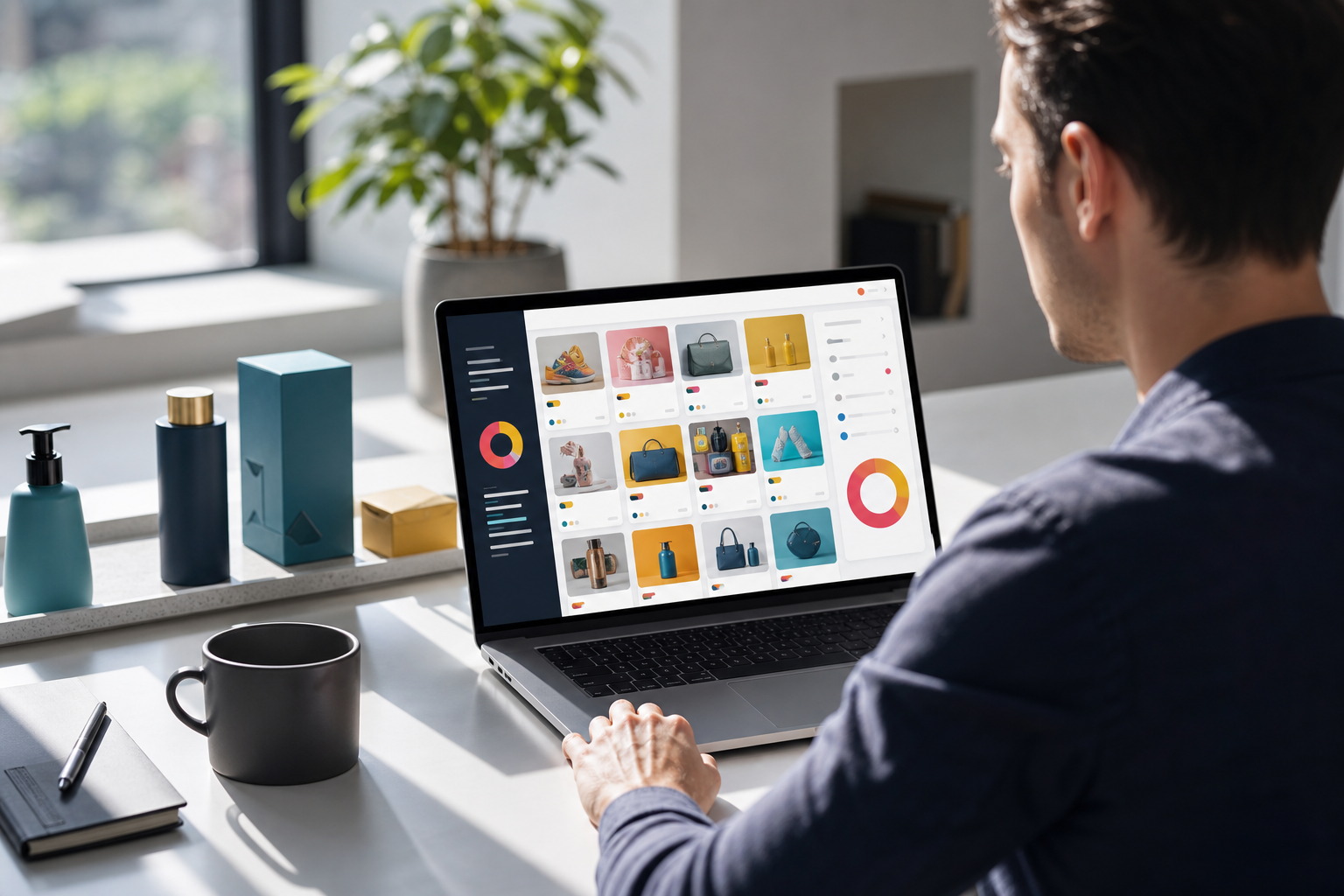
 , and a grid of competitor ads with performance tags; modern ecommerce brand feel; soft studio lighting; realistic style)
Why Ecommerce Sellers Struggle with Competitor Ad Intelligence
You fight on speed and margins. But your research stack is slow, patchy, and hard to trust. Ad libraries live on each platform, with different filters and limits. So, what should take ten minutes turns into a maze of tabs, clipboards, and “did we save that link?” moments.
Moreover, fragmentation hides context. Meta, TikTok, and Google each show a slice of the truth. Without a single view, you misread what actually scales. For example, you may copy a top TikTok hook, then learn a week later that the brand’s real spend sits on Meta. You spent budget on the wrong lesson.
In addition, manual screenshot workflows kill your time-to-test. By the time you paste the ad into a doc, write a note, and add a link, the team has moved on. Then the “what to test next” meeting becomes a rehash of old content, not a plan grounded in live data.
- Disconnected sources: Each platform has its own search rules and formats.
- No cross-platform picture: You can’t compare angles and spend signals across 9+ channels in one pass.
- Slow to act: Screenshots and docs don’t ship ads; they stall them.
The hidden cost: guesswork
Guesswork leads to wasted ad spend. You test hooks that never scaled, or you copy a creative without the offer that made it convert. You also lose days rebuilding pieces you already researched last month.
Therefore, you need a single source for ad research that lets you search by brand, niche, geo, and format, then move from learning to a live A/B test in one session. The best fix isn’t “more screenshots.” It’s a clear workflow that cuts steps between research and launch with the least drag possible. In short: one tool, one search, one place to act.
What to Look for in an Ad Spy Tool for Ecommerce
Your goal is simple: find what wins, learn why, then ship better ads, fast. To get there, judge any platform on six practical points.
First, look at database size and freshness. A bigger, current index increases the odds you’ll find the same ad angles your rivals run. It also lets you spot trends faster. If you need a competitor ad spy tool to guide real spend, a “small slice” of the market won’t cut it.
Second, check platform coverage. You sell on feeds and search. You need at least Meta, TikTok, and Google in one place, plus support for other paid channels your niche uses. Breadth matters because creative and offer patterns echo across networks, and you want a bird’s-eye view, not three siloed tools.
Search and filter quality
Strong filters save hours.
- Platform, country/region, and date range
- Format (image, video, UGC, carousel)
- Keywords, brand names, and product terms
In addition, look for regional performance context. If you care about CAC in the UK or ROAS in the US, you need to connect creative choices with where spend and traction sit. This avoids copying ads that only work in a different market.
Creative format support
Your research should show image, video, and UGC. Then it should help you act. Tools that only spy keep you in research mode. The strongest choice helps you jump to branded variations, including AI video types like UGC, B-roll, and avatar reads, without switching apps.
From insight to action
Search is step one. The must-have is the ability to create and launch from those insights. Ideally, you can generate multiple ad variations, keep your brand voice, and push to networks like Meta in a single flow. That’s the shortest line from learning to lift in ROAS. If you track return on ad spend, read the simple overview on ROAS (Return on ad spend) to align tests with profit, not just CTR.
Pricing transparency
Finally, make sure pricing is clear. A solid free plan helps you trial the workflow with real tasks. Then look for an entry plan near the cost of a single ad test so the tool pays for itself in week one. The math should be obvious: fewer hours spent, better creative shipped, and a test live today, not next week.
Also Read!
How to Spy on Competitor Ads as a Small Business Owner
How to Spy on Competitor Ads for Ecommerce: A Step-by-Step Guide
How AdsGPT's 500M+ Ad Database Solves Competitor Intelligence for Ecommerce
Here’s how you move from “What are they running?” to “Launch our better version”: use one platform that joins research and creation. AdsGPT does that with a 500M+ competitor ad database across 9+ ad platforms, then turns those insights into fresh creative in under a minute.
First, start in Competitor Intel. Type a brand, keyword, niche, or product term. Then filter by platform, region, date range, and creative format. You’ll scan live and historical ads side by side, with insights on ad performance by region to guide which ideas fit your target geos. Instead of three tools and five tabs, you see the patterns in one view.
Second, open the ad chat platform. Here you can ask for “variants of this angle for UK shoppers” or “rewrite this UGC script for a BOGO offer.” The ad chat platform is designed for generating ad copies and discussing ad analytics, so research and copy sit together. You keep the thread with a 30-day chat history and share it across your team.
Third, go from spy to ship. AdsGPT generates 60 high-converting ads in 60 seconds. You can produce image sets, product B-roll, and UGC-style video reads, then match them to your brand assets. Because generation lives next to research, you don’t lose speed moving ideas to a brief. You just create, pick, and launch.
Why scale and breadth matter
- 500M+ Ad Database: More signals, fewer blind tests.
- 9+ Ad Platforms: One search across the channels that drive your revenue.
- Insights by Region: Choose geo-fit angles before you spend.
In addition, you’re not alone on this workflow. There are 10K+ happy marketers on AdsGPT, which means a tested path for ecommerce teams that care about ROI and speed. Compared to alternatives that stop at spying, the link from Competitor Intel to instant creative is where AdsGPT saves the most time. You research once, create in the same place, and push live with Meta Integration.
“We cut our ‘from idea to launch’ time from a week to an afternoon. The creative volume changed our testing cadence.” — Ecommerce growth lead
Moreover, the platform’s design favors action. After you pick your winners, you can Launch Ads on Meta without exporting files or pasting copy across tools. The fewer handoffs, the more tests you run per week. If you need a competitor ad spy tool that pays back fast, this “spy-to-create” loop is the edge.

AdsGPT vs. BigSpy vs. AdSpy: Head-to-Head for Ecommerce Sellers
You have strong choices for research. BigSpy and AdSpy help you see what brands run. Where they differ from AdsGPT is the step after research. AdsGPT connects spying to high-volume, on-brand creative generation and lets you launch on Meta, all in one platform. That’s the key time win for ecommerce teams.
Here’s a high-level snapshot based on publicly available product positioning as of 2026. We list concrete details for AdsGPT from verified product data and keep competitor cells descriptive without guessing numbers.
| Feature | AdsGPT | BigSpy | AdSpy |
|---|---|---|---|
| Database Size | 500M+ Ad Database | Broad library (publicly positioned; exact figures vary by plan) | Broad library (publicly positioned; exact figures vary by plan) |
| Platforms Supported | 9+ Ad Platforms | Multi-platform spying focus | Multi-platform spying focus |
| Creative Generation | Generates 60 high-converting ads in 60 seconds | Not advertised as built-in AI creative generation | Not advertised as built-in AI creative generation |
| Video Formats | AI Video Ads (UGC, B-roll, Avatars) | Video spying focus; creation not positioned as core | Video spying focus; creation not positioned as core |
| Launch to Meta | Launch Ads on Meta | Not positioned as a launch tool | Not positioned as a launch tool |
| Pricing | Free plan with 35 ad credits; Starter at $49/month; plans up to $399/month; enterprise available | Paid plans available (see provider) | Paid plans available (see provider) |
Compared to alternatives, the biggest workflow gain with AdsGPT is that you don’t stop at screenshots. You take a set of winning angles and spin up 60 new, brand-safe variants in under a minute, test them, and then scale, without leaving the platform.
Practical implications for your team
- One platform replaces a spy tool, a creative brief, a generator, and a launch handoff.
- AI Video Ads cover UGC, product B-roll, and avatar styles, so you test multiple video angles fast.
- Clear entry pricing: a Free plan with 35 ad credits (no credit card required) and a Starter plan at $49 per month means you can trial a full week of tests before you commit budget.

If you want to read more about how research flows into creative for agencies and brands, see the related walkthroughs on competitor ad insights and this guide to building stronger competitor ad creative. They show how to translate spy findings into shipped ads without bottlenecks.
Trust, Security, and Proven Scale
You’re dealing with sensitive plans: what you search, which brands you benchmark, and drafts of ads not yet live. That data needs strong controls. AdsGPT is SOC 2 Type II certified, which means enterprise-grade security practices are audited against a standard most vendors don’t reach. This matters if you run paid for a brand with strict compliance needs or share access across a large team.
Scale also matters. A 500M+ competitor ad database and coverage across 9+ ad platforms help you avoid guesswork and spot cross-channel patterns early. You don’t want a tool that “sometimes has it.” You want one that almost always does.
Furthermore, you’re not testing alone. There are 10K+ happy marketers on the platform, which signals a mature product with support and pace. You can go deeper with BrandIQ to keep your creative on-brand and with Autopilot to handle repeatable steps, such as turning a winning hook into a fresh batch of variants every week.
In addition, you can de-risk your trial. The Free plan includes 35 ad credits, no credit card required, so you can run a true pilot with your workflow. If you need a competitor ad spy tool you can trust with competitive research and production, security and proven scale should be part of your checklist, not an afterthought.
Also Read!
Best Competitor Ad Spy Tool for Small Businesses in 2026
How to Launch Ads on Multiple Platforms as a Small Business Owner
How to Get Started: From First Search to First Campaign
Move from insight to a live test in one session. Here’s a practical path you can run this afternoon.
Step-by-step onboarding
- Step 1: Sign up on the Free plan. You get 35 ad credits with no credit card required. Video ads on the free plan support up to a 17-second limit, which is enough to test a UGC hook or B-roll loop.
- Step 2: Open Competitor Intel. Search by brand, niche, or product term. Add filters for platform, region, and format to narrow to ads that match your market and goals.
- Step 3: Analyze top performers. Use insights on ad performance by region to decide if a concept fits your geo. Save the best examples and note the hook, offer, and visual pattern.
- Step 4: Generate your own variations. In the ad chat platform, ask for 10 headline options, 5 primary texts, and 3 UGC scripts based on the angles you found. Then generate images, product B-roll, or avatar reads to match.
- Step 5: Prepare for launch. Pick 3–5 strongest variants. Keep brand tone aligned with BrandIQ. Build an experiment plan with clear KPIs tied to ROAS and CPA.
- Step 6: Launch on Meta. Use the built-in Meta Integration to push your set live. Monitor early signals; use Autopilot to schedule a second batch of creative if a winner emerges.
Tip: If you want guided help, you can use Expert-Led Training to set up your first research-to-launch sprint with a coach.
As you rinse and repeat, your catalog of proven hooks grows. You also spend less time hunting for ideas and more time shipping tests. For deeper tactics on scaling this loop, check the agency playbook in Best Competitor Ad Spy Tool for Agencies in 2026 or this workflow on How to Use Competitor Ad Spy Tools to Win More Agency Clients.
Frequently Asked Questions
How big is AdsGPT's competitor ad database compared to other spy tools?
AdsGPT indexes 500M+ ads across 9+ platforms including major channels like Meta, TikTok, and Google. This is among the largest databases available, which gives ecommerce sellers broad visibility. With that reach, you find more examples that match your niche and country. As a result, you spend less time hunting and more time testing.
Can I use AdsGPT just for ad spying without the AI ad generation features?
Yes. You can use the Competitor Intel and the ad chat features on their own to research and discuss analytics. However, the main edge is the spy-to-create workflow, where you spot winning ads and instantly generate your own variations. This shortens the time between learning and launch. You can always add creation later if you start with research only.
What does AdsGPT cost, and is there a free plan for ecommerce sellers?
AdsGPT offers a free plan with 35 ad credits and no credit card required. Paid plans start at $49 per month for the Starter plan and scale to $399 per month for the Scale plan, with enterprise custom pricing available. This range lets solo stores and mid-market brands pick a fit. You can pilot the workflow on the free plan before you commit.
Which ad platforms does AdsGPT's spy tool cover?
AdsGPT supports 9+ ad platforms. For ecommerce use, the key coverage includes Meta (Facebook/Instagram), Google, TikTok, and other major channels where product ads run. This spread helps you track angles across feeds and search. One search replaces the need to hop across platform libraries.
How accurate is competitor ad data, and how often is it updated?
The 500M+ database is continuously refreshed to reflect current and historical ads. In addition, regional performance insights and ad chat analytics help you validate which competitor ads are active versus historical. This keeps your tests focused on what is live now. You avoid copying ideas that already cooled off.
Can AdsGPT replace tools like BigSpy or the Meta Ad Library?
AdsGPT covers ad spying and goes further by letting you generate and launch ads from your insights. The Meta Ad Library is free but limited to Meta only and does not create or launch ads for you. BigSpy helps with research but lacks AI creative generation tied to a launch workflow. If you want research and action in one place, AdsGPT fills that gap.
Is my competitive intelligence data secure on AdsGPT?
Yes. AdsGPT is SOC 2 Type II certified. That means enterprise-grade security controls protect your searches, saved ads, and brand data. If you run paid for a sensitive brand or a high-volume store, this baseline is key. Security is not an add-on; it’s built in.
Can I spy on competitor video ads and UGC content?
Yes. AdsGPT’s database includes video ads, so you can study styles, hooks, and pacing. You can also generate AI video ads in UGC, B-roll, and avatar formats based on the patterns you find. This speeds up your video testing cadence. You move from “we saw it” to “we shipped it” in one tool.
The Bottom Line
- Pick a platform that joins a large, multi-platform database with instant creation and launch; speed beats theory.
- AdsGPT’s 500M+ database, 9+ platform coverage, and “spy-to-create” workflow help you ship 60 ads in 60 seconds and launch on Meta without handoffs.
- With SOC 2 Type II security, a Free plan with 35 credits, and 10K+ happy marketers, you can trial the full stack and scale with confidence.
If you need a competitor ad spy tool that pays back the same week you start, choose the fastest path from research to a live test.

MOST POPULAR