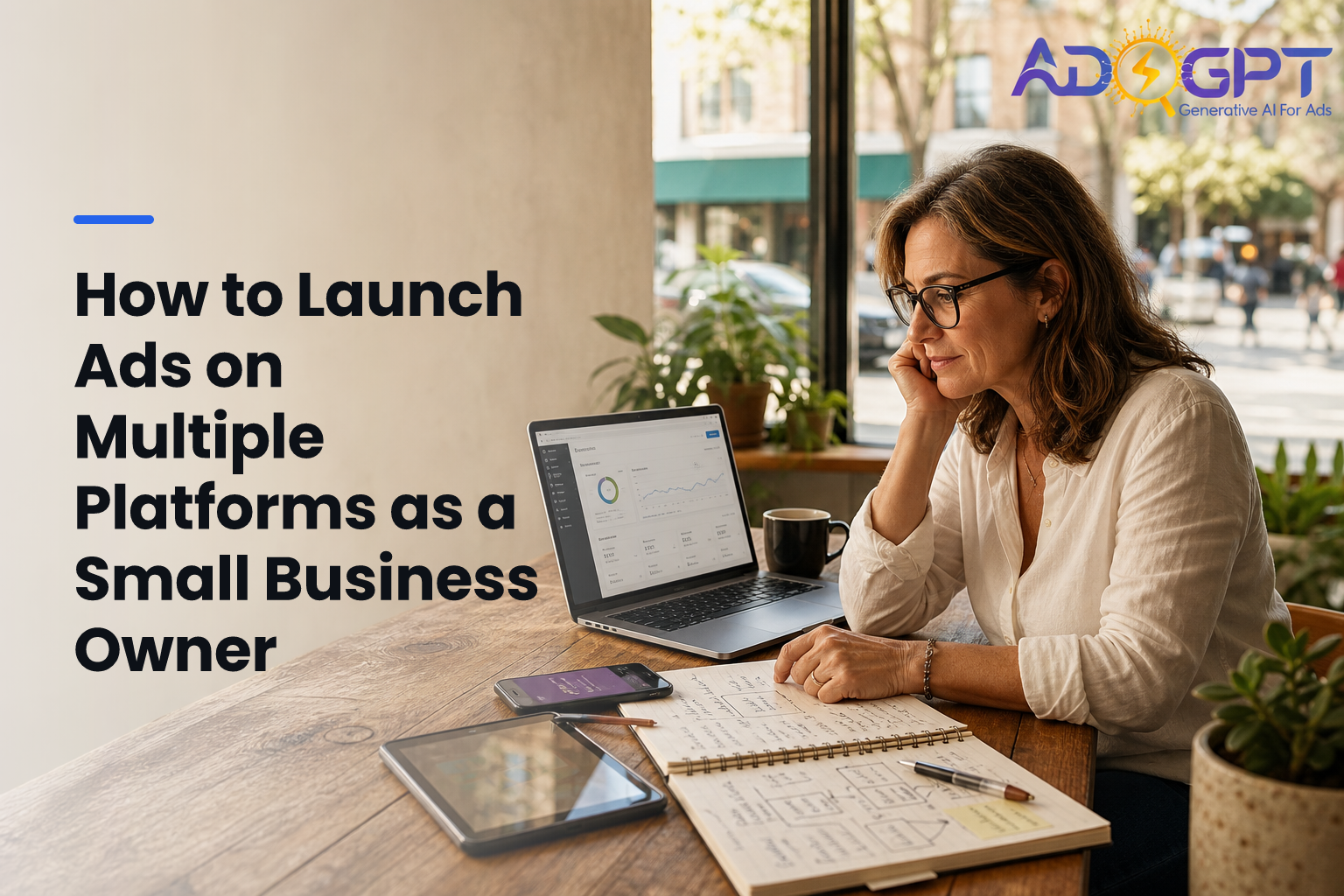
Four ad dashboards, one tiny team, and a dozen passwords, that’s the bottleneck you can remove this week. The fastest path is to plan once, tailor per network, and manage it all through a multi-platform ad launcher.
You don’t need bigger budgets in 2026. You need fewer tabs, fewer re-uploads, and one clear feedback loop for creative and targeting. A multi-platform ad launcher pulls your planning, creative, budgets, and reporting into one flow so you can spend your time on what moves the needle: message, audience, and offers.
Here’s the short answer you can use today: pick two or three channels that match your buyer, prep a baseline set of images and videos, match each platform’s specs, and watch the first 72 hours like a hawk. Then keep what proves itself and cut what doesn’t. You’ll save hours each week and you’ll see cleaner results, fast.

What Is a Multi-Platform Ad Launcher and Why Does It Matter for Small Businesses?
A multi-platform ad launcher is a single workspace where you plan, create, launch, and track ads across several networks at once. Instead of logging into Meta, Google, TikTok, and LinkedIn one by one, you set the goal once, import your brand rules, upload your assets, and push to each platform from one place.
For a 1–3 person team, the pain is real. Every platform has its own specs, policies, and quirks. Uploading a square image here and a 9:16 video there eats your morning. Then you repeat the same ad set build, audience setup, budgets, and naming rules in each tool. The rework adds up.
Let’s do simple math. If you spend 20 minutes per platform per day on setup checks, timing tweaks, and comments, that’s 80 minutes across four platforms. Over a five-day week, you’ve burned 6+ hours. If your hour is worth $40, that’s $240 a week tied up in busywork you can consolidate.
Moreover, a unified launcher reduces context switching. You keep your naming, brand colors, and disclaimers consistent. You can also compare channels side by side without creating yet another spreadsheet. As a result, you can act on real wins and stop leaks faster.
- Repeated tasks across ad platforms you can centralize:
- Audience and pixel/conversion setup
- Creative uploads and aspect-ratio cuts
- Budget caps, pacing, and schedule rules
- Naming, UTM tags, and notes
- Early performance checks and pause rules
In addition, look for coverage. Tools in this class commonly support multiple networks; some support 9 ad platforms, which gives entrepreneurs and business owners room to test channels without changing their process. If you’re unsure which networks fit your buyer, use this guide to find the right ad platform before you launch.
Step-by-Step: How to Set Up and Launch Your First Multi-Platform Ad Campaign
You can launch a clean, focused campaign across platforms in one afternoon. Follow these six steps.
1.
Start with one hard goal: purchases, booked calls, or qualified leads. Write it down with the one KPI that proves it (e.g., cost per purchase). Then sketch your buyer: who they are, the problem they feel, and the proof they need. Keep it to one page you can share.
2.
Pick the channels your buyer already uses and that match your goal. For example, Google suits high-intent search; Meta shines for broad reach with interest stacks; LinkedIn is best for B2B targeting by title. Use this shortlist to keep spend tight and signal strong. If you need help deciding, skim this primer to find the right ad platform.
3.
Create a base kit: 3 images (square and 4:5), 2 short videos (9:16 and 1:1), and 3 copy angles. Include one UGC video, one product B-roll video, and one simple image ad with a clear offer. Keep hooks in the first 2 seconds on vertical video. Some tools can generate 60 ads in 60 seconds; use that burst to explore more angles, then shortlist the best six.
4.
Document your brand kit: hex colors, fonts, logo lockups, voice cues, and disclaimers. A brand identity feature (for example, BrandIQ) helps you lock styles so your Meta ad and your TikTok cut still feel like you. That consistency lifts recall and makes cross-channel retargeting feel cohesive.
5.
Allocate a simple split: 60% to your “home” channel, 40% split across the two tests. Set daily caps you can afford for two weeks. Add a rule to pause any ad that spends 2x your target CPA without a conversion. Protect your cash while you learn.
6.
Launch on the same day and time so data lines up. Add UTM tags with channel, campaign, ad set, and creative names to track what wins. Then check results at 24, 48, and 72 hours. Don’t judge by CTR alone; tie back to your single KPI. For tracking basics, see this short explainer on UTM parameters.

Furthermore, tag learnings as you go: which hook, which image, which audience. By day four, you should have a first cut of what to scale and what to drop. Keep the system light, and keep the rules honest.
Also Read!
Best Multi-Platform Ad Launcher for Small Businesses in 2026
AdsGPT vs AdCreative.ai for Agencies: Which Is Better for Multi-Platform Ad Launching?
5 Common Mistakes Small Businesses Make With Multi-Platform Ads
Small teams don’t fail from lack of hustle. They stall from tiny leaks that add up. Avoid these five traps.
Mistake 1: Using identical creative everywhere
Every platform has its native feel. A LinkedIn feed post with on-screen captions won’t work the same on TikTok. Recut the same story for each feed: square with product callouts for Meta, short 9:16 with fast cuts for TikTok, and clean headline-first for LinkedIn. Keep the message, change the wrapper.
Mistake 2: Spreading budget too thin across platforms
A $20 daily budget split five ways won’t learn fast. Pick two channels and give them room. Set a minimum spend that can reach at least 50–100 clicks per ad in the first 72 hours. That sample gives you a fair read without wasting weeks.
Mistake 3: Ignoring platform-specific ad specs
Ad rejections slow you down and mess with learning. Match aspect ratios, file sizes, and text limits per platform. Build to the feed, not from it. Batch your exports so you have the right cuts ready when you schedule.
Mistake 4: Not tracking attribution cleanly
If each platform counts wins its own way, you can’t compare. Add consistent UTMs and one shared KPI. Cross-check platform reports with your analytics tool. Moreover, tag geographic data so you can act on insights on ad performance by region, not just channel.
Mistake 5: Skipping competitor research before you write
You don’t need to copy, but you do need to know what your buyer already sees. A Competitor Intel feature tied to a 500M+ competitor ad database shows angles, offers, and hooks your space runs today. Use that scan to choose a sharper hook and a clearer offer before you spend a dollar.
Most of these errors come from speed, not neglect. Slow down for one hour up front, and you’ll save ten hours of back-and-forth later.
Tools and Resources for Multi-Platform Ad Launching
You have three tool paths. Each has trade-offs. Pick based on your team size, creative needs, and risk level.
First, native platform managers (Meta Ads Manager, Google Ads Editor, TikTok Ads Manager, LinkedIn Campaign Manager) are free and feature-complete for their own networks. Pros: full control, latest beta features, and direct policy feedback. Watch-outs: you’ll repeat setup steps across dashboards and rebuild the same creative kit four times.
Second, third-party campaign managers and schedulers (such as Smartly.io) centralize cross-platform launches and rules. Pros: shared budgets, bulk edits, and one naming system. Watch-outs: higher cost and a learning curve, and they may not support every network you want on day one.
Third, AI creative and launcher suites bring ideation, creative production, and launch under one roof. Tools like AdsGPT can generate 60 ads in 60 seconds, include Meta Integration for direct publishing, and offer an Autopilot feature for smart testing. They provide a Free plan with 35 ad credits, a Starter plan at $49/month, and are SOC 2 Type II certified, a plus if you handle customer data. Pros: more creative volume, faster test cycles, and one flow from idea to launch. Watch-outs: you still need a clear brief and guardrails to keep brand and claims tight.
| Category | Pros | Watch-outs |
|---|---|---|
| Native managers | Free; full control; latest features | Repetitive setup; siloed data |
| Third-party schedulers | Centralized edits; shared rules | Cost; coverage gaps |
| AI creative + launcher | Fast creative; end-to-end flow | Needs strong briefs |
Moreover, if you’re new to analytics setup, bookmark this GA4 guide to events and conversions from Google’s docs: GA4 events and conversions. Clean tracking makes every test worth more.
Also Read!
Best AI Ad Copy Generator for Ecommerce in 2026
How to Launch Ads Across Multiple Platforms as a Marketing Agency
What to Do Next: Your First Multi-Platform Campaign This Week
Give yourself five days. Keep it lean, and protect your time.
-
Day 1 — Audit what you have
Pull your past 90 days of ads. Note the 3 headlines and 2 hooks that performed best. Save assets into one folder. Write your one-page brief: goal, KPI, buyer, offer, and proof. -
Day 2 — Pick two or three platforms
Match your buyer and goal to channels. Cross-check with your budget and creative kit. If you’re unsure, use this walk-through to find the right ad platform. Decide spend and go/no-go rules before you touch the launch button. -
Day 3 — Create smart variants
Build 3 image ads, 2 short videos (one UGC, one product B-roll), and 3 copy angles. Keep captions readable on mobile. If your tool offers a free tier, use it to batch exports fast. Remember: you can expand later. -
Day 4 — Launch and tag everything
Publish on the same day and hour across platforms. Add UTMs with channel, campaign, ad set, and creative names. Set alerts for bad spend (2x target CPA without conversion). -
Day 5 — Review early signals
Check results at 24, 48, and 72 hours. Pause clear laggards, keep learning ads live, and note surprises. If your tool offers a Free plan with 35 creatives and no credit card required, keep iterating this week with that pool to find a steady winner.

Key Takeaways
You don’t need a bigger budget to win across platforms. You need a tighter loop: one plan, platform-specific wrappers, clean tracking, and faster creative cycles. Here’s what to keep front and center.
-
Plan once, then tailor per platform
Set one goal and KPI. Recut each creative to the feed, square or 4:5 for Meta, 9:16 vertical with quick hooks for TikTok, headline-first for LinkedIn. -
Test fewer things, learn faster
Start with two or three platforms. Push enough spend to reach 50–100 clicks per ad in 72 hours so you can trust the read and act. -
Keep brand identity consistent
Lock colors, fonts, logos, and voice. A brand identity system (e.g., BrandIQ) keeps your ads “feel” the same while the formats change. -
Track attribution the same way everywhere
Use consistent UTMs and one KPI that matches your goal. Cross-check platform numbers with your analytics so wins are clear and defensible. -
Use tools to win back hours
An end-to-end launcher that supports 9 ad platforms can save you 6+ hours a week by cutting re-uploads and repetitive setup in 2026.
Furthermore, look for social proof and security so you feel safe scaling. For example, a platform used by 10K+ happy marketers and certified (SOC 2 Type II) reduces your risk while you move faster. Then keep shipping small tests every week. That rhythm is what compounds.
What to Do This Week
Block 90 minutes. Write a one-page brief with your goal, KPI, and buyer. Download or prep a small creative kit: three images, two short vertical videos, and three copy angles. Choose two platforms that match your buyer and split a modest budget: 60% to your best bet, 40% to your test. Launch on the same day, tag with UTMs, and calendar three checkpoints at 24/48/72 hours.
If you prefer to try a tool before you buy, start on a free tier. A platform that gives you a Free plan with 35 ad credits (no credit card) lets you produce real ads without extra cost. In addition, look for guardrails like Meta Integration, an Autopilot testing mode, and clear controls for budgets and naming. Those quality-of-life features reduce errors and speed up your week.
By the end of the week, keep the top two creatives, cut the rest, and write down why they worked. Then repeat next week with one new hook and one new audience. That simple loop is how small teams punch above their weight in 2026.

MOST POPULAR