The ad budgets kept climbing. The results did not.
That was the reality facing a mid-sized DTC brand in the early days. Their creative team was producing batch after batch of new ads, new visuals, new copy angles, new hooks, only to watch click-through rates flatten and ROAS slip quarter after quarter. Nobody was analyzing competitor ad creative. CPMs were rising across the board. Creative fatigue had set in hard. A new concept took two weeks to go from brief to live. By the time results came in, the window had already shifted.
This was not an isolated problem. Performance marketers everywhere were hitting the same wall. The old playbook tested five versions, picked a winner, scale had outgrown traditional production workflows. And nobody had a clean answer for what came next.
The shift came when a small group of marketers stopped inventing ideas from scratch and started studying competitor ad creative systematically. The answers were already out there running profitably in front of the same audiences they were trying to reach. What they needed was a faster way to extract those insights and turn them into scalable production.
Read Aloud
The Challenge: Why Traditional Creative Testing Was Breaking Down
Production expenses rose as brands needed more volume. A single UGC shoot could run thousands of dollars. Design approvals created backlogs. And the creative team was perpetually stretched between building new assets and maintaining live campaigns. Every week without fresh creative meant accelerating fatigue on whatever was running.
Manual competitor research made it worse. Teams were relying on screenshot folders and scattered swipe files. Someone would manually browse the Meta Ad Library, screenshot interesting ads, and dump them into a shared folder. There was no system. No analysis. Just a pile of images that occasionally sparked an idea.
Performance marketers needed a faster path from insight to execution, structured ad inspiration that was repeatable and scalable, and a way to turn competitive intelligence into actual creative output without adding headcount or production cost.
The Turning Point: Using Competitor Ad Creative as a Data Source
The mindset shift was simple but powerful: competitor ad creative is not just inspiration it is a data source.
Every ad a competitor keeps running is a signal. Long-running ads cost money. No brand runs an ad for sixty or ninety days unless it is performing. Which means a hook that has been running for three months has already cleared a performance threshold. It is working.
The marketers who started thinking this way stopped asking “what do I like about this ad?” and started asking “why is this still running, and what pattern does it represent?” They were identifying recurring angles, the same emotional trigger framed six different ways, the same transformation narrative adapted for different audiences. This was competitor creative intelligence: not copying, but pattern recognition.
The Problem With Manual Competitor Research
Too Many Ads, Not Enough Insights
The Meta Ad Library contains millions of active creatives at any given time. Most teams managed to review maybe ten or fifteen competitor ads per week — a sample too small to identify real patterns.
Teams Could Not Produce Variations Fast Enough
Even when a good hook was identified, turning it into multiple tested variants was a separate production challenge. Designers had to build each version. Approvals had to happen. By the time four variations went live, two weeks had passed.
Swipe Files Were Difficult to Organize
The scattered folder systems most teams relied on created more noise than signal. No tagging structure, no searchability, no way to connect an old ad to a pattern emerging today. Institutional knowledge just sat there, unused.
How AdsGPT Changed the Workflow Completely
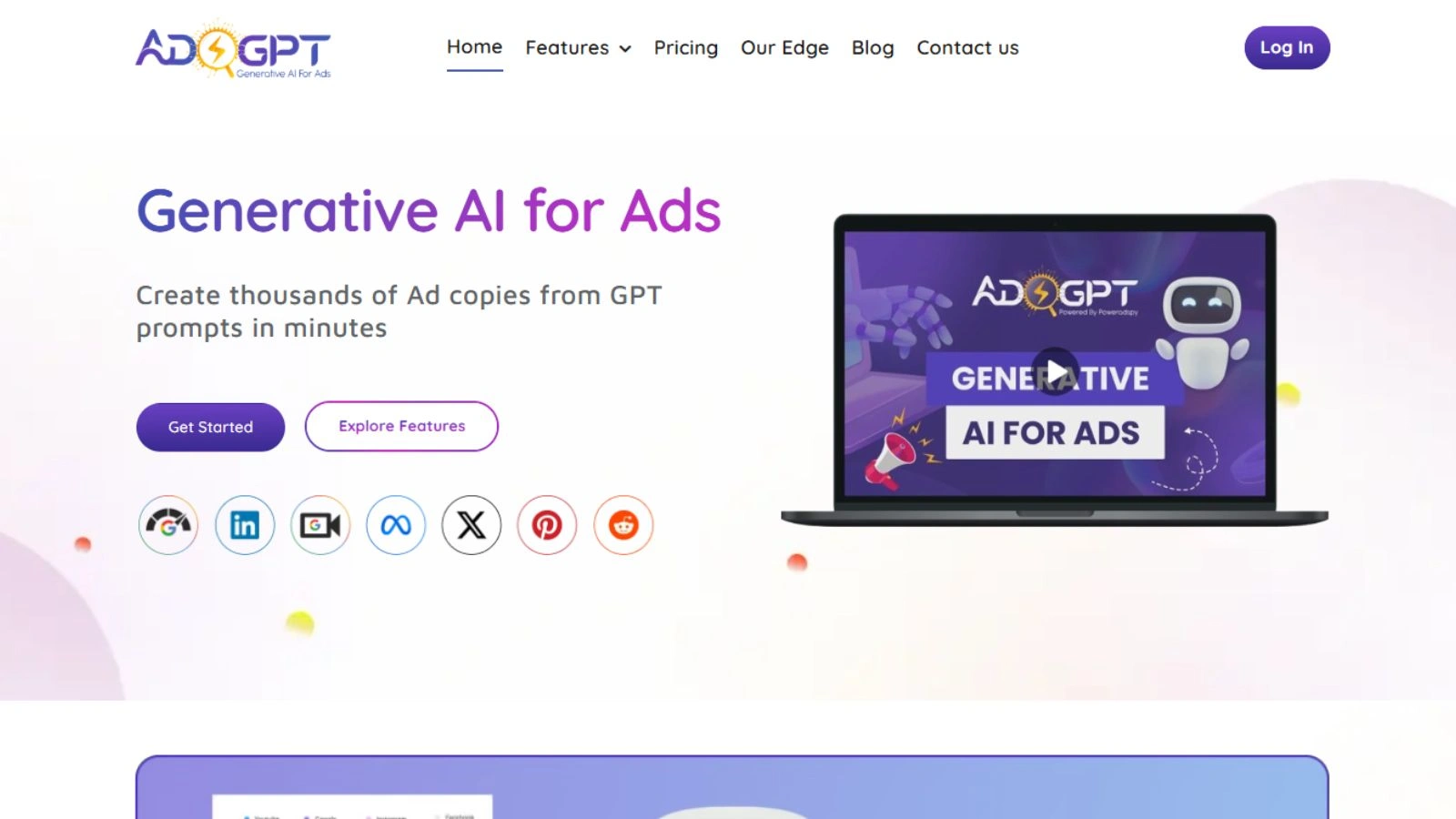
AdsGPT is a competitor ad intelligence and AI creative platform built specifically for performance marketers. It combines a massive searchable database of competitor ads with AI-powered analysis and one-click creative generation, turning a week-long research and production process into something that takes under an hour.
Accessing a Massive Competitor Ad Creative Database
The foundation of AdsGPT is its database: over 500 million competitor ads searchable by niche, platform, format, and audience. Instead of scrolling and screenshotting, a team can search their competitive landscape and immediately surface the ads that have been running the longest, the ones most likely to be profitable. For teams looking for structured ad inspiration, this changes everything. The noise disappears. What remains is a signal-dense view of what is working.
Finding Winning Hooks in Minutes Instead of Days
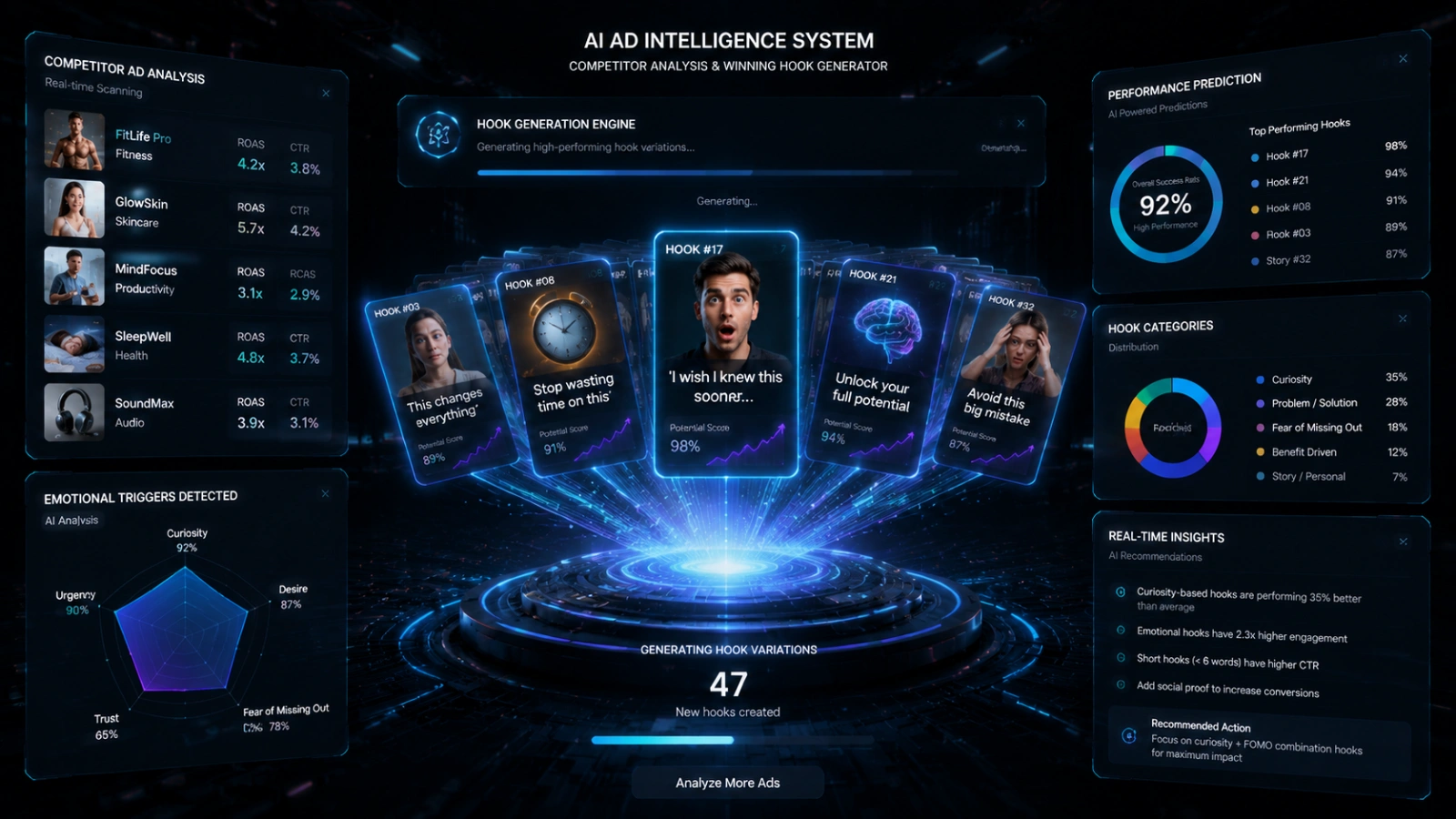
AdsGPT’s AI layer analyzes the hook structure of high-performing ads and surfaces the patterns behind them. Winning hooks cluster around a handful of emotional structures: pain-point acknowledgment, curiosity gaps, transformation promises, direct UGC-style openings. AdsGPT identifies which structures competitors are using and how frequently they appear. A marketer can go from zero context to a clear picture of dominant hook patterns in their category in under thirty minutes.
Turning Competitor Insights Into New Ad Variations
This is where AdsGPT functions as a true ad generator AI, not just a research tool but a production engine. After identifying a winning hook structure, marketers generate multiple original variations built on that framework. Different audience angles, different copy tones, different opening lines all built on structural logic that competitor research confirmed as effective. The output is genuinely original and creative, just informed by what is already proven to work.
Producing UGC-Style Ads Without Traditional Production Bottlenecks
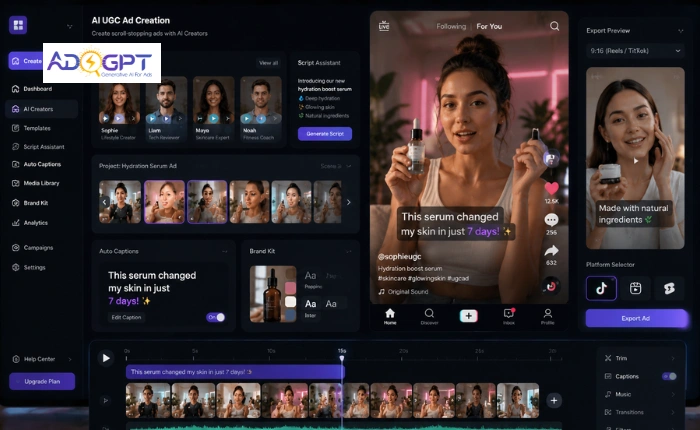
UGC-style content consistently outperforms polished brand creative on social platforms, but producing it traditionally is expensive and slow. AdsGPT addresses this through AI avatars and AI-generated UGC ads — creator-style video content that looks native to the platform with no shoot, no coordination, no editing delays. For teams fighting creative fatigue, this capability is operationally significant.
The New Creative Testing Workflow
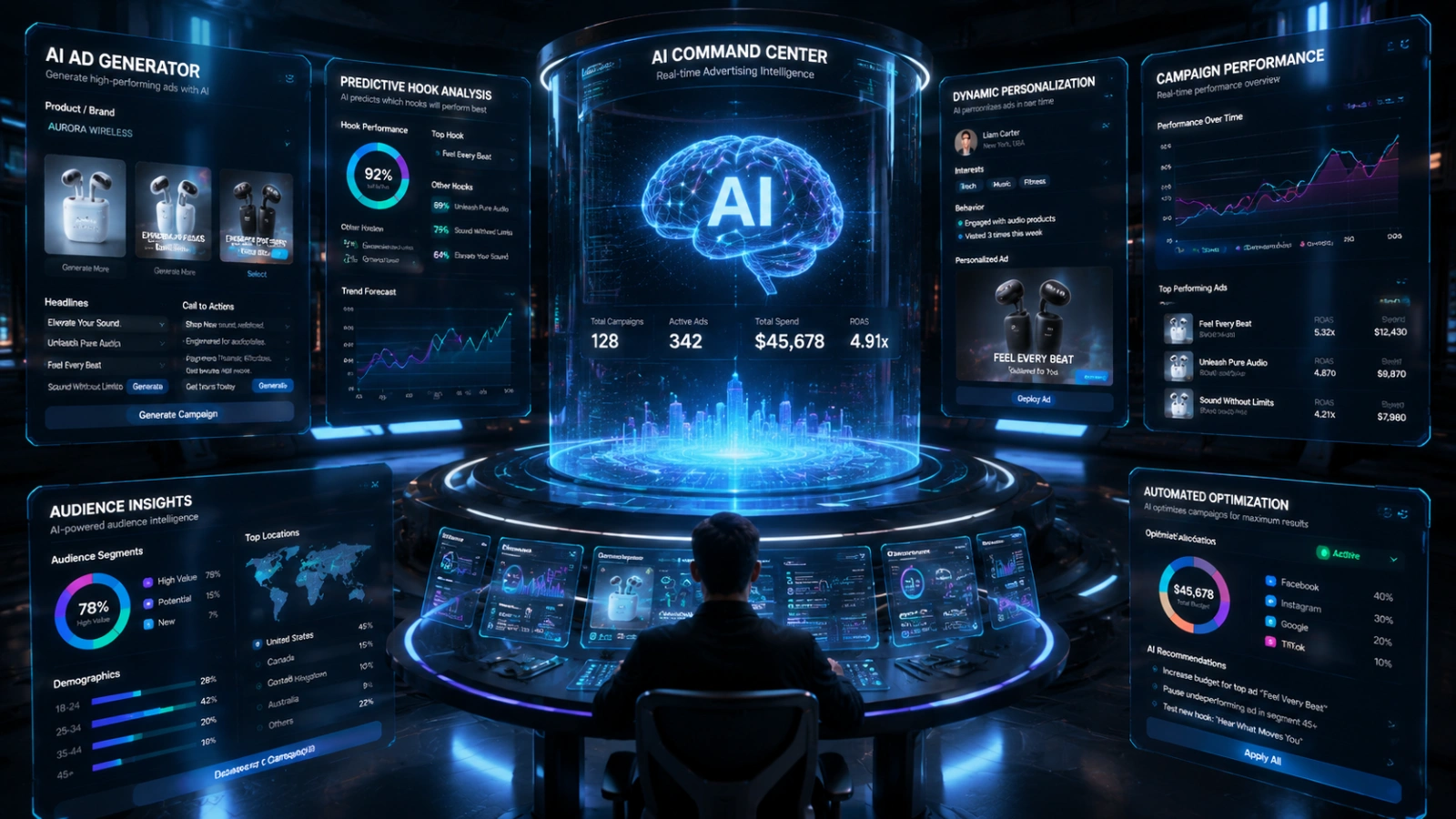
Step 1 — Analyze Long-Running Competitor Ads
Filter by niche and platform in AdsGPT, sort by longevity, and the most profitable competitor creatives surface immediately. Long-running ads are performance-confirmed — the most reliable signal about what resonates with the target audience.
Step 2 — Identify the Hook Structure
What happens in the first three seconds? Is it a pain-point opening, a transformation statement, or a direct UGC format? What emotional trigger is being activated? This analysis produces a structural framework that can be adapted and tested with the brand’s own product and messaging.
Step 3 — Generate Multiple AI Variations
AdsGPT’s ad generator AI produces multiple variations quickly — different audience angles, different copy tones, all built on the same hook logic. The bulk generation workflow allows teams to produce a full testing batch in the time it once took to brief a single creative.
Step 4 — Launch More Creative Tests Faster
With multiple variations ready, testing cycles launch in a fraction of the traditional timeline. Faster iteration means faster winners, which means faster scaling decisions. The entire feedback loop compresses dramatically.
What Changed After AI-Powered Competitor Ad Analysis
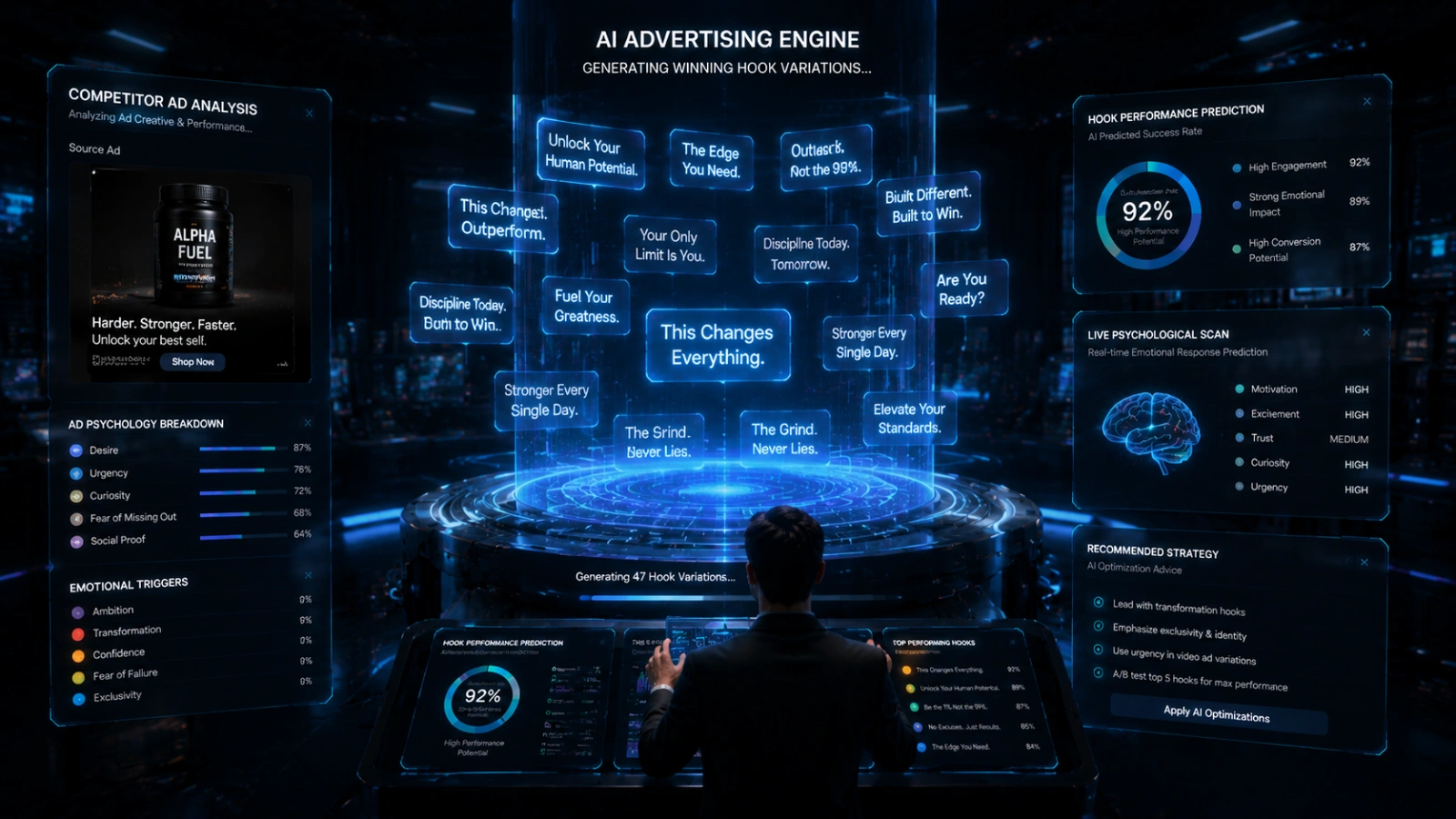
Faster Creative Production
Teams report producing three to five times more ad variations per week than they could with traditional workflows. The production bottleneck that once defined creative strategy was effectively removed.
Better Hook Discovery
When marketers could see exactly which emotional triggers competitors were using at scale, they stopped guessing. First-frame performance improved. Ads opening with proven hook structures were getting watched, not scrolled, and the downstream metrics reflected it.
Lower Creative Fatigue and More Scalable Ad Inspiration
AI-generated UGC-style content could be produced and rotated consistently without repeated creator shoots. And teams moved from relying on scattered swipe files to operating a systematic, searchable creative intelligence process. Ad inspiration became a discipline, not a mood.
What Winning Competitor Ad Creative Usually Has in Common
- An immediate hook in the first two to three seconds that stops the scroll
- Native-looking UGC formatting that blends with organic feed content
- Emotional specificity a very particular pain point or desire, not a generic promise
- Early product or result visibility that anchors the value proposition
- A clear problem-solution narrative arc that plays out in under thirty seconds
- A direct call to action that closes the loop
These patterns appear consistently across high-performing ads in almost every DTC and SaaS category. The brands hitting ROAS targets are not reinventing the wheel; they are applying these structural principles with discipline and volume.
Also Read
Why AI Ad Generators Are Becoming Essential for Performance Marketers
AdsGPT sits at the more sophisticated end of the ad generator AI category. A generic AI writing tool produces copy based on training data. AdsGPT combines live competitor intelligence with creative generation. Every output is informed by real market data about what is currently working in a specific category. It is not just scaling volume; it is making every variation smarter before a single dollar of testing budget is spent.
Teams that build systematic competitor intelligence workflows get smarter every week. Their briefs get more precise. Their testing cycles get more efficient. AdsGPT is not a shortcut it is an infrastructure upgrade that compounds over time.
Key Lessons From This Competitor Ad Creative Strategy
- Competitor ads are performance data, not just an inspiration; study them systematically
- Long-running ads are the most reliable signal of what is working in a category
- Hook structure matters more than production polish
- Variation volume improves testing outcomes. More tests mean faster learning
- AI-powered analysis closes the gap between insight and execution at scale
- Creative fatigue is a system problem, and it requires a system solution
Conclusion
The DTC brand that started this story eventually rebuilt its entire creative workflow around competitor intelligence and AI-powered generation. ROAS stabilized. Testing velocity doubled. Creative fatigue dropped from a constant crisis to a managed variable. They were not smarter — they had a better system.
The brands scaling fastest today are not building ads from scratch and hoping something lands. They are analyzing competitor ad creative with discipline, extracting the structural patterns behind winning hooks, and using AI platforms like AdsGPT to turn that intelligence into scalable campaigns. The guesswork is gone. The system is an advantage.
FAQs
What is competitor ad creative analysis?
It is the process of systematically studying ads that competitors are actively running to identify high-performing hooks, emotional triggers, and creative structures — then using those patterns to inform original creative production.
How do marketers find winning hooks from competitor ads?
The most effective approach is identifying long-running ads and analyzing their opening hook structure. AdsGPT automates this by surfacing top-performing competitor creatives and identifying the emotional and structural patterns driving their performance.
Why are long-running ads important in competitor research?
Long-running ads are performance-confirmed. No brand sustains spend on a creative that is not delivering ROI. When a competitor keeps an ad running for months, it signals the creative has cleared their profitability threshold — making it a reliable data point for hook and angle research.
How does AdsGPT help with ad inspiration?
AdsGPT provides a database of over 500 million competitor ads searchable by niche, platform, and format. Its AI layer analyzes hook structures and creative patterns, turning raw competitor data into structured ad inspiration that marketers can apply to their own campaigns immediately.
Can AI generate high-converting ad creatives?
AI significantly improves the odds of producing high-converting creative especially when generation is informed by competitor intelligence. AdsGPT combines competitive data with AI generation, producing variations built on proven hook frameworks rather than generic outputs.
How do AI ad generators improve creative testing?
By reducing production time dramatically, an ad generator AI like AdsGPT allows teams to launch more variations per testing cycle. More tests mean faster identification of winners and compounding learning that improves campaign performance over time.
Why are UGC-style ads performing so well?
UGC-style ads feel native to social feeds, matching the visual language of organic content and reducing the psychological resistance viewers have to obvious advertising. They tend to generate higher engagement and lower CPMs than polished brand creative on platforms like TikTok, Instagram Reels, and Facebook.
MOST POPULAR