
Marketing teams are under more pressure than ever. Campaigns that once took weeks now need to be done in days. With so many platforms and constant revisions, great ideas often get lost. AI advertisement generator help solve this by speeding up ad creation and making it easier.
The real issue is not talent; it is the volume of work. Human teams can’t keep up with producing enough high-quality content fast enough. Yet, many brands still rely on outdated methods.
AI advertisement generators do not replace great marketing; they remove the friction between an idea and a live ad. If you want to stay competitive, this is the shift you need to embrace.
In a hurry? Listen to the podcast now.
What AI Advertisement Generators Actually Are
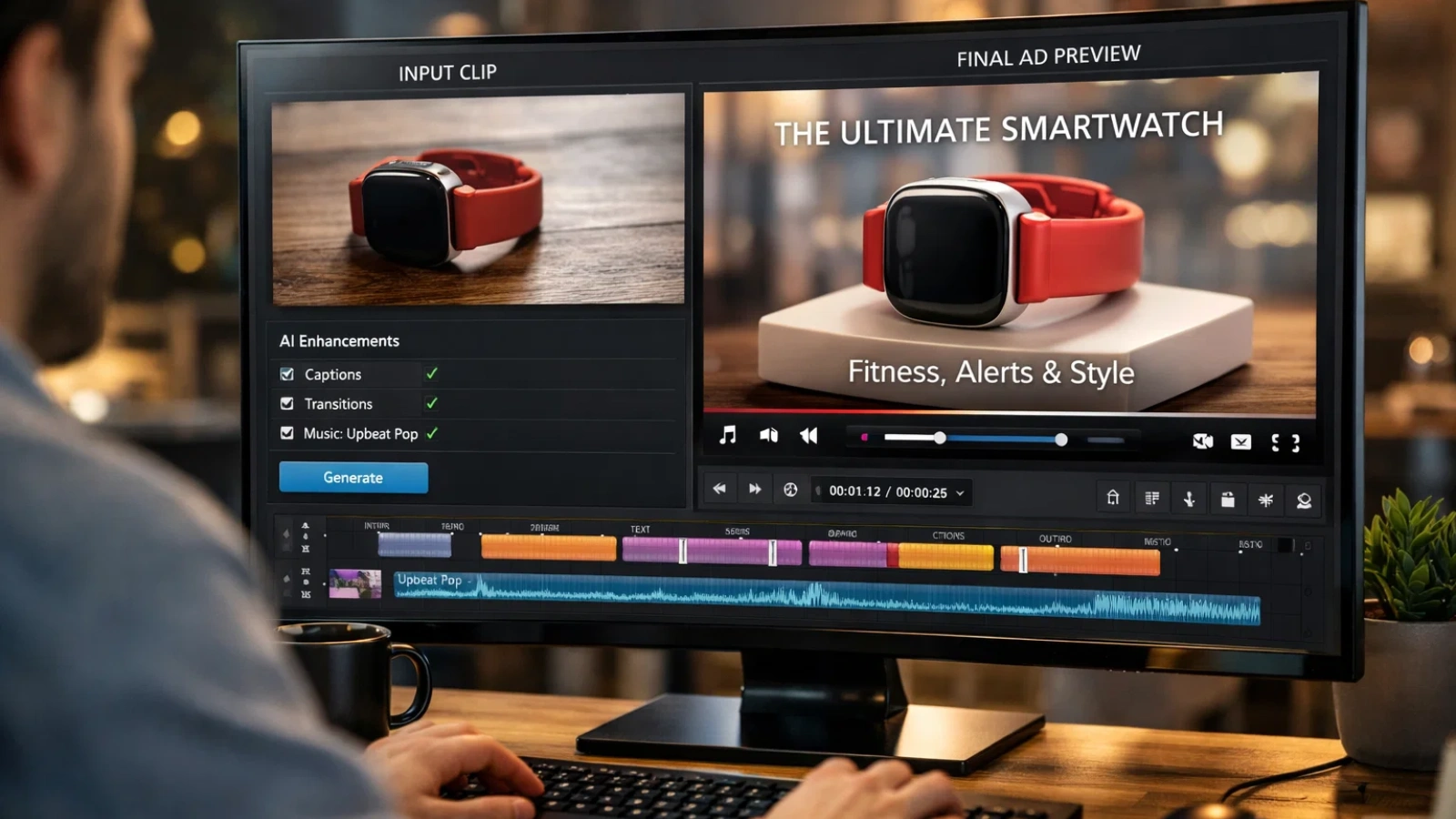
Advertisement AI generators are software tools that harness machine learning, specifically, large language models and generative image or video models to produce advertising content. You feed the system context: your product, target audience, and campaign goals. The AI responds with output: copy, visuals, video scripts, or even complete ad creatives ready for deployment.
AI advertisement generators are not just about text generation anymore. Here’s what top-tier platforms can do:
- Copywriting across formats: From headlines to CTAs, AI can generate ad copy that’s optimized for different platforms. Ads on Facebook will look very different from ads on LinkedIn.
- Image and video generation: This includes background replacements, product mockups, and even short-form video ads made from your brand assets.
- Audience targeting recommendations: AI analyzes your product category and suggests messaging angles that are likely to resonate with specific segments.
- Performance-based iteration: As ads run, the system learns from real-time performance, improving the next round of generated content.
There’s a big difference between “AI generates content” and “AI participates in the entire campaign lifecycle”. Early AI tools were basically autocomplete for ad copy, but today’s tools are far more sophisticated.
For those just starting out, a free AI advertisement generator allows you to produce basic content without any cost, while more advanced tools offer features like personalized ad creation and optimization.
Why Traditional Advertising No Longer Works
Traditional advertising isn’t just slow; it is misaligned with how modern marketing works. Campaigns must move quickly, especially with fast-moving trends on social media, but traditional processes like briefs, design, and legal reviews take too long, often missing the moment.
Agency costs are rising, making it unsustainable for brands to produce hundreds of ad variations. Even mid-sized companies struggle to personalize messaging at scale.
Creative burnout is also a problem. Teams producing dozens of assets each quarter often resort to safe, repetitive work. This isn’t a talent issue; it’s a volume issue.
Lastly, testing becomes limited when ads take too long to produce. With fewer experiments and less data, optimization suffers, leading to slower output, higher costs, and worse results, while competitors with better tools pull ahead.
What You Gain by Switching to AI Advertisement Generators
AI advertisement generators streamline ad creation, offering faster, cost-effective, and data-driven solutions for high-performing campaigns.
Speed That Unlocks New Possibilities
AI ad generators allow you to create ads in minutes instead of days. This speed lets you test new ideas, gather performance data quickly, and adapt in real-time, all without increasing your budget.
Cost-Effective Solutions
With AI, you only pay for what you use, lowering costs. Creative teams can focus on strategy while AI handles repetitive tasks, making it a more cost-effective solution.
Data-Driven Creativity
AI combines creativity with real-time performance data. It generates ad variations based on what’s working, ensuring your ads are both creative and optimized for performance.
Effortless Personalization at Scale
AI makes it easy to personalize ads for different audience segments. You can quickly generate tailored content for each group, scaling your efforts without increasing costs.
Meaningful A/B Testing
Instead of small tweaks, AI allows you to test major ad variations, different emotional angles, formats, or value propositions, leading to more meaningful optimization and better insights.
How AI Advertisement Generators Actually Work
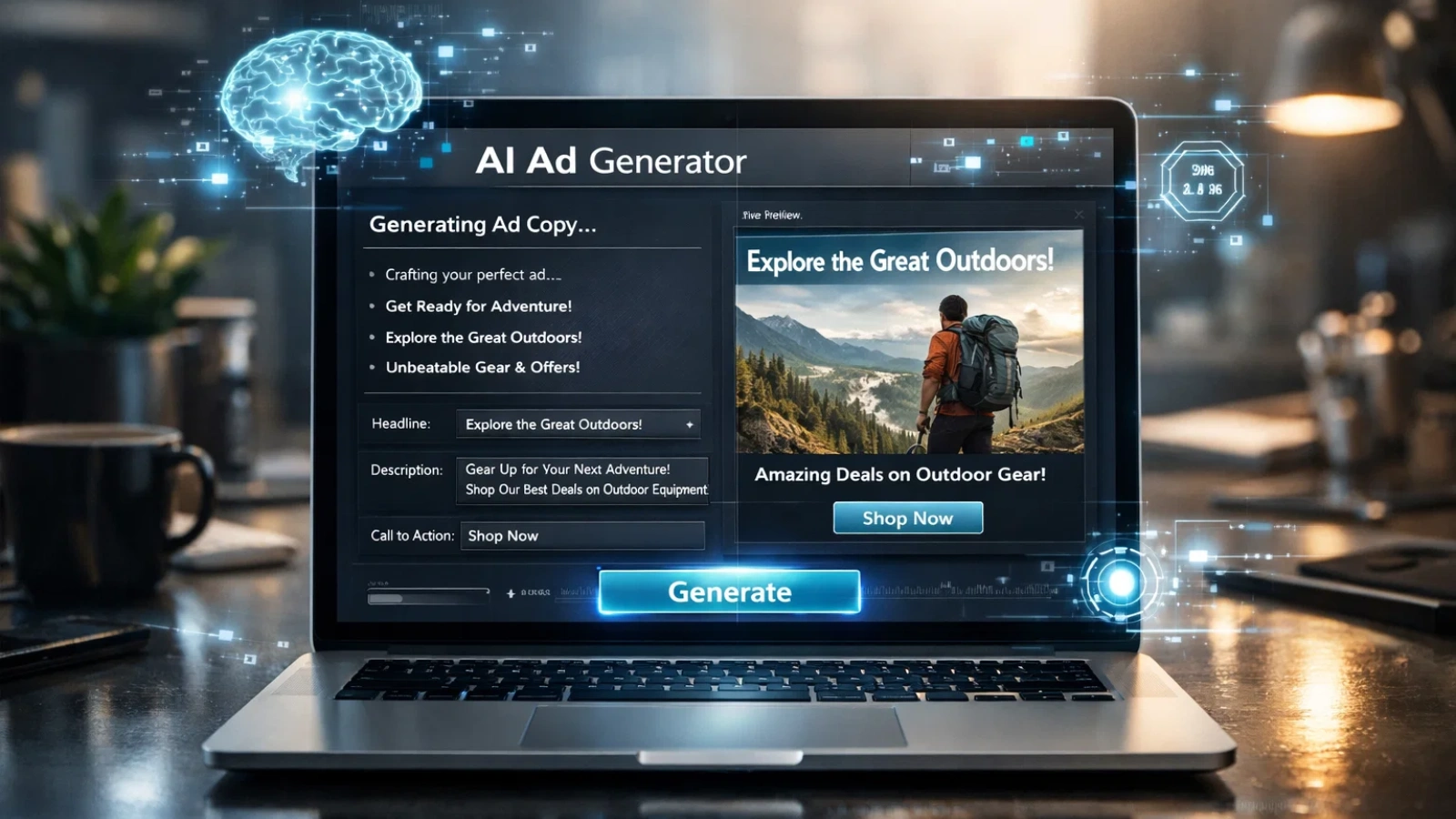
The process is straightforward. Here’s how it works in four basic stages:
- Input: You provide the system with essential details about what you are advertising, who you are targeting, what action you want people to take, and any brand constraints (tone, style, etc.).
- Processing: AI analyzes data patterns, drawing from advertising data, best practices, and platform-specific performance signals.
- Output: You receive multiple ad variations from copy to visuals to complete creatives that fit your brief.
- Optimization: As the ads run, AI analyzes performance and learns from the data, improving future outputs for better results.
The longer you use the tool, the more personalized and effective your ads become.
How to Get the Best Results from AI Advertisement Generators for High Conversions and Views

AI advertisement generators are powerful tools that can help you create high-performing ads quickly, but to truly get the best results, including high conversions and views, it’s crucial to use them effectively. Here are the key strategies to ensure you’re maximizing their potential:
1. Understand Your Audience and Targeting
Before you even begin generating ads, it’s important to know who your target audience is. AI tools work best when they have clear and detailed input about the audience’s needs, preferences, and behaviors.
Input specific details about your audience, such as demographics, interests, and pain points, into the AI. The more data the AI has, the better it can tailor the content to resonate with your audience.
Personalized, well-targeted ads are more likely to result in conversions. Ads that speak directly to the audience’s needs and desires naturally perform better.
2. Create Clear, Specific Prompts
The quality of the AI’s output depends on the clarity of the input you provide. For high-converting ads, avoid vague requests and give the AI as much context as possible.
Be specific in your prompts. For example, instead of asking the AI to generate “a headline for a new product,” provide more context: “Generate a headline for a fitness product aimed at busy professionals looking to improve health in less than 30 minutes a day.”
Detailed prompts ensure the AI understands your goals, resulting in more relevant, engaging ad copy and visuals that appeal to your audience and drive conversions.
3. Test Different Ad Variations
One of the key benefits of AI advertisement generators is the ability to create multiple variations of an ad quickly. Use this to your advantage by testing different creative angles, headlines, CTAs (calls-to-action), and visuals.
Use the AI to generate several versions of an ad, try different emotional tones, value propositions, or ad formats. Test them across different platforms like Facebook, Instagram, and Google Ads to see what works best.
Running A/B tests on various elements (headlines, visuals, CTAs) helps you discover which version resonates best with your audience. This allows you to optimize for higher conversions over time.
4. Focus on High-Impact Visuals
Your visuals can make or break the effectiveness of an ad. AI can generate both text-based and visual content, but it’s important to focus on images, videos, and designs that will grab attention.
Choose visuals that align with your messaging and are designed for the platform you’re using. For example, Instagram ads often perform better with bold, eye-catching visuals and short videos, while LinkedIn requires more professional, informative content.
Strong visuals that complement your message boost engagement and increase the likelihood of users clicking through to your website or landing page.
5. Optimize for the Right Platform
Each platform has different ad requirements and audience behaviors. Use AI to customize your ads for the platform where they’ll be displayed, whether it’s social media, search engines, or other advertising networks.
Make sure the AI tool is set to generate ads that fit the platform’s best practices (e.g., ad size, copy length, video formats). For example, Facebook ads might benefit from carousel formats, while Google Ads might require more keyword-driven copy.
Tailoring your ads to each platform’s strengths ensures they’re not just seen, but also engaged with. Optimized ads generate more clicks and ultimately higher conversions.
6. Analyze Performance and Adjust
AI can create ads, but real-time data analysis is what helps you refine them. As your ads run, track their performance using built-in analytics tools or third-party platforms. Use this data to continuously adjust the AI-generated content for better performance.
Review the performance metrics (CTR, engagement, conversion rates) regularly. If an ad is underperforming, adjust the copy, visuals, or targeting, and let AI generate new variations based on what works.
Continuous optimization ensures that you’re always improving your ads, resulting in increased conversions and views over time.
7. Leverage AI-Driven Insights for Personalization
One of the most powerful aspects of AI is its ability to analyze data and personalize content at scale. Personalizing your ads based on user behavior, location, and preferences can significantly boost your ad’s effectiveness.
Use AI to create personalized ads for different audience segments, based on factors like demographics, past behavior, or where they are in the customer journey.
Ads that are tailored to individual needs and interests perform better, leading to higher engagement and improved conversion rates.
Also Read
How To Create Facebook Ads That Actually Drive Results?
7 Best AI Tools For Marketing To Run Better Ads
Best AI Ad Copy Generator Tool: AdsGPT
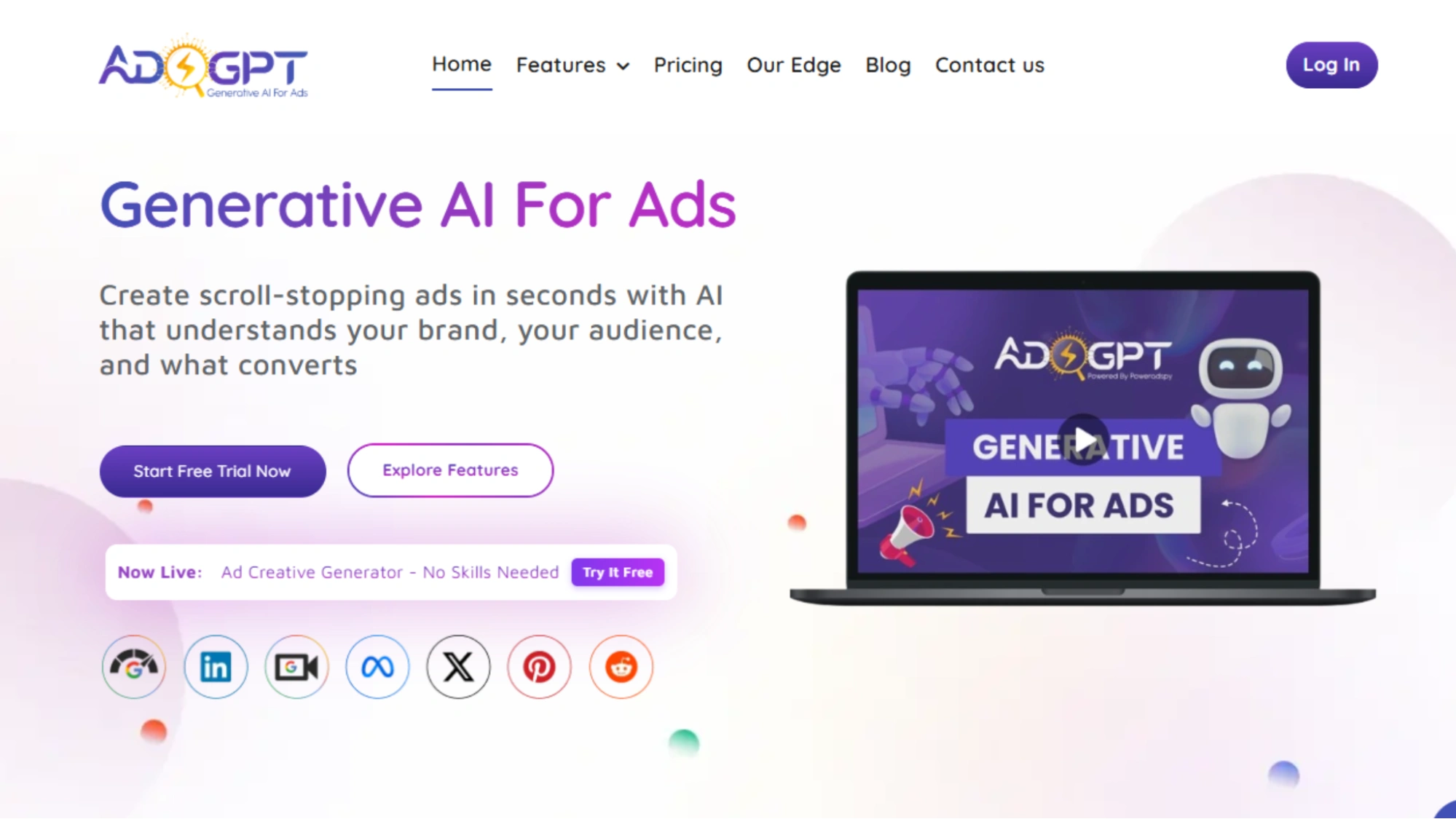
AdsGPT is an AI-powered tool designed to simplify ad copy creation, making it faster and more efficient. Whether you’re creating ads for social media or paid campaigns, AdsGPT enables you to generate high-converting, engaging ad copy instantly, with no writing skills or guesswork required.
Key Features of AdsGPT
- Instant Ad Copy Creation
Generate custom ad copy for platforms like Google, Meta, LinkedIn, Twitter, and more, all within seconds. AdsGPT speeds up the process so you can launch campaigns faster than ever. - AI-Powered Creativity
Let AdsGPT handle the creative work. Based on your input and industry best practices, it crafts high-performing ads that grab attention and drive engagement. - Platform-Specific Optimization
Each platform has unique requirements, and AdsGPT ensures that your ad copy is optimized for each one. Whether it’s a short, punchy message for Twitter or a more detailed ad for LinkedIn, AdsGPT delivers the right format every time. - Get Inspired by Competitor Ads
Want fresh ideas? AdsGPT allows you to analyze competitor ads, choose a design or message that stands out, and then generate a similar copy in seconds. - Track Your Creations
Easily keep track of all your generated ad copies in one place. Review past campaigns, refine strategies, and use historical data to improve your future ads.
The Honest Limitations of AI Advertisement Generators
AI tools are powerful, but they do have limitations:
- Emotional Depth: AI can create technically proficient ads but struggles to convey the emotional depth and resonance that a human touch can provide. Effective advertising often requires a human perspective.
- Over-Automation: Relying too much on AI can lead to complacency. While AI is excellent for content generation, strategic thinking still requires a human touch.
- Garbage In, Garbage Out: The quality of AI output depends entirely on the input. Vague briefs lead to generic results, while clear, specific inputs produce better, more effective ads.
Conclusion
AI advertisement generators, like AdsGPT, are transforming the way brands create ads. By automating content creation, these tools help marketers produce high-quality ads faster, more cost-effectively, and with data-backed insights. Whether you’re looking to boost efficiency, scale your ad production, or optimize performance in real-time, AI-powered tools offer a game-changing solution.
However, while AI can streamline processes, it’s essential to keep human oversight in the loop to ensure the ads remain on-brand and resonate with your audience. By combining AI’s speed and scalability with human creativity and strategy, you can unlock the full potential of your advertising efforts.
To stay competitive in today’s fast-paced marketing environment, embracing AI tools like AdsGPT is no longer a choice; it’s a necessity.
Frequently Asked Questions
Q1: Can AI advertisement generators create effective ads?
Yes! AI tools generate high-quality, engaging ads by using data and learning from audience behavior to optimize content quickly.
Q2: What is an AI advertisement generator?
It’s a tool that creates ad copy, visuals, and videos based on your inputs, helping you produce ads faster and more efficiently.
Q3: How do I choose the best AI advertisement generator?
Look for tools that offer customization, platform integration, and AI-driven performance optimization. Trial versions and reviews can help guide your choice.
Q4: Do AI-generated ads improve performance?
Yes, AI generates data-driven variations that optimize your ads for better engagement and conversions.
Q5: How quickly can I create a video ad using an AI video generator?
With an advertisement AI video generator, you can create a video ad in just minutes. The process is fast, allowing you to launch multiple video ads for testing or campaigns, all without the long turnaround time typical of traditional video production.
MOST POPULAR