Picking the right ad platforms is only half the battle. The other half? Creating ads that actually stop the scroll, match your brand, and convert. Most marketers spend weeks optimizing targeting while their creatives are generic, slow to produce, and mismatched to each platform’s unique requirements.
This guide walks through the best ad platforms available right now, what each one is genuinely good for, and how a tool like AdsGPT helps you build platform-ready creatives at speed without hiring a designer or copywriter.
Listen To The Podcast Now!
What Are Ad Platforms, and Why Does Your Choice Matter?
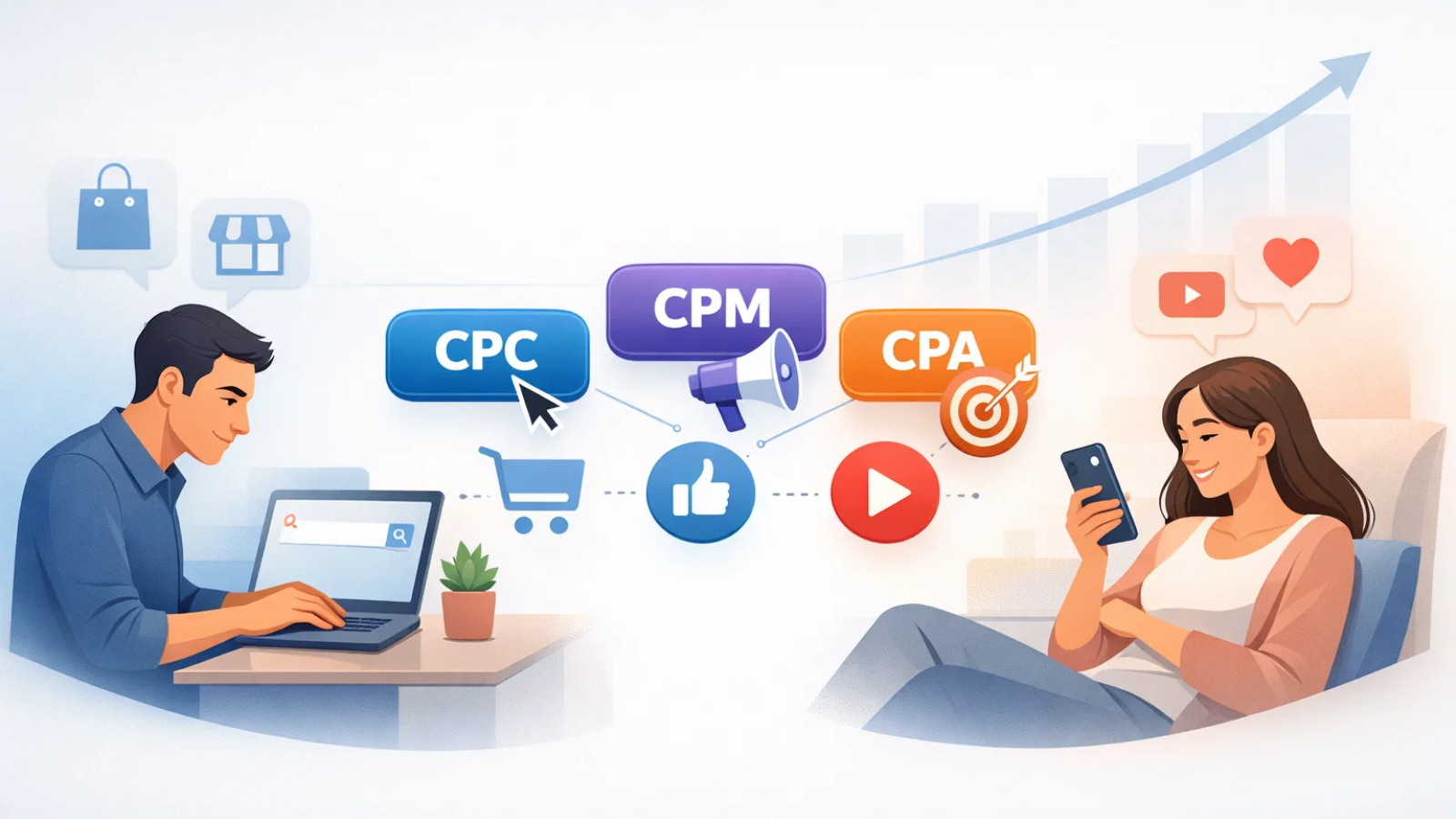
Ad platforms are digital services that connect your message with audiences across search engines, social feeds, retail sites, and publisher networks. They operate on pricing models like CPC (cost per click), CPM (cost per thousand impressions), and CPA (cost per acquisition), and they give you targeting controls, creative formats, and measurement tools to manage campaigns.
The platform you choose shapes everything: who sees your ad, what format your creative needs to be, how much you pay per click, and what kind of intent the audience brings. A searcher on Google is actively hunting for a solution. A user scrolling Instagram is in discovery mode. Those are fundamentally different mindsets, and your creative strategy needs to reflect that.
What complicates things further is that average cost per lead has been climbing steadily, reaching around $70 in 2025, up from $66 the year before. You are paying more for the same click, which makes the quality of your creative and your post-click experience more important than ever.
The Major Ad Platforms Broken Down
Google Ads
Google Ads is the default starting point for most businesses because it captures people who are already searching for what you sell. With access to the vast majority of global search traffic, it offers Search campaigns for text ads triggered by keywords, Shopping campaigns for product listings with images and prices, Display campaigns across the Google Display Network, YouTube video ads, and Performance Max campaigns that run automatically across all Google channels.
Google rewards relevance through its Quality Score system, which directly affects your cost per click and ad placement. The better your ad matches the searcher’s intent and lands on a relevant page, the less you pay and the higher you appear.
Best for: High-intent lead generation, ecommerce, local businesses, and direct response campaigns.
Meta Ads (Facebook and Instagram)
Meta’s advertising system covers both Facebook and Instagram through a single platform. Its core strength is audience targeting: demographics, interests, behaviors, and lookalike modeling based on your existing customers. Since iOS privacy changes reduced pixel tracking accuracy, Meta has leaned heavily into broader audiences and automated Advantage+ campaigns.
Meta supports single image, carousel, video, Stories, Reels, and collection ad formats. It works especially well for visual products, awareness-phase campaigns, and retargeting people who have already visited your site.
Best for: Consumer brands, visual products, awareness campaigns, and top-of-funnel retargeting.
TikTok Ads
TikTok has become one of the fastest-growing ad platforms for reaching Gen Z and Millennial audiences. Its algorithm surfaces content based on engagement rather than follower count, which means newer brands can get meaningful reach alongside paid campaigns.
The catch is that creative strategy here is completely different from other platforms. Polished, brand-forward ads consistently underperform compared to content that looks native to the feed: authentic, conversational, and direct. If your creative team cannot produce this style, TikTok will eat your budget.
Best for: Consumer brands targeting younger audiences, e-commerce with Shopify integration, and awareness campaigns that lean on UGC-style video.
Microsoft Advertising
Microsoft Advertising runs on Bing, Yahoo, AOL, and a network of partner sites. Bing holds a fraction of global search share compared to Google, but that smaller pool comes with a notable benefit: significantly lower competition. CPCs on Microsoft Advertising can run 30 to 50 percent lower than equivalent Google keywords.
Campaigns can be imported directly from Google Ads, which means you can expand your reach to this channel without rebuilding everything from scratch.
Best for: B2B advertisers, desktop-heavy audiences, budget-conscious teams, and anyone wanting to test search advertising without Google’s price tag.
LinkedIn Ads
LinkedIn is the only platform where you can target by job title, company size, industry, seniority, and professional skills at scale. That precision makes it the clear leader for B2B advertising, even though CPCs run higher than other social platforms.
The formats include Sponsored Content (native feed ads), Message Ads sent directly to inboxes, Dynamic Ads that personalize automatically, and standard Text Ads. The higher cost per click is justified when your product has a high lifetime value and your buyer is a decision-maker who is hard to reach elsewhere.
Best for: B2B lead generation, high-value SaaS products, thought leadership content, and reaching senior professionals.
Amazon Ads
Amazon Ads puts your products in front of shoppers who are at the bottom of the funnel with credit card in hand. The platform offers Sponsored Products for keyword-targeted search results placement, Sponsored Brands for banner-style placements, Sponsored Display for retargeting, and the Amazon DSP for programmatic buying on and off Amazon.
The platform works best for brands already selling on Amazon or willing to build an Amazon presence. The intent is high, but competition is fierce and you need tight inventory and fulfillment management alongside your ad strategy.
Best for: Ecommerce brands selling physical products, consumer goods, and any category where Amazon has established shopping behavior.
Pinterest Ads
Pinterest reaches users during the planning and discovery phase of a purchase, often weeks before they actually buy. Categories like home decor, fashion, recipes, beauty, and weddings perform strongly here. Promoted Pins continue generating impressions long after they are published, which gives content on Pinterest a longer shelf life than most other platforms.
Best for: Visual consumer products, planning-phase purchases, and brands targeting a predominantly female audience.
Native Advertising Platforms (Taboola, Outbrain)
Native ad platforms like Taboola and Outbrain place your content in recommended article widgets on major publisher sites. They work differently from intent-based or social platforms because the audience is in content consumption mode rather than searching or scrolling a social feed. This makes them well-suited for distributing blog posts, guides, and advertorials rather than direct conversion pushes.
Best for: Content marketing, email list building, brand awareness, and diversifying beyond search and social.
Also Read
How [Shopify Seller] Beat Creative Fatigue On Meta
How To Choose The Right Mix
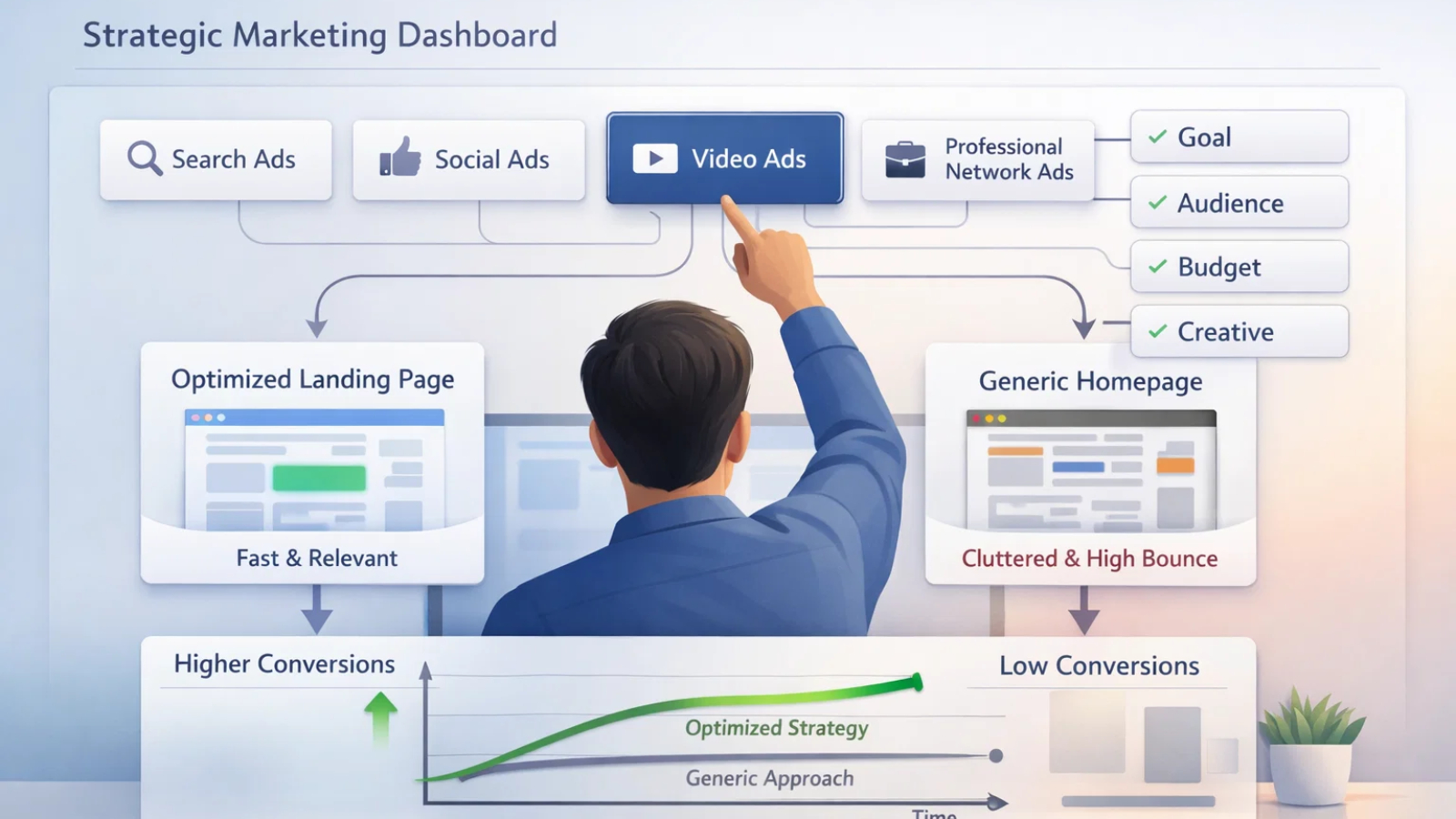
The right combination of ad platforms depends on four things: your goal, your audience, your creative resources, and your budget.
If your primary goal is capturing high-intent demand, start with Google Ads and expand to Microsoft Advertising once you have validated your conversion funnel. If you are building awareness or selling visual products direct to consumers, Meta Ads combined with TikTok or Pinterest, gives you broad reach with format variety. For B2B lead generation, LinkedIn paired with Google Ads covers both decision-maker reach and problem-aware search traffic.
On budget, a good rule of thumb is to focus on one or two platforms until you can accurately track conversions, then add channels. Spreading a limited budget across five platforms before you understand what is working slows your learning and creates an attribution mess.
One mistake that consistently burns ad budgets across all platforms is sending traffic to a homepage or generic product page. A visitor who clicked an ad has declared specific intent. A homepage designed for every type of visitor dilutes that intent. Research shows a one-second delay in mobile page load time can reduce conversions by up to 20 percent, and message mismatch between an ad and its landing page reliably increases bounce rates.
The platform gets you the click. What happens after the click determines whether you make money.
Where Most Ad Creative Workflows Break Down
Running ads across multiple platforms creates a production bottleneck that most marketing teams underestimate. Each platform has different size requirements, different creative best practices, and different audience expectations. A creative that performs well on LinkedIn will look awkward on TikTok. A static image formatted for an Instagram feed needs to be resized and reformatted entirely for Stories.
Most teams handle this by building one or two core creatives and adapting them manually, or by relying on a designer whose production queue never empties. Neither approach scales well once you are running campaigns across three or four platforms simultaneously and need to test multiple variants per campaign.
This is exactly the problem AdsGPT was built to solve.
How AdsGPT Helps You Create Platform-Ready Ads Faster
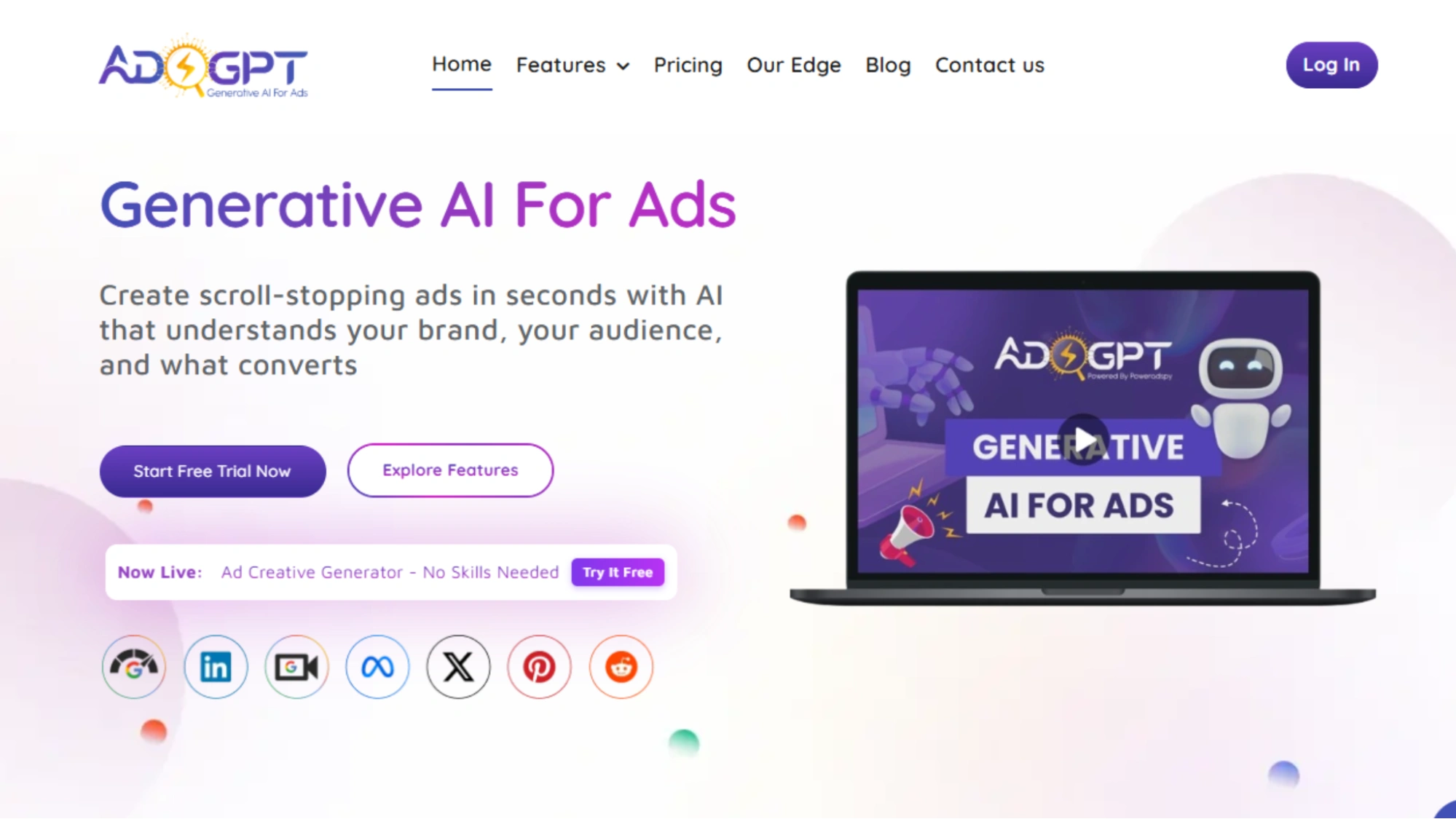
AdsGPT is an AI-powered creative platform that covers both ad copy and ad visuals. It has generated over one million ads across more than one hundred industries and has helped optimize over one hundred thousand campaigns. Here is what makes it genuinely useful for teams running ads across multiple platforms.
Built for every platform, not generic outputs.
AdsGPT builds platform-ready creatives for Meta, Google, LinkedIn, Pinterest, and more, each optimized for the specific requirements and placement conventions of that channel. You are not just getting a generic image and then manually resizing it yourself.
Start from a competitor ad instead of a blank canvas.
One of the most useful features in AdsGPT lets you pick a competitor ad as your starting point. The AI produces a fresh creative with your tone, your message, and your logo, so you are informed by what already works in your market without copying anyone.
Post-ready visuals without a design queue.
Every creative that comes out of AdsGPT is fully customized, properly sized, and styled for the target platform. You are not waiting on a designer or dealing with export settings.
Generate up to five creatives at once.
Instead of spending time producing variations one at a time, you can generate up to five ad creatives in a single run. This is practical for A/B testing and for running different angles across campaigns simultaneously.
Guide the output with a short prompt.
A brief prompt is all it takes to steer the creative’s tone and direction, keeping every output fresh, original, and consistent with your brand voice rather than defaulting to something generic.
Brand memory that carries across every creative.
AdsGPT logs your brand details, logo, and description, then applies them automatically across every creative you generate. You do not have to re-enter this information or manually add your logo to each output.
Turn a competitor name into a competitive advantage.
You can input a competitor’s name directly and let the AI craft creatives that are designed to highlight your unique value against theirs. This is a practical shortcut for positioning campaigns.
Image style options that match your brand’s visual language.
Choose from Realistic, 3D, Anime, or General image styles depending on what fits your brand’s tone and your target audience’s expectations.
Aspect ratios for every placement.
Select from 1:1, 3:4, or 16:9, or let AdsGPT automatically generate the right dimensions for feeds, stories, video placements, and other formats.
Beyond creatives, AdsGPT also covers ad copy generation for Google, Meta, LinkedIn, Twitter, and more, with features for platform-specific optimization, competitor ad inspiration, and a creation history so you can revisit past outputs and refine what worked.
The analytics side of the platform adds multi-platform coverage across Facebook, Google, YouTube, and Instagram, along with market trend analysis, an ad popularity index, call-to-action analysis, geographic breakdowns, and performance comparisons across advertisers. These are the kinds of insights that used to require either an expensive analytics tool or hours of manual research.
Putting It Together: Ad Platforms Plus Better Creatives
Choosing the right ad platforms gets your message in front of the right audience. Creating the right ad gets them to stop and pay attention. Both matter, and neither compensates for the other.
The practical workflow for most teams in 2026 should look like this: start with one or two platforms where your audience clearly lives, build conversion tracking before expanding, and produce platform-specific creatives rather than recycling the same assets across channels. Use tools like AdsGPT to collapse the production time on creatives so you can test more angles without expanding your team.
The marketers consistently winning on paid channels are not necessarily spending more. They are testing more, iterating faster, and keeping creative quality high across every placement. That combination is now more accessible than it has ever been.
Over ten thousand marketers are already using AdsGPT to create ads that fit their brand, their platform, and their performance goals. If you are spending time and budget on ad platforms without a scalable way to produce and test creatives, it is worth trying.
MOST POPULAR