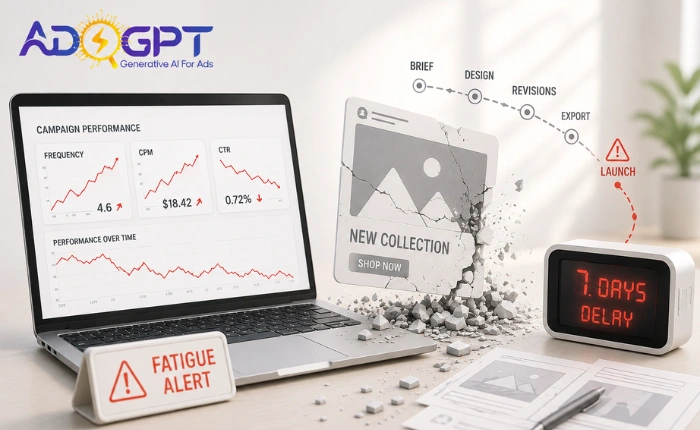
Most fatigue-fighting advice starts in exactly the wrong place: the analytics dashboard. Watch your frequency. Monitor CPM creep. Check if CTR is declining. All useful signals. All, by definition, is telling you about damage that’s already been done.
By the time frequency triggers an alert or your cost-per-click climbs noticeably, your audience has been seeing the same image, the same hook, the same caption for days. The creative has peaked. What you’re measuring now is the decay, not the warning sign. And if it takes your team another week to brief a designer, wait on revisions, export to spec, and push the replacement live, you’ve already bled ROAS through a wound you could see but couldn’t close fast enough.
That’s not an analytics failure. That’s a production bottleneck wearing an analytics costume.
In a hurry? Listen to the blog instead!
The Real Mechanism Behind Ad Creative Fatigue
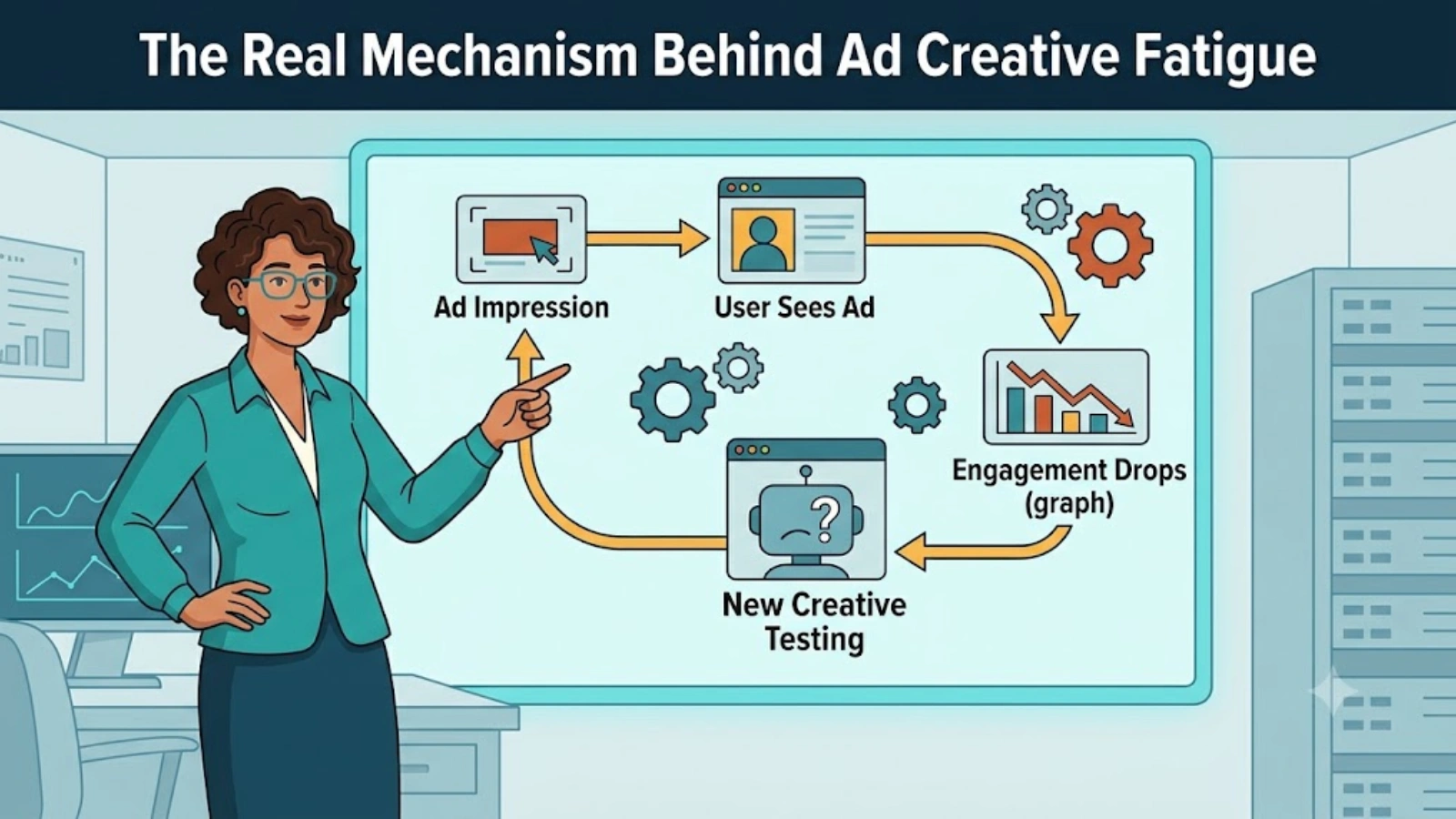
Creative fatigue is usually described as an audience problem: people see the same ad too many times and stop responding. True, as far as it goes. But it misses the part you can actually control.
You cannot stop audiences from growing tired of a creative. You can control how quickly you put something fresh in front of them. The gap between “fatigue detected” and “replacement live” is where money disappears. For most teams running a traditional creative workflow- brief, design, revise, export, upload- that gap is measured in days, not hours.
The shelf life of a winning creative has already collapsed. Ad fatigue data for 2026 puts the effective lifespan of a top-performing Meta creative at 2–3 weeks, down from 4–6 weeks in 2024. The culprit is Andromeda, Meta’s current ranking system, which saturates audiences faster than the algorithm it replaced. On TikTok and YouTube pre-rolls, where scroll velocity is higher, that window is shorter still. Instagram Stories and LinkedIn banners each have their own decay curves. The platforms are not slowing down; your production cycle has to accelerate.
Teams that stay ahead of creative fatigue share one trait: they’ve built a creative refresh cycle, not just a monitoring system. Monitoring without the production capacity to act is just watching a tire go flat.
Meanwhile, the IAB’s 2025 Video Ad Spend & Strategy report found that nearly 90% of advertisers plan to use generative AI to build video ads. That’s not adoption for its own sake; it’s because the teams scaling fastest have learned that creative volume is now a competitive moat, not just a nice-to-have.
Why “Optimize the Winner” Is the Wrong Instinct

When a creative is performing, the instinct is to protect it. Adjust the budget. Tighten the audience. Maybe A/B test a headline. Leave the visual alone. Don’t change what’s working.
This instinct will quietly wreck your account over time.
The creative that’s working today has a ceiling. It will hit fatigue; every ad does. The only question is whether you have fresh replacements staged when that happens, or whether you’re back at step one of the brief-and-design cycle. Research on detecting ad fatigue is clear that reliable detection methods, saturation curves, SKAN 4.0 anonymity tiers, and blended ROAS tracking only tell you what’s already happening. The strategic advantage goes to the team that has replacements ready before those signals fire.
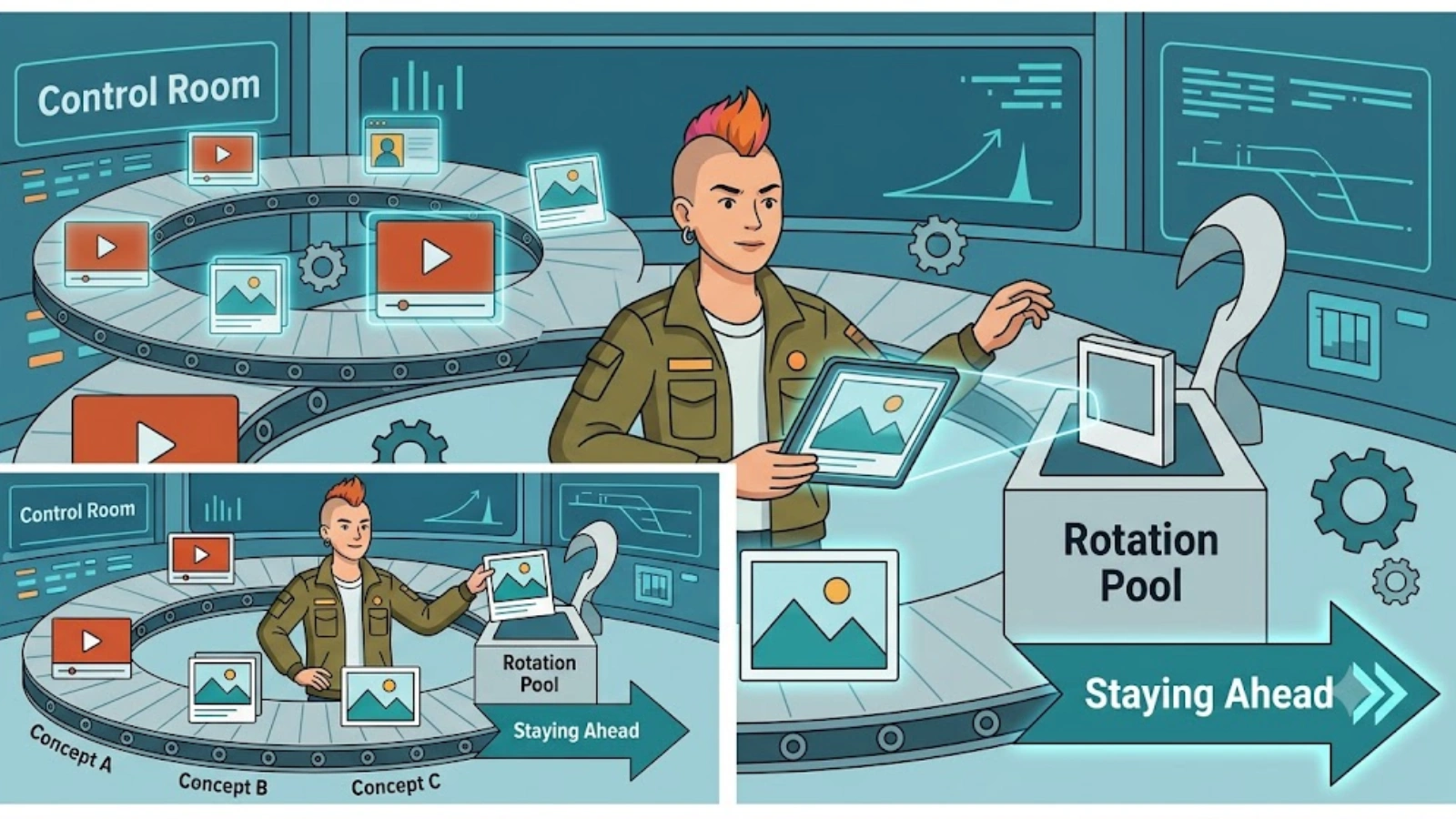
AdsGPT‘s approach addresses this with a workflow most marketers overlook. When a winning ad surfaces, you click Recreate, and the platform immediately generates five fresh variations, preserving the hook and brand DNA while rotating visuals, copy angles, and formats. You’re not starting from scratch. You’re building a bench from a proven playbook.
That’s the upstream fix. Not better fatigue dashboards, a stocked creative library before the alarm goes off.
The Production Math Most Teams Get Wrong
Here’s a benchmark worth sitting with: an AI-assisted workflow can produce 50 ad variants in a single hour. A manual workflow- brief, design, review, export- produces roughly five variants over several days. That’s a 10× volume difference, and it compounds every week you’re running ads.
Teams using AdsGPT have reported a 50% reduction in prototype-to-launch time without adding headcount. That’s not just efficiency. It’s the difference between responding to fatigue after ROAS drops and having a replacement queued before the drop starts.
The mistake most growth teams make is treating creative production as a reactive function: something that kicks into gear when performance dips. The teams consistently hitting higher ROAS treat it as a proactive one, a creative bench that’s always stocked, always rotating, always testing something fresh against the current winner.
Before blaming your AI ad generator, make sure your brief is doing its job. Here’s how to improve it: AI Ad Generator Underdelivers? Fix Your Brief
How to Build a Creative Rotation That Stays Ahead
Step 1: Identify winners early and generate variations immediately
Don’t wait for fatigue signals. As soon as a creative proves itself in the early testing window, use Recreate to spin out five variations right away. Different hooks, different visual treatments, same core offer. You want a rotation ready to deploy, not a single champion with no backup.
Step 2: Build across formats, not just across copy
Static image fatigue and video fatigue hit at different speeds and on different platforms. A brand running only static image ads will exhaust its audience faster than one rotating between image ads, UGC-style video, and product B-roll. AdsGPT covers this natively. Generate image ads with AI Ad Creatives, talking-head content with UGC Video Ads, and cinematic 4K product footage with Product B-roll Video. Spokesperson spots come through AI Avatar Ads. All from a single prompt.
Format diversity buys you time. An audience tired of your static carousel will still respond to a well-made product video. For a detailed breakdown of how format choice shapes performance across channels, see how AI ad creative generators handle multi-format output.
Step 3: Scale creative rotation with Ad Factory, not headcount
Running across Facebook, Instagram, TikTok, YouTube, Google, and LinkedIn simultaneously, AdsGPT exports sized-to-spec for all six and turns the manual resize-and-reformat step into its own bottleneck. Ad Factory handles bulk on-brand variations across all formats and platforms, so a single creative brief yields a full deployment-ready library rather than a handful of assets you individually adapt.
This is where the 80% lower production cost versus a traditional agency workflow becomes tangible. It’s not that any single asset is cheaper to produce. It’s that you produce ten times the assets in the same window.
Step 4: Let Autopilot close the loop
Even with a stocked creative bench, you need something to watch a live performance continuously. Running Autopilot lets the AI audit and optimise your Meta ads around the clock, flagging underperformers before the damage compounds, and surfacing which bench variations are ready to step in. It turns a reactive fire-fighting process into something that mostly runs itself.
Want better ad performance? Read Ad Creative Testing at Scale: A 2026 Playbook to learn how winning teams test and scale creatives.
What Actually Goes Wrong
The failure mode I see most often: teams invest in building a creative library and then don’t update their rotation logic. They generate thirty variations, launch three, and let the others sit undeployed because nobody owns the decision of when to rotate. The bench exists. It just isn’t being used.
The fix is unglamorous but critical. Pick a rotation trigger, a frequency threshold, a CTR decline, a fixed time window, and make pulling from the bench the automatic response. Not a decision that needs a meeting. A real-time optimization mindset means setting those triggers before launch, not after performance has already slipped.
The other failure mode: treating copy variation as creative variation. Swapping a background color on a static image is not rotation. Real bench depth means different formats, different hooks, different talent in UGC videos, and different visual angles on product shots. The Product Shot Studio can take a single product image and generate lifestyle and packshot variants that look like a full studio shoot; that kind of visual diversity is what genuine creative rotation actually looks like.
The Numbers That Make This Concrete
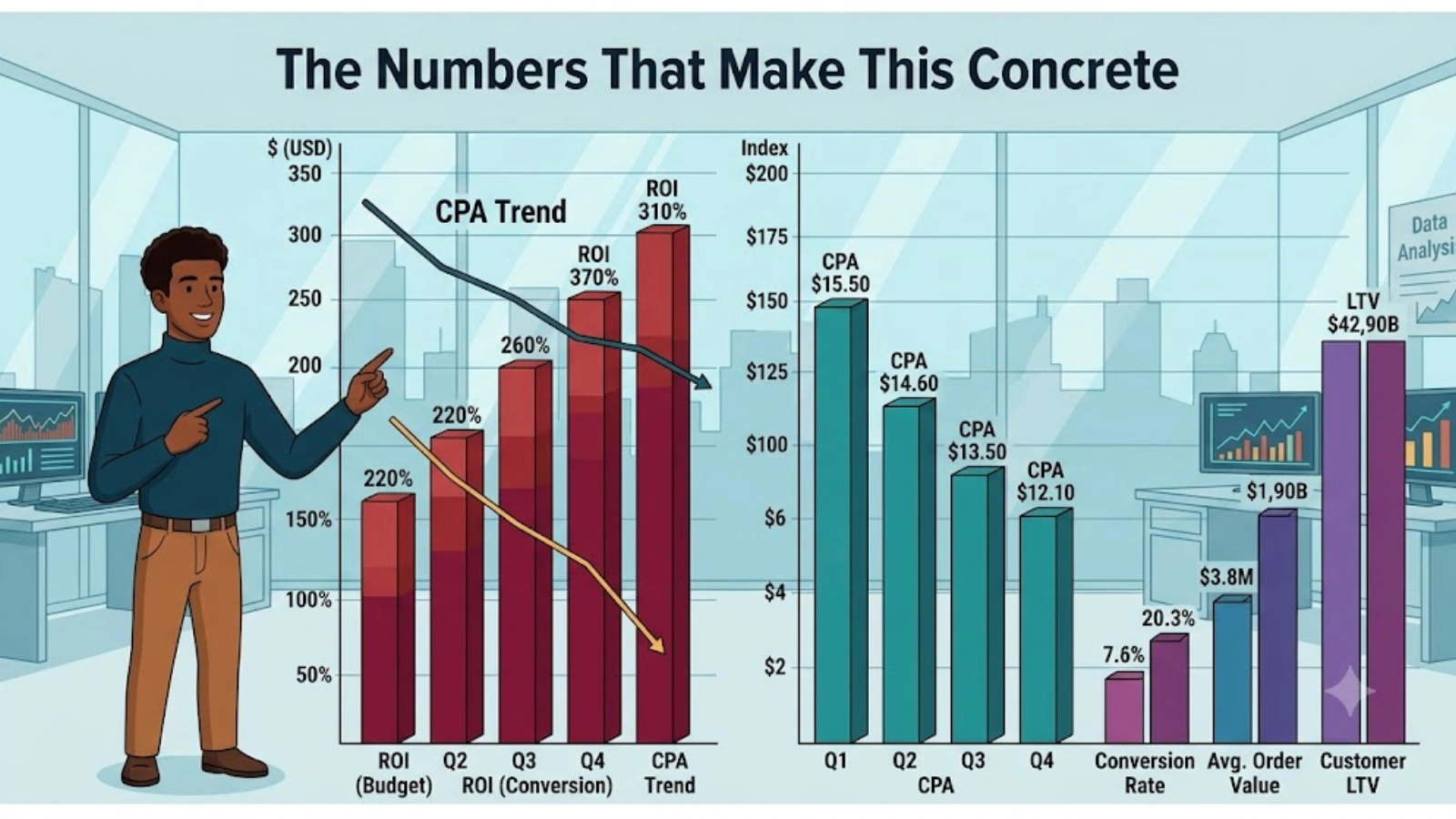
Across more than 1 million ads generated on the platform and 10,000+ active marketers, the pattern behind a reported 4.8× higher ROAS within six weeks isn’t better targeting or bigger budgets. It’s a consistent creative refresh cycle built on faster production. Those figures reflect what happens when you stop treating creativity as a one-time production event and start treating it as an ongoing operation.
For a closer look at how creative fatigue manifests across different ad types and what the early signals look like in practice, our deep dive on creative fatigue is worth reading before you set your rotation triggers.
Creative fatigue is inevitable. The only variable is whether you have the production infrastructure to outrun it. If your answer to a fatiguing ad is “let’s brief the designer,” you’re already behind.
Start your free AdsGPT trial and build your creative bench before your winning ad peaks.

MOST POPULAR