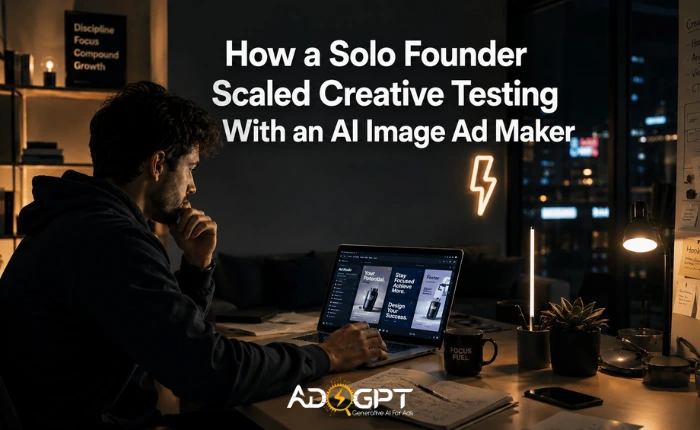
At 1:47 AM, the founder was still editing ad creatives.
Again.
Three tabs of Canva were open. A half-finished coffee sat next to the keyboard. The product photos looked repetitive, the headlines felt weak, and tomorrow’s campaigns still were not ready.
This had become routine.
Every week followed the same exhausting cycle:
- Create ads manually
- Launch campaigns
- Wait for results
- Watch most creatives fail
- Repeat everything again
The problem was not the product.
The targeting was decent.
The landing page converted.
But creative production had become a bottleneck that was slowing the entire business down.
And as a solo founder, there was nobody else to delegate it to.
That was the moment he started looking for a better way to scale creative testing—and eventually discovered how an image ad maker powered by AI could completely change the speed of his marketing workflow.
This is not one of those unrealistic “AI made millions overnight” stories.
It is a real look at how faster creative iteration helped one founder test more ads, find winners quicker, and finally stop spending entire nights stuck designing campaigns manually.
In a hurry? Listen to the blog instead!
The Business Was Growing – But So Was The Pressure
The founder was running a small online productivity brand.
Nothing massive.
No investors. Without a creative agency. Lacking an internal marketing team.
Just one person trying to grow a business while managing:
- Customer support
- Inventory
- Emails
- Organic content
- Ad campaigns
- Product updates
At first, paid ads seemed manageable.
He launched a few campaigns on Meta and saw decent results almost immediately.
One creative performed surprisingly well.
Sales came in consistently for about two weeks.
Then performance crashed.
CTR dropped.
CPM increased.
Conversions slowed down.
At first, he assumed the algorithm was the problem.
Then he realized something important:
People were simply tired of seeing the same creatives repeatedly. As he explored new ways to improve his marketing workflow, an AI presentation maker became a practical solution for organizing campaign ideas, presenting performance insights, and developing fresh creative concepts that could be shared more effectively with collaborators and clients.
Creative Fatigue Was Quietly Killing Performance
This is where many founders struggle.
They think ad scaling is mostly about:
- Bigger budgets
- Better targeting
- More audiences
But modern advertising works differently now.
Platforms reward freshness.
The moment audiences stop engaging with your creatives, performance starts declining fast.
The founder noticed a frustrating pattern:
| Week | Ad Performance |
| Week 1 | Strong engagement |
| Week 2 | Stable conversions |
| Week 3 | Rising costs |
| Week 4 | Ad fatigue hits |
The solution sounded simple:
Create more ad variations.
The execution, however, was brutal.
The Real Problem Was Production Speed
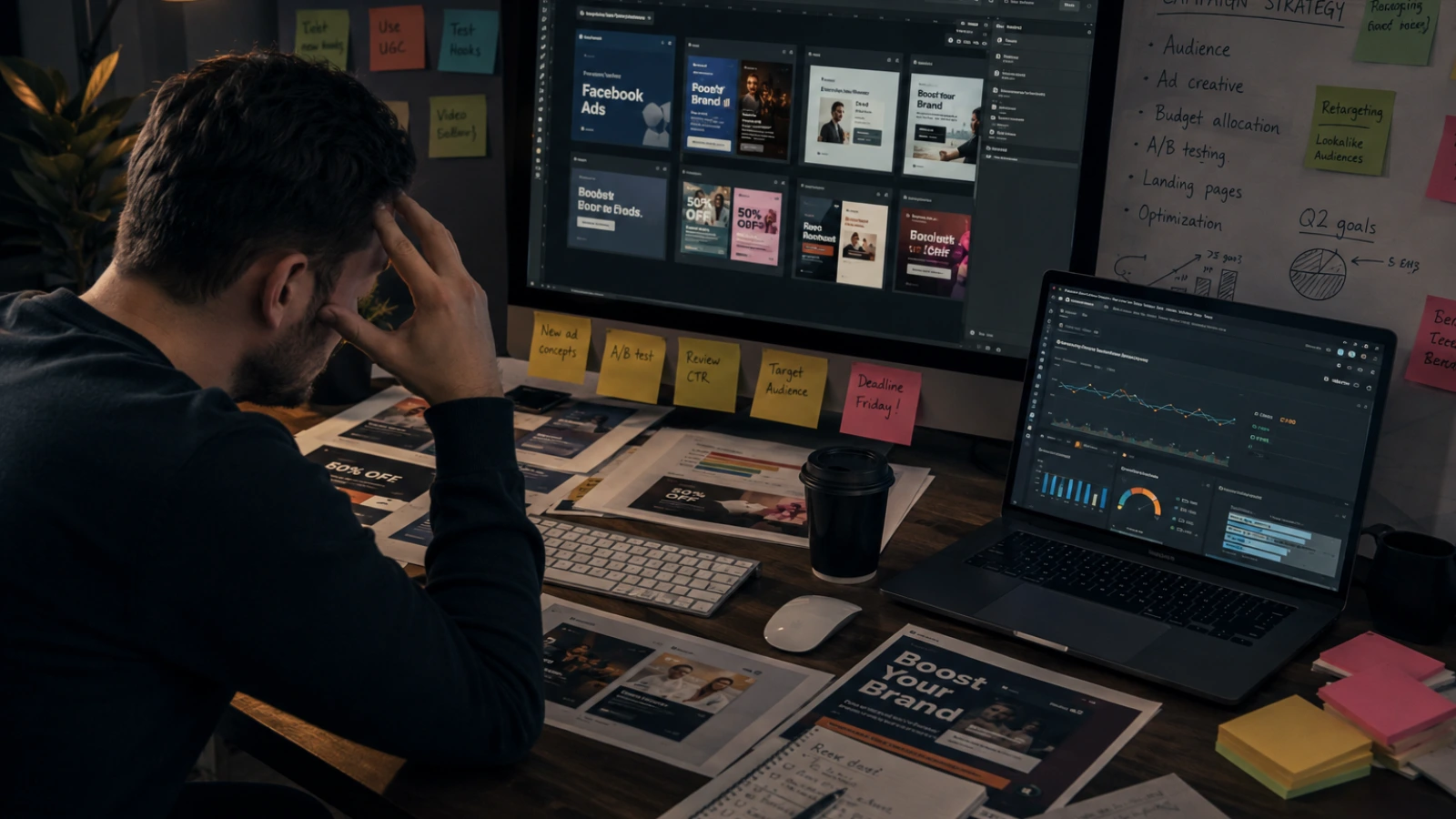
Every creative took forever to make.
The founder’s workflow looked something like this:
| Task | Average Time |
| Finding visuals | 40 mins |
| Editing layouts | 1 hour |
| Writing headlines | 25 mins |
| Resizing formats | 20 mins |
| Exporting variations | 15 mins |
That meant producing just 5–6 creatives could consume an entire day.
And most of them still failed.
That was the most frustrating part.
Hours of work disappeared instantly if an ad did not perform.
The founder eventually realized he was approaching advertising incorrectly.
He was trying to create “perfect ads” instead of running enough creative tests.
That mindset shift changed everything.
The Discovery That Changed His Workflow
One night, after spending nearly four hours building three different campaigns that barely converted, he started researching tools that could speed up creative production.
That is when he discovered an AI advertisement generator.
Initially, he was skeptical.
Most AI-generated ads online looked painfully generic:
- Robotic copy
- Recycled layouts
- Overdesigned templates
- Fake-looking visuals
But newer AI tools worked differently.
Instead of trying to create one polished “final ad,” they focused on generating multiple creative directions quickly.
That distinction mattered a lot.
Because successful advertising rarely comes from one perfect idea.
It usually comes from testing many good ideas rapidly.
The First Experiment With AI
The founder started small.
He fed the tool:
- Product descriptions
- Customer pain points
- Existing winning headlines
- Competitor angles
- Brand tone guidelines
Within minutes, the image ad maker generated multiple creative concepts.
Not just resized versions.
Completely different approaches.
One ad leaned into productivity frustration.
Another focused on saving time.
One emphasized emotional burnout.
Another used minimal, clean visuals designed to look native to social feeds.
For the first time, creative production no longer felt painfully slow.
And that changed how he approached advertising completely.
Before AI vs After AI
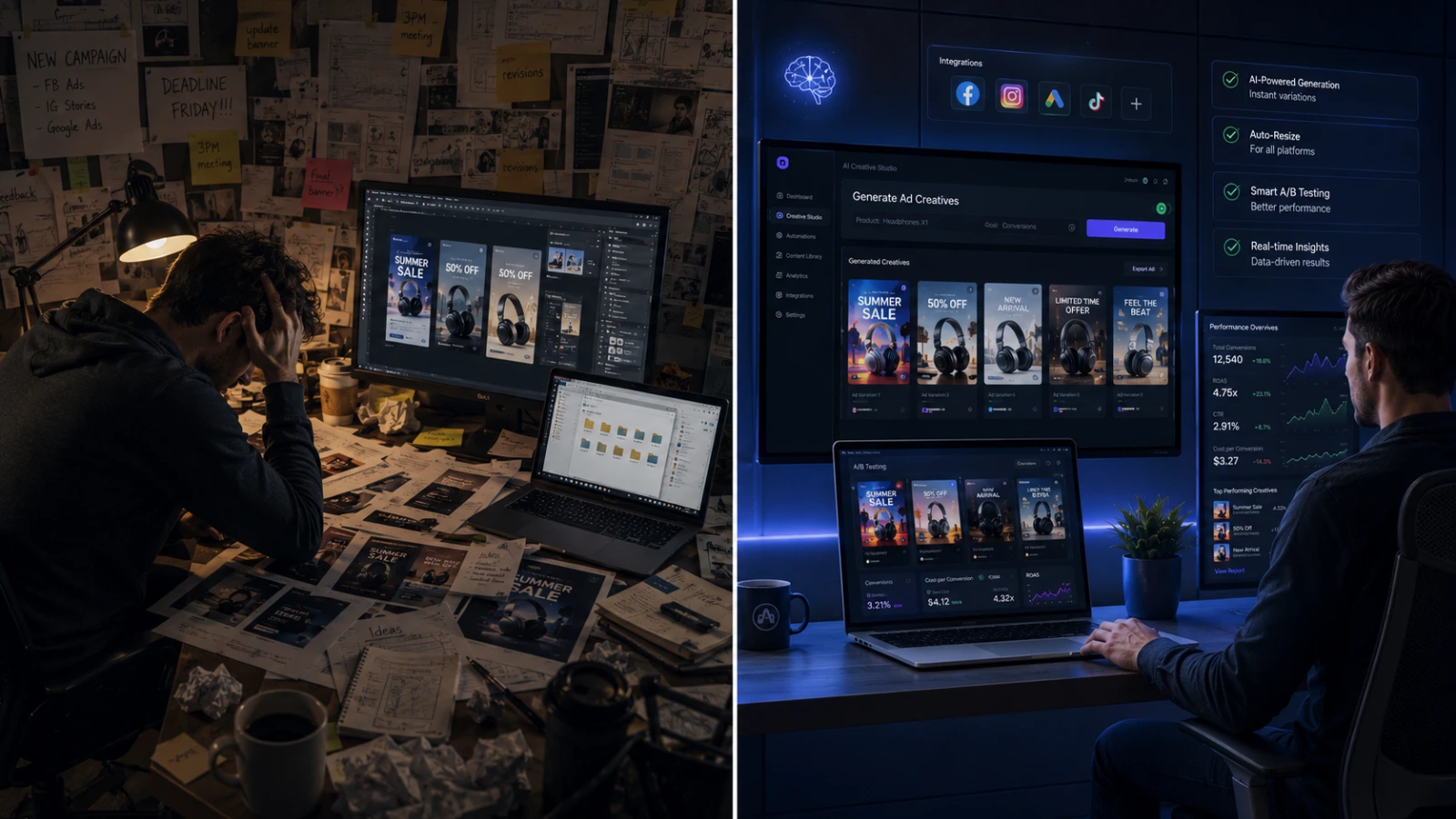
The difference became obvious within the first month.
| Workflow Metric | Before AI | After AI |
| Weekly creatives produced | 5–6 | 40+ |
| Time spent designing | 18+ hrs/week | 4 hrs/week |
| Creative testing cycles | Weekly | Daily |
| Campaign refresh speed | Slow | Rapid |
| Ability to test angles | Limited | Massive |
The biggest advantage was not even design quality.
It was speed.
Why Speed Became The Competitive Edge
Modern advertising changes incredibly fast.
A creative that works today might fail next month.
A trending visual format can dominate feeds overnight.
Audience behavior shifts constantly.
Before using ad creatives ai tools, reacting quickly was almost impossible.
By the time the founder created new creatives manually:
- Trends were already fading
- Competitors had moved faster
- Campaign momentum was lost
After switching workflows, things changed dramatically.
Now he could:
- Test trending hooks the same day
- Spin out variations instantly
- Refresh fatigued ads quickly
- Launch multiple creative angles rapidly
That agility became a massive advantage.
Especially against slower competitors still relying on traditional creative workflows.
The Most Surprising Part? Ugly Ads Sometimes Won
One unexpected lesson completely changed the founder’s understanding of advertising.
The “best-looking” ads often performed worse.
At first, he spent hours making polished creatives:
- Perfect typography
- Clean branding
- Premium layouts
- High-end visuals
But the data told a different story.
Some of the highest-performing ads looked almost casual.
Simple screenshots.
Raw-looking visuals.
Minimal edits.
Natural language.
Why?
Because they blended naturally into feeds instead of screaming “ADVERTISEMENT.”
After testing hundreds of variations, he noticed winning creatives usually shared three traits:
| Winning Trait | Why It Worked |
| Fast visual hook | Stopped scrolling immediately |
| One clear emotion | Easier to connect with |
| Native platform feel | Felt less promotional |
That insight became incredibly valuable moving forward.
The Founder Stopped Guessing
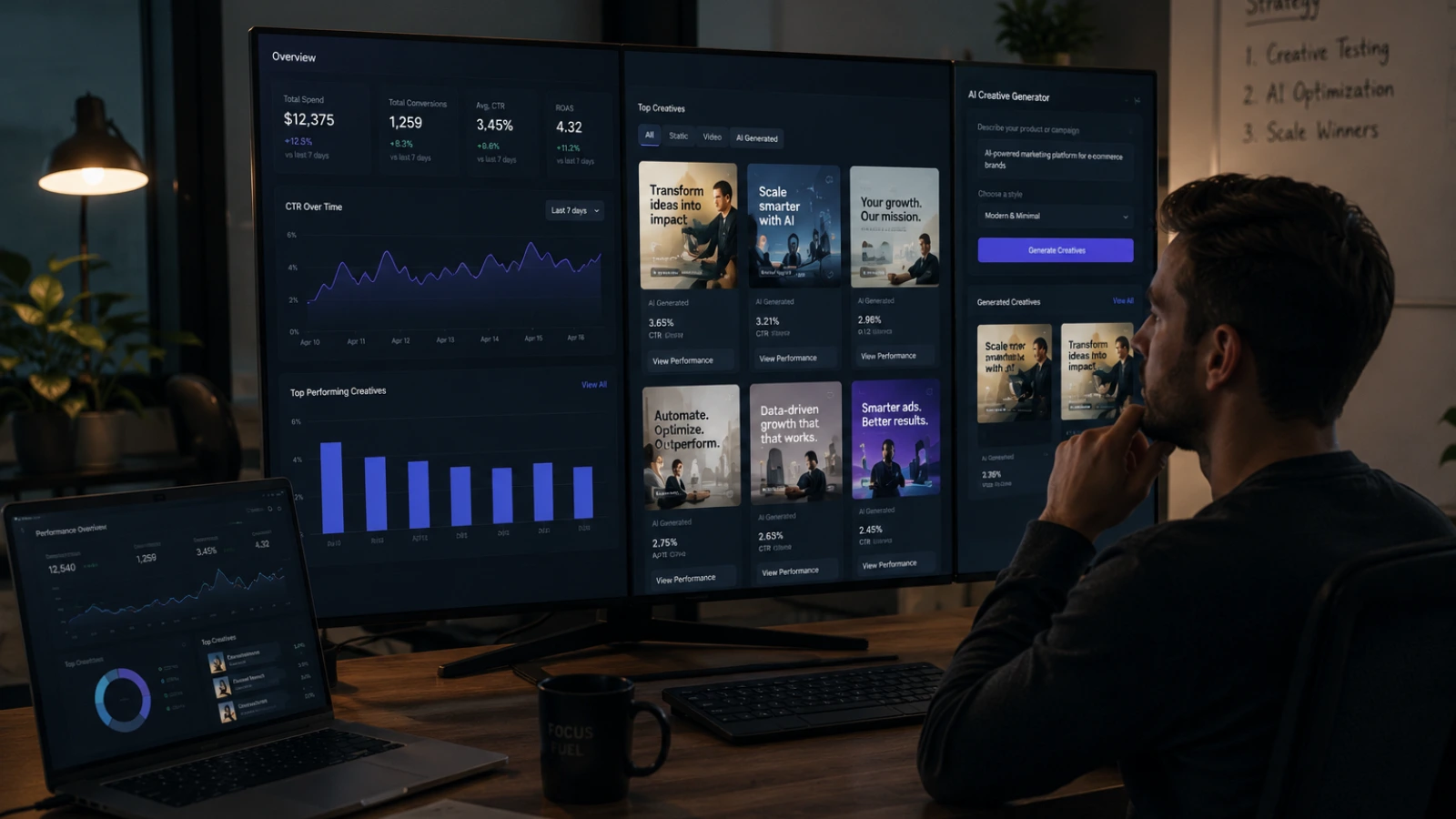
Before scaling creative testing, most decisions were emotional.
He would ask himself:
- “Does this design look premium enough?”
- “Should the CTA be larger?”
- “Maybe this font converts better?”
After running dozens of AI-assisted tests every week, those opinions stopped mattering.
The market decided what worked.
Data replaced assumptions.
And honestly, that made advertising less stressful.
Instead of obsessing over every tiny design choice, the founder focused on testing more concepts faster.
That shift improved results dramatically.
The Workflow That Finally Scaled
Eventually, the founder built a repeatable creative testing system.
Not random experimentation.
An actual process.
Here is what the workflow looked like:
Step 1: Research Customer Emotions
He studied:
- Reviews
- Reddit discussions
- Support tickets
- Customer complaints
- Product feedback
The goal was understanding emotional pain points.
Also Read:
How to Use an AI Ad Maker to craft Personalized Ad Campaigns 5x Faster
How an EdTech Brand Replaced 3 Freelancers With an AI Ad Maker
Step 2: Build Multiple Creative Angles
Each problem became several messaging directions.
For example:
| Customer Pain Point | Ad Angle |
| Constant distractions | “Finally focus without chaos” |
| Burnout | “Work smarter, not longer” |
| Lack of productivity | “Get more done in less time” |
| Overwhelming workload | “Simplify your entire workflow” |
Step 3: Use The AI Workflow
The ai advertisement generator then produced:
- Visual concepts
- Layout variations
- Hook combinations
- Platform-specific formats
This massively reduced production time.
Step 4: Launch Small Creative Tests
Instead of risking huge budgets immediately, the founder launched small experiments first.
The goal was simple:
Find promising creatives quickly.
Step 5: Scale Winning Variations
Once a creative showed strong metrics:
- More versions were created
- New hooks were tested
- Additional audiences were targeted
This turned scaling into a structured process instead of random luck.
The Hidden Advantage Nobody Talks About
Most people think AI’s biggest benefit is saving time.
But for the founder, the real advantage was mental clarity.
Before adopting an image ad maker, creative production consumed enormous mental energy.
Every day involved repetitive tasks:
- Resizing assets
- Rearranging layouts
- Exporting formats
- Rewriting tiny sections of copy
It became draining.
After automating large parts of production, he finally had more mental space for:
- Offer optimization
- Customer research
- Funnel improvements
- Brand positioning
- Strategy
Ironically, removing repetitive creative work actually made the marketing better overall.
Why Smaller Brands Suddenly Have An Opportunity
For years, large brands dominated paid advertising because they had:
- Creative agencies
- Dedicated designers
- Video editors
- Production teams
- Massive budgets
Solo founders could not compete at that level.
AI changed that equation.
Now smaller businesses can generate and test creative concepts at a scale that was previously impossible without large teams.
That does not mean AI replaces good marketing.
Far from it.
Weak messaging still fails.
Bad offers still struggle.
But production bottlenecks are no longer the massive limitation they once were.
And that changes everything for lean businesses.
What Actually Made The Ads Convert Better
After months of testing, the founder noticed something important:
The best ads were not necessarily the smartest.
They were the clearest.
The winning creatives usually:
- Focused on one emotion only
- Solved one obvious problem
- Used conversational language
- Created immediate curiosity
- Looked natural on the platform
This is where ad creatives ai became incredibly useful.
Instead of spending hours manually creating every variation, the founder could rapidly test:
- Emotional tones
- Different hooks
- Visual formats
- CTA placements
- Audience-specific messaging
That volume increased the chances of finding winning combinations much faster.
This is exactly where the founder eventually started using AdsGPT more seriously.
At first, it was simply to speed up creative production.
But over time, it became a major part of the entire testing workflow.
Instead of juggling multiple tools for:
- Ad creatives
- Video generation
- Competitor research
- Platform resizing
- Creative variations
The founder could manage everything in one place while continuously testing new angles at scale.
And for a solo founder, that kind of workflow efficiency matters a lot more than people realize.
How AdsGPT Helped Scale Creative Testing Faster
As testing volume increased, manually managing creatives across multiple platforms became messy very quickly.
That is where AdsGPT stood out.
Instead of acting like just another design tool, it helped streamline the entire creative testing process — from idea generation to launch.
Here are some of the features that made the biggest difference:
| AdsGPT Feature | How It Helped |
| AI Image Ad Generator | Generated platform-ready ad creatives in seconds |
| UGC Video Ads | Created native-looking social ads without filming |
| AI Avatar Ads | Helped test talking-head style creatives quickly |
| 500M+ Competitor Ad Database | Showed winning ad trends and competitor angles |
| One-Click Creative Variations | Made scaling winning ads much faster |
| Multi-Platform Support | Generated creatives for Meta, TikTok, LinkedIn, YouTube, and more |
| Brand Identity Memory | Kept visuals and messaging consistent across campaigns |
| Meta Ad Launch Integration | Simplified launching campaigns directly from the workflow |
One feature the founder used heavily was the competitor ad database.
Instead of guessing what might work, he could study:
- Active ad trends
- High-performing hooks
- Visual styles competitors were using
- Winning formats across industries
That made creative testing feel more strategic instead of random.
Another major advantage was speed.
With AdsGPT, the founder could generate:
- Image ads
- UGC creatives
- B-roll video ads
- AI avatar videos
- Multiple ad variations
within minutes instead of spending entire days creating assets manually.
That completely changed the pace of experimentation.
Final Thoughts On AdsGPT
Creative testing moves fast, and manually producing ads can quickly become a bottleneck for solo founders. AdsGPT helps simplify that process with AI-generated creatives, rapid variations, and faster campaign execution.
If you want to test more ideas and scale campaigns faster, AdsGPT is worth exploring.
The Biggest Lesson From The Entire Journey
The founder originally believed scaling ads required:
- Bigger budgets
- Better design skills
- A large marketing team
But eventually, he realized something else entirely.
The brands winning today are often the ones that:
- Test faster
- Learn quicker
- Adapt constantly
- Refresh creatives aggressively
Execution speed matters more than ever now.
And removing creative bottlenecks unlocked growth that previously felt impossible as a solo founder.
Final Thoughts
Most solo founders do not lack ideas.
They lack time.
Modern advertising demands endless experimentation, fresh creatives, and constant adaptation. Trying to manage all of that manually quickly becomes exhausting—especially when you are running an entire business alone.
That is exactly why this founder turned to an image ad maker.
Not to replace creativity.
But to scale it.
The biggest transformation was not simply producing more ads.
It was building a repeatable creative testing system where:
- New ideas could launch faster
- Winning creatives could scale quicker
- Ad fatigue became easier to manage
- Decisions became data-driven instead of emotional
And in today’s digital advertising landscape, the brands that can test, adapt, and iterate the fastest usually end up ahead.
FAQs: –
What is an AI image ad maker?
An image ad maker is an AI-powered tool that helps businesses generate ad creatives quickly using prompts, templates, or brand inputs. Instead of designing everything manually, marketers can create multiple ad variations for platforms like Meta, TikTok, LinkedIn, and Google within minutes.
How do solo founders use AI for creative testing?
Solo founders use AI tools to generate multiple ad concepts, test different hooks, experiment with visuals, and launch creatives faster. This helps them scale creative testing without needing a large design or marketing team.
Can AI-generated ads actually perform well?
Yes, many AI-generated ads perform extremely well when paired with strong messaging and clear audience targeting. In fact, some brands see better engagement from simple, native-looking AI creatives compared to heavily polished ads.
What are the benefits of using AdsGPT for ad creation?
AdsGPT helps marketers create image ads, UGC videos, AI avatar ads, and creative variations quickly. It also includes competitor ad research, multi-platform support, and rapid testing features that make campaign scaling much faster.
Why is creative testing important in modern advertising?
Creative testing helps advertisers discover which visuals, hooks, and messaging resonate most with audiences. Since ad fatigue happens quickly on modern platforms, continuously testing fresh creatives is essential for maintaining strong performance and lowering advertising costs.
MOST POPULAR