
Content creation has never been more demanding. Brands need blogs, ads, social posts, emails, and scripts all at once, all the time. That’s exactly why an AI content generator has become one of the most valuable tools in any modern marketing stack.
An AI Content Generator saves hours of manual work by producing well-structured, ready-to-use content from simple inputs. Whether you run a small business, manage a marketing team, or create content independently, these tools are designed to keep up with the pace without sacrificing quality.
In this guide, you will discover the best AI content generator tools available right now, what makes each one worth considering, and how to choose the right one for your specific needs.
Listen To The Podcast Now!
What Is an AI Content Generator?
An AI content generator is a software tool that uses artificial intelligence and natural language processing to create written content automatically. You provide a topic, a brief, or a few keywords, and the tool produces structured, readable content in seconds.
These tools are trained on large datasets, which helps them understand context, tone, and intent. They can produce everything from short social media captions to long-form blog articles, product descriptions, email sequences, and ad copy.
The technology has evolved significantly. Earlier versions produced generic, repetitive output. Modern tools now adapt to brand voice, match specific formats, and generate content that feels genuinely written rather than machine-produced. For businesses scaling content production without scaling headcount, this capability is no longer optional; it’s essential.
Why Businesses Are Turning to AI Content Generators in 2026?

The demand for content has outpaced what most teams can realistically produce manually. Publishing consistently across blogs, social media, email, and paid channels simultaneously requires resources that most businesses simply don’t have.
This is where an AI content generator fills the gap. It doesn’t replace creative thinking; it handles the time-consuming execution so teams can focus on strategy, editing, and distribution.
Businesses are also dealing with increased competition for attention online. Content quality and publishing frequency both matter. Falling behind on either creates real consequences for visibility and engagement.
Teams using AI content generator tools report significant reductions in content production time, lower costs compared to freelance hiring, and more consistent output across campaigns. The productivity advantage alone makes adoption worth exploring for any content-driven business.
Key Benefits of Using an AI Content Generator:
The benefits of using an AI content generator go well beyond speed. Here’s what makes these tools genuinely useful for content teams and solo creators alike:
- Faster Content Production: Generate first drafts, outlines, and complete articles in minutes rather than hours. This allows teams to publish more frequently without burning out.
- Lower Production Costs: Reduce dependency on expensive freelance writers or large in-house teams. AI handles volume while humans focus on strategy and quality control.
- Consistent Brand Voice Most modern tools allow tone and style customization, ensuring every piece of content feels on-brand regardless of who reviews it.
- Scalability Across Channels From email to social media to long-form blogs, a single AI content generator can handle multiple content types simultaneously without losing consistency or quality across formats.
How to Choose the Right AI Content Generator?

With dozens of options available, selecting the right AI content generator requires looking beyond surface-level features. Here are the key factors worth evaluating before committing to any platform:
- Content Quality and Accuracy Test the tool with real prompts from your industry. The output should be coherent, factually sound, and minimal in editing requirements.
- Customization Options Look for tools that allow tone adjustments, brand voice settings, and format flexibility. Generic output that sounds the same for every brand is a limitation.
- Platform Coverage: Some tools specialize in blog content. Others handle ad copy, emails, or social media posts. Choose one that covers your primary content channels.
- Pricing and Scalability Compare free plans, trial options, and paid tiers. The best free AI content generator options let you test quality before any financial commitment.
Top Features to Look for in an AI Content Generator:
Not every AI content generator is built equally. These are the features that separate tools worth using from those that slow you down:
- Multi-Format Output: A strong tool generates blogs, captions, emails, ad copy, and product descriptions from a single platform without switching between tools.
- SEO Optimization: Built-in keyword integration, meta description generation, and readability scoring help content perform better in search results without additional tools.
- Tone and Style Control: Whether you need formal, conversational, persuasive, or informational content, the tool should adapt without manual rewriting.
- AI Social Media Content Generator Capability: The ability to generate platform-specific social posts, sized and styled for LinkedIn, Instagram, Twitter, and Facebook, saves significant time for social media teams managing multiple accounts daily.
- Editing and Refinement Tools: Built-in rewrite, summarize, and expand features allow quick refinement without leaving the platform.
Also Read:
AdsGPT: The AI Content Generator Built for Marketers:
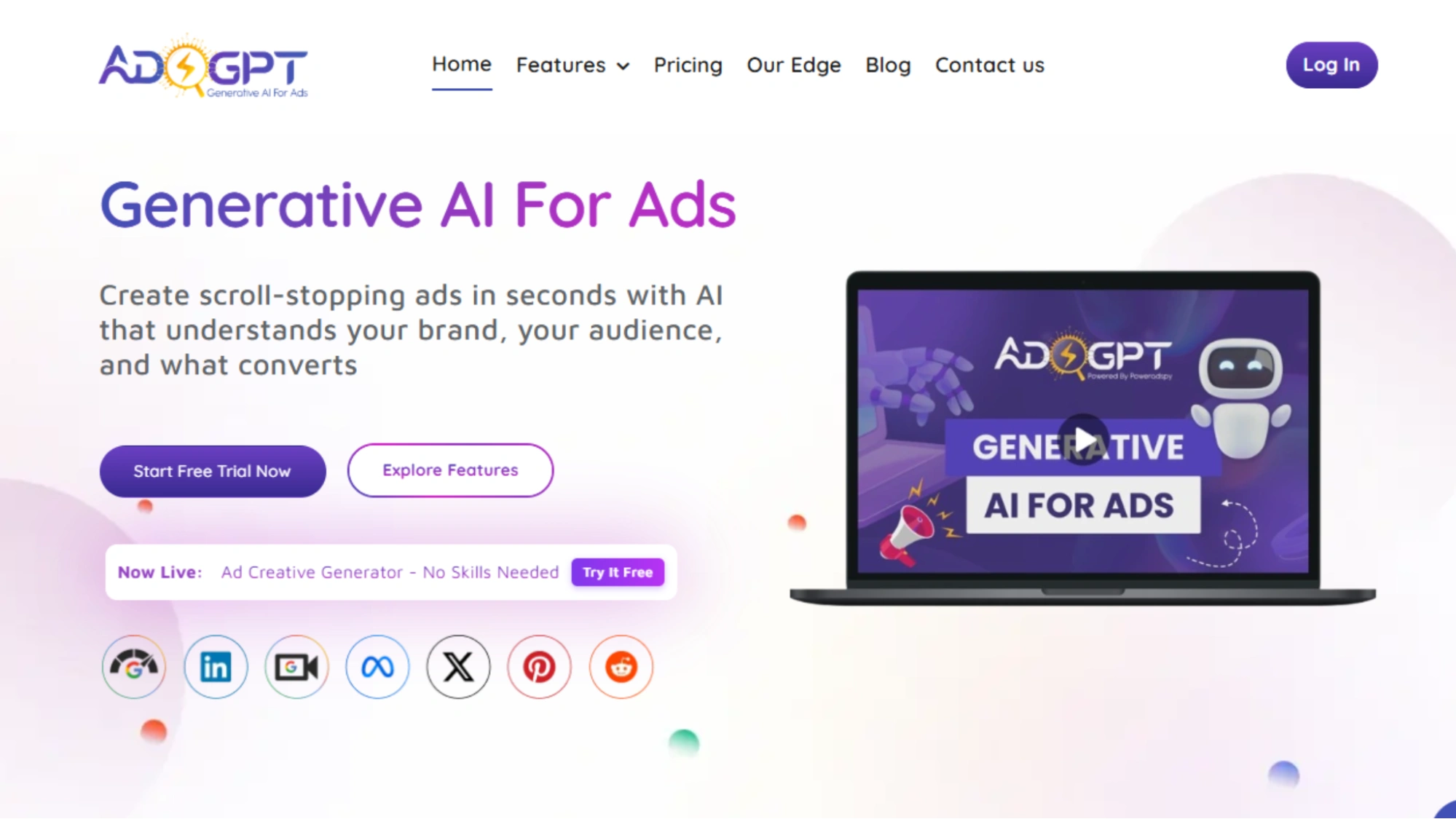
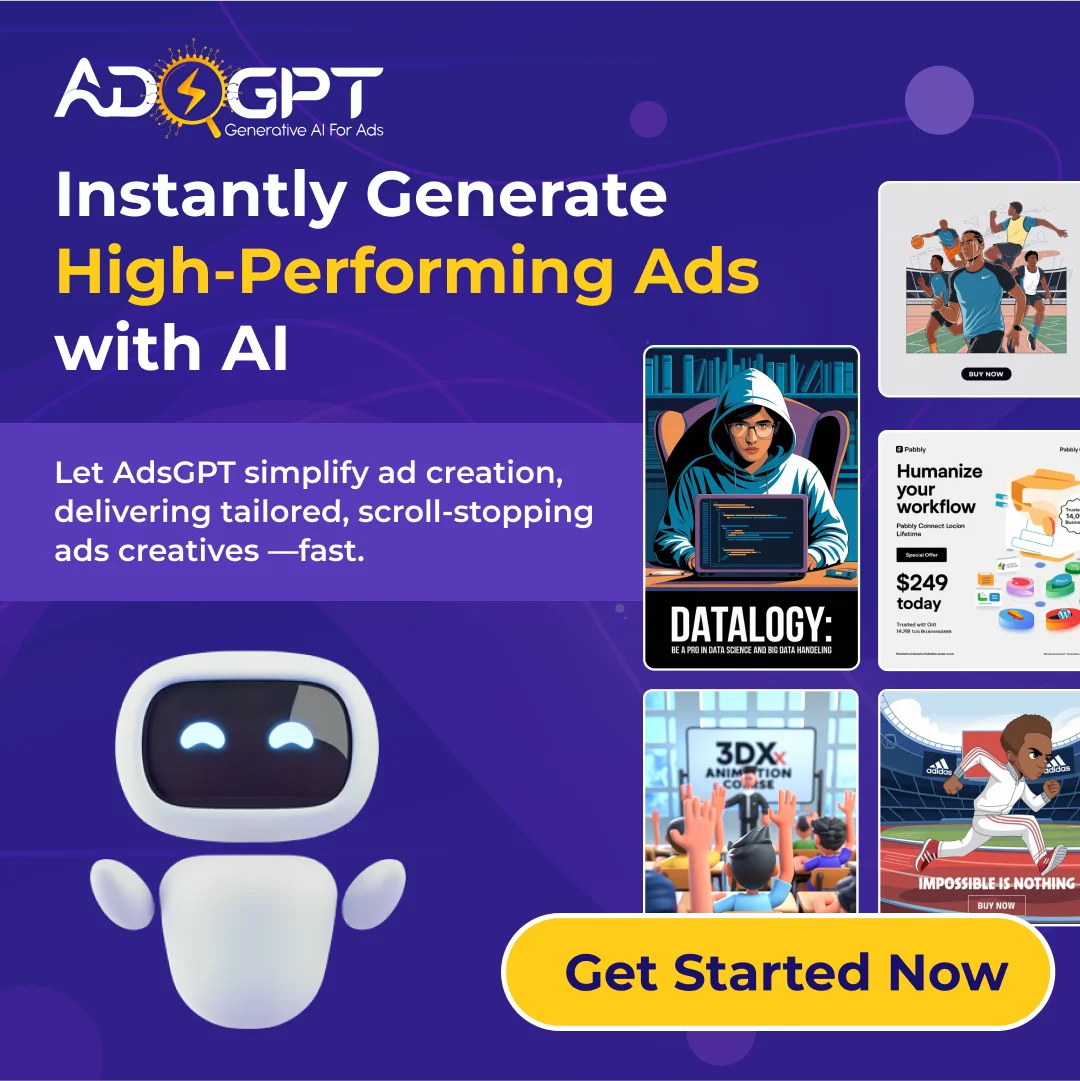
If your primary focus is advertising content, AdsGPT is one of the most focused and capable tools available. It functions as a dedicated AI marketing content generator built specifically for creating high-converting ad creatives and copy across major platforms.
Key Features:
- Generate scroll-stopping ad creatives and copy for Meta, Google, LinkedIn, Pinterest, Twitter, and more.
- Smart Brand Memory that auto-applies your logo, brand tone, and description across every creative
- Competitor-inspired ad creation, input a competitor’s name, and get tailored creatives that highlight your unique value. e
- Dynamic image styles including Realistic, 3D, Anime, and General formats
- Multiple aspect ratios (1:1, 3:4, 16:9) optimized for feeds, stories, and video formats
- Analytics with market trend data, ad popularity index, and performance comparison
Over 10,000 marketers use AdsGPT to create professional ads faster without designers or copywriters.
AI Content Generator vs Traditional Content Creation:
The comparison between traditional content creation and using an AI content generator often comes down to time, cost, and consistency.
Traditional content creation relies on skilled writers, creative briefs, revision rounds, and approval cycles. For one piece of quality content, this process can take days. For a full content calendar, it can require an entire team.
An AI content generator compresses that timeline dramatically. First drafts are ready in seconds. Revisions happen within the tool. Multiple content formats are produced from a single input. Teams that previously published two blog posts per week can now publish daily without increasing headcount.
However, human judgment still matters. AI handles structure, language, and speed. Humans add strategic context, brand nuance, and editorial oversight. The strongest content workflows combine both, using AI for production and humans for direction, refinement, and final approval before publishing.
Common Mistakes to Avoid When Using an AI Content Generator:
Getting strong results from an AI content generator requires more than just pressing generate. These are the mistakes that consistently reduce output quality:
Using vague prompts and short, unclear instructions produces generic content. The more specific your prompt, including tone, audience, purpose, and format, the better the output.
Skipping the editing step, AI output should always be reviewed. Even high-quality tools occasionally miss nuance, produce repetitive phrasing, or generate factual inaccuracies that need correcting before publishing.
Ignoring brand voice, publishing AI content without adapting it to your brand’s specific tone creates inconsistency across channels. Most tools offer customization features; use them.
Over-publishing without a strategy. Producing more content faster is only valuable if it serves a clear purpose. More volume without strategic direction rarely improves results and can actually reduce content quality perception over time.
Conclusion:
The right AI content generator doesn’t just save time, but it fundamentally changes what a small team or solo creator can realistically achieve. From blog posts and email campaigns to social media content and high-converting ad copy, these tools handle the production side so you can focus on strategy, creativity, and growth.
For marketers specifically focused on paid advertising, AdsGPT delivers a level of specialization that general AI content generator tools simply don’t match. For broader content needs, evaluating tools based on quality, customization, and platform coverage ensures the right fit for your workflow.
FAQ’s:
Q1. Is an AI content generator suitable for beginners?
Ans: Yes. Most tools are designed for users without technical backgrounds. Simple interfaces and guided prompts make them accessible from day one.
Q2. Can an AI content generator replace a copywriter?
Ans: Not entirely. AI handles volume and speed. Experienced copywriters add strategic thinking, emotional nuance, and brand expertise that AI tools currently cannot replicate fully.
Q3. What is the best free AI content generator to start with?
Ans: Several platforms offer strong free tiers, including basic blog generation and social media copy. AdsGPT offers a free trial specifically for ad creative and copy generation
MOST POPULAR