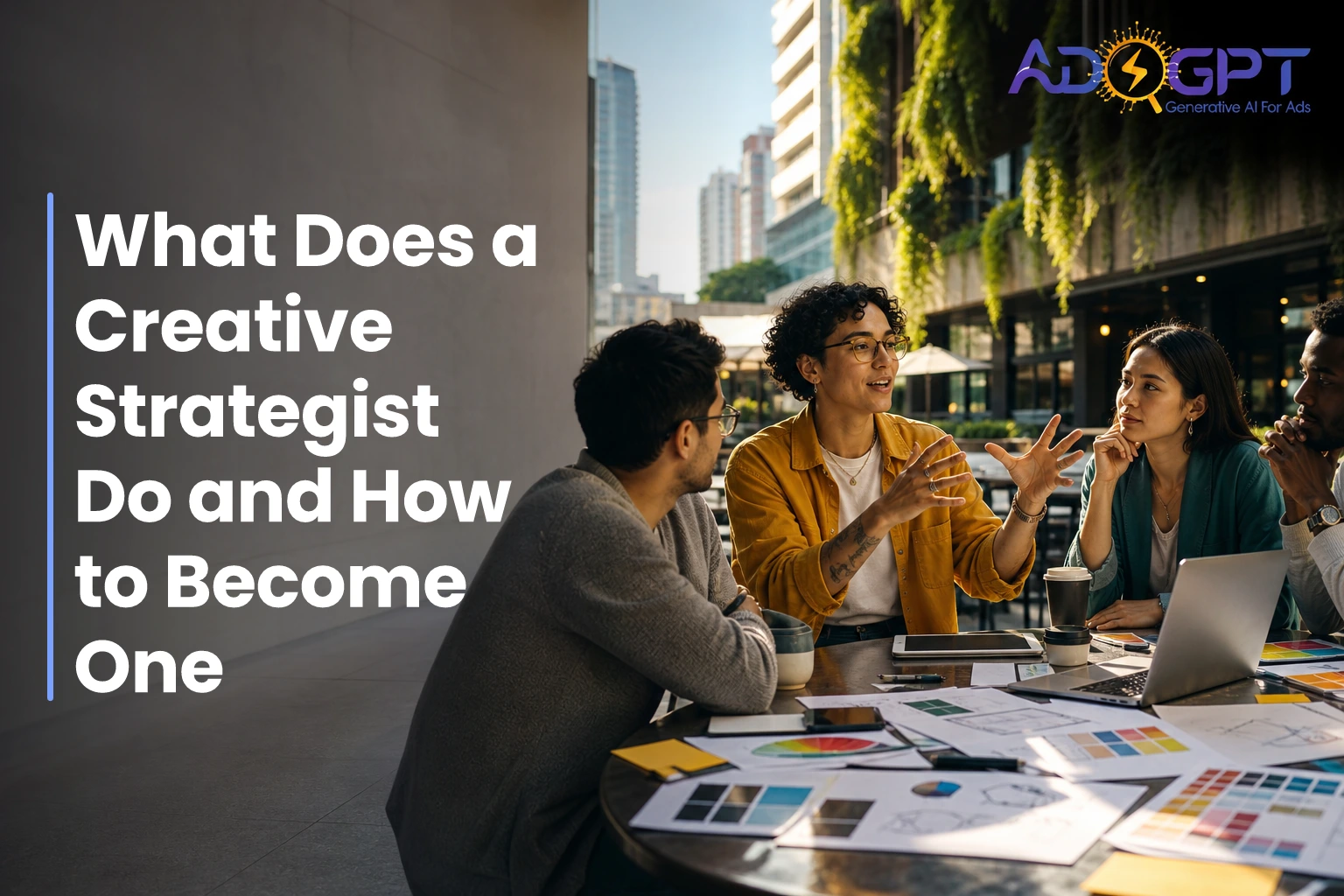
Great creatives don’t win on looks; they win on proof and timing. You’re asking “does creative strategist do” work that blends data with ideas? Yes: a creative strategist studies the audience and market, writes the brief, turns insights into testable ad concepts, guides production, and reads results to iterate.
In practice, you bridge creative and performance. You decide what to make, why it should convert, and how to test it fast. Then you sort signal from noise, keep what works, and cut what doesn’t. In 2026, that mix of research, concept chops, and measurement is the difference between lucky hits and repeatable wins.
Here’s the short path: learn to read data without losing the human story, write briefs that spark ideas, and test hooks across Meta, TikTok, Google, and more. Then you’ll speak the language of media buyers, art directors, and founders, and get hired for it.

What Is a Creative Strategist and What Do They Actually Do?
A creative strategist is the connective tissue between research, creative, and revenue. If you’ve wondered “what does creative strategist do beyond pitch decks?”, here’s the real job: you turn audience truth into ads people actually respond to, then you scale the ones that perform.
Unlike an art director, you don’t own the final look. You define the why, the angle, the hook, and the proof. Unlike a copywriter, you don’t write every line.
You set the message and give the writer the angle and the constraints that make lines hit. Unlike a media buyer, you don’t optimize bids. You feed them testable creative that can win the auction in the first three seconds.
Moreover, your day splits into five loops:
- Audience research: pull reviews, search terms, and support tickets to spot pains, desires, and exact phrases.
- Brief development: write a tight brief with objective, audience, insight, and constraints (length, aspect ratio, claims allowed).
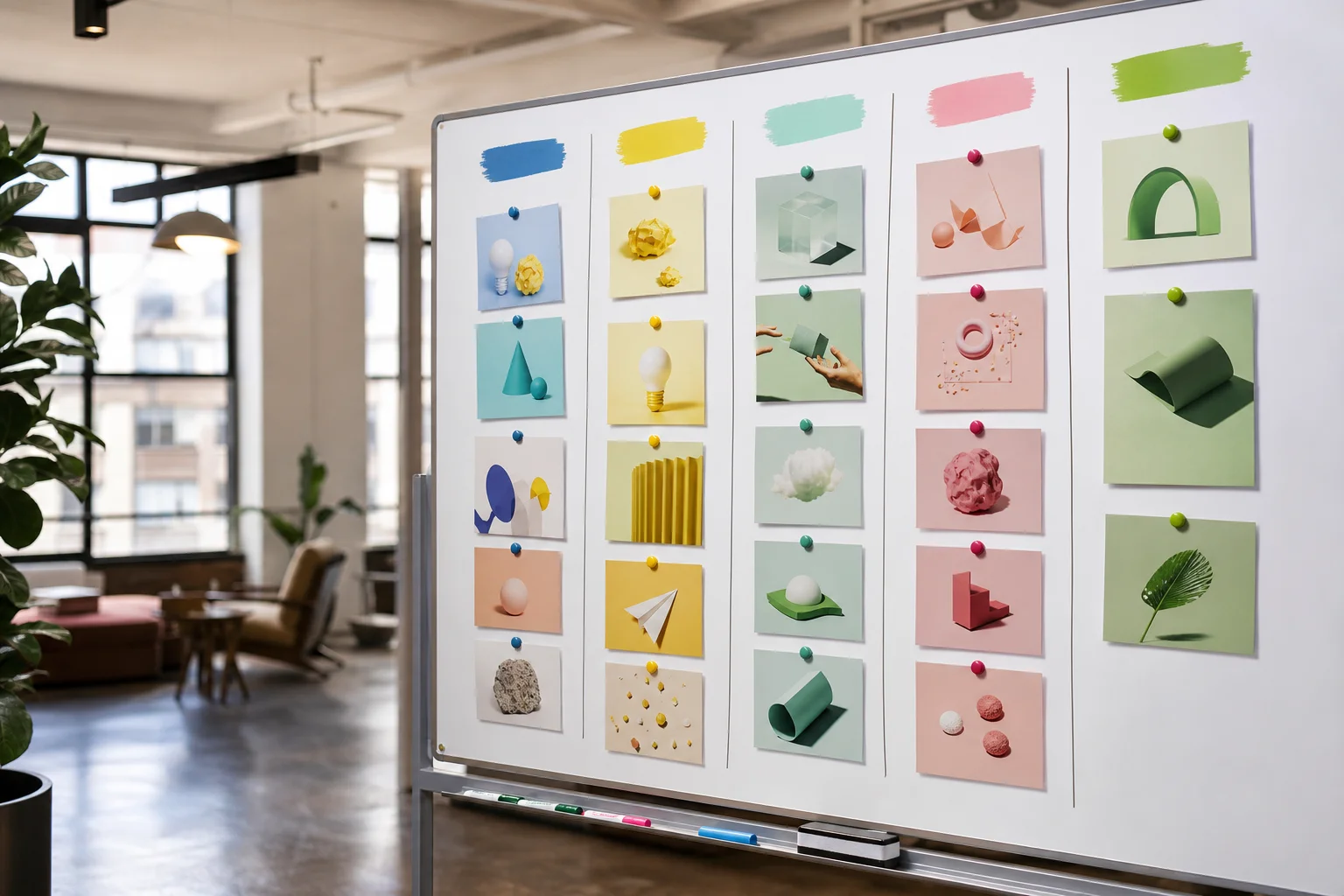
- Concept ideation: map 5–10 hooks per angle, each with proof (demo, before/after, social proof).
- Performance analysis: read click-through rate and hook rates, then tag creatives by angle, format, and claim to find winners.
- Cross-team collaboration: align with media, design, video, and product so the message stays sharp from storyboard to spend.
How It’s Different From Creative Leadership
- Art director: owns visual craft; you own the message strategy and test plan.
- Copywriter: crafts words; you define the angles and evidence that words must carry.
- Media buyer: steers spend; you feed them test-ready concepts and reporting tags.
Therefore, a strong strategist moves fast between docs, dashboards, and dailies. You set clear bets, test fast, and explain results in plain language.
“Insight without action is trivia. Action without insight is waste.”
Also Read!
How to Become a Creative Strategist: A Step-by-Step Framework
If you want a clear path into the role, this is the ladder. And yes, this answers the real “does creative strategist do” skill stack you’ll need to show, not just know.
Step 1: Build foundational skills (data literacy + creative thinking)
Start with two habits: read data and spot stories. In a spreadsheet, track hooks, formats, and results by ad. Then, in a notebook, reframe one insight into five angles. As a result, you’ll learn to translate numbers into ideas and ideas into tests.
Step 2: Study winning ad campaigns across platforms
Each week, pick three brands and study their ads across Meta, TikTok, and YouTube. What’s the hook? Where’s the proof? Which social proof is used, star ratings, press, or user quotes? Therefore, screenshot and tag each ad by angle (price, speed, risk reversal, authority).
Step 3: Learn to write creative briefs
Your brief should fit on one page:
- Objective: the one metric that proves success.
- Audience: 2–3 sharp traits and exact phrases they use.
- Insight: the tension or belief the ad must flip.
- Proof: demo, guarantee, stat, or story that backs the claim.
- Constraints: time, formats, do/don’t say list, must-include CTAs.
Step 4: Build a portfolio with spec or freelance work
Create three spec campaigns for brands you like. For each, include the brief, 5 hooks, sample scripts/frames, and a simple test plan. Furthermore, if you can land a small freelance project, ship one round, report results, and include a “what I’d try next” slide.
Step 5: Master performance metrics (CTR, ROAS, hook rates)
Know how to read the early signs. Hook rate tells you if the opening lands. CTR shows if your angle and call to action connect. ROAS shows if the traffic buys. For clarity, define thresholds for “keep”, “fix”, and “kill” before you spend.
- CTR: see click-through rate for a plain-English primer.
- ROAS: track revenue divided by ad spend; pair it with contribution margin to avoid false wins.
- Hook rate: percent of viewers who watch past the opening seconds; log by angle.
Step 6: Develop platform fluency (Meta, TikTok, Google, etc.)
Each platform has a native “language.” On TikTok, pattern interrupts and quick cuts win. On Meta, UGC cutdowns, carousels, and stat-led graphics still pull. On YouTube, hook fast, then earn the longer watch with a demo. Therefore, plan your ideas by platform, not just by product.
Get instant creative prompts →
Common Mistakes Aspiring Creative Strategists Make
You can save months by avoiding traps that stall new strategists. And yes, fixing these will improve how you answer “does creative strategist do” in interviews with proof, not buzzwords.
First, don’t ignore data. Gut is a starting point, not a verdict. If your hook feels right but your hook rate tanks, adjust the opening, proof point, or pacing.
Second, don’t copy competitors blindly. Instead, ask why their ad works: tension, proof, offer, or format. Then reframe it for your audience and brand.
Third, don’t treat all platforms the same. A 15-second TikTok might fail on YouTube Pre-Roll without context. Fourth, skipping competitive research leaves you guessing the bar. You need to know what your viewers have seen 100 times already, so you can zag.
- Ignoring tests: If you never A/B test openings, you won’t find cheap gains.
- Overvaluing polish: A pretty ad that doesn’t persuade is a cost, not an asset.
- Single-concept launches: Launching one idea hides the lesson. Launch three angles, each with a clear, different hook.
Moreover, never measure in a silo. For example, a high CTR with a low add-to-cart rate can signal curiosity without trust. Therefore, pair top-of-funnel metrics with mid- and bottom-funnel reads before calling a winner.
“Pretty is a nice-to-have. Persuasion pays the bills.”
Essential Tools and Resources for Creative Strategists
You don’t need dozens of tools. You need a tight stack that shows you the field, speeds up concepting, and proves results. Here’s where “does creative strategist do” work gets faster without making it simple.
Competitor research
- Meta Ad Library: search live ads by brand, keyword, or country.
- Foreplay: save, tag, and search swipe files across teams.
- Tools like AdsGPT: one option among several that pairs competitor intel with generation. AdsGPT includes a 500M+ competitor ad database, supports 9 ad platforms, and can Generate 60 High-Converting Ads in 60 Seconds. It also lists “Competitor Intel” and BrandIQ features, plus Meta Integration and an Autopilot mode. For risk-free trials, there’s a free plan with 35 creatives and no credit card. With 10K+ happy marketers and SOC 2 Type II in place, it’s built for teams that care about speed and security.
Ad creation
- Figma and Canva: fast mockups, storyboards, and simple stat graphics.
- AI-powered creative platforms: draft UGC scripts, B-roll beats, or product shots. Keep a human in the loop for claims and brand voice.
Analytics and dashboards
- Native dashboards (Meta, TikTok Ads Manager, Google Ads): fast reads on CPM, CTR, and early hook signals.
- Triple Whale: tie ad spend to revenue cohorts for post-click truth.
Learning resources
- Courses by experienced media buyers and creative leads (record your notes and recreate frameworks in your own docs).
- Newsletters and Slack communities where people share tests, wins, and flops — with screenshots, not theory.
Therefore, pick one tool per category and get to work. Depth beats breadth. If a tool doesn’t speed up briefs, concepts, or reads, cut it.
Also Read!
How to Choose and Use an AI Ad Creative Generator as a Performance Marketer
The Complete Guide to Sales Collateral: Types, Examples, and How to Create It
What to Do Next: Building Your Creative Strategy Career
Momentum beats perfect timing. If you’re mapping “does creative strategist do” into your week, stack small, daily reps that build judgment and proof.
Start by analyzing five ads per day. For each, label the hook, angle, proof, and CTA. Then log why you think it works and what you’d test next. After one month, you’ll have 150 labeled examples, more than most portfolios show.
Next, volunteer for creative projects. Ask to own the brief and the test plan, not the whole asset. Moreover, build a swipe file that’s searchable. Tag by angle (price, speed, ease, authority, risk reversal), platform, and format. Then, connect with strategists on LinkedIn: comment with mini-teardowns, not “great post”.
Finally, apply for junior roles or freelance gigs with proof. Share one PDF per project: the brief, three concepts, a storyboard or script, the test plan, and a one-page readout. As a result, you’ll look like someone who can ship, not just talk.
- Analyze 5 ads daily and tag them by angle and proof.
- Volunteer to write briefs and propose a test plan.
- Build a swipe file with clear tags and notes.
- Connect with peers and post one teardown per week.
- Pitch junior or freelance roles with “before/after” concept decks.
Get portfolio-ready templates →

Key Takeaways
You came to learn what the job really is and how to get it. Here’s the essence, condensed into actions you can repeat and teach.
- A creative strategist turns audience insight into testable ideas, then reads results to scale winners. That’s why your value tracks to both creative and revenue.
- The role differs from art direction, copy, and media buying. You own the why, the angle, the test plan, and the story around results.
- A simple weekly loop — research, brief, concept, test, readout, iterate — builds compound skill. In 2026, that loop is how teams ship faster without burning budget.
- Tools help when they speed up thinking or proof. Competitor intel, quick mockups, and clear dashboards beat big stacks you don’t use. AdsGPT, mentioned above as one option, highlights how AI can shorten the distance from prompt to first draft while keeping your tests organized.
- Proof wins interviews. Portfolios with briefs, hooks, and performance notes beat pretty assets alone. Moreover, daily reps build taste, and taste builds speed.
Therefore, if you focus on tight briefs, clear angles, and honest reads, you’ll outlearn bigger budgets and stand out for the roles you want.
What to Do This Week
Make this job real in seven days. On Day 1, pick one product you like. Write a one-page brief: objective, audience, insight, proof, constraints.
On Day 2, brainstorm ten hooks across three angles. On Day 3, turn the top three into rough scripts or storyboards. On Day 4, mock simple stat graphics and UGC frames in Canva or Figma.
On Day 5, build a micro test plan: two openings per concept, one CTA, and a naming scheme that tags angle, format, and date. On Day 6, ask a friend in media buying or a marketer you follow if they’ll review your plan. Keep feedback to one page. On Day 7, write a one-page readout as if you ran the test. State which opening you’d keep, which you’d fix, and which you’d cut, and why.
As a result, you’ll have a mini-case study. Share it in job apps and messages to hiring managers. Then repeat this sprint the next week with a new product and a new angle. After four weeks, you’ll have four real case studies and sharper instincts.

MOST POPULAR