
Creative, not audience size, sets your ROAS ceiling. If you want faster testing and cheaper wins, an AI ad creative generator that ships high-volume, on-brand assets across channels is your best move in 2026.
Here’s the short answer: pick a tool that turns one product input into dozens of platform-ready ads in under a minute, holds your brand rules by default, and lets you launch on Meta without exports. That mix cuts production time, raises test volume, and keeps CPAs in check.
You live in a world of rising CPMs and short‑lived winners. In 2026, speed and fit beat slow polish. You need a system that turns a product image into launch-ready image and video ads, not a blank canvas.
You also need proof your tool is mature: a large competitor-ad library, cross-platform support, and real security standards. AdsGPT checks those boxes with 9+ ad platforms, a 500M+ ad database, and SOC 2 Type II. But before we get there, let’s define the problem and the buying criteria that matter.
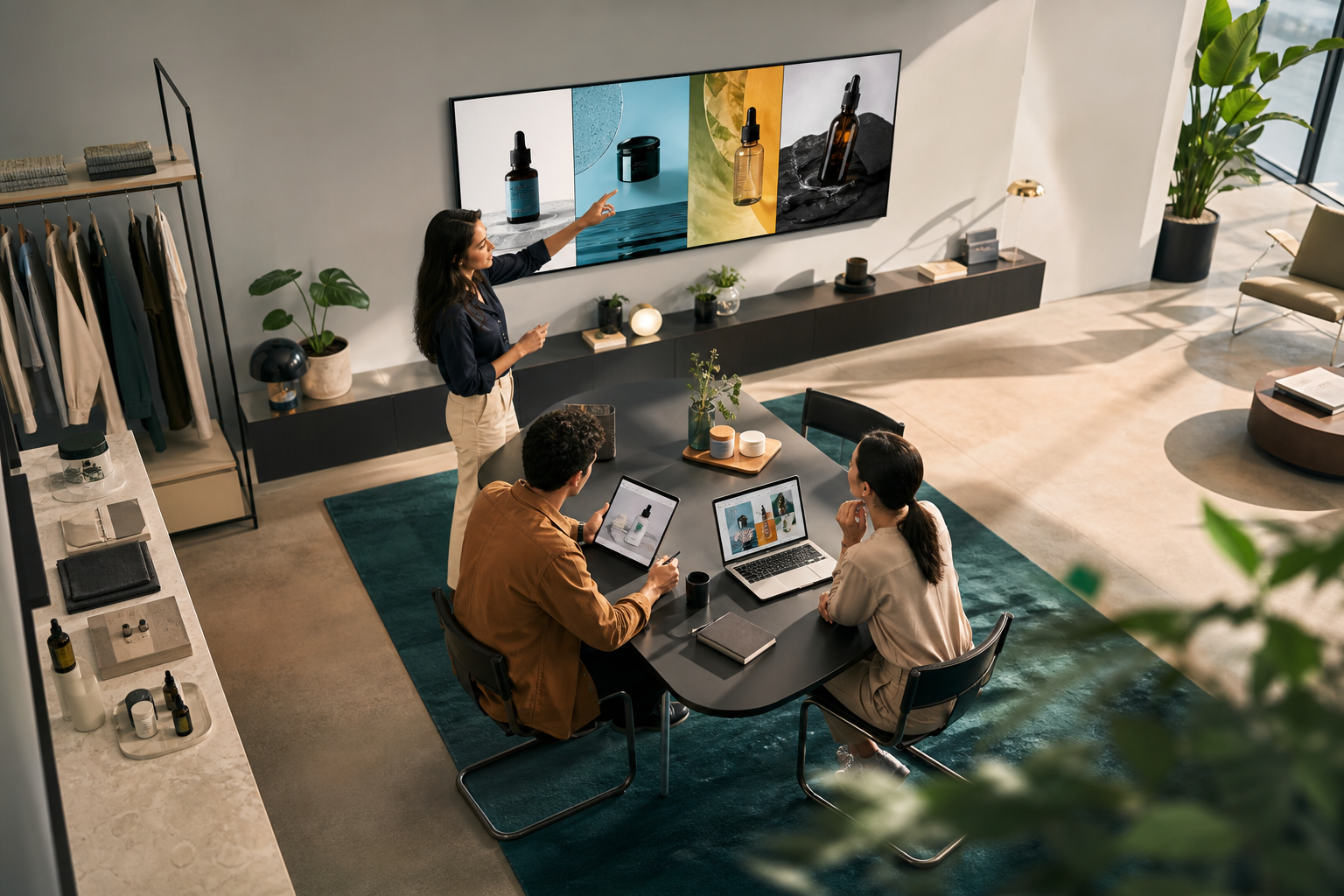 , and a direct push to Meta Ads. Include brand colors, device screens for Facebook, Instagram, TikTok, and Google placements, with labels like “60 ads in 60 seconds,” “BrandIQ,” and “Autopilot.”)
Why Ecommerce Sellers Struggle With Ad Creative at Scale
Creative wins the auction only if you can test at volume. Yet, most teams ship 3–5 variants per week and declare fatigue by Friday. That pace fails in paid social, where audiences decay fast and trend cycles shift in days, not months. An AI ad creative generator promises relief, but the real pain sits in the day-to-day grind.
First, CPMs rise while attention falls. That means fewer cheap shots at learning. Every swing has to teach you something. You need lots of angles on hooks, CTAs, and visuals in a short time window. Without fresh inputs, performance slides and CAC creeps up.

Second, designers become your choke point. One person wrangles copy, layout, and exports across 1:1, 4:5, 9:16, and 16:9 sizes. Feedback loops stretch.
Hand-offs break. Small edits like price overlays or seasonal badges stall launches for days. Meanwhile, your best ad burns out.
Platform demands and fatigue
Third, platforms demand unique specs and style cues. TikTok favors raw UGC with fast cuts. Instagram may want polished carousels. Google needs feed-based product shots plus clear value props. A single master PSD can’t serve all of them well, and reworks drain hours.
Fourth, creative fatigue kills ROAS. The same hook stops pulling. The same colorway blends in.
Without new variants, your CPC rises and conversion rate drops. You can slow the slide with smarter tests: headline order, offer framing, and visual pacing. But you need throughput to learn.
- Platform basics you must juggle:
- Aspect ratios: 1:1, 4:5, 9:16, 16:9
- Creative types: static, carousel, short video, UGC
- Hooks to test: price, bundle, social proof, urgency
Finally, your tests need clean controls. You need consistent brand, tight variable changes, and enough samples to call a winner. That’s hard to do by hand. It’s why structured A/B testing remains the gold standard for marketing experiments (A/B testing).
What to Look for in an AI Ad Creative Generator for Ecommerce
You need speed, but not at the cost of brand drift or launch friction. The right tool should turn a SKU into testable ads in a minute, across channels, and keep you on-brand by default. It should also offer clear pricing that lets you plan creative volume per month without guesswork. If your AI ad creative generator fails on any one of these, your team pays the tax later.
Start with multi-platform output. One prompt or product image should yield placements for Meta, TikTok, and Google in the sizes that matter. Moreover, those exports should include captions, headlines, and CTAs fit to the channel. If you still have to re-size and re-write, the tool missed the point.
Next, demand a product-image-to-ad workflow. Specifically, upload a clean product shot and receive a set of image and video concepts with background scenes, on-frame value props, and offer callouts. For videos, look for UGC-style voice lines and product b-roll that match channel norms. For context on technical video guidance, see Google’s developer docs for building video creatives (Google Ads video overview).
Core capabilities to prioritize
Brand consistency must be automatic. Your color, font, logo use, and tone should lock in once and apply across every export. You shouldn’t teach the tool your brand every time. A brand profile should drive layouts, thumbnail choices, and copy voice.
Competitor ad intelligence is non-negotiable. Before you generate, you should be able to scan what’s running in your niche: hooks in use, visual patterns, and offer trends. This sets test ideas and helps avoid me-too creative. Further, the database should be large enough to reflect real market behavior, not a narrow slice.
Finally, check the speed of generation and pricing transparency. Can you get dozens of variants in under a minute? Can you tie output volume to plan tiers with no hidden fees? As a busy operator, you need firm math on “ad units per month” and a clear path from free trial to paid.
Quick checklist
- Multi-platform outputs in native sizes
- Product image to on-brand image/video ads
- Built-in brand rules across copy and visuals
- UGC and b-roll video generation
- Large competitor ad library
- Under-60-second batch generation
- Transparent plans, clear creative credits
For deeper context on creative tactics across networks, this primer on creative ad ai
Also Read!
How AdsGPT Solves Ad Creative for Ecommerce Sellers
AdsGPT was built for throughput without chaos. From a single product input, you can generate up to 60 high-converting ads in 60 seconds, then push straight to Meta. This matters because speed alone doesn’t win, you also need brand fit and the right formats for each channel.
BrandIQ locks brand identity. You set colors, fonts, logos, and tone once. From there, every image and video ad adheres to your rules. This keeps your top-of-funnel tests clean and your store’s look intact across placements. It also cuts approval loops, since BrandIQ handles layouts and on-frame text without drifting off-spec.
 auto-applied across multiple ad mockups for Meta, TikTok, and Google; clean UI, minimal style.)
Video matters, and AdsGPT covers the formats that sell. You can spin up UGC-style scripts with natural delivery, create product b-roll that spotlights features and materials, and even generate avatar-led explainers for skimmable demos. Paired with platform-sized crops and automatic captions, you get scroll-stopping units ready for TikTok, Instagram Reels, and Facebook Feed, no manual edits needed.
Competitor intelligence shapes better tests. AdsGPT’s 500M+ competitor ad database lets you search by niche and platform to see what’s trending now. You spot hooks to borrow, gaps to target, and formats that are seeing traction. Compared to alternatives that lack deep ad libraries, you start ahead with a backlog of ideas.
Launch and iteration
Meta integration cuts launch time to near zero. You connect your ad account once, pick your best variants, and launch. No ZIP files.
No manual naming. And if you want hands-off iteration, Autopilot can refresh winners and rotate new angles to slow fatigue. When copy needs a tweak, ad chat helps you iterate headline order, punch up a hook, or adjust tone without opening another tool.
“Speed gives you the test. Consistency gives you the win. AdsGPT is built to do both.”
Social proof also matters. More than 10K+ happy marketers use AdsGPT, across solo shops and scaling teams. On coverage, AdsGPT supports 9 ad platforms, so your tests are not locked to one network. And volume is flexible: a free plan gives you 35 ad credits with no credit card required, and paid plans scale up to high-output teams.
For a broader look at where AI helps in ad production, compare tactics in this guide to an ai ad generator.
 , Pricing, and Free Trial. Highlight AdsGPT’s 60 ads in 60 seconds, 9 platforms, and 500M+ ad database. Clean, minimalist style suited for a blog.)
AdsGPT vs. AdCreative.ai vs. Pencil: Which Is Best for Ecommerce?
You’re buying speed, coverage, and insight. Here’s how the options stack for ecommerce teams that live and die by test volume. We’ll call out where others are strong, and where AdsGPT differentiates with data and platform reach.
| Criteria | AdsGPT | AdCreative.ai | Pencil |
|---|---|---|---|
| Speed of Generation | Generates 60 ads in 60 seconds | Fast image-focused generation (vendor strength) | Rapid concept testing (vendor strength) |
| Platform Support | 9 ad platforms supported | Multi-platform (details vary by plan) | Multi-platform (details vary by plan) |
| Competitor Intel | 500M+ competitor ad database | Limited public info | Limited public info |
| Video Ad Types | UGC, Product B-roll, AI Avatars | Emphasis on static creatives and scores | Concept iterations, video support varies |
| Pricing Tiers | Free plan with 35 ad credits; paid from $49/mo to $399/mo; enterprise | Paid tiers, free options vary by promos | Paid tiers; trial options vary by promos |
| Free Trial | Free plan with 35 ad credits, no credit card required | Trials/promos may vary | Trials/promos may vary |
Two clear edges for AdsGPT stand out. First, the 500M+ competitor ad database helps you plan tests with market context before you spend a dollar. Second, support for 9 platforms widens your learning surface so you can find cheap wins beyond one network.
On the other hand, AdCreative.ai has strong tooling for static creatives and quality scoring, which can help teams that run image-heavy funnels. Pencil is known for fast concept iteration, which is useful if you prefer to test narrative variations. If your plan is video-first UGC with direct Meta launch and recurring refresh via Autopilot, AdsGPT’s feature set fits better.

Remember your goals: more tests per week, clean brand fit, and the ability to launch without manual exports. On that scorecard, AdsGPT’s mix of BrandIQ, video generation (UGC and b-roll), and direct Meta integration gives ecommerce teams a faster loop from idea to spend.
For image-heavy catalog work, you can also explore this guide on an ai ad image generator, then layer video tests once you have early signals.
Also Read!
Best AI Ad Copy Generator for Performance Marketers in 2026
How to Choose the Best AI Ad Creative Generator for Ecommerce
Trust, Security, and Proven Scale
You’re connecting ad accounts and brand assets, so security is table stakes. AdsGPT holds SOC 2 Type II certification, which signals mature controls and audited processes around data access and handling. For brands with strict vendor reviews, this helps shorten approvals.
Scale also matters. A 500M+ ad database points to data maturity and broad coverage across niches and platforms. That helps you benchmark and avoid stale creative patterns. Paired with 10K+ happy marketers using the platform, you get confidence that workflows and support have been battle‑tested.

Risk should be low as you try it. AdsGPT offers a free plan with 35 credits and no credit card required, so you can validate output quality and brand fit before you switch workflows. Paid plans start at $49 per month and scale to $399 per month, with enterprise options if you need custom terms or volume.
If you prioritize fast iteration and platform breadth in 2026, those signals. SOC 2 Type II, a 500M+ ad library, and wide adoption, separate tools built for hobby use from tools ready for your spend.
How to Get Started With AdsGPT for Your Ecommerce Store
Getting from “idea” to “live” should take minutes, not days. Here’s a tight setup path you can run today.
- Sign up. Start on the free plan with 35 ad credits. No credit card required. This is enough to produce a first batch of image and video ads and see how BrandIQ holds your look.
- Upload product images. Use high‑quality shots: front, angled, detail. Add key specs or value props (materials, warranty, bundle). The tool will turn these into on‑brand image ads and short videos.
- Set your brand with BrandIQ. Add colors, fonts, logo rules, and tone. From now on, every ad should reflect your identity without rework.
- Generate your first batch. Create up to 60 variations in under 60 seconds. Sort by hook angles (price, social proof, urgency) and pick 6–10 to move forward.
- Connect Meta. Use the direct integration to launch without exporting files. Name your tests cleanly so you can read results at a glance.
- Review with ad chat. Tighten headlines, swap frames in UGC scripts, or adjust CTA phrasing. Ask for two to three alternates and pick the strongest.
- Scale to a paid plan. Once you prove fit, move to a tier that matches your weekly volume. Paid plans remove watermarks and extend video limits; on the free plan, video ads are capped at 17 seconds. On paid tiers, there is no watermark on exports.
For channel-specific guidance, see this walkthrough on an ai facebook ad generator to tailor hooks and placements for Meta.

Frequently Asked Questions
How much does AdsGPT cost for ecommerce sellers?
AdsGPT offers a free plan with 35 credits and no credit card required. Paid plans start at $49 per month for Starter and go up to $399 per month for Scale. Annual billing discounts are available if you want to lower your monthly rate. Enterprise plans offer custom pricing for higher volumes and added controls.
Can AdsGPT generate video ads for product listings?
Yes. You can create UGC-style videos, product b-roll, and AI avatar videos from a simple product input. On the free plan, videos are limited to 17 seconds so you can sample output without cost. Paid plans remove watermarks and extend limits, which is helpful once you start scaling winners.
Which ad platforms does AdsGPT support?
AdsGPT supports 9+ platforms, including Meta (Facebook and Instagram), Google, TikTok, and others. A direct Meta integration lets you launch ads without leaving the tool, which cuts hand-offs and speeds testing. If you need other channels later, coverage beyond those cores is already baked in.
How does AdsGPT compare to AdCreative.ai for ecommerce?
Both tools generate AI ads. AdsGPT differentiates with a 500M+ competitor ad database, support for 9 platforms, and built-in UGC video generation. AdCreative.ai focuses more on static creatives and creative scoring, which can be useful for image-led funnels. If video and market context are priorities, AdsGPT has an edge.
Is AdsGPT secure enough for ecommerce brands?
Yes. AdsGPT holds SOC 2 Type II certification, which reflects audited security controls suitable for ad account data. This helps pass vendor reviews and aligns with enterprise expectations. You also get role-aware access and process maturity, which reduces risk as teams grow.
Can I maintain brand consistency across all generated ads?
Yes. BrandIQ lets you upload brand guidelines, colors, fonts, logos, and tone, so every export stays on-brand. This reduces review cycles and keeps shopper trust high. You’ll also see consistency across both image and video assets, which helps your storefront feel cohesive.
How fast can I generate ads with AdsGPT?
AdsGPT generates up to 60 high-converting ad variations in 60 seconds from a single prompt or product image. That speed lets you test more angles per week and find winners before fatigue sets in. It also means less time waiting on hand-offs and more time reading results.
Does AdsGPT offer competitor ad research for ecommerce niches?
Yes. AdsGPT includes a 500M+ competitor ad database you can search by brand, niche, or platform. You can spot hooks and visuals that are trending before you generate, which improves your test backlog. This context helps you avoid lookalikes and focus spend on fresh concepts.
Closing Thoughts
- Speed wins tests. Brand fit wins profit. You need both to hold ROAS in 2026.
- Choose tools with proof: SOC 2 Type II, 9+ platforms, and a 500M+ ad library mean maturity, not promises.
- AdsGPT ties it together with BrandIQ, UGC and b-roll video, a Meta launch path, and credits that match your output goals.
**[See Pricing.
For more strategy notes on AI-produced assets and testing frameworks, explore this guide to an ad creative generator.
MOST POPULAR