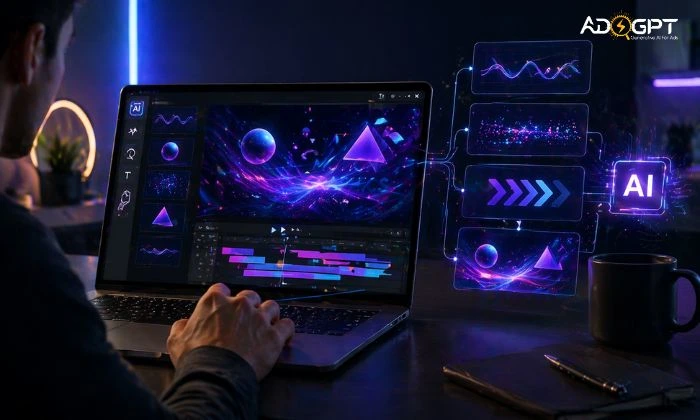
Creating motion content used to be slow, expensive, and heavily dependent on skilled designers. Businesses often need large creative teams, advanced software, and long production timelines just to produce a few polished animations. In 2026, that process looks very different. AI motion graphics are changing how brands create animated content by making production faster, simpler, and far more affordable, helping companies create High-Converting Ads with ease.
From social media campaigns to product explainers, companies are now using artificial intelligence to automate tasks that once took hours of manual work. Designers can generate transitions, animate text, match visuals to voiceovers, and even build complete scenes with only a few prompts. What once required technical expertise can now be handled by marketers, freelancers, and small teams without a deep animation background.
The shift is happening because speed matters more than ever. Brands need to publish more content across more platforms, and traditional workflows can no longer keep up. With smarter automation and better creative control, AI motion graphic is becoming a practical solution for anyone who wants professional-looking visuals without the usual production delays, helping businesses launch high-converting ads quickly and effectively.
Listen To The Blog Post!
What AI Motion Graphics Actually Means?
At its core, AI motion graphic refers to using artificial intelligence to create, edit, and enhance animated visuals with minimal manual effort. Instead of building every frame from scratch, AI helps automate key parts of the animation process saving time while still delivering high-quality results.
Traditionally, motion graphics involved tools like After Effects, where designers had to manually animate elements, adjust timelines, and fine-tune every transition. Now, with an AI motion graphic generator, much of that heavy lifting is handled automatically. You can input text, a script, or even just an idea, and the system generates animated visuals that match your content.
These tools rely on machine learning to understand patterns in design, movement, and storytelling. They can suggest layouts, apply transitions, sync animations with audio, and even choose colors or styles that fit your brand. This is why many creators are turning to AI tools for motion graphics to speed up production without sacrificing creativity.
Another reason for the rapid shift is accessibility. Even beginners can use a free AI motion graphic generator to create decent-quality animations without needing advanced skills. And with the rise of free AI motion graphic animation tools 2026, the barrier to entry has dropped significantly, making it easier for individuals and small businesses to compete with larger brands.
Why AI Motion Graphics Is Growing So Fast in 2026:
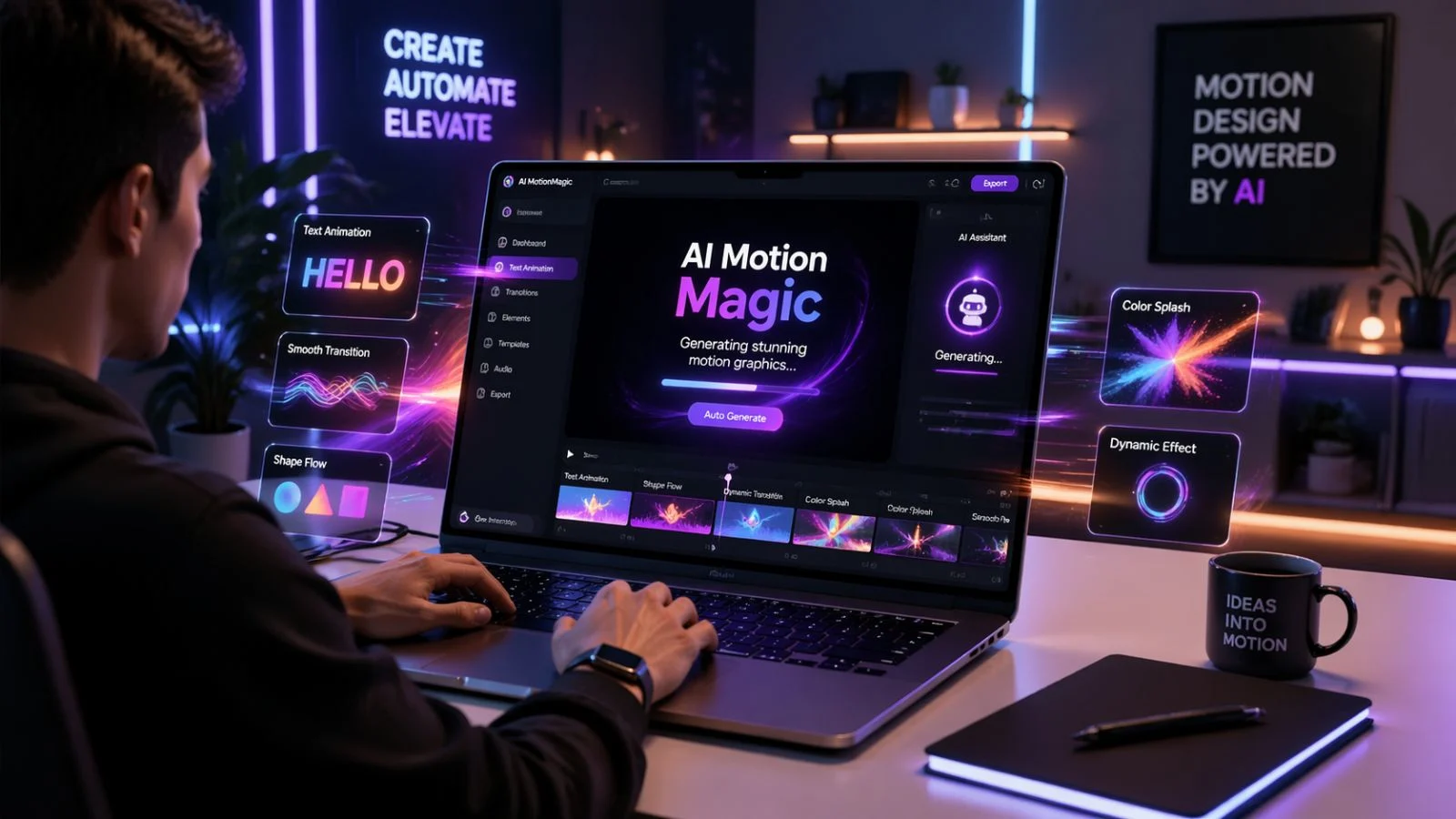
The growth of AI motion graphics is closely tied to how content demands have changed. Brands are expected to publish videos consistently, not occasionally, and traditional animation workflows are too slow to keep up with that pace.
Speed is a major driver. With an AI motion graphic generator, creators can turn ideas into animations within minutes. This makes it easier to respond to trends, launch campaigns quickly, and keep content pipelines active without delays.
Cost efficiency is another reason adoption is rising. Producing motion graphics used to require multiple specialists, but now much of that work is automated. Businesses can create high-quality visuals without investing heavily in large creative teams.
Ease of use is also pushing growth. Many AI tools for motion graphics are designed for non-designers, allowing marketers and founders to create content on their own. The learning curve is much lower compared to traditional animation software.
There’s also a clear shift toward experimentation. With faster production, teams can test multiple creatives instead of relying on a single polished video. This flexibility is one of the reasons AI motion graphics is becoming a core part of modern content strategies.
Key Benefits of Using AI Motion Graphics:
One of the biggest advantages of AI motion graphic is the speed it brings to content creation. Instead of spending hours on timelines and keyframes, creators can generate animations almost instantly and focus more on ideas rather than execution.
Cost reduction is another major benefit. Using an AI motion graphic generator, businesses can produce high-quality videos without relying heavily on designers or agencies. This makes it easier to scale content without increasing budgets.
The learning curve is much lower compared to traditional tools. Most AI tools for motion graphics are built with simple interfaces, allowing beginners to create professional-looking animations without technical expertise.
Consistency also improves significantly. AI can apply the same visual style, colors, and motion patterns across multiple videos, which helps maintain a strong and uniform brand identity.
Flexibility plays a role as well. Creators can quickly tweak scripts, visuals, or formats and generate new versions without starting from scratch, making it easier to adapt content for different platforms.
Popular Use Cases of AI Motion Graphics:
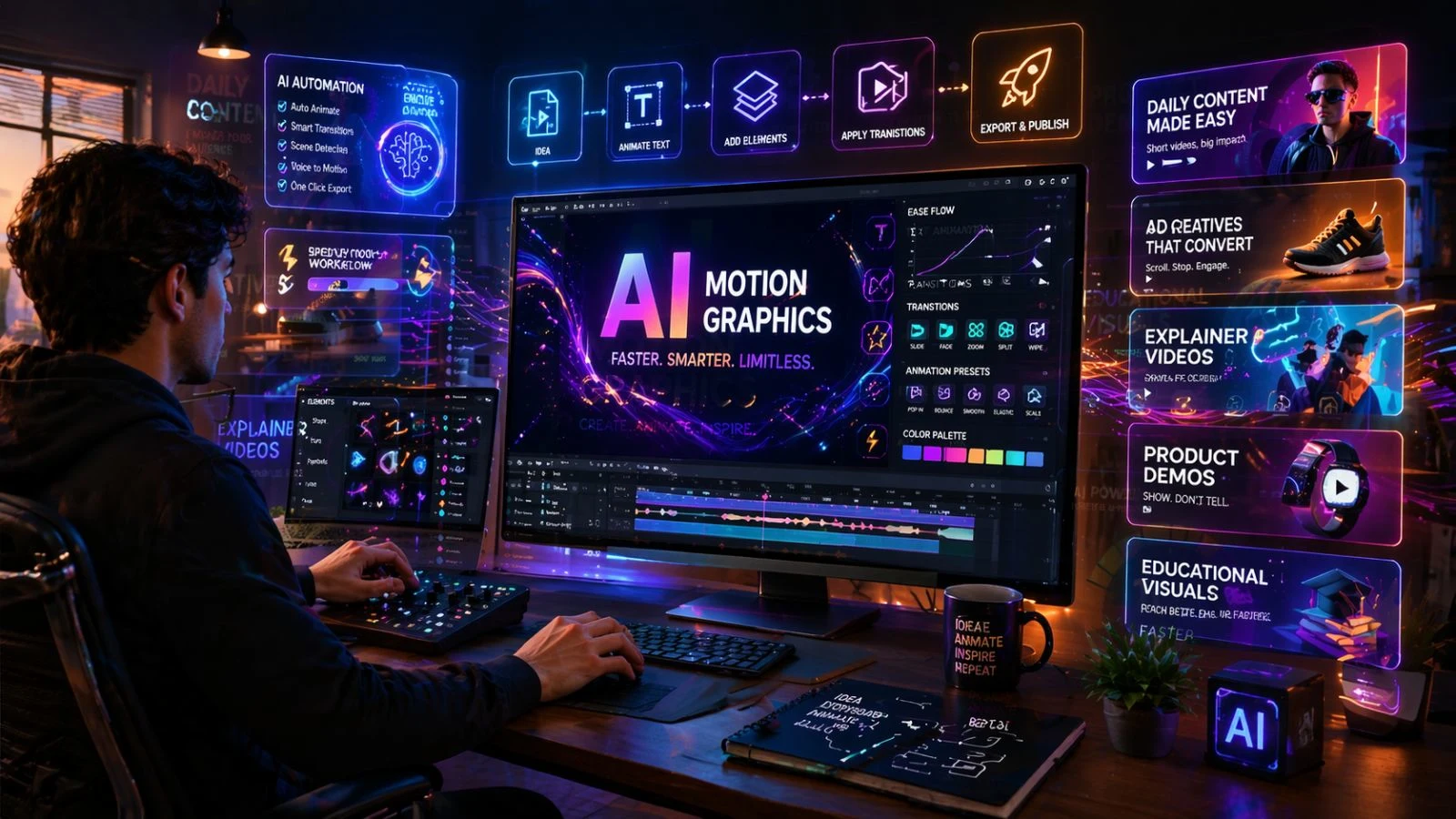
Social media content is where AI motion graphic is used the most. Brands create reels, short videos, and visual posts quickly, keeping up with daily content demands without slowing down production.
Ad creatives are another major use case. With an AI motion graphic generator, marketers can turn basic ideas or scripts into multiple video ads, making it easier to test different versions and improve performance.
Explainer videos are becoming easier to produce as well. Businesses use AI tools for motion graphics to simplify complex topics into clean, animated visuals that are easier for audiences to understand.
Product demos and launches also benefit from this shift. Instead of long production cycles, teams can create polished launch videos in a short time, helping them go live faster.
Educational and internal content is growing too. Companies are using motion graphics for training, onboarding, and presentations, where clear visuals improve communication without needing a full design setup.
Limitations of AI Motion Graphics (What It Can’t Do Yet):
While AI motion graphics is powerful, it still has its limits. Creative control is one of the main challenges. AI can generate visuals quickly, but highly specific or unique animation styles often still require manual work.
Customization can feel restricted at times. An AI motion graphics generator usually works within predefined templates or styles, which can make some outputs look similar if not adjusted properly.
There’s also a gap in storytelling depth. AI can structure visuals and match them with scripts, but it doesn’t always capture emotional nuance or brand voice the way an experienced designer can.
Another issue is over-reliance. Many creators depend entirely on AI tools for motion graphics, which can lead to generic-looking content if there’s no creative input or direction involved.
Performance can vary depending on the tool. Some platforms handle complex animations well, while others are better suited for basic content, so results aren’t always consistent across different use cases.
Best AI Motion Graphics Tools to Try in 2026:
The rise of AI motion graphic has led to a wave of tools that focus on speed, automation, and ease of use. Each one is built slightly differently, depending on whether you need quick social content, ads, or more polished animations.
Some platforms focus on text-to-video generation. These tools act as an AI motion graphics generator, where you input a script and get a ready-to-use video with animations, transitions, and synced visuals. They’re useful for ads, explainers, and short-form content.
Others are designed for customization. These AI tools for motion graphics give more control over scenes, styles, and branding, making them better suited for businesses that want consistent visuals across multiple campaigns.
There’s also a growing category of free tools. A free AI motion graphics generator can handle basic animations, simple transitions, and short videos without requiring a paid plan. These are useful for beginners or creators testing ideas before scaling production.
The emergence of free AI motion graphic animation tools 2026 has made it easier to experiment without upfront investment. However, more advanced features like higher-quality exports, deeper customization, and brand controls are usually part of paid versions.
Choosing the right tool depends on how much control you need versus how fast you want to produce content.
Also Read:
How To Create High-Converting Ads With A Video Ad Generator?
Why AdsGPT Fits Perfectly Into This Workflow:
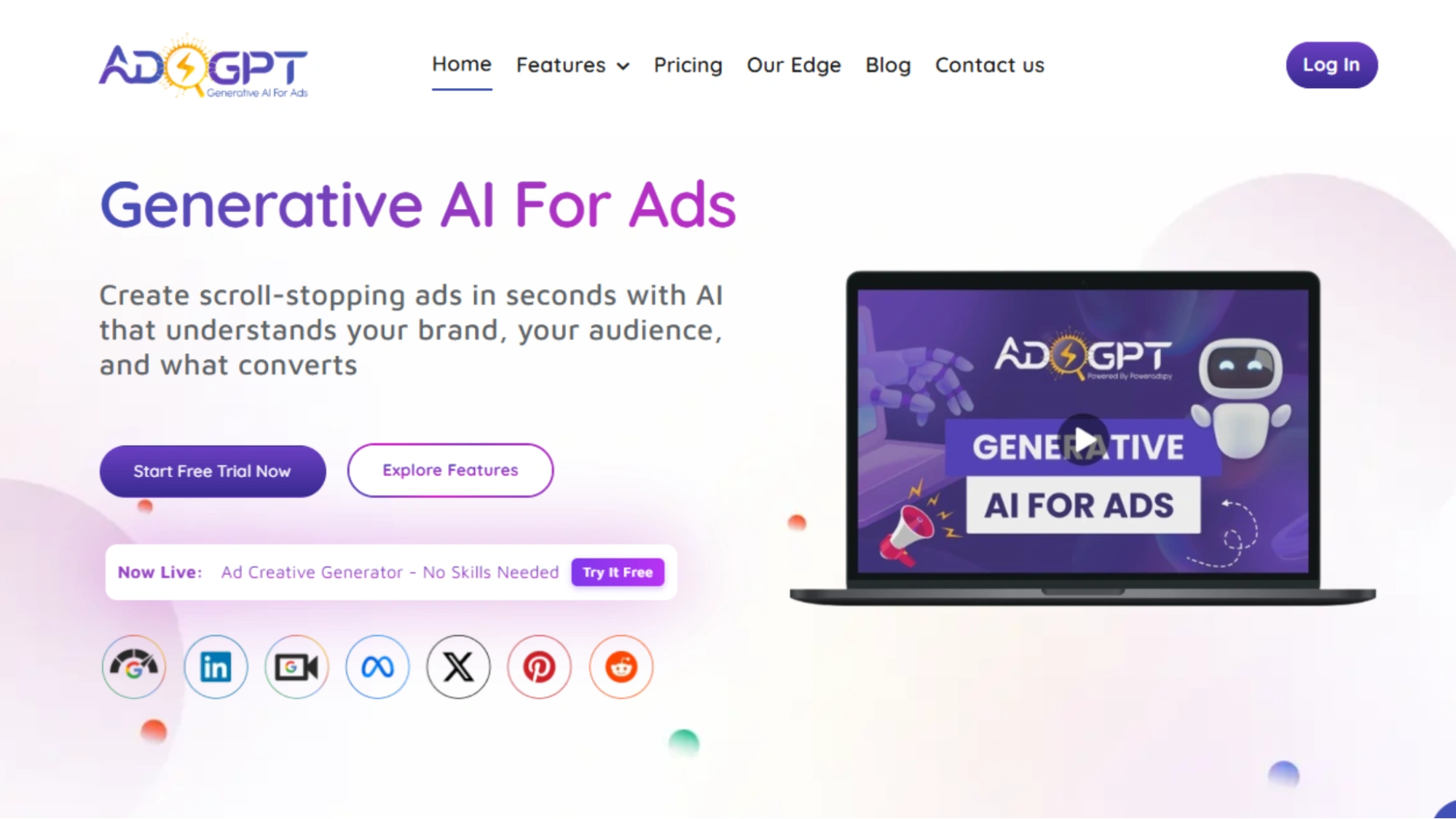
Creating ads with AI motion graphics becomes much more effective when the tool is built specifically for marketing and that’s where AdsGPT stands out. Instead of just generating animations, it focuses on turning ideas into high-performing ad creatives that are ready to launch.
It bridges the gap between content creation and performance by combining script generation, visuals, and motion into one streamlined process. This makes it especially useful for marketers who need speed without compromising on quality.
Key Features of AdsGPT:
- Generates complete ad creatives from a simple prompt or idea
- Built-in AI motion graphics generator for fast video creation
- Creates multiple variations for A/B testing instantly
- Automatically structures scripts for better conversions
- Optimized outputs for platforms like Instagram, Facebook, and YouTube
- Reduces dependency on designers and editors
- Fast turnaround time from concept to final ad
- Easy-to-use interface, no technical skills required
With tools like AdsGPT, AI motion graphics is not just about creating visuals—it becomes a system for producing, testing, and scaling ad campaigns efficiently.
Conclusion:
The shift toward AI motion graphic is happening because content creation is no longer occasional it’s constant. Brands need faster output, more variations, and the ability to adapt quickly, and traditional workflows struggle to meet those demands.
With automation handling the heavy lifting, creators can focus more on ideas, messaging, and performance. Whether it’s ads, social media, or explainer content, AI is making motion graphics more accessible and scalable than before. As tools continue to improve, the gap between professional production and everyday creation is getting smaller.
FAQs
- What is an AI motion graphics generator?
An AI motion graphic generator is a tool that uses artificial intelligence to create animated videos from inputs like text, scripts, or ideas, reducing the need for manual design work. - Are there any free AI motion graphics tools available?
Yes, there are several options, including a free AI motion graphic generator that can handle basic animations. These tools are useful for beginners or small projects. - Do I need design skills to use AI motion graphics tools?
Most AI tools for motion graphics are designed for ease of use, so even beginners can create professional-looking animations without prior experience. - Can AI motion graphics replace designers?
Not entirely. While AI motion graphics speed up production, creative direction and advanced customization still benefit from human input.
MOST POPULAR