
Every purchase starts with a moment of discovery. Someone sees a post, clicks an ad, or hears a brand name for the first time. Behind that moment is a well-planned advertising campaign quietly doing its job.
Modern businesses build an advertising campaign to guide customers through every stage of the buying journey, from first impression to final sale. In this post, you will find real-world examples that actually worked, the key elements behind each one, and how AI is reshaping the way brands advertise today.
Read Aloud
What Is an Advertising Campaign?

It is a coordinated set of marketing efforts running across one or more channels to achieve a specific business goal. Unlike a single ad, a campaign has a defined audience, a clear theme, a timeline, and measurable objectives.
Most campaigns are built around one of four goals: awareness, engagement, lead generation, or sales. Each goal shapes the content, channels, and targeting strategy a brand uses.
Why It Matters for Business Growth
A well-run campaign builds brand visibility, earns customer trust, and creates conversion opportunities at every stage of the funnel. The brands that grow consistently are not always the ones with the biggest budgets. They are the ones who know exactly what they want each campaign to do before they spend anything.
How an Advertising Campaign Works Across the Customer Journey
The best campaigns do not push everyone toward a sale immediately. They meet people where they are and move them forward, one step at a time.
Stage 1: Building Brand Awareness
At the top of the funnel, the goal is reach. Brands use social media ads, video content, influencer partnerships, and display advertising to connect with new audiences. The focus at this stage is on storytelling and recognition rather than direct selling.
Examples for Brand Awareness
Some of the most recognizable advertising campaign examples come from this stage. Nike’s ‘Just Do It’ built decades of loyalty by centering human ambition over product specs. Coca-Cola’s seasonal work consistently reinforces joy and belonging. Spotify Wrapped turns personal listening data into shareable social content, earning millions of organic impressions without spending extra on reach.
Stage 2: Increasing Audience Engagement
Once people know your brand, the next step is keeping them interested. Brands use personalized ads, interactive content, retargeting sequences, and email flows to stay relevant until the customer is ready to buy.
Engagement Examples
Two standout campaign advertising examples at this stage are Duolingo and Airbnb. Duolingo uses humor and trending content to stay visible on social media between lessons. Airbnb’s storytelling work puts real hosts and guests front and center, building an emotional connection that keeps people coming back.
Stage 3: Turning Attention Into Sales
At the bottom of the funnel, the advertising campaign needs to make converting as simple as possible. Optimized landing pages, clear calls-to-action, product demos, retargeting ads, and limited-time offers all reduce friction and push people toward a decision.
Strong examples of advertising campaign success here include Amazon’s personalized recommendation engine, SaaS free-trial offers that remove buying risk, and e-commerce remarketing ads that recover lost sales from people who browsed without buying.
Types of Advertising Campaigns Businesses Use Today
Digital Campaigns
- Google Ads: Intent-based campaigns for users actively searching your product or service
- Meta Ads: Interest and behavior-based campaigns across Facebook and Instagram
- YouTube: Video campaigns that capture attention before or during content
- Programmatic advertising: Automated ad buying across thousands of websites in real time
Traditional Campaigns
- TV and radio: Effective for mass-market reach and local audiences
- Print and out-of-home: Strong for niche publications and location-based visibility
Omnichannel Campaigns
The most effective brands today run campaigns that connect online and offline touchpoints into one seamless experience. A customer might see a billboard on their commute, get retargeted on Instagram, and convert through a Google ad. That is how smart brands build a unified system rather than a set of disconnected efforts.
Key Elements of a Successful Advertising Campaign
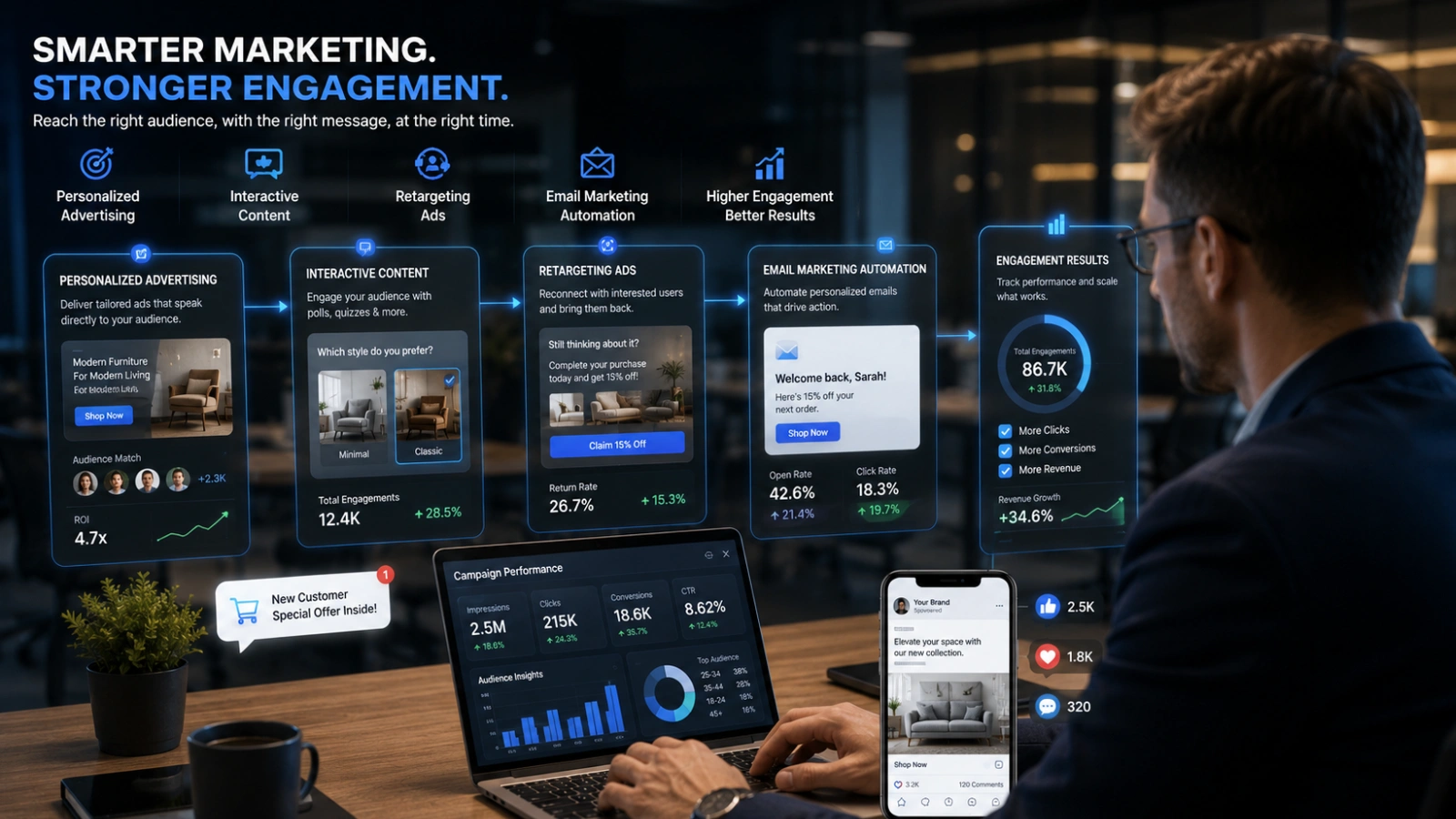
Strong campaigns share the same foundational building blocks, regardless of industry or budget:
- Clear target audience: Know exactly who you are reaching before you launch
- Consistent messaging: Visuals, tone, and offer should feel unified across every channel
- Creative content: Stand-out creative earns attention in crowded feeds
- Strong call-to-action: Tell people what to do next, clearly and specifically
- Multi-channel distribution: Meet your audience wherever they spend time
- Data-driven optimization: Review performance regularly and cut what is not working
Advertising Campaign Examples That Delivered Results
Nike: Emotional Storytelling
Nike does not sell shoes. It sells ambition. Every advertising campaign from Nike puts a human story at the center, building emotional connections that drive loyalty across decades.
Spotify Wrapped: Personalized Marketing
Spotify Wrapped turns user data into a cultural moment. This advertising campaign generates massive organic reach by making users the story and giving them content they genuinely want to share every year.
Dove Real Beauty: Social Impact Branding
Dove’s advertising campaign challenged narrow beauty standards by featuring real women in authentic stories. The result was lasting brand loyalty and a cultural conversation that competitors could not replicate.
Airbnb: Community-Centered Advertising
Airbnb’s ‘Belong Anywhere’ advertising campaign focused on people, not properties. It stands as one of the best examples of an advertising campaign strategy built around community and genuine human storytelling.
How AI Is Changing Modern Advertising Campaigns
AI is reshaping how brands plan, execute, and optimize every stage of their campaigns. Here is what that looks like in practice:
- AI-powered targeting: Machine learning identifies high-intent users with far more precision than traditional methods
- Automated optimization: AI tests thousands of creative variations simultaneously and shifts budget to top performers
- Personalized experiences: Dynamic ads adapt to individual user behavior without manual effort
- Predictive analytics: AI forecasts outcomes before launch, reducing wasted spend and improving overall ROI
How AdsGPT Helps Businesses Run Better Advertising Campaigns
AdsGPT is built to help marketers move faster and perform better across every advertising campaign they run.
AI-Powered Ad Copy Creation
AdsGPT generates headlines, copy variations, and content in seconds, so your team can focus on strategy instead of production.
Faster Campaign Planning
AdsGPT cuts the time from brief to live campaign. Build a complete advertising campaign structure, including targeting, messaging, and channel strategy, faster than any manual process allows.
Data-Driven Optimization
AdsGPT surfaces real-time insights on what is working across your advertising campaign, where to reallocate budget, and which audience segments are converting. Stay ahead of performance drops before they happen.
Read More:
AI Advertising: Everything You Need To Know
How To Utilize An Ad Copy Generator For Successful Campaigns?
Everything You Need To Know About Campaign Tracking
Common Advertising Campaign Mistakes to Avoid
- Weak audience targeting: Broad targeting wastes budget. Define your audience before you launch.
- Inconsistent messaging: If your ad promises one thing and your landing page says another, you lose trust immediately.
- Ignoring retargeting: Most people do not convert on the first visit. A retargeting strategy is not optional.
- Poor landing page experience: A great ad fails if it leads somewhere slow or confusing. Optimize every touchpoint.
- Chasing impressions over conversions: Focus on the metrics that actually move revenue forward.
Metrics That Measure Advertising Campaign Success
Awareness Metrics
- Reach: Total unique people who saw your ad
- Impressions: How many times was your ad displayed across platforms
- Brand recall: How well your audience remembers your brand after exposure
Engagement Metrics
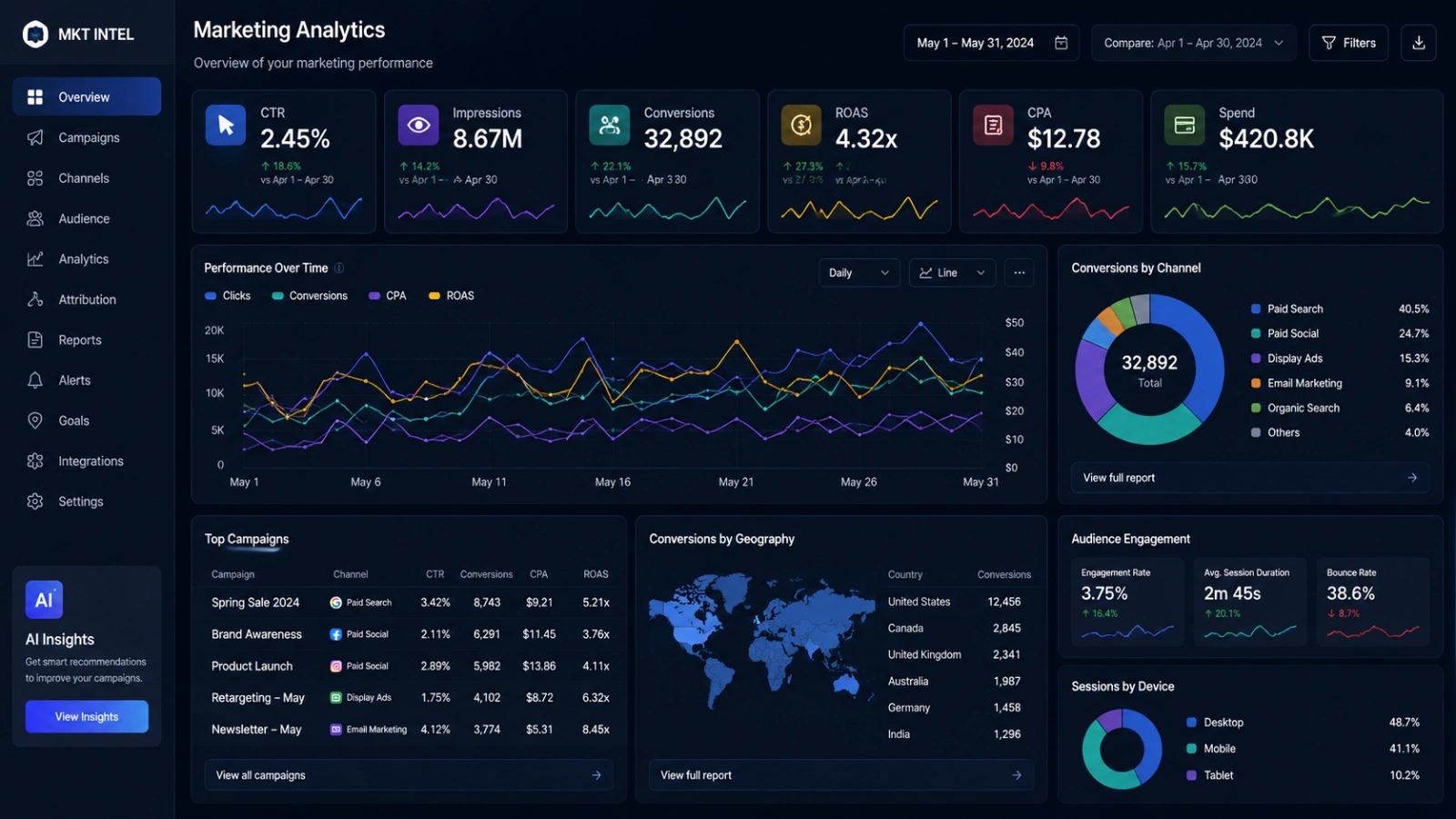
- Click-through rate (CTR): Percentage of viewers who clicked
- Shares and comments: Indicators of organic resonance and audience connection
- Watch time: For video, how long viewers stay before dropping off
Conversion Metrics
- Leads generated: Total prospects captured through your campaign
- Sales: Direct revenue attributed to campaign activity
- ROAS: Revenue earned for every rupee spent on advertising
- CPA: Cost to acquire one paying customer through the campaign
Future Trends to Watch
- AI-generated advertising: Brands will use AI to produce personalized ads at scale with dynamic visuals and copy
- Hyper-personalization: Every ad will be tailored to individual behavior and real-time context
- Interactive video: Viewers will shop, respond, and decide directly within the video itself
- Creator-led marketing: Niche creator partnerships will drive trust in ways traditional ads cannot
- Privacy-first strategy: As third-party cookies phase out, first-party data and contextual targeting become essential for reaching the right audience
Conclusion
Moving customers from awareness to purchase takes strategy, creativity, and data working together. The brands that do it best- Nike, Airbnb, Spotify, and Dove- share a clear audience understanding, compelling storytelling, and a commitment to continuous optimization.
As AI continues to evolve, campaigns will become more precise, more personalized, and more effective. The future belongs to brands that embrace smarter tools, stay close to what their customers actually need, and keep refining their approach. The brands that win tomorrow are already testing, learning, and improving today. Start building that way, and the results will follow.
FAQs
1. What is an advertising campaign?
An advertising campaign is a planned series of marketing activities designed to promote a product, service, or brand across different channels. It helps businesses increase awareness, engagement, leads, or sales through consistent messaging and targeted communication.
2. What are some successful advertising campaign examples?
Some of the most successful advertising campaign examples include Nike’s “Just Do It,” Spotify Wrapped, Dove Real Beauty, and Airbnb’s “Belong Anywhere.” These campaigns succeeded because they combined emotional storytelling, strong branding, and audience-focused messaging.
3. How does an advertising campaign increase sales?
A strong advertising campaign guides customers through the buying journey by building awareness, nurturing engagement, and encouraging conversions using targeted ads, landing pages, retargeting, and compelling calls-to-action.
4. What are the key elements of a successful advertising campaign?
Successful campaigns typically include a clear target audience, consistent branding, creative content, strong CTAs, multi-channel promotion, and ongoing performance optimization using analytics and customer insights.
5. How is AI improving modern advertising campaigns?
AI helps businesses improve advertising campaigns through automated targeting, personalized ad experiences, predictive analytics, and real-time campaign optimization. Tools like AdsGPT make it easier to create, manage, and scale campaigns efficiently.
MOST POPULAR