Traditional advertising often works on a simple assumption: spend money, gain visibility, and hope results follow. Performance marketing flips that model. Instead of paying for exposure alone, businesses invest in measurable actions such as clicks, leads, app installs, or sales.
That shift matters more than ever. Marketing budgets face greater scrutiny, leadership teams expect clear returns, and customer acquisition costs continue to rise across channels. Under those conditions, guessing is expensive.
This is why performance marketing has become a core part of modern growth strategies. It offers accountability, faster feedback, and a clearer connection between spending and outcomes. The real advantage, however, goes beyond tracking numbers. When executed well, it creates a system that continuously improves through data, testing, and customer behavior insights.
Read Aloud!
What Performance Marketing Actually Means (Beyond the Buzzword)
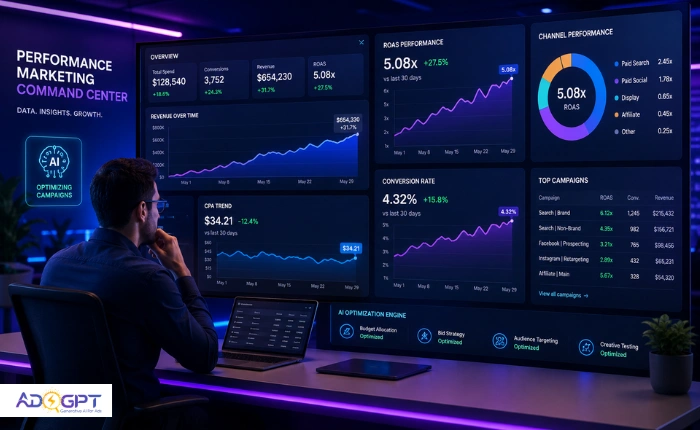
Performance marketing is a marketing approach where advertisers pay based on measurable outcomes such as clicks, leads, sales, app installs, or other defined actions. Every campaign is tied to performance data, allowing businesses to track results and optimize spending more effectively.
At its core, it focuses on outcomes rather than exposure. Success is measured by actions that contribute directly to business goals.
Common channels include:
- Paid search advertising
- Paid social campaigns
- Affiliate partnerships
- Programmatic advertising
- Influencer campaigns tied to results
Many people confuse digital performance marketing with all digital advertising. The two overlap, but they are not identical. Digital marketing includes awareness campaigns, content initiatives, and brand-building efforts. Performance-focused campaigns prioritize measurable business outcomes.
Brand marketing and performance marketing are not competitors. One builds demand. The other captures and converts it.
Why Performance Marketing Hits Different Right Now
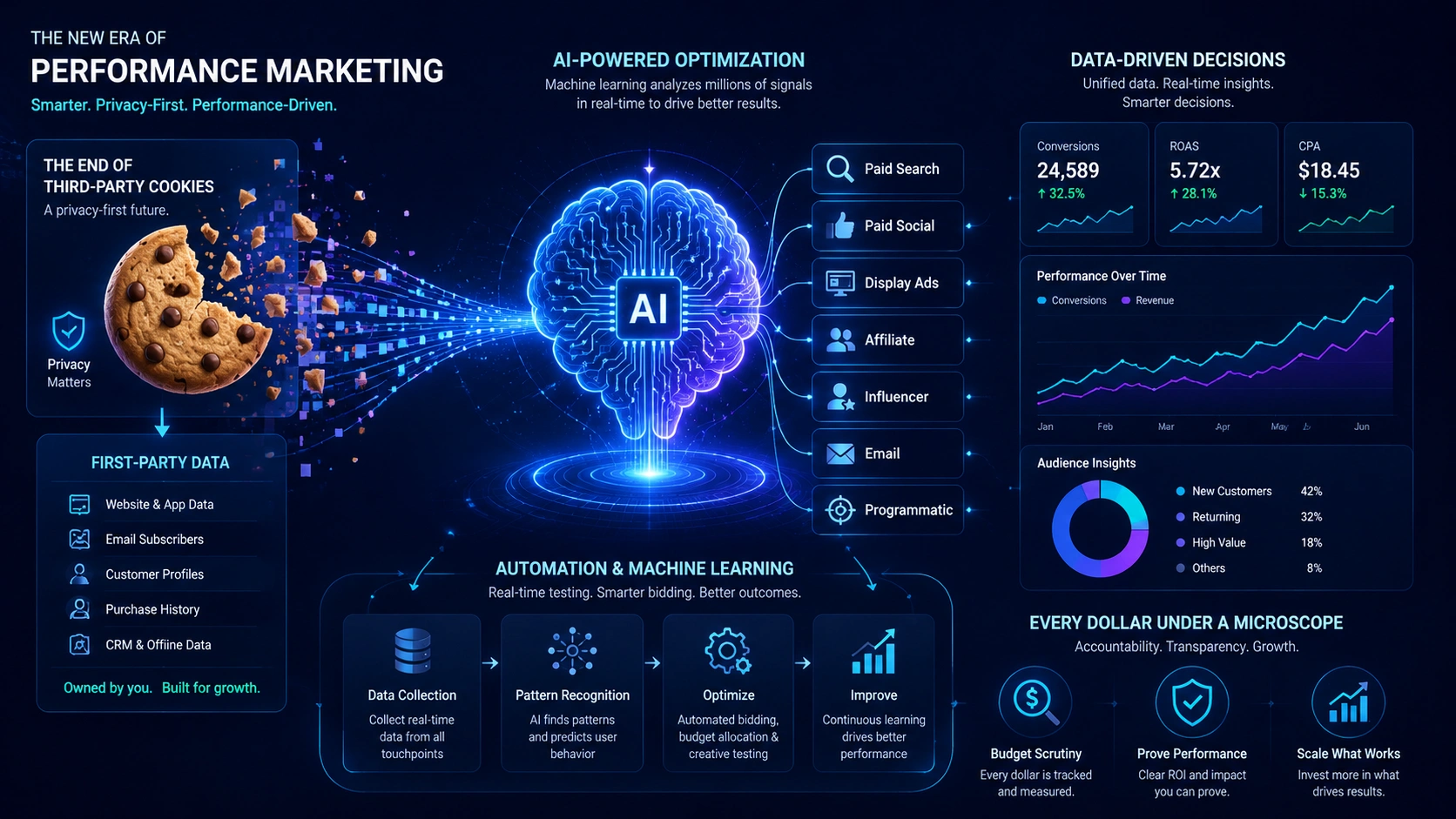
Several market shifts have made results-driven marketing more valuable than it was just a few years ago.
The Death of the Cookie Changed the Game
Third-party cookies once fueled much of digital targeting. As privacy regulations increased and browsers limited tracking, businesses had to adapt.
Companies that invested in first-party data gained an advantage. Email subscribers, customer databases, and owned audiences suddenly became far more valuable. In many cases, acquisition efforts now depend heavily on audience quality rather than platform targeting alone.
AI Turned Optimization From Manual to Instant
Campaign optimization used to require weeks of analysis and manual adjustments.
Today, platforms use machine learning to identify patterns, adjust bids, and allocate budgets automatically. This evolution has accelerated AI performance marketing capabilities across major advertising platforms.
As a result, marketers can spend less time making routine adjustments and more time improving offers, creative assets, and customer experiences.
Every Dollar Is Under a Microscope
After years of economic uncertainty, businesses became far more cautious about spending.
Leadership teams want evidence before increasing budgets. They expect marketers to connect spending with revenue. Under those conditions, this naturally becomes the preferred model because results can be measured, reported, and improved with greater precision.
The Channels That Actually Drive Results (And What Each Is Best For)
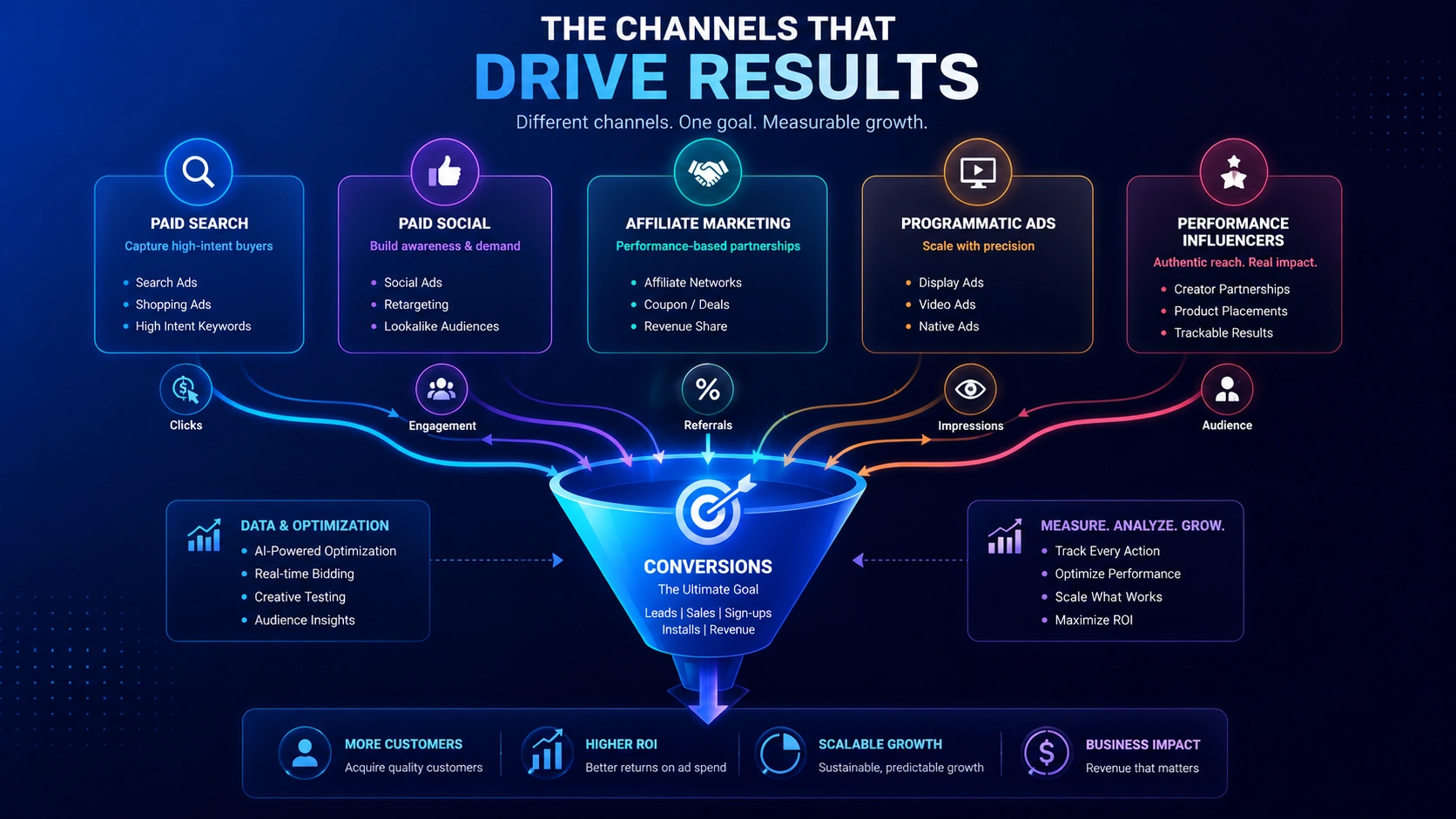
Different channels solve different business problems. Effective campaign planning starts with matching the right channel to the right objective.
Paid search works well when customers already know what they need. Someone searching for a solution is often much closer to making a purchase.
Social advertising helps businesses generate demand. It allows brands to reach audiences before active buying intent appears.
Affiliate partnerships offer another powerful acquisition channel because costs remain closely tied to outcomes.
Programmatic advertising delivers scale while maintaining targeting precision. Meanwhile, influencer campaigns increasingly include performance-based compensation models rather than flat promotional fees.
If you work with a performance marketing agency, understanding these channel strengths helps set realistic expectations from the start.
What a Winning Performance Marketing Strategy Actually Looks Like
Many campaigns fail because businesses focus on tactics before establishing a clear framework.
A strong performance marketing strategy begins with understanding what success actually means.
Start With the Metric That Matters
Not every company should prioritize the same metric.
Early-stage businesses often focus on customer acquisition. Growth-stage organizations may emphasize return on ad spend. Larger enterprises frequently balance efficiency with lifetime customer value.
Choosing the wrong metric can lead marketing efforts toward outcomes that look positive on reports but fail to support broader business goals.
Build the Funnel Before You Build the Campaign
Ads cannot solve every problem.
Traffic generation becomes meaningless when visitors encounter confusing landing pages, weak offers, or complicated conversion paths. Successful campaign execution requires alignment between ad creative, messaging, user experience, and conversion goals.
The funnel matters as much as the campaign itself.
Test, Don’t Guess
Opinions are useful. Data is better.
Top-performing teams treat optimization as an ongoing testing process. Headlines, creative formats, offers, landing pages, and audience segments all become opportunities for experimentation.
Modern AI tools can accelerate testing cycles, but the underlying principle remains unchanged. Consistent learning drives sustainable growth.
Read More!
AI In Advertising Psychology: Latest Marketing Strategies
Create an Advertisement in 8 Easy Steps That Can’t Be Ignored!
The Mistakes That Quietly Kill Performance Campaigns
Many underperforming campaigns share similar problems. The challenge is that these issues often remain hidden until budgets have already been wasted.
Optimizing for the Wrong Conversion Event
Generating leads means little if those leads never become customers.
Ignoring Creative Fatigue
Even strong ads lose effectiveness over time. Fresh creative is essential for sustained campaign results.
Treating Brand and Performance as Opposites
Businesses that balance both approaches often outperform those that rely exclusively on one.
Scaling Before Proving Profitability
Increasing spend too quickly can magnify existing inefficiencies.
Trusting Platform Attribution Blindly
Cross-channel verification provides a more accurate picture of campaign effectiveness.
Most campaign failures are not caused by a lack of effort. They stem from flawed assumptions that go unchallenged.
How AdsGPT Helps Marketers Improve Campaign Performance
Running successful campaigns requires more than launching ads. Teams need visibility into performance, faster optimization cycles, and data-driven decision-making.
AdsGPT helps marketers streamline campaign management by providing:
- AI-powered ad copy and full creative generation (image, UGC video, B‑roll, avatar ads)
- Bulk ad creation (Ad Factory) for fast A/B testing
- BrandIQ to enforce brand voice, logos, and colors
- Competitor Intel (500M+ ads) to find and remix winning creatives
- Meta Ads integration: Ads Manager for live analytics + Autopilot for automated optimizations on Meta
- Platform-ready exports for Meta, Google, LinkedIn, TikTok, YouTube, etc.
These capabilities help teams spend less time on manual analysis and more time improving campaign outcomes. Whether you’re managing a few campaigns or operating at scale, having the right tools can make the difference between average results and sustainable growth.
The Edge Most Marketers Are Ignoring: Psychology + Performance
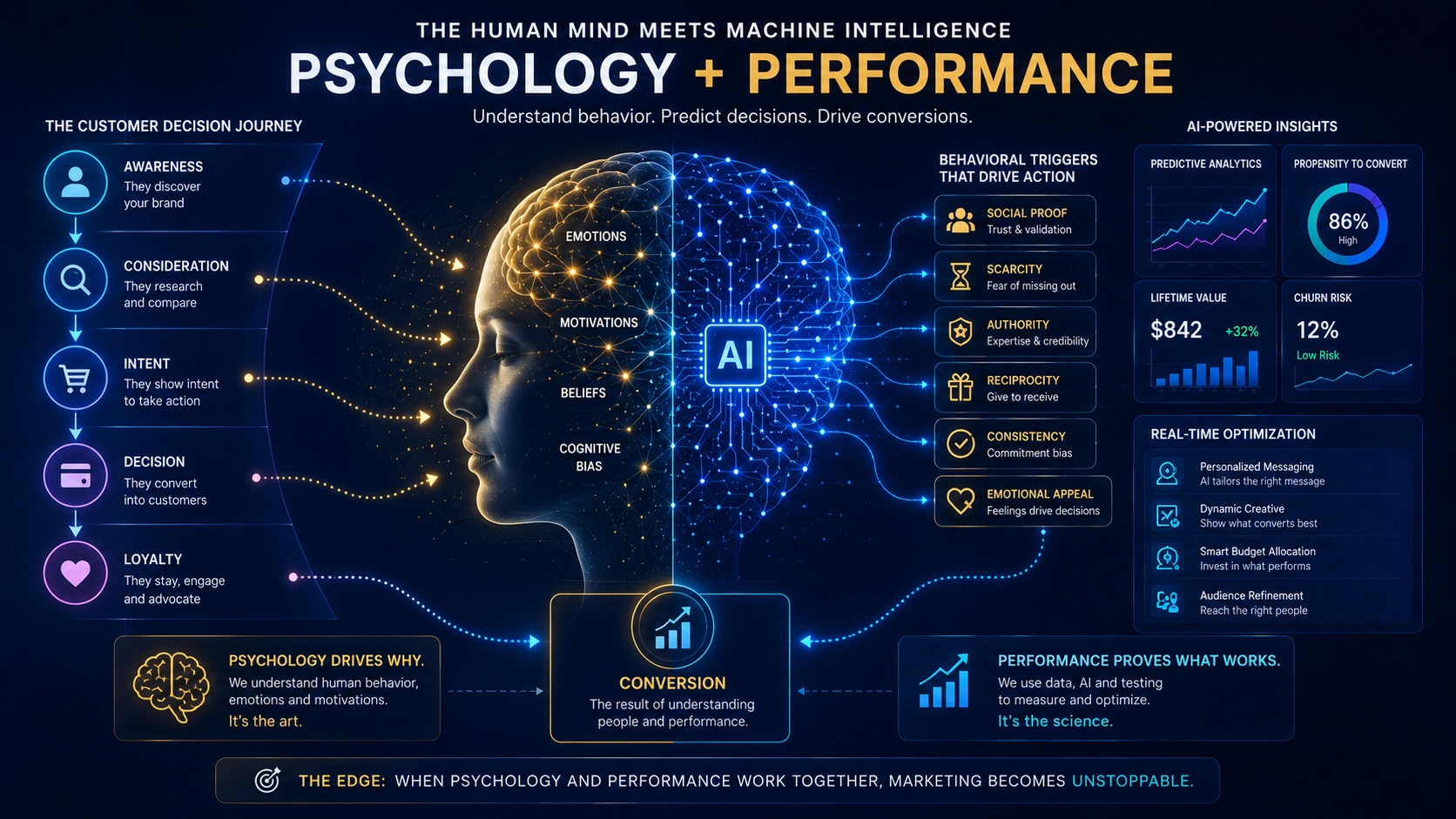
Data tells you what happened.
Psychology helps explain why it happened.
The strongest growth campaigns succeed because they understand human decision-making. Every click, conversion, and purchase reflects a behavioral choice.
Viewed this way, every campaign becomes a series of experiments. Which message creates urgency? Which offer reduces hesitation? Which creative generates trust?
Modern AI performance marketing tools can uncover patterns faster than humans alone. Yet technology still relies on understanding people. Algorithms identify signals. Marketers interpret motivations.
That combination creates a powerful competitive advantage.
Conclusion
The appeal of performance marketing comes down to accountability. Traditional advertising often asks businesses to spend first and evaluate later. This model works differently. Results drive decisions, and data guides improvements.
That advantage matters even more when budgets are tight and competition is intense. Whether you are choosing channels, refining campaigns, or building a stronger team, the principles remain the same.
At its best, performance marketing is not simply efficient. It is transparent. Success is earned through measurable outcomes, allowing results to speak for themselves.
FAQ: Real Questions People Are Searching
How is results-based marketing different from digital marketing?
Digital marketing includes all online marketing activities. Results-driven campaigns focus specifically on measurable business outcomes and direct accountability.
What are the most effective growth marketing channels in 2025?
Paid search, paid social, affiliate partnerships, programmatic advertising, and outcome-based influencer campaigns remain among the strongest channels for measurable growth.
How much should I budget for a results-driven marketing campaign?
Budgets vary by industry, competition, and goals. Most businesses start with a testing budget, evaluate results, and increase spending only after profitable metrics are established.
What does a growth marketing agency actually do?
A specialized agency plans, manages, optimizes, and reports on campaigns focused on measurable outcomes such as leads, sales, and customer acquisition.
How is AI changing results-driven marketing strategies?
AI improves audience targeting, bidding, creative testing, and budget allocation. These capabilities help marketing teams identify opportunities faster and improve campaign efficiency.
MOST POPULAR