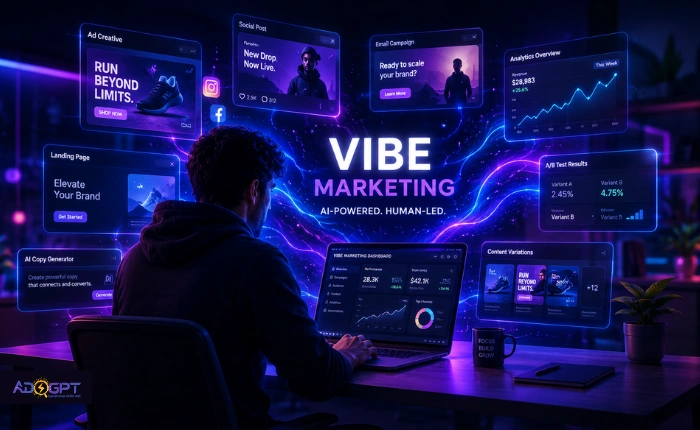
Marketing used to be a team sport. One person handled strategy, another wrote copy, someone else designed creatives, and a paid media specialist managed campaigns. Small companies were expected to compete against that structure with a fraction of the resources.
That model is breaking fast.
Today, one marketer with the right AI stack can brainstorm campaigns, generate ad creatives, test messaging angles, build landing pages, and launch experiments in days instead of months. That shift is what people are starting to call vibe marketing.
The term grew out of Andrej Karpathy’s idea of “vibe coding” in early 2025. Developers were using AI to generate software from intent instead of writing every line manually. Marketers quickly realized the same thing was happening to campaigns, content, and creative work.
This isn’t just another AI buzzword. It’s a new operating model for lean teams that need to move faster than companies ten times their size.
In this guide, you’ll learn what vibe marketing actually means, how the workflow works in practice, which tools matter, and why the companies adopting it early are creating a serious speed advantage.
Read Aloud!
What Is Vibe Marketing? (The 30-Second Answer)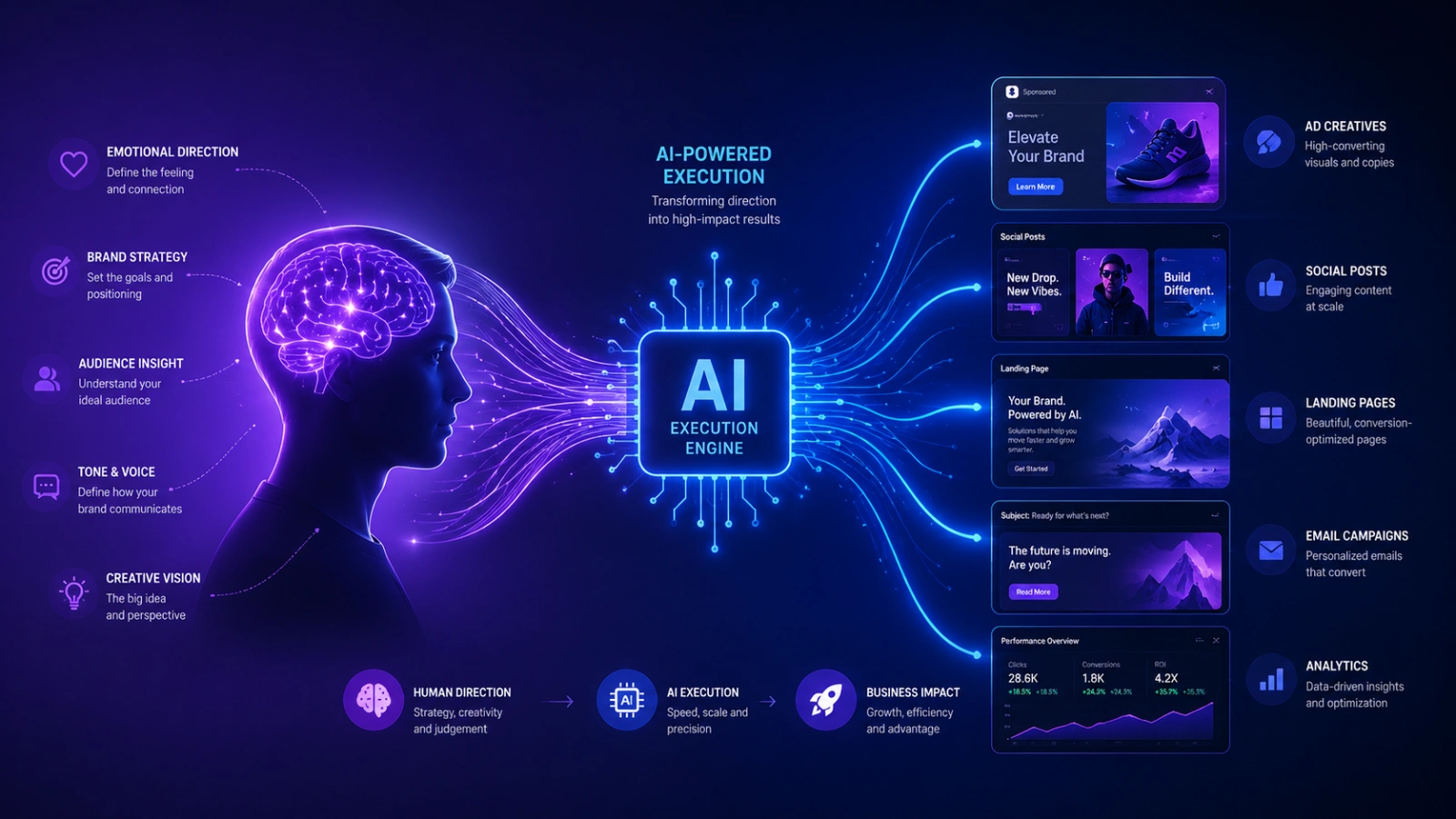
Vibe marketing is a modern marketing approach where humans define the emotional direction, brand tone, and strategic intent while AI tools handle execution at scale. That includes content generation, campaign variations, testing, optimization, and distribution.
The term became popular in 2025 as a marketing parallel to “vibe coding,” a phrase associated with Andrej Karpathy. Instead of manually producing every asset, marketers guide AI with high-level creative direction and rapidly iterate based on audience response.
There’s also a second meaning people use. Some marketers use vibe marketing to describe emotionally resonant branding, where the “vibe” of a company matters as much as the product itself. Both interpretations are valid, and the strongest brands usually combine them.
The reason this matters now is simple: audience expectations are rising while teams are shrinking. AI gives smaller companies the ability to execute at a level that once required an agency.
Why Vibe Marketing Is Taking Over (And Why Now)
Search interest around vibe marketing exploded in 2025 because it solves a very real operational problem. Teams need more output, faster experimentation, and lower production costs at the same time.
That pressure changed how marketing gets done.
Large companies already use AI-assisted workflows internally, but the bigger shift is happening among startups and lean teams. A solo founder can now test ten campaign angles before a traditional company finishes its kickoff meeting.
The economics are hard to ignore.
Companies experimenting with vibe marketing workflows report dramatic reductions in production overhead. Tasks that once required writers, designers, editors, and coordinators now happen inside one connected AI workflow.
At the same time, culture started validating the shift. “Vibe coding” entered mainstream business conversations, major brands leaned into AI-native campaigns, and entirely new job titles began appearing around AI-assisted marketing operations.
This isn’t just about efficiency, either. Faster iteration changes the strategy itself.
Traditional marketing often forces teams to commit heavily before they know what resonates. Vibe marketing flips that process. Launch quickly, read the signals, improve the message, then scale what works.
That creates a major advantage for teams willing to experiment early.
Two Definitions, One Term – Know Which One You’re Talking About
One reason people get confused about vibe marketing is that the phrase currently means two different things online.
Both matter. They just solve different problems.
Vibe Marketing as AI-Accelerated Execution
This is the definition most startup founders and AI-focused marketers mean.
The human sets the direction. AI handles much of the production work.
You define the tone, positioning, emotional angle, audience, and campaign objective. Then AI tools generate content variants, ad creatives, landing page copy, email sequences, social posts, and testing ideas at speed.
The core advantage is operational velocity.
Instead of asking, “Can we produce this campaign?” the question becomes, “Which version should we test first?”
That’s a very different way of working.
Vibe Marketing as Emotional Brand Resonance
The second definition focuses less on AI workflows and more on emotional consistency.
Here, vibe marketing means creating a recognizable feeling around a brand. The aesthetic, tone, humor, personality, and emotional atmosphere become part of the marketing itself.
Think about why some brands feel instantly familiar even before you read the copy. That emotional coherence is the vibe.
This interpretation matters heavily in lifestyle brands, fashion, beauty, entertainment, and consumer apps, where emotional identity drives attention.
This article focuses primarily on the first definition because that’s the shift changing how fast modern teams execute. Still, the second definition quietly shapes every strong campaign.
How Vibe Marketing Actually Works – The Workflow in Plain English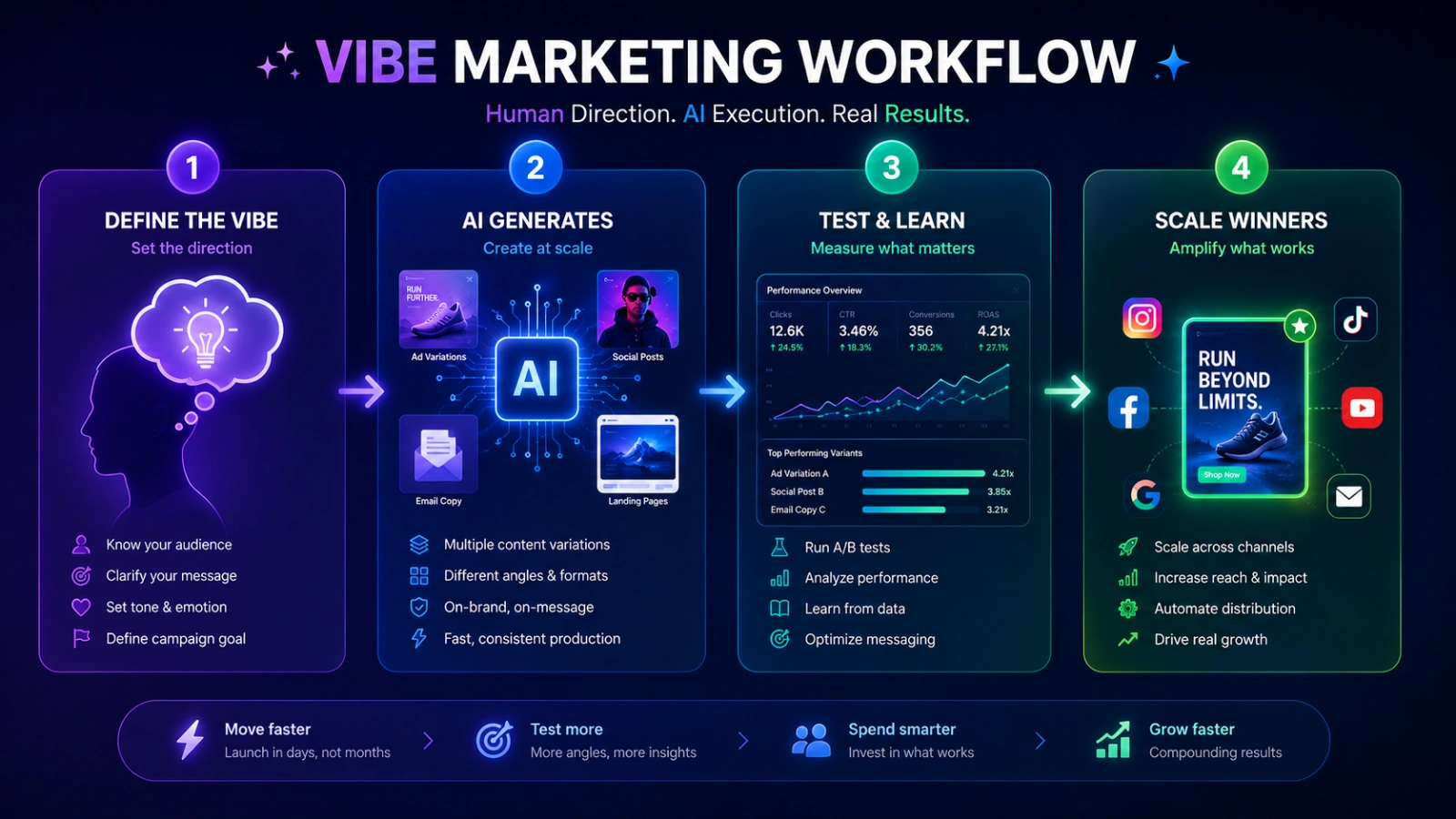
A lot of people hear the term vibe marketing AI and imagine fully automated campaigns running without humans.
That’s not really what’s happening.
The best workflows still rely heavily on human judgment. AI simply compresses the time between idea and execution.
Step 1 – Define the Vibe (Not a Brief, a Direction)
Traditional marketing briefs can stretch for pages. Vibe marketing starts with clarity instead.
You describe the emotional direction in plain language.
For example:
“Write a LinkedIn post that sounds like a confident founder reflecting honestly on a failed product launch while still sounding optimistic.”
That single instruction contains tone, personality, emotional framing, and strategic intent.
Good vibe marketers get unusually good at describing feelings precisely.
Step 2 – Let AI Generate the First Layer
Once the direction exists, AI tools generate multiple options quickly.
This is where the workflow changes psychologically. You stop creating from a blank page and start curating from generated possibilities.
That shift matters more than most people realize.
Writers often lose time trying to create the perfect first draft. Vibe marketing removes much of that friction by turning ideation into selection and refinement.
The output will not always be great. That’s expected.
The advantage comes from volume and iteration speed.
Step 3 – Test Fast, Read the Signal
Traditional campaigns sometimes take weeks before meaningful feedback arrives.
Vibe marketing compresses the loop.
You launch smaller experiments, monitor engagement quickly, identify emotional resonance, then refine the prompt and regenerate. Often within 48 hours.
This creates a much tighter relationship between audience behavior and creative direction.
Over time, teams build instinct around what their audience responds to emotionally, not just analytically.
Step 4 – Scale What Resonates
Once something works, AI can extend that winning angle across channels quickly.
A successful LinkedIn post becomes:
- an email sequence
- a landing page headline
- paid ad variants
- short-form video scripts
- retargeting copy
- webinar positioning
That scalability is the real power behind vibe marketing workflows.
The speed isn’t the point by itself. The ability to compound learning rapidly is.
Vibe Marketing vs. Traditional Marketing – The Real Difference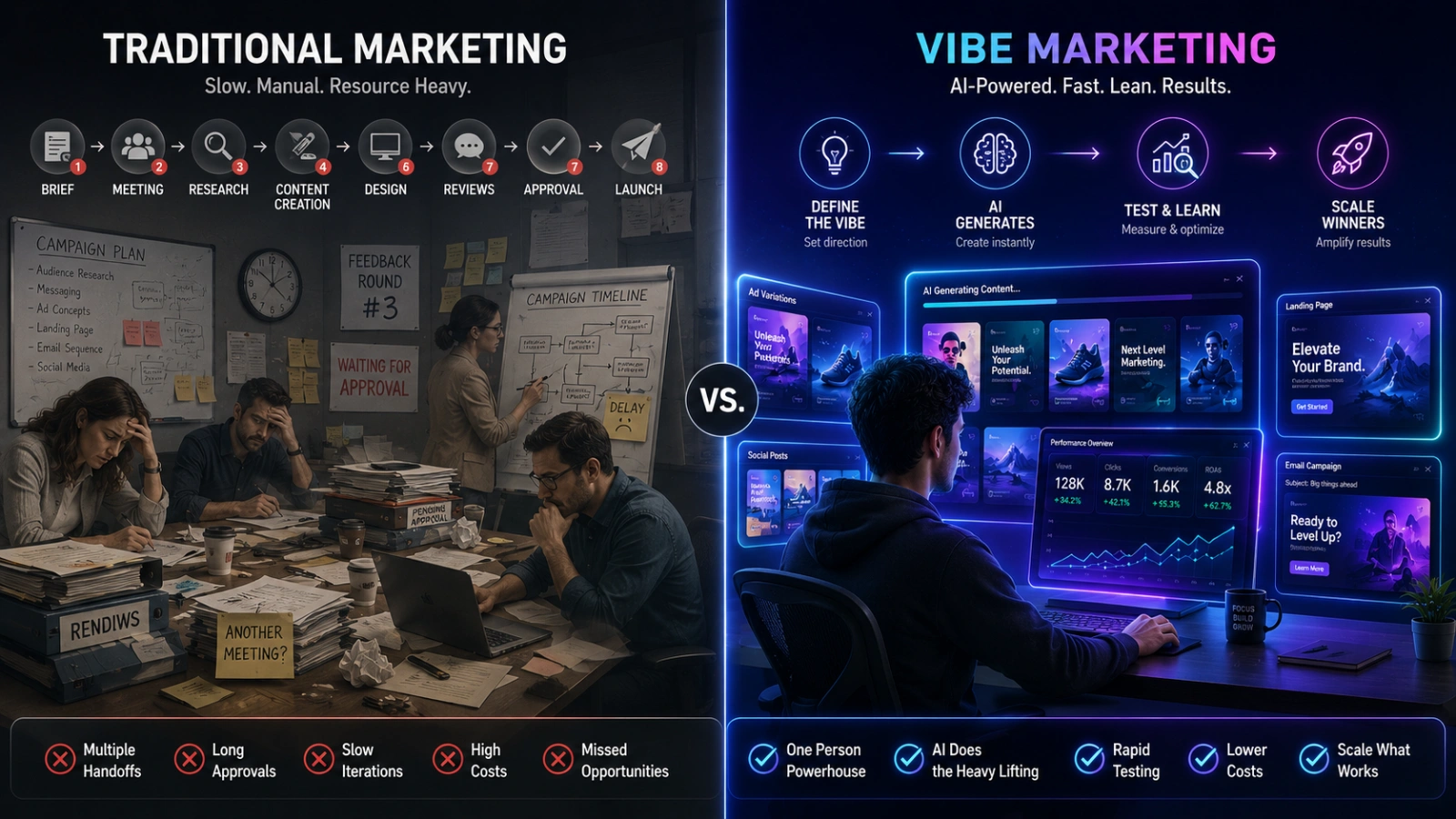
The easiest way to understand vibe marketing is to compare it to a typical campaign launch.
Imagine a startup releasing a new product feature.
In a traditional workflow, strategy meetings happen first. Then briefs move between copywriters, designers, media buyers, and stakeholders. Feedback cycles stack on top of each other.
A launch can easily take three to six weeks.
By the time the campaign goes live, the market may already have shifted.
Now compare that to a vibe marketing workflow.
One marketer defines the emotional angle, generates ten campaign directions with AI, launches lightweight tests across channels, and scales the strongest performer within days.
The campaign becomes adaptive instead of fixed.
That changes the economics dramatically.
Traditional marketing also front-loads risk. Teams invest heavily before knowing whether the messaging works. Vibe marketing lowers that exposure by encouraging fast, low-cost experimentation before scaling spend.
This doesn’t mean traditional marketing disappears. Large campaigns still require coordination, brand governance, and deep strategic work.
But for startups and lean teams, vibe marketing creates leverage that traditional systems struggle to match.
The Boring Business Marketing Demo
One of the clearest demonstrations of vibe marketing AI workflows comes from teams building campaigns live in real time.
A simple emotional brief goes into the system:
- target audience
- desired tone
- offer positioning
- campaign objective
Within hours, the workflow produces landing pages, headlines, ad creatives, CTAs, and testing variants that traditionally require weeks of coordination.
The speed changes what teams are willing to experiment with.
That’s the hidden advantage.
Read More!
What Most People Get Wrong About Vibe Marketing
This is where experienced marketers become skeptical, and honestly, some of that skepticism is justified.
A lot of AI-generated marketing already feels interchangeable.
Confusing Speed with Strategy
Fast execution means nothing without clarity.
Some teams generate huge amounts of content but never define what they actually want audiences to feel.
That creates noise, not resonance.
Good vibe marketing starts with positioning, audience empathy, and emotional precision. Speed is the result of those things, not the replacement for them.
Letting AI Erase Your Brand Voice
The “AI slop” problem is real.
When everyone uses identical prompts and default outputs, brands begin sounding strangely similar. Audiences notice faster than marketers think.
The teams getting strong results train AI systems using their existing voice, customer language, founder perspective, and historical messaging.
Originality still matters.
Possibly more than ever.
Treating Vibe Marketing as a Content Hack
One-off experiments are not systems.
The real leverage appears when companies build repeatable infrastructure:
- prompt libraries
- brand voice frameworks
- workflow automations
- testing systems
- feedback loops
That’s what allows performance to compound over time.
Ignoring AI-Referred Traffic
Search behavior is changing quickly.
People increasingly discover products through ChatGPT, Perplexity, Gemini, and AI-powered search interfaces. That changes how content should be structured.
Clear explanations, direct answers, named frameworks, original insights, and structured information improve retrieval across both traditional SEO and AI search environments.
Teams optimizing only for Google may already be missing part of the traffic shift.
The Skill That Actually Wins in the Vibe Marketing Era
The strange thing about AI is that it makes human judgment more valuable, not less.
When everyone has access to the same tools, execution advantages shrink.
Taste becomes the differentiator.
The best vibe marketers understand:
- What feels emotionally authentic
- What audiences secretly want
- What trends feel forced
- When messaging crosses into cringe
- How to create emotional consistency
Those are deeply human skills.
AI can generate endless variations. It cannot fully replace intuition, cultural awareness, or aesthetic judgment.
That’s why the strongest marketers increasingly resemble creative directors instead of production specialists.
They guide systems rather than manually building every output themselves.
For founders, this has a practical implication.
Spend as much time sharpening your judgment as you spend learning new AI tools. Study campaigns that move people. Pay attention to emotional tone. Analyze why certain brands feel magnetic while others feel generic.
That instinct compounds.
And in the vibe marketing era, it may become the most valuable advantage you own.
The Vibe Marketing Stack: What Actually Matters
Most marketing teams are not short on ideas. The real problem is how long execution takes.
One campaign can involve copy revisions, design feedback, video edits, approvals, and platform setup before anything even goes live. For lean teams, that process gets exhausting fast.
That’s where vibe marketing starts to make sense.
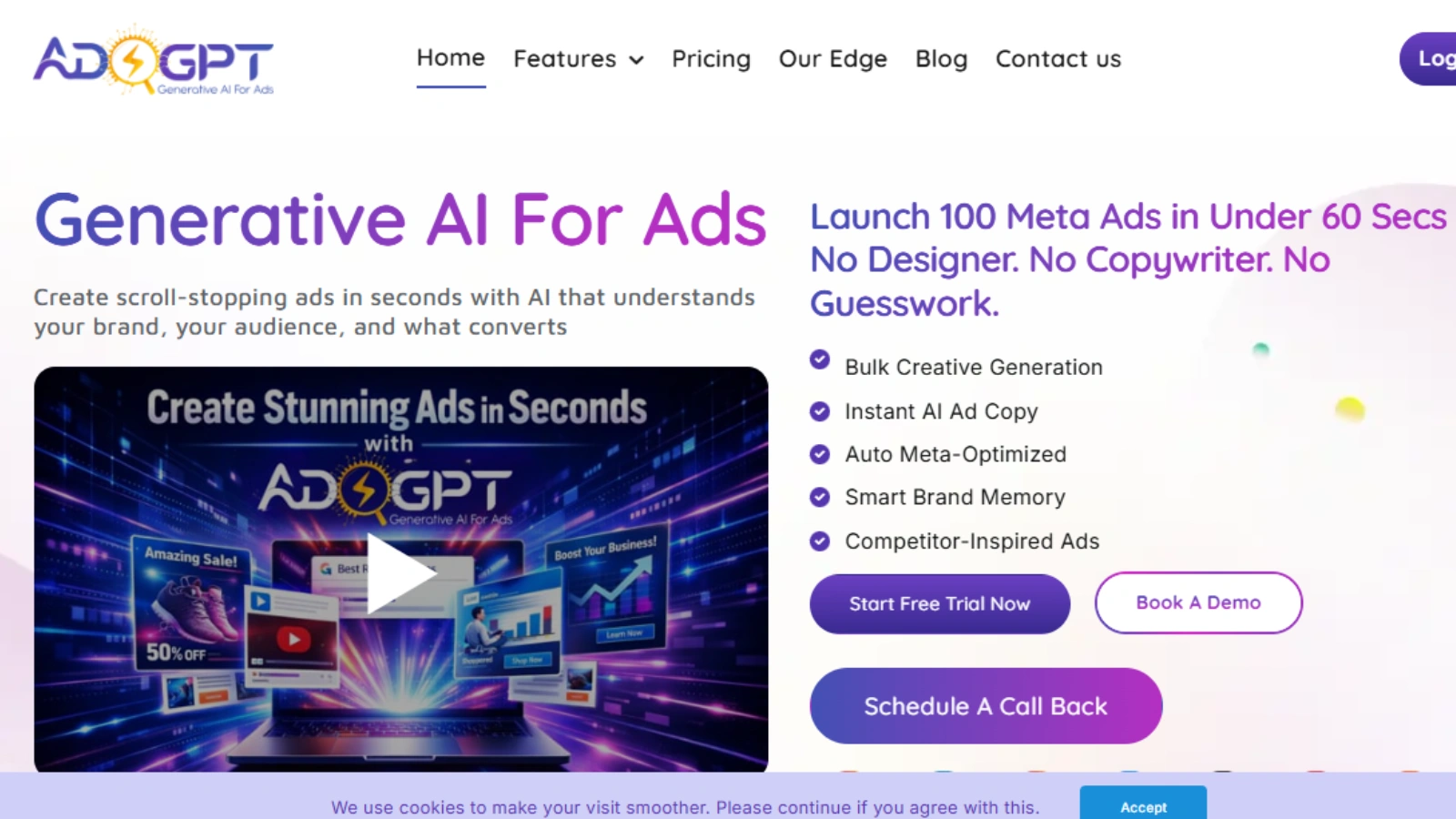
Instead of juggling multiple tools and specialists, AdsGPT brings the workflow into one place. You define the direction, and the platform helps turn it into launch-ready creative much faster.
With AdsGPT :
- Generate AI-powered image ads and creative variations in seconds
- Create UGC-style and AI avatar video ads without filming or production teams
- Bulk-generate on-brand ad creatives with Ad Factory for faster testing
- Maintain consistent brand tone, visuals, and messaging with BrandIQ
- Launch Meta ad campaigns directly from generated creatives in one workflow
Frequently Asked Questions About Vibe Marketing
Is vibe marketing just AI content generation with a new name?
Not exactly. AI content generation is only one layer of the process. Vibe marketing includes emotional direction, rapid iteration, testing workflows, audience feedback loops, and scalable systems built around AI-assisted execution.
Do I need a big team or budget to start with Vibe Marketing?
No. In fact, vibe marketing works especially well for lean teams and solo founders. The biggest investment is usually time spent defining your voice, audience, and workflow clearly.
How is vibe marketing different from content marketing?
Content marketing is a channel strategy focused on attracting audiences through useful content. Vibe marketing is an execution philosophy that uses AI-human collaboration to create, test, and scale campaigns faster across channels.
What skills do I need to become a vibe marketer?
Prompt writing helps, but judgment matters more. Strong vibe marketers understand emotional tone, audience psychology, positioning, and fast iteration. The technical tools are easier to learn than creative intuition.
What’s the biggest risk of vibe marketing?
Brand dilution through volume. Fast output can become generic quickly if teams rely on default AI responses without maintaining a strong voice and clear positioning.
How does vibe marketing affect SEO?
Good vibe marketing can accelerate high-quality content production significantly. Poor execution creates thin AI-generated content that search engines increasingly deprioritize. Quality still matters more than scale alone.
MOST POPULAR