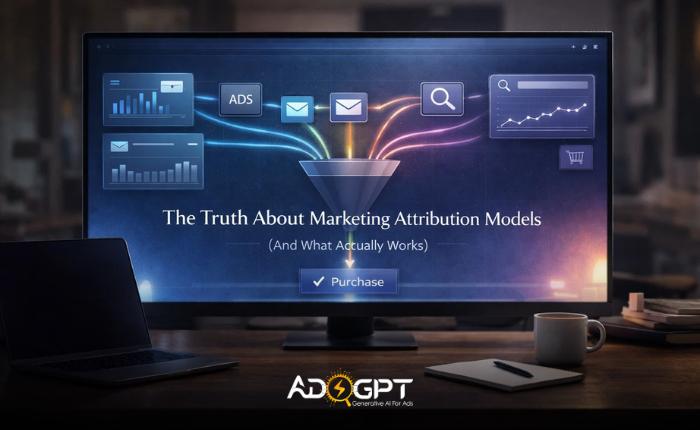
Marketing has never been more measurable.
Every click, scroll, impression, and conversion is tracked, analyzed, and reported. Dashboards are filled with numbers that look precise, even convincing, even reassuring.
But here’s the uncomfortable truth:
Most marketers still don’t know what actually drives results.
Not with certainty.
Because while data has increased, clarity hasn’t kept up.
A customer might interact with your brand 10 times before converting—but if your system only credits one of those interactions, you’re not seeing reality. You’re seeing a simplified version of it.
This is exactly why the marketing attribution model exists.
But here’s where things get interesting: attribution models don’t just reveal truth, they interpret it. And depending on which model you use, that interpretation can look very different.
Let’s unpack what’s really going on behind the scenes.
In a hurry? Listen to the blog instead!
What Is a Marketing Attribution Model (Beyond the Definition)?
At a surface level, a marketing attribution model is a system that assigns credit to different touchpoints in a customer journey.
But in practice, it’s much more than that.
It’s a lens.
A way of deciding:
- Which interactions matter
- Which ones don’t
- And how much each contributes to a conversion
Every time a user engages with your brand, through ads, emails, blogs, or social media, they leave behind signals.
Marketing attribution organizes those signals into a narrative.
Without that narrative, your data is fragmented. You might know what happened, but not why it happened.
And when to Dominate marketing, that difference is everything.
The Hidden Complexity of Modern Customer Journeys

To understand why attribution model marketing matters, you need to understand how messy customer journeys have become.
A typical journey today might look like this:
- A user discovers your brand through a social media post
- Visits your website but leaves without converting
- Sees a retargeting ad two days later
- Clicks an email a week after that
- Searches your brand on Google
- Finally makes a purchase
Now ask yourself:
Which touchpoint deserves the credit?
- The social post that created awareness?
- The retargeting ad that reminded them?
- The email that re-engaged them?
- Or the Google search that sealed the deal?
There’s no single “correct” answer.
That’s why different marketing attribution models exist to answer this question in different ways.
Single-Touch vs Multi-Touch Attribution: A Strategic Choice
Before diving into specific models, you need to make a foundational decision.
Single-Touch Attribution
This approach assigns all credit to one touchpoint.
It’s fast, simple, and easy to understand.
But simplicity comes at a cost; it ignores most of the journey.
Multi-Touch Attribution
This approach distributes credit across multiple interactions.
It reflects reality more accurately but requires better data and tools.
Professional Comparison Table
| Factor | Single-Touch Attribution | Multi-Touch Attribution |
| Data Requirement | Minimal | High |
| Accuracy | Low | High |
| Implementation | Easy | Complex |
| Insight Depth | Basic | Advanced |
| Best For | Small teams, short cycles | Scaling businesses, complex funnels |
Deep Dive: Understanding Each Attribution Model

Let’s go beyond definitions and understand how these models behave in real-world scenarios.
First-Touch Attribution: The Awareness Champion
This model gives full credit to the first interaction.
It answers one key question:
“How are people discovering us?”
It’s incredibly useful for understanding top-of-funnel performance.
But it has a major blind spot; it ignores everything that happens after the first interaction.
In reality, discovery alone rarely drives conversions.
Last-Touch Attribution: The Closer’s Bias
This model gives full credit to the final interaction before conversion.
It’s widely used because it’s simple and easy to measure.
But here’s the problem:
It assumes the last touchpoint did all the work.
In most cases, that’s not true.
The final interaction often just captures demand that was created earlier.
Linear Attribution: The Equalizer
This model distributes credit evenly across all touchpoints.
It’s fair, but not necessarily accurate.
Not every interaction has the same level of influence.
Still, it’s useful for understanding the full journey without bias toward a single stage.
Time-Decay Attribution: The Recency Effect
This model gives more credit to interactions closer to conversion.
It’s based on the assumption that recent touchpoints have more influence.
This works well for:
- Short-term campaigns
- Promotions
- Nurture sequences
But it can undervalue early interactions that started the journey.
Position-Based (U-Shaped) Attribution: The Balanced Approach
This model emphasizes:
- The first touch (awareness)
- The last touch (conversion)
It acknowledges that both discovery and decision matter.
The middle interactions still get credit, but less.
W-Shaped Attribution: The Funnel-Focused Model
This model adds another key milestone:
Lead creation
It’s especially useful for B2B or SaaS businesses where the funnel is structured.
Data-Driven Attribution: The Intelligent Model
This is where attribution becomes more advanced.
Instead of predefined rules, it uses algorithms to analyze patterns.
It compares:
- Converting vs non-converting journeys
- High-value vs low-value customers
Then assigns credit based on actual impact.
It’s powerful, but only if you have enough clean data.
Comparison Table: Attribution Models in Action
| Model | Credit Logic | Best For | Strength | Weakness |
| First-Touch | 100% to first | Awareness campaigns | Identifies discovery channels | Ignores conversion path |
| Last-Touch | 100% to last | Conversion tracking | Simple insights | Misleading conclusions |
| Linear | Equal distribution | Full journey analysis | Balanced view | Lacks prioritization |
| Time-Decay | Weighted by time | Promotions & nurturing | Reflects recency | Undervalues early stages |
| U-Shaped | First & last heavy | Balanced strategy | Focus on key moments | Mid-funnel ignored |
| W-Shaped | Adds lead stage | B2B funnels | Detailed insights | Complex setup |
| Data-Driven | Algorithm-based | Advanced teams | High accuracy | Data-intensive |
What Are the Top Marketing Attribution Tools?
Let’s answer the big question clearly:
What are the top marketing attribution tools?
Because even the best marketing attribution model is useless without proper tracking.
Tool Categories Explained
| Tool Type | Examples | Use Case |
| Analytics Tools | Google Analytics | Basic attribution |
| CRM Platforms | HubSpot, Salesforce | Customer lifecycle tracking |
| Attribution Platforms | Triple Whale, Ruler Analytics | Multi-touch attribution |
| BI Tools | Tableau, Power BI | Custom dashboards |
Each category serves a different purpose.
The key is choosing tools that align with your data maturity.
While understanding attribution is critical, acting on those insights is where real growth happens. Knowing which touchpoints drive conversions is only useful if you can quickly turn that knowledge into high-performing campaigns. This is where platforms like AdsGPT step in, helping marketers bridge the gap between insight and execution by transforming attribution data into ready-to-launch ad creatives at scale.
Turn Attribution Insights into High-Performing Ads with AdsGPT
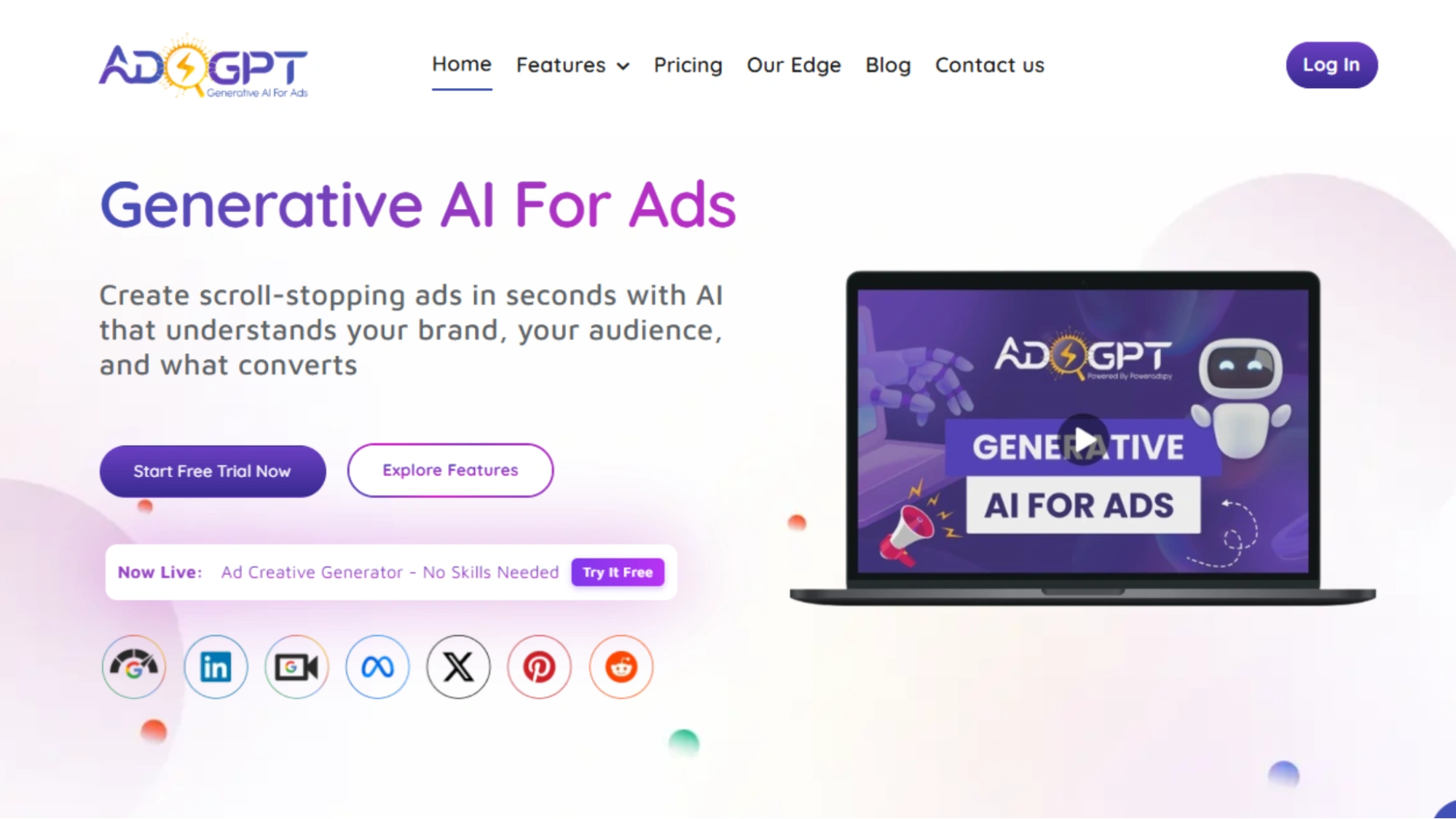
Understanding your marketing attribution model is powerful, but it’s only half the equation. The real advantage comes when you can take those insights and instantly turn them into campaigns that perform.
That’s exactly what AdsGPT is built for.
Instead of spending days translating data into creatives, AdsGPT enables you to generate, test, and scale ads in seconds based on what your attribution data is already telling you.
Key Features That Make AdsGPT a Game-Changer
-
Bulk Creative Generation
Generate multiple ad creatives instantly to test different angles and scale what works faster; it’s perfect for attribution-driven experimentation.
-
AI-Powered Ad Copy
Create high-converting, platform-specific ad copy for Meta, Google, LinkedIn, and more, aligned with the channels your attribution data highlights.
-
Competitor-Inspired Creatives
Leverage competitor insights to generate ads that follow proven patterns while maintaining your unique brand voice.
-
Smart Brand Memory
Ensure consistency across every ad with saved brand elements like tone, logo, and messaging, no matter how many creatives you generate.
-
Platform-Specific Optimization
Automatically format and optimize creatives for different platforms, placements, and aspect ratios so your execution matches your strategy.
-
Built-In Analytics & Insights
Track performance with analytics, and refine your campaigns with data-backed insights all in one place.
If attribution gives you clarity, execution gives you results.
And the brands that win today are the ones that can move from insight to action without delays.
👉 Start creating smarter, faster, and more effective ads with AdsGPT and turn your attribution insights into real performance.
The Biggest Attribution Challenges (That Most Blogs Ignore)
Let’s talk about what actually goes wrong.
1. Data Silos Break Everything
Your data lives in different tools:
- Ads platforms
- CRM
- Email systems
If these don’t connect, your attribution is incomplete.
2. Cross-Device Tracking Is Still Broken
Users switch devices constantly.
Tracking them as one user is still a challenge.
3. Offline Influence Is Invisible
Word-of-mouth, events, and referrals don’t show up in dashboards.
But they still impact decisions.
4. Privacy Is Reshaping Attribution
With stricter regulations, tracking is becoming limited.
Marketers are shifting toward first-party data.
5. Attribution Bias Is Real
Teams often prefer models that favor their channel.
This creates internal conflicts and skewed decisions.
Read More:
How to Use AI Marketing Tools to Dominate in 2026
How To Create a Marketing Analytics Dashboard in 5 Easy Steps
How to Choose the Right Marketing Attribution Model (Strategically)
Instead of asking “Which model is best?” ask:
- What am I trying to measure?
- How complex is my funnel?
- How reliable is my data?
Simple Framework:
- Short journey → Last-touch
- Awareness focus → First-touch
- Complex funnel → Multi-touch
- Advanced data → Data-driven
What Actually Works in Marketing Attribution

After all the theory, here’s the reality:
1. Use Multiple Models
No single model tells the full story.
2. Focus on Trends, Not Perfection
You don’t need perfect accuracy, just better direction.
3. Invest in Data Quality
Clean data matters more than complex models.
4. Turn Insights into Action
Attribution without action is just reporting.
The Future of Marketing Attribution
Attribution is evolving, and fast.
AI & Machine Learning
Smarter, automated insights.
Privacy-First Tracking
Less reliance on cookies.
Unified Measurement Models
Combining multiple attribution approaches.
Incrementality Testing
Measuring true impact, not just correlation.
Final Thoughts: What Most Marketers Get Wrong
Here’s the truth most marketers eventually realize:
A marketing attribution model won’t give you perfect answers.
But it will give you better ones.
And in marketing, better decisions compound over time.
You stop wasting budget.
You double down on what works.
You understand your audience more deeply.
And slowly, your strategy becomes less about guessing… and more about knowing.
That’s what marketing attribution is really about.
Frequently Asked Questions (FAQs)
1. What is a marketing attribution model in simple terms?
A marketing attribution model is a method used to assign credit to different touchpoints in a customer’s journey. It helps you understand which channels or interactions contribute to conversions so you can make smarter marketing decisions.
2. Which marketing attribution model is the best?
There’s no one-size-fits-all answer. The best marketing attribution model depends on your goals, sales cycle, and data quality. For simple tracking, last-touch works. For deeper insights, multi-touch or data-driven models are more effective.
3. Why is marketing attribution important for businesses?
Marketing attribution helps businesses identify what’s actually driving results. It improves budget allocation, enhances campaign performance, and ensures you’re investing in the channels that deliver real ROI.
4. What are the top marketing attribution tools?
Some of the top marketing attribution tools include analytics platforms like Google Analytics, CRM systems like HubSpot, and advanced attribution tools like Triple Whale or Ruler Analytics. The right choice depends on your business size and data complexity.
5. How do you turn attribution insights into better campaigns?
Attribution insights show you what’s working, but acting on them is key. This means creating ads, content, and campaigns aligned with high-performing touchpoints. Tools like AdsGPT can help speed up this process by generating data-backed ad creatives, making it easier to test, optimize, and scale campaigns effectively.
MOST POPULAR