
Introduction – The Gut-Feel Problem
Marketing data analytics often shows up right when a campaign ends. You open the dashboard, scan a few numbers, and try to decide if things worked. Traffic looks fine. Clicks seem decent. Conversions are harder to explain.
So someone makes a call. Success or failure. And everyone moves on, slightly unsure.
This is a common pattern. Teams have access to more data than ever, yet decision-making still leans on instinct. The issue is not data volume. It is the gap between what you see and what you understand.
That gap is exactly where marketing data analytics becomes useful. It helps turn scattered numbers into decisions you can explain, defend, and improve over time.
Read Aloud!
Quick Answer – What Is Marketing Data Analytics?
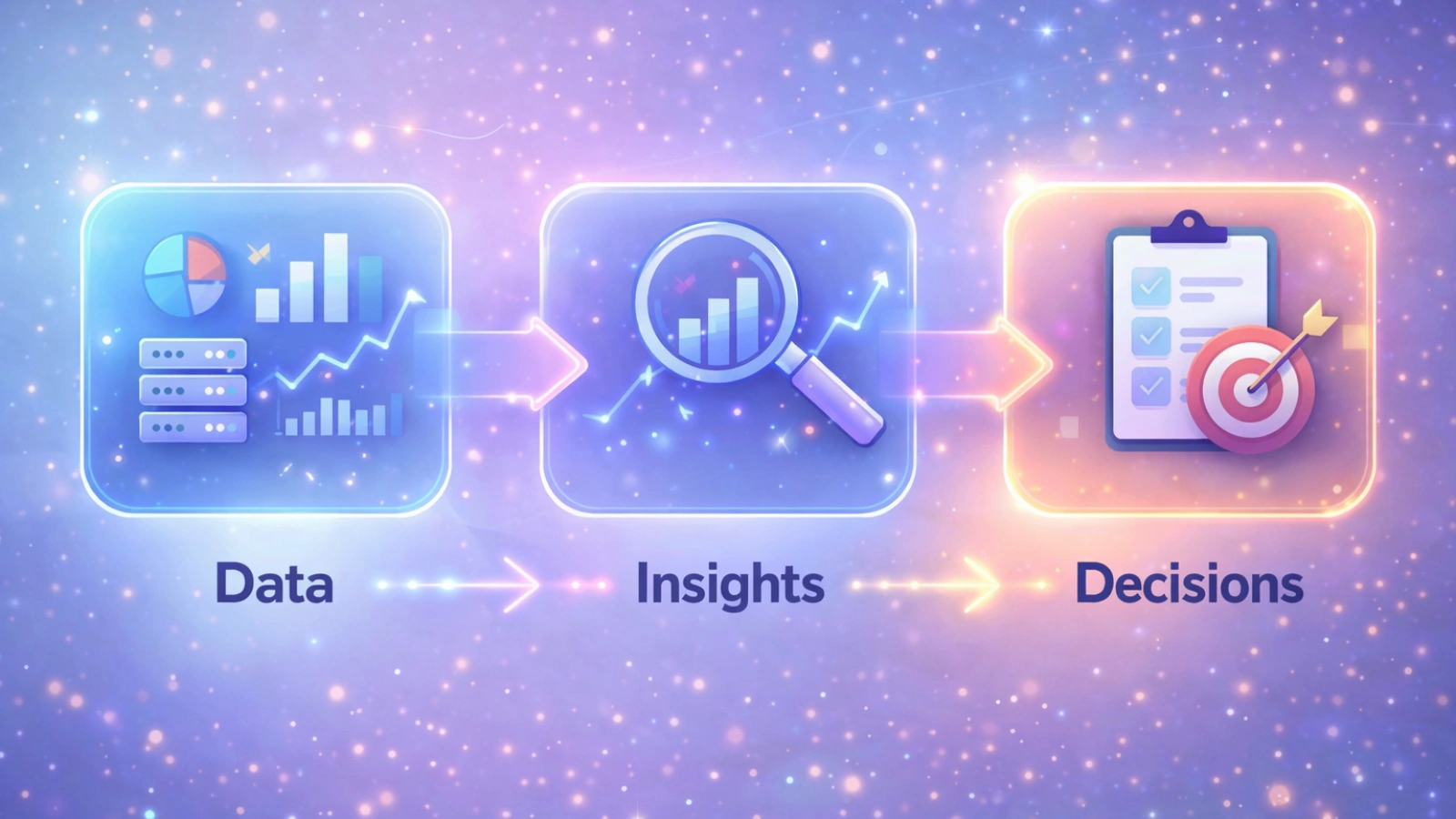
Marketing data analytics is the practice of collecting and analyzing data from your campaigns to make better marketing decisions. It helps you understand customer behavior, measure performance, and identify what actually drives results.
At its core, marketing data analytics is about turning information into action, not just observation.
The Four Layers of Marketing Analytics (And Where Most Teams Get Stuck)
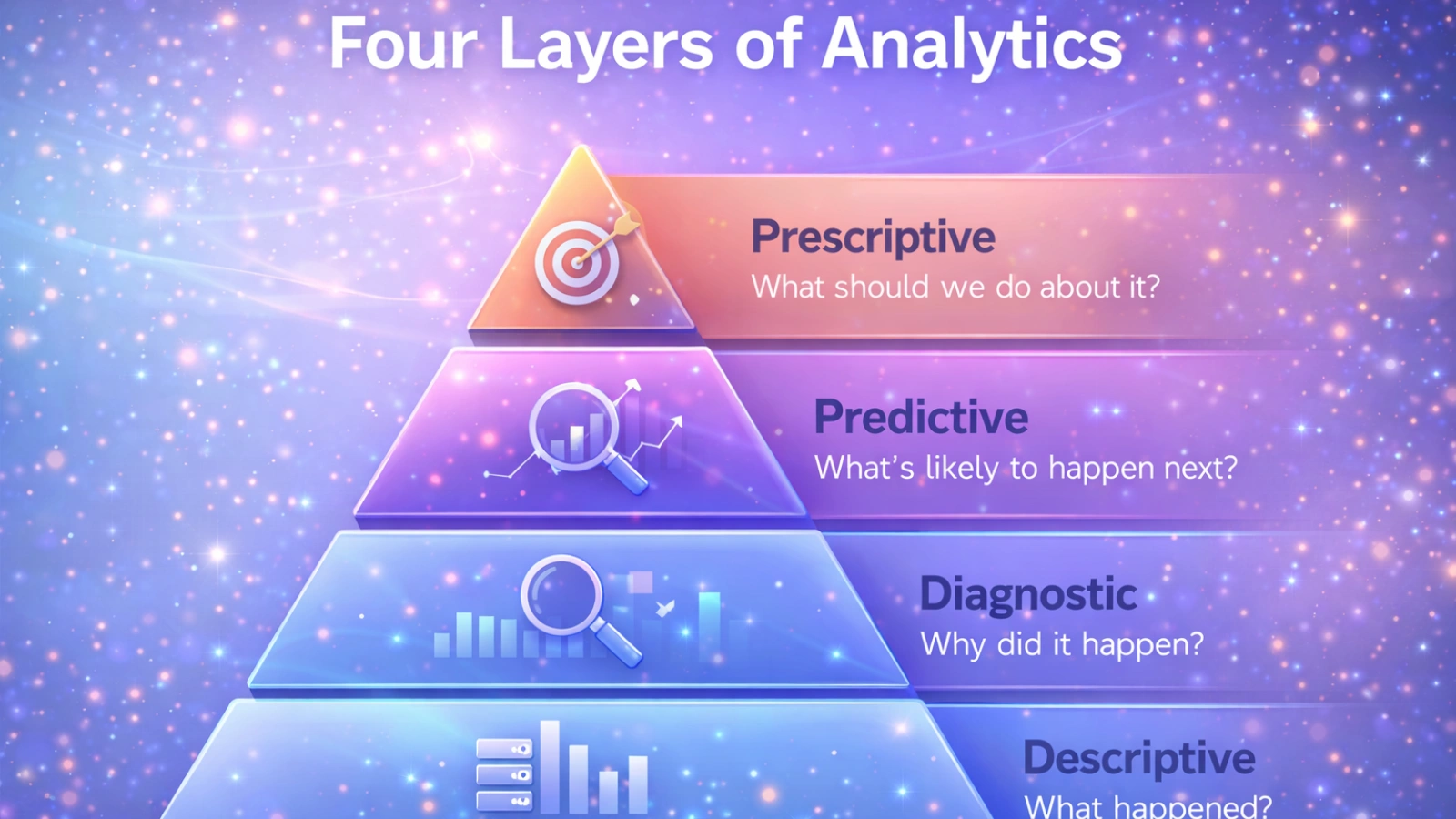
It helps to think of marketing data analytics as a progression. Each level answers a more valuable question, but most teams stop earlier than they should.
Descriptive – “What happened?”
This is the starting point for almost every team. You review dashboards, campaign summaries, and performance reports.
For example, you might notice your email open rate dropped by 12% last month. That insight is useful, but it does not explain much on its own.
The problem is not this layer. It is stopping here and assuming you understand the full story.
Diagnostic – “Why did it happen?”
This is where marketing data analytics starts to pay off. You begin connecting data points instead of just reading them.
That drop in open rates might link back to a subject line test sent to the wrong audience segment. Now you have context, not just numbers.
Without this step, teams often fix the wrong problems. With it, decisions become more precise.
Predictive – “What’s likely to happen next?”
At this stage, marketing data analytics helps you look ahead instead of backward.
You can identify patterns, such as which leads are more likely to convert or when customers might stop engaging. Even simple forecasting can change how you plan campaigns.
You do not need complex systems to begin. Many data analytics tools for marketing already include basic prediction features.
Prescriptive – “What should we do about it?”
This is where insights turn into action. Instead of just understanding patterns, you receive clear recommendations.
For instance, a platform might suggest shifting the budget toward a specific audience segment with a lower acquisition cost.
Reaching this level means marketing data analytics is no longer just reporting. It becomes part of how decisions are made every day.
Why This Actually Matters – The Business Case Behind the Buzzword
It is easy to treat marketing data analytics as something to improve later. After all, campaigns still run without it.
But decisions based on incomplete understanding tend to scale the wrong things. That is where the real cost shows up.
When analytics is used well, feedback loops shrink. You do not wait until the end of a quarter to learn what worked. You adjust while campaigns are still running.
It also changes how marketing is viewed internally. When you connect effort to revenue, conversations with leadership become clearer and more grounded.
What Marketing Data Analytics Actually Covers (It’s More Than Your Dashboard)
Many people assume marketing data analytics starts and ends with a dashboard. In reality, it spans several areas of your marketing system.
You are working with different types of data, each answering a specific question:
- Website analytics shows how visitors behave and where they come from
- Campaign analytics tracks performance across ads, email, and content
- Customer analytics focuses on segmentation, retention, and lifetime value
- Attribution analytics helps identify which touchpoints drive conversions
- Market analytics compares your performance to competitors
Understanding how to use data platforms for marketing analytics means connecting these layers, not treating them separately.
The Metrics That Actually Tell You Something (vs. the Ones That Feel Good)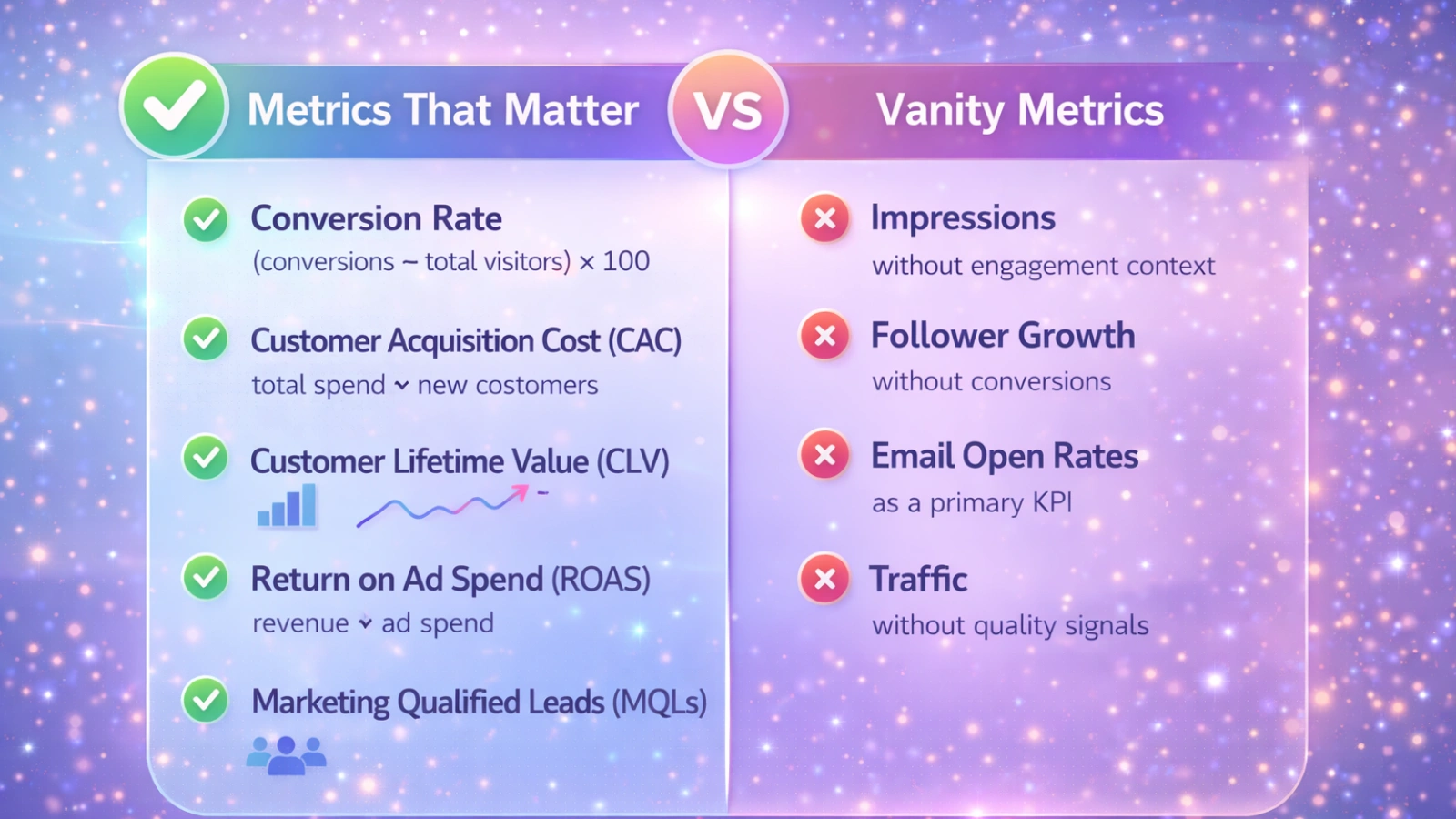
Not every metric deserves your attention. Some help you make decisions. Others simply look impressive.
Metrics worth tracking
These metrics connect directly to outcomes:
- Conversion rate = (conversions ÷ total visitors) × 100
- Customer Acquisition Cost (CAC) = total spend ÷ new customers
- Customer Lifetime Value (CLV) reflects long-term revenue potential
- Return on Ad Spend (ROAS) = revenue ÷ ad spend
- Marketing Qualified Leads (MQLs) indicate sales readiness
These numbers guide where to invest and what to improve.
Metrics that mislead
Some metrics create a sense of progress without real impact:
- Impressions without engagement context
- Follower growth without conversions
- Email open rates as a primary KPI
- Traffic without quality signals
They are not useless, but relying on them alone can distort your decisions.
How to Actually Use Data Analytics in Your Marketing (A Framework, Not a Lecture)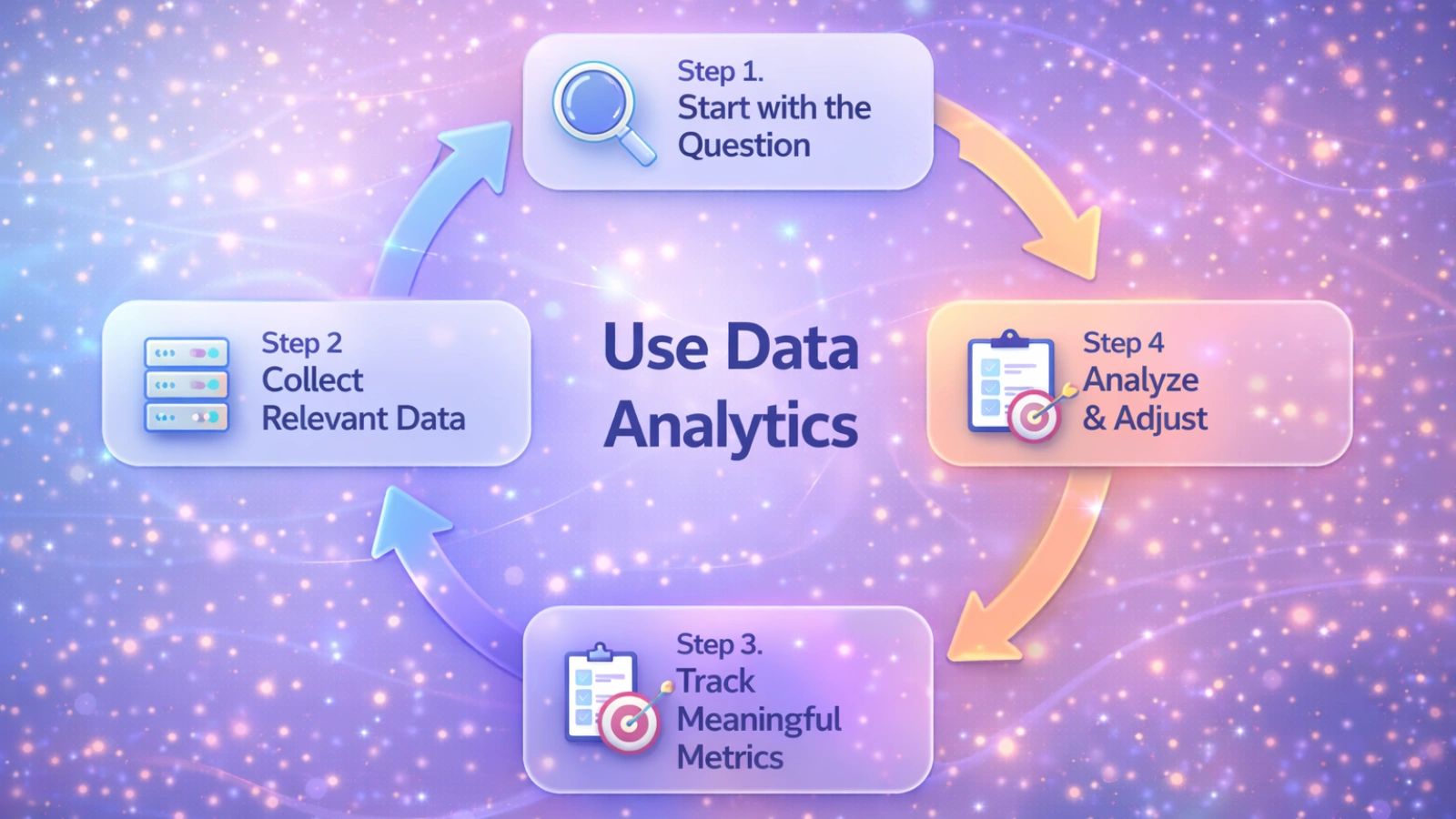
Most advice on marketing data analytics focuses on tools. That approach often misses the point.
Good analysis starts with clear thinking.
Step 1 – Start with the question, not the data
Before opening any tool, define what you are trying to figure out.
A focused question might be: Why did our Q2 leads convert at a lower rate than Q1?
This approach keeps your analysis grounded. Otherwise, you risk collecting data without direction.
Step 2 – Identify your data sources and close the gaps
Your data likely sits across multiple platforms. CRM systems, ad platforms, website analytics, and email tools all hold pieces of the picture.
Mapping these sources helps you see what is missing.
Strong data analytics for marketing depends on visibility across the entire customer journey, not isolated data points.
Step 3 – Pick the right metrics for the right stage
Each stage of the funnel requires different signals.
- Awareness focuses on reach and visibility
- Consideration looks at engagement and interest
- Conversion tracks actions like purchases or sign-ups
- Retention measures loyalty and repeat behavior
Using the wrong metrics at the wrong stage often leads to confusion.
Step 4 – Build a feedback loop, not just a report
Reports summarize what happened. Feedback loops drive action.
Set a regular rhythm for reviewing performance and adjusting strategy. Weekly check-ins and monthly reviews are a good starting point.
The goal is simple. Every insight should lead to a decision.
Where AdsGPT Fits Into Your Marketing Analytics Workflow
Marketing data keeps growing, but turning insights into action is still where most teams struggle. AdsGPT helps bridge that gap by combining marketing data analytics with execution in a single workflow.
Here’s how it fits in where it matters most:
- Multi-platform analytics in one place
View performance data across channels like Google, Meta, and YouTube without jumping between tools, making data analytics for marketing more streamlined. - Performance comparison and trend insights
Compare campaigns, track engagement patterns, and understand what is actually working across your ads and competitors. - Unified ad-level analytics
Get a clear view of key metrics for individual ads, helping you quickly identify underperforming segments and opportunities. - Actionable insights like CTA and regional performance
Understand which messages drive engagement and how performance varies by location, so you can refine targeting and messaging with confidence. - Instant move from insight to execution
Turn insights into action by generating new ad creatives or copy based on what the data reveals, closing the gap between analysis and optimization.
The result is simple. Marketing data analytics becomes part of how you run campaigns, not just something you review after they end.
Also Read!
The Mistakes That Make Good Data Useless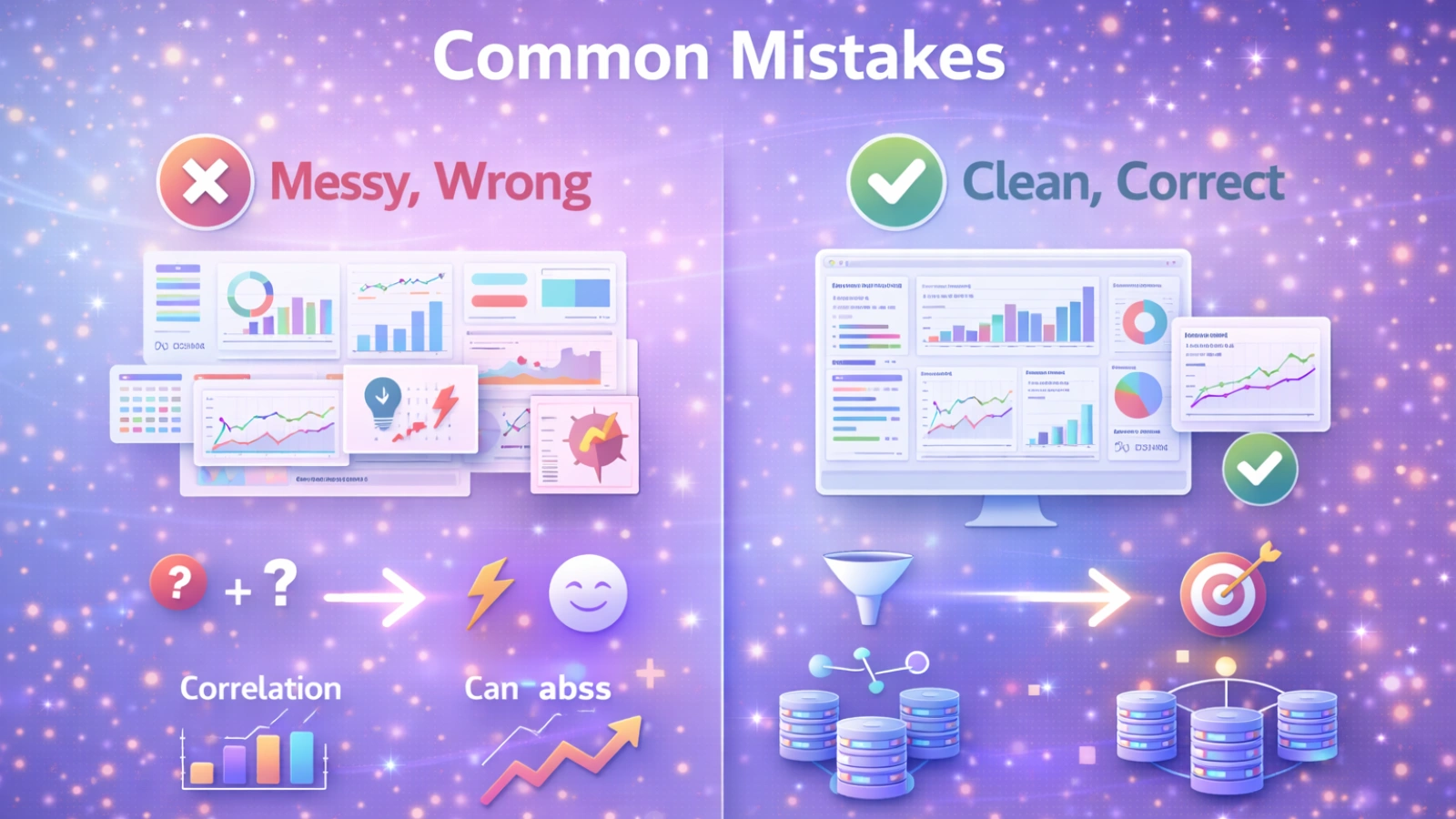
Even strong marketing data analytics systems can fail if the basics are overlooked.
One common issue is tracking what is easy instead of what matters. This leads to dashboards filled with surface-level metrics.
Another mistake is assuming correlation equals causation. Just because two events occur together does not mean one caused the other.
Data silos also create problems. When systems are not connected, the full picture never comes together.
Then there is data quality. Incomplete or inaccurate data leads to confident but incorrect conclusions.
Finally, many teams hesitate to act. Waiting for perfect data often means missing opportunities.
The Shift You Haven’t Planned For – First-Party Data and the New Analytics Reality
The way marketing data analytics works is changing.
Third-party tracking is becoming less reliable, which means businesses need to rely more on their own data.
First-party data includes customer information collected directly through your website, CRM, and campaigns. It is becoming one of the most valuable assets a company has.
There is also growing interest in zero-party data, where customers voluntarily share preferences or feedback.
Investing in these areas is not just about marketing performance. It is about building a stronger foundation for future analysis.
Conclusion: From Data to Decisions: The Real Goal
The value of marketing data analytics is not in the dashboards you build. It is in the decisions you make because of them.
You do not need a perfect system to begin. Start with one unclear question.
Find the data, interpret it, and act on it. Then repeat the process.
That is how analytics becomes part of your everyday marketing, not just something you review after the fact.
FAQ – Real Questions from People Actually Doing This
What’s the difference between marketing analytics and marketing reporting?
Reporting shows what happened. Marketing data analytics explains why it happened and what actions to take next.
Do I need a data analyst to do marketing analytics?
Not at the beginning. Clear thinking and the right questions matter more than technical expertise early on.
Which marketing analytics tool should I use?
Start simple and scale as needed. The best data analytics tools for marketing depend on your goals and team size.
How do I know if my analytics data is trustworthy?
Check your tracking setup and look for inconsistencies. If the data does not match real-world outcomes, something is likely off.
What’s the first metric I should focus on?
Conversion rate by channel is a strong starting point. It quickly shows where your funnel is working and where it needs attention.

MOST POPULAR