
Your shortlist has twelve names, and none feel right. If you need to use ai business name tools without spinning in circles, you’re in the right place. The fastest path is simple: define what you stand for, prompt an AI generator with tight inputs, then filter with domain, trademark, and audience checks.
Naming is emotional. You’re not just picking a label; you’re choosing a story you’ll say a thousand times. In 2026, AI can speed up ideas, but you still make the final call.
Think of AI as a fast, tireless partner. You steer. It drafts.
What You’ll Learn
In this guide, you’ll see how these tools work, a step-by-step method that saves hours, the mistakes to avoid, and the best tools to try. You’ll leave with a shortlist you can test and a plan to launch it.

What Is an AI Business Name Generator and How Does It Actually Work?
AI name generators use language models trained on billions of words to spot patterns people like. They split words into tokens, learn which sounds and letters work well together, and map meanings so they can suggest names that “feel” right for a niche. When you type a prompt, the model predicts the next best tokens to form names that fit your input.
Under the hood, tools blend three inputs: your keywords, your industry context, and learned language patterns. For example, if you give “ethical skincare, clinic-grade, calm,” the model may blend soft phonetics (“calm,” “pure”) with clinic cues (“derm,” “lab”) to propose options like “CalmDerm,” “PureLabo,” or “KindClinic.” It’s not magic. It’s statistics guided by your brief.
Crucially, these models learn phonesthetics and morphology. That’s why they can riff on roots like “bio-,” “astro-,” or suffixes like “-ify,” “-ly,” “-scape.” With the right constraints, you’ll get names that are short, easy to say, and on-brand.
Set Realistic Expectations
AI is great for fast breadth, delivering dozens of options in minutes. You still need to run filters, legal checks, domain checks, and human tests, before you commit. Brief quality drives output quality, so vague in means generic out. When you use ai business name tools, expect volume, not a final verdict. Treat AI as your sprint partner; you’ll still refine, reject, and sometimes combine two AI ideas into one stronger brand.
Step-by-Step: How to Generate a Winning Business Name with AI
Names land when process beats luck. Follow these six steps to go from blank page to a clear front-runner in a single work session.
Prompt Formulas for Better Names
Try this pattern: “Act as a brand namer. Brand: direct-to-consumer hiking gear. Voice: rugged, honest, modern. Values: durable, fair price. Avoid: ‘peak,’ ‘mountain.’ Output: 20 short names, 1-2 words, no hyphens.
1.
- Write 3 values, 3 tone words, and 5 keywords.
- Add red lines: words to avoid, legal words you can’t use.
- Note target buyer and price point.
2.
- Pick one fast generator and one that supports filters.
- Shortlist two you like to compare styles.
- Save time with batch output features.
3.
- Give niche, tone, length limits, and banned words.
- Ask for multiple styles: literal, abstract, invented.
- Request separate lines for easy scanning.
4.
- Run 3–5 batches with slight prompt tweaks.
- Tag favorites fast: yes, maybe, no.
- Merge top picks into one shortlist.
5.
- Search exact-match and sensible variations (.com,.co).
- Do a quick trademark knockout using the USPTO trademark search.
- Drop names with obvious conflicts.
6.
- Say names out loud; record a quick voice note.
- Ask a small sample of ideal users to pick top three.
- Watch for misreads, misspellings, and tone mismatch.
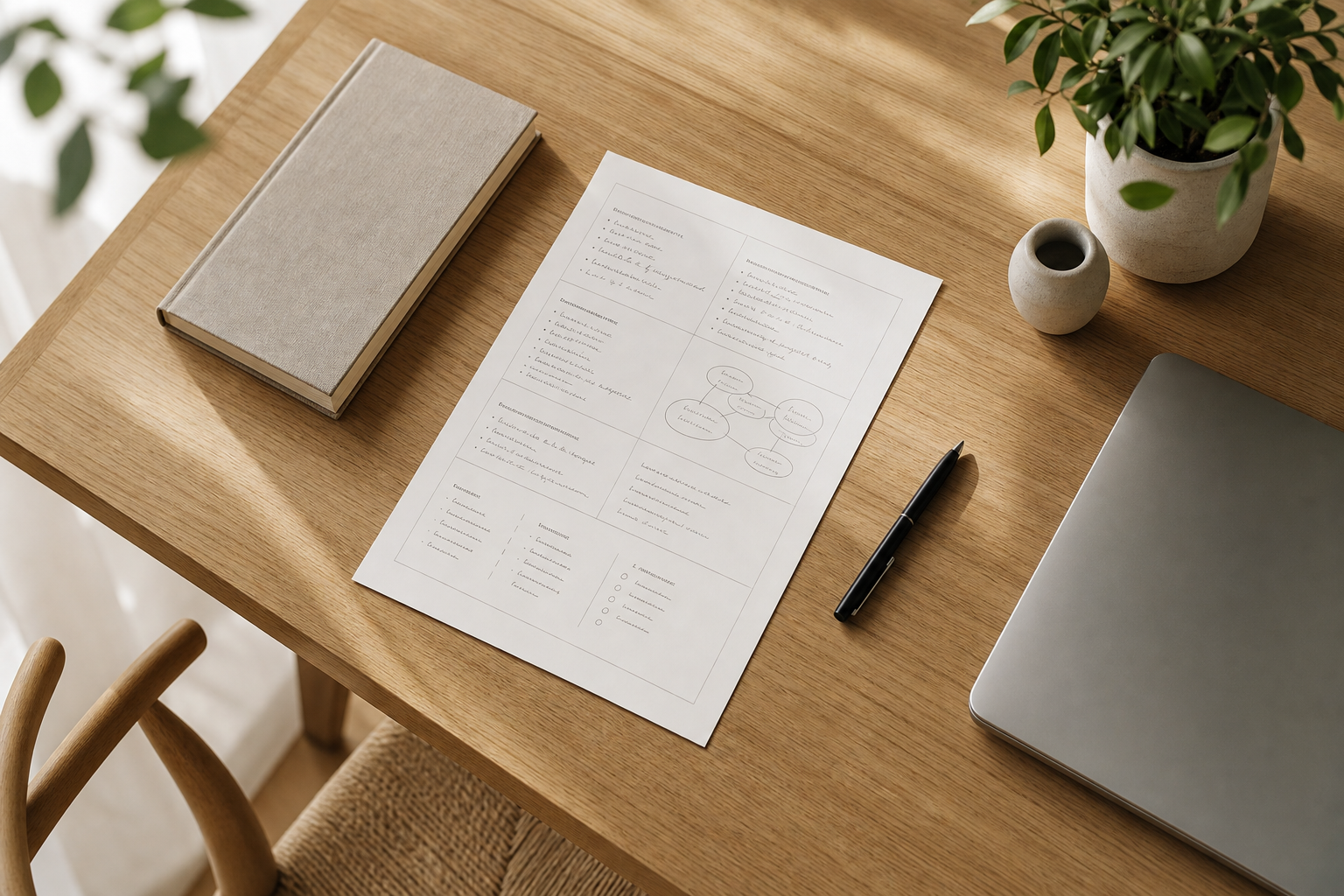
As you use ai business name tools in this flow, you’ll keep momentum high and bias low. The structure helps you move from wild ideas to a viable, ownable name fast.
Also Read!
How to Choose and Use an AI Ad Copy Generator for Your Small Business
How to Choose the Best AI Ad Creative Generator for Your Small Business
5 Common Mistakes People Make When Using AI Name Generators
Great tools can still lead you astray. Avoid these traps so your shortlist holds up under real-world pressure.
Don’t accept the first output; AI can nail it on try one, but that’s rare, so run fresh prompts to explore more styles before you decide. Likewise, don’t ignore domain availability, a name without a sensible domain forces workarounds, so filter for clean, short domains early to avoid sunk time. Resist choosing trendy over timeless; chasing “-ly” or “-ify” can date your brand, so favor clear sound, easy spelling, and meaning that lasts.
Never skip a trademark search; if you don’t screen names, you risk rebrand costs later, so do a basic search before you fall in love. Finally, test pronunciation and spelling; if people mishear or misspell it, you’ll pay for support and lost traffic, so say it out loud and get quick feedback.
Reality Check on Availability
As you use ai business name tools, remember: legal and domain checks are not chores; they are part of the creative process. Constraints sharpen ideas. A name you can own is better than a “perfect” name you can’t.
**[Book a Live Demo.
Best AI Business Name Generator Tools to Try in 2025
You don’t need a giant stack. Test a few, keep what works, and move on.
- Namelix — fast, lots of style mixes, good for short coined words.
- Brandroot — curated, brandable names with domains.
- Shopify Name Generator — quick seeds for ecommerce angles.
- Looka — names plus instant logo mockups.
- Squadhelp — human + AI blend with contests.
- Zyro — simple, clean lists when you want speed.
Once You Have a Name: Shape Your Brand Voice
For brand copy and ads that match your new name, an AI-driven ad creation platform like AdsGPT can help you move from name to launch. It offers Ads Based on Your Brand Identity, a 500M+ competitor ad database, and supports 9 ad platforms. With BrandIQ insights and SOC 2 Type II certification, it pairs speed with trust. There’s a free plan with 35 ad credits and no credit card required, and 10K+ happy marketers use it to test messages and creative angles. Use it once you’ve locked your name to keep your tone tight across image ads, UGC-style video, and short taglines.
As you use ai business name ideas from the tools above, keep criteria front and center: say it, spell it, search it, then stress-test it in a headline.
What to Do After You Pick Your Business Name
Lock down your assets the same day you decide. Momentum now saves you rework later.
-
Register the domain immediately
Buy the exact match if it’s available, then common variants and misspellings. Set auto-renew so you never lose it. -
Secure social handles
Grab your handle on the main networks you plan to use. Even if you won’t post yet, parking the name protects it. -
File a trademark
Do a knockout search first, then file. If you need help, talk to counsel. Keep screenshots and dates for your records. -
Create simple brand guidelines
Define logo rules, color hex codes, font families, tone words, and name usage (e.g., capitalization, hyphenation). -
Start building brand assets
Make a basic logo, a short tagline, and a one-page site. Draft a few ad lines to hear your voice in context.
As you use ai business name checks in this phase, treat every asset as a test bed. Names come alive in sentences, not slides.
**Compare Plans.
Key Takeaways

MOST POPULAR