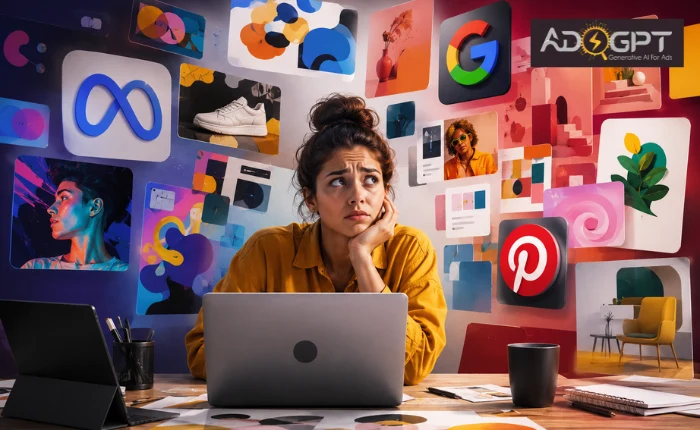
When you run ads across multiple platforms (such as Meta, Google, and Pinterest) without having a brand guide, you may end up with a disorganized disaster. One of those mid-sized WooCommerce companies learned this lesson the hard way.
They were scaling their ecommerce ad campaigns on multiple platforms at once, and without a cohesive visual identity document for branding, there were inconsistencies in their creative pieces, resulting in an unclear message and ultimately a waste of ad dollars.
They found a better process to maintain brand coherence while producing a high volume of platform-ready content very quickly. Their discovery will affect how they operate moving forward on all future campaigns.
The Brand’s Challenge: Scaling Without a Visual Identity System
The brand had been running paid ads for two years. They sold home décor products through WooCommerce and had grown to a healthy five-figure monthly revenue. But as they pushed into multi-platform advertising, cracks started showing.
Their in-house designer was stretched thin, creating separate assets for each platform. Meta required square and vertical formats. Google Display needed banner variations. Pinterest demanded tall, aspirational visuals with a completely different energy. Without a brand guide to anchor decisions, every campaign looked like it came from a different company.
Their cost per click was rising. Their ROAS was flattening. And their creative team was burning out producing assets that still felt inconsistent. They knew multi-platform advertising was the right strategy, but execution was the problem.
The Turning Point: Discovering AI-Powered Creative Generation
A growth consultant suggested they explore AI content marketing tools that could handle creative production at scale. After evaluating several options, they landed on AdsGPT, a platform built specifically to generate platform-ready ad creatives from a single prompt, across every major ad network.
The difference was immediate. Instead of briefing a designer separately for each platform, the brand entered its product details once. AdsGPT’s The BrandIQ feature stored its logo, colour palette, tone of voice, and key taglines. From that point forward, every creative generated, whether for Meta, Google Display, or Pinterest, automatically reflected their brand identity.
Their ad creative AI workflow went from five business days of production per campaign to under two hours. More importantly, the creatives looked like they belonged together.
How AdsGPT Solved the Multi-Platform Creative Problem
The brand adopted AdsGPT’s Ad Factory feature, which generates hundreds of on-brand variations across every format and placement in bulk. One product photo and a short prompt produced square ads for Meta feed, vertical stories for Instagram, wide banners for Google Display, and tall pins for Pinterest ads , all in one session.
They also leaned on Competitor Intel, a database of 500M+ active ads. By searching competitor brands in their niche, they could see what creatives were actually performing across platforms, then click “Generate Similar” to produce their own version instantly. This eliminated the guesswork in a multi-platform advertising strategy.
For their Pinterest campaigns specifically, they used the Product Shot Studio. Uploading a single product SKU generated lifestyle shots, packshots, and hero images suited to Pinterest’s discovery-first format. The visual quality was consistent with their Meta and Google assets, finally.
Within 45 days of adopting AdsGPT, their CPA dropped by 38%, and ROAS climbed by 2.3×.
Why AdsGPT Is the Right Tool for This Problem
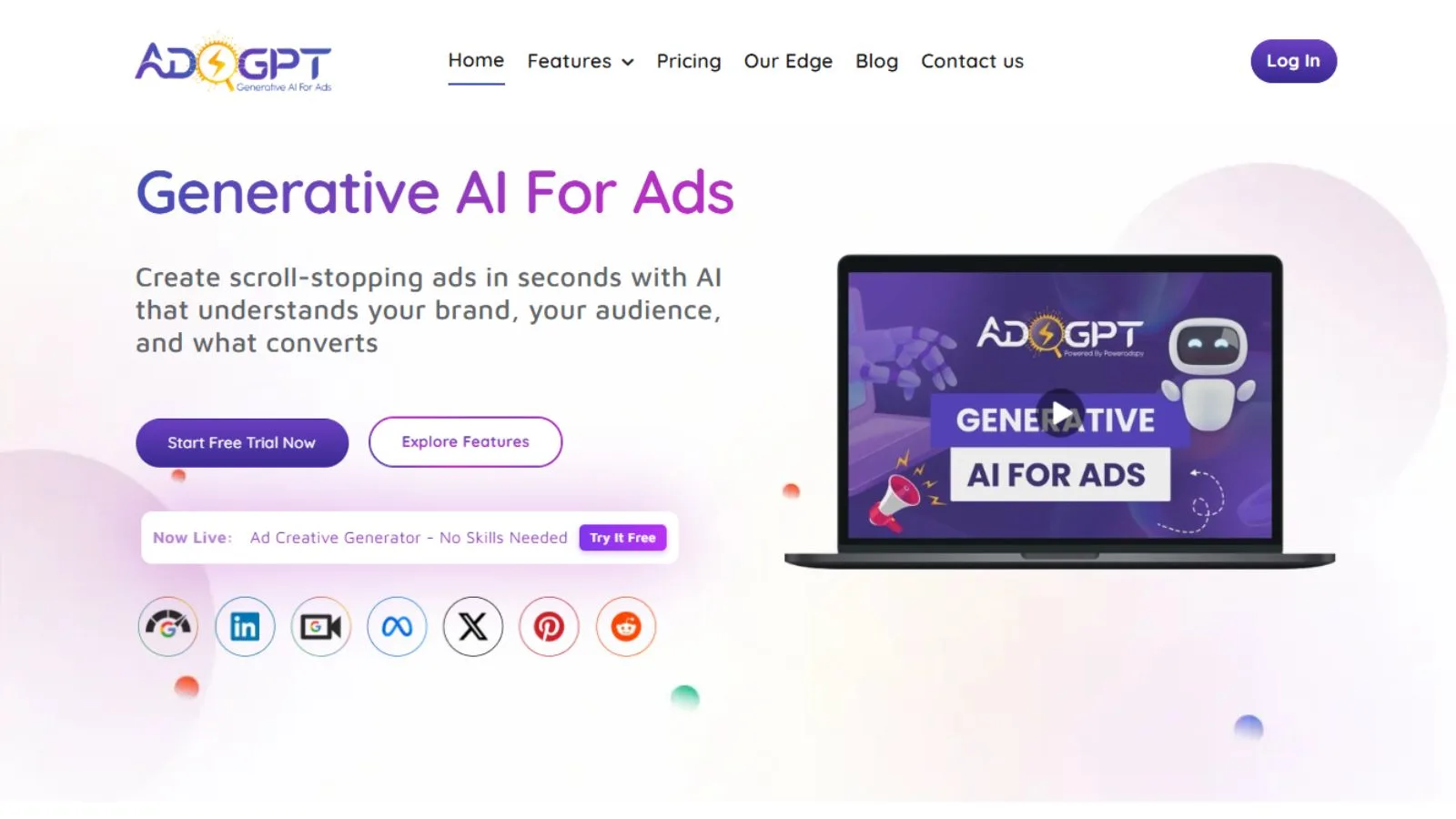
If you’re running multi-platform advertising without a creative system, AdsGPT is worth serious attention. It replaces the need for a dedicated designer, a separate video editor, and a manual competitor research process, all in one platform. For eCommerce brands navigating AI content marketing at scale, here is what makes it stand out:
- BrandIQ stores your logo, colours, and tone once, and every future creative auto-reflects your brand identity across all platforms
- Ad Factory generates hundreds of on-brand ad variations in bulk across Meta, Google, LinkedIn, Pinterest, TikTok, and more
- AI Ad Creatives produces scroll-stopping image ads in four styles, every ratio, in under 60 seconds no Canva, no waiting
- UGC Video Ads create authentic talking-head videos that convert up to 4× better than polished brand content
- AI Avatar Ads deliver spokesperson-style videos with lip-sync, natural pacing, and burned-in captions
- Product Shot Studio turns a single product photo into a full catalogue of lifestyle and hero images for any platform
- Competitor Intel searches 500M+ active ads so you can see what’s winning in your niche and remix it instantly
- Meta Ads Manager integration lets you launch directly from the platform, with no tab switching and no manual exports
- 9 ad platforms supported, including Meta, Google, TikTok, Pinterest, LinkedIn, Reddit, YouTube, and more
Results at a Glance
By month three, the brand had eliminated its reliance on a freelance design roster for ad creative production. The numbers told a clear story. Creative output increased by 2.8× compared to their previous in-house process. Production costs dropped by over 70%. And because BrandIQ ensured visual consistency across every platform, their brand recall metrics tracked through post-purchase surveys improved significantly.
Their team also found a new workflow rhythm. Every Monday, a single team member would load a product brief into AdsGPT, run Ad Factory, review the outputs, and schedule the week’s creative tests. Multi-platform advertising went from the most labour-intensive part of their week to the most efficient.
The pivot to ad creatives with AI wasn’t about replacing creativity; it was about removing the friction between a good idea and a live ad.
Conclusion
Any eCommerce company trying to manage multiple platforms without any type of established branding guide can accomplish a level of consistency not needing a creative director or even a style guide simply by having the right system in place. AdsGPT has demonstrated that a source for brand truth – consolidated in BrandIQ – along with AI-assisted mass production using that source, can create synchronized advertising materials across Meta, Google, and Pinterest at an extensive scale. The results of this approach are clear – decreased costs, quicker time to market, and increased brand alignment throughout all platforms.
Frequently Asked Questions
Q1. Can you use AdsGPT for a WooCommerce brand without having any experience creating designs?
Yes, AdsGPT is created for marketers and business owners who can enter a product description using plain text. Then, based on that sentence, AdsGPT will create a fully designed and ready-to-use ad in the appropriate format for you to publish.
Q2. Do AdsGPT support all the platforms that a typical WooCommerce brand would use?
Yes, there are nine platforms currently supported by AdsGPT, including Meta (Facebook and Instagram), Google, Pinterest, TikTok, LinkedIn, YouTube, Reddit, and more — virtually all platforms relevant to e-commerce brands are covered through AdsGPT.
Q3. How does BrandIQ keep brands consistent in advertising when creating ads across multiple platforms?
BrandIQ saves your brand assets once. After that, any subsequent marketing materials created will automatically include the same logo, colour scheme, tone and tagline as the previous creations – no need to enter your branding each time, and your brand will always look identical no matter what platform or format you are creating.
Q4. Can you try it for free?
Yes, you can create up to 35 ads for free without giving a credit card to receive the full functionality of the platform before you commit.
MOST POPULAR