Listen To The Podcast Now!
Meet Ravi: The Two-Person Team That Cracked The Code:
Ravi runs a small DTC oats brand out of Bengaluru. It is a lean setup with two co-founders, one part-time designer, and a Meta Ads budget that would not keep a Mumbai agency in coffee for a week. For six months, his team shipped maybe four hooks a month. Some flopped, some did okay, but none broke through. The real bottleneck was not effort; it was the lack of a scalable system for AI copywriting and turning ideas into consistent ad creative.
Then a friend running a beauty brand told him she had figured out how to A/B test 30 hooks a week, and her CPA had dropped 41 percent in two months. Ravi laughed. Thirty hooks a week sounded like something only large teams with massive budgets could pull off.
But after one demo call, he realized it was never a budget problem. It was a workflow problem.
Why The Old Creative Pipeline Kills Startups?
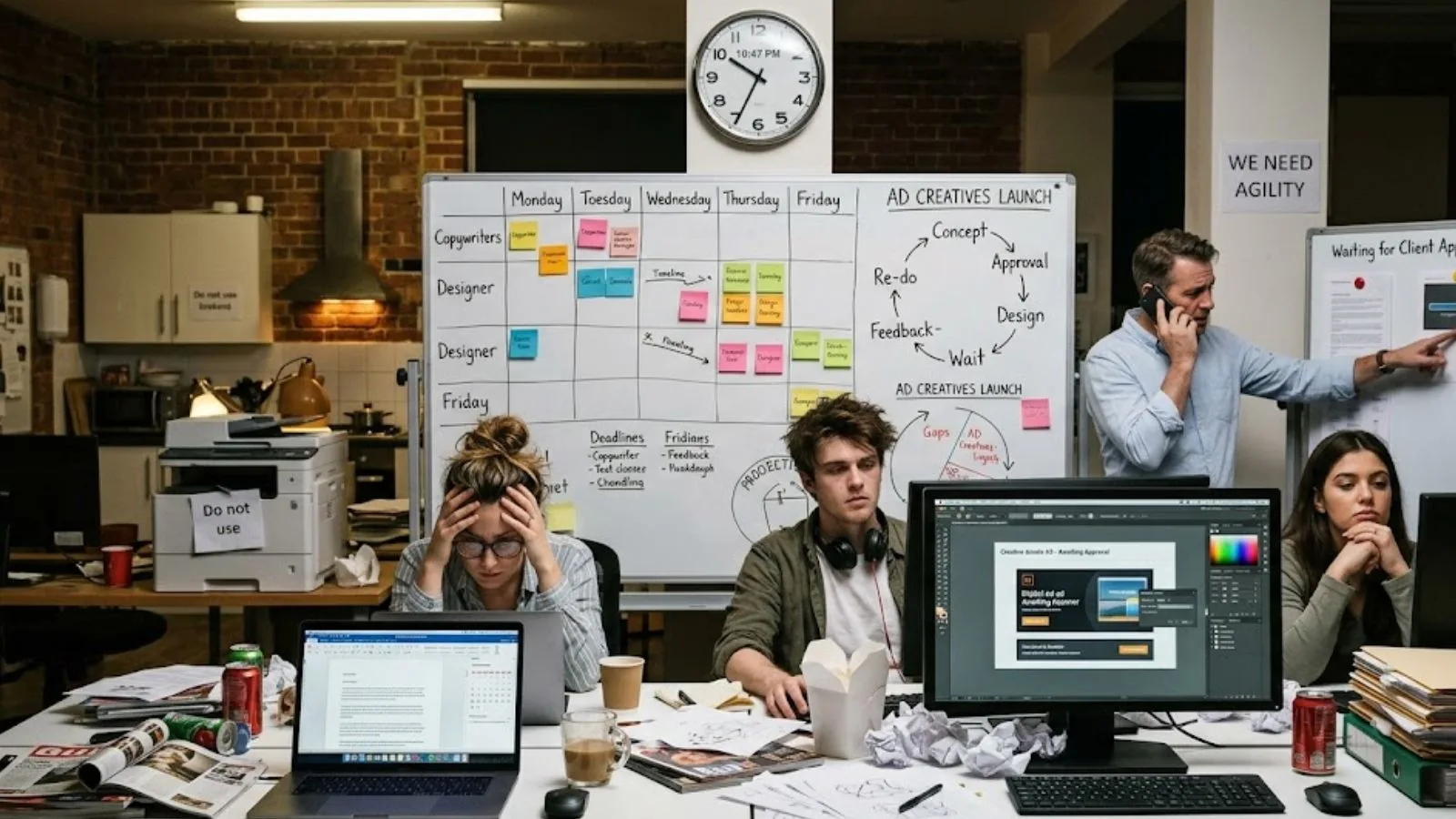
The traditional playbook is broken. You brief the copywriter on Monday, wait two days for hooks, pass them to the designer, and then wait three more days for mocks. By the time everything is approved and scheduled, the trend you wanted to ride is already cold. This is exactly where most teams hit a wall before they even explore what AI copywriting can actually unlock.
Most startups simply cannot afford to A B test 30 hooks a week through this kind of production. Each hook ends up costing ₹800 to ₹1,500 in combined copy and design time. That quickly adds up to ₹24,000 to ₹45,000 a week. Once you factor in management overhead, you are effectively spending half a junior salary just to produce ad creative, something most early-stage teams are not even set up to measure properly.
The brands that figure out how to A B test at this scale do not outspend bigger players. They out-iterate them. Volume is not a vanity metric here. It is the only reliable way to find the one hook that can 10x your campaign.
The Shift: How Ravi Rebuilt His System:
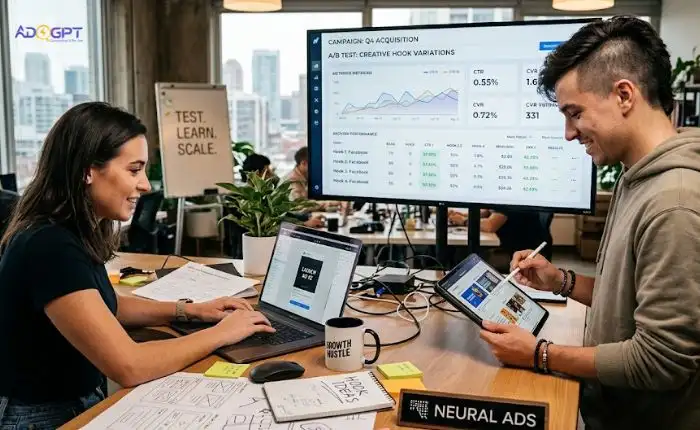
Ravi’s first move was abandoning the idea that a hook needs to be handcrafted. Hooks are meant to be tested, not perfected. Instead of relying on slow manual writing, he leaned into AI copywriting to generate volume quickly and consistently. He built a simple four-day rhythm: brainstorm angles on Monday, generate variants on Tuesday, ship to Meta on Wednesday, and read results on Friday.
To A/B test 30 hooks a week, he split them across five angle buckets: pain, transformation, social proof, curiosity, and contrarian. Six hooks per bucket. Each angle was turned into a lightweight ad creative and run against the same audience for forty-eight hours. Winners moved into a champion pool and were recombined into the next week’s batch, while losers were cut immediately without overthinking.
Within three weeks, Ravi was consistently able to A/B test 30 hooks a week without working past 7 PM. His designer was no longer stuck churning out variations and was reassigned to landing page work, where she actually made a measurable impact on conversions.
Also Read:
AI Write for Me: How to Instantly Create Content Using AI
How AI Text Generators Revolutionize Powerful eCommerce Ad Content?
How AdsGPT Made It Possible?
The real unlock for Ravi came when he started using AdsGPT, an AI copywriting and creative engine built for lean teams that need to move fast. Instead of writing detailed briefs for a copywriter and waiting days for output, Ravi now briefs the platform once and gets dozens of usable variations in minutes. What changed was not just speed, but consistency. Every idea could be turned into a testable ad creative without adding more people or cost.
Here is the toolkit he relies on each week:
AI Ad Creative generates up to 60 image-based ads in under a minute, letting him quickly test multiple hooks across formats.
UGC Video Ads help create simple, talking head-style videos that often outperform polished brand content because they feel more native and relatable.
BrandIQ stores brand elements like logo, colors, tone, and messaging guidelines so every output stays consistent without manual checks.
Competitor Intel allows him to search competitors across a massive ad database and remix proven ideas instead of starting from scratch.
Ad Factory bulk generates variations across formats, ratios, and placements, making it easy to scale winning concepts.
Meta Ad Launch lets him push live campaigns directly, reducing the friction between creation and testing.
There is also a free plan that allows teams to generate up to 35 creatives without needing a credit card, which makes it accessible for early-stage startups trying to validate this workflow.
The Results: 60 Days Later:
Sixty days into the new system, Ravi’s numbers told the story. CPA dropped 38%. ROAS climbed from 1.9× to 4.2×. Most importantly, he discovered three “champion hooks” he’d never have written manually, including one contrarian angle (“Oats are boring. Ours aren’t.”) that became his top performer for the next quarter.
Because he could A/B test 30 hooks a week, statistical significance arrived in days, not months. He stopped guessing which angle would land. The data told him.
The bigger win was psychological. Ravi stopped treating every hook like a precious asset. When you ship thirty a week, no single hook carries pressure. You’re running a portfolio, not making a bet. That mindset shift, more than any single tool, is what separates startups that scale from startups that stall out at the same plateau every quarter.
The Four-Step Framework You Can Copy This Week:
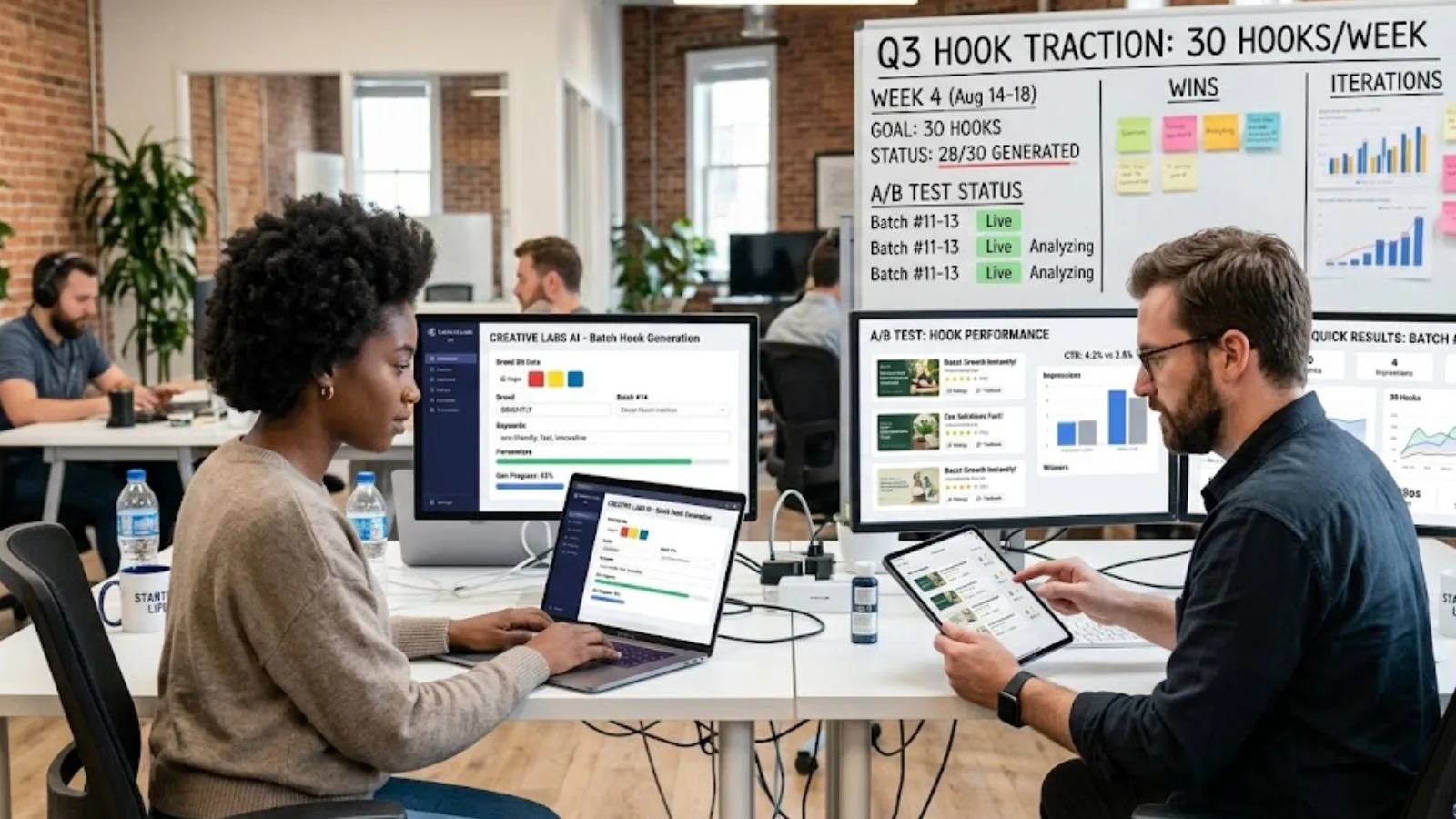
Want to A B test 30 hooks a week on your own startup budget? Here is the exact framework Ravi used:
Pick five angles, not five hooks. Pain, transformation, social proof, curiosity, and contrarian. Create six variants from each to reach thirty. This is where AI copywriting helps you scale ideas without slowing down.
Brief once and generate in bulk. Feed your brand kit into a tool and let it produce multiple variations. The goal is volume and speed, not perfect writing.
Ship in batches of ten. Run three flights a week, each for forty-eight hours, targeting the same audience so results stay comparable.
Recycle winners and kill losers fast. Winning hooks move into the next cycle and get remixed into fresh ad creative, while underperformers are dropped immediately without overthinking.
This rhythm is how lean teams reach this level of testing without hiring anyone new. It is not magic, it is a system. The brands doing this consistently are not bigger; they have simply stopped treating creative production like a one-off craft and started treating it like a repeatable process.
Conclusion:
You don’t need a Series B war chest to A/B test 30 hooks a week. You need a workflow that respects volume over polish, AI tools that handle production at scale, and the mental shift from “perfect hook” to “portfolio of bets.” Ravi’s two-person team is now shipping more creatively than mid-sized agencies, at a fraction of the cost, and finding winners faster than competitors three times their size. The takeaway is simple: stop treating hooks as precious. Start treating them as data points. Pick your five angles, set your weekly cadence, and ship. Your turn.
FAQ’s:
Q1. Do I really need to A/B test 30 hooks a week, or is fewer fine?
Ans: Fewer works for established brands with proven creative. Early-stage startups need the volume to find their winners faster, before the runway runs out.
Q2. What’s the smallest budget required?
Ans: Most lean teams A/B test 30 hooks a week with under ₹15,000/month in tooling, plus a modest ad-spend pool to validate the variants.
Q3. Can a solo founder run this whole system alone?
Ans: Yes. The framework is built specifically for one-person teams who can’t afford a full creative crew or an in-house designer.
Q4. How do I know which hook actually won?
Ans: Run each batch for 48 hours against the same audience, then compare CTR, CPA, and CPC. Promote only statistical winners.
Q5. What if I don’t have a designer on the team?
Ans: You don’t need one. AI tools like AdsGPT generate platform-ready visuals, captions, and video, no design skills required at all.

MOST POPULAR