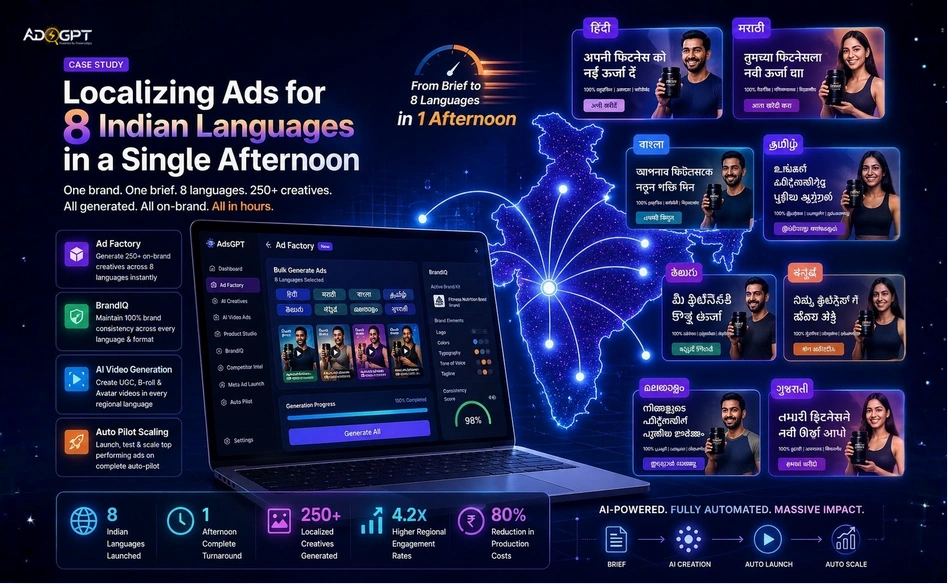
India is not one market. It is eight. Maybe twelve. Maybe more.
Every language has its own rhythm. Its own slang. Its own way of saying ‘buy this now.’ And if your ad speaks in English to someone who thinks in Tamil, you have already lost them.
This is the story of how one brand cracked the multilingual ad problem. Not in weeks. Not in months. In a single afternoon, using an AI content generator that rewrote what we thought was possible.
Hit ‘Play’ Button & Tune Into The Blog!
The Problem: India’s Language Barrier Was Blocking Growth
Our client had a great product. They had strong English campaigns running across Metro cities. The numbers looked good. But when they tried to push deeper into regional markets, everything slowed down.
Here is what they were up against:
- Separate copywriters were needed for each language
- Video production costs multiplied per regional version
- Brand consistency kept breaking across translations
- Manual adaptation of creatives was taking weeks per language
- Competitors were already moving faster in Marathi, Tamil, and Bengali markets
They needed to reach audiences in eight languages simultaneously:
- Marathi
- Bengali
- Tamil
- Telugu
- Kannada
- Malayalam
- Gujarati
- Punjabi
Running eight separate campaigns with traditional teams meant hiring eight separate creative squads. The costs were impossible. The timelines were brutal. And the window of opportunity was closing fast.
Why Regional Advertising Is No Longer Optional
Here is a number that should make every business owner pay attention: India has over 600 million internet users outside of the top six metro cities. Most of them do not prefer English content. Most of them convert faster when they see ads in their own language.
The research backs this up. Native-language ads generate higher engagement, lower cost-per-click, and stronger brand recall. It is not just about translation. It is about cultural fit. A consumer in Coimbatore responds differently from one in Surat. And both respond very differently from someone in Kolkata.
The challenge was never about whether to localize. The challenge was always: how do you do it fast, at scale, without burning your entire budget?
That is where AI changes the game.
The Solution: Using an AI Content Generator to Build a Regional Ad Machine
Instead of treating each language as a separate project with a separate team, we used an AI content generator to centralize and automate the entire creative process.
Think of it like this: one brief in, eight language markets out. All in the same afternoon.
Here is how each stage of the process worked.
Step 1: Locking Down Brand Identity with BrandIQ
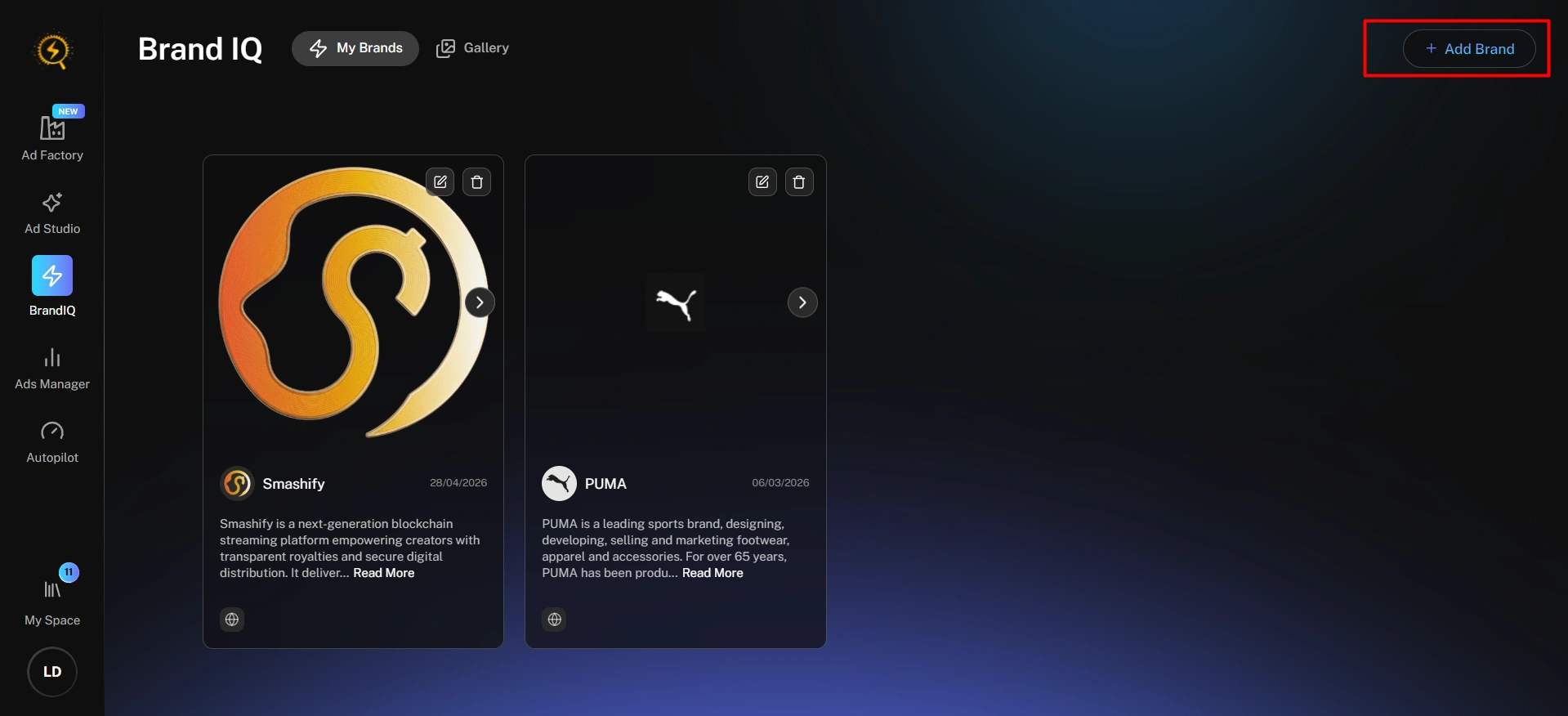
The first thing we did was make sure the brand would not get lost in translation. Literally.
Before any ad was generated, we uploaded the complete brand kit into BrandIQ. This is the brand memory layer that sits underneath every piece of content the AI produces. We loaded in:
- Brand colors and font guidelines
- Product USPs and key messaging pillars
- Tone of voice and personality notes
- Platform-specific CTAs for Meta, YouTube, and Google Display
Once BrandIQ had this information, every ad, in every language, automatically reflected the same visual identity and messaging standards. No manual checks. No brand audits needed after the fact.
This step is critical, and most brands skip it. They localize the words but forget to localize the brand experience. With BrandIQ, both happen at the same time.
Step 2: Bulk Creative Generation with Ad Factory
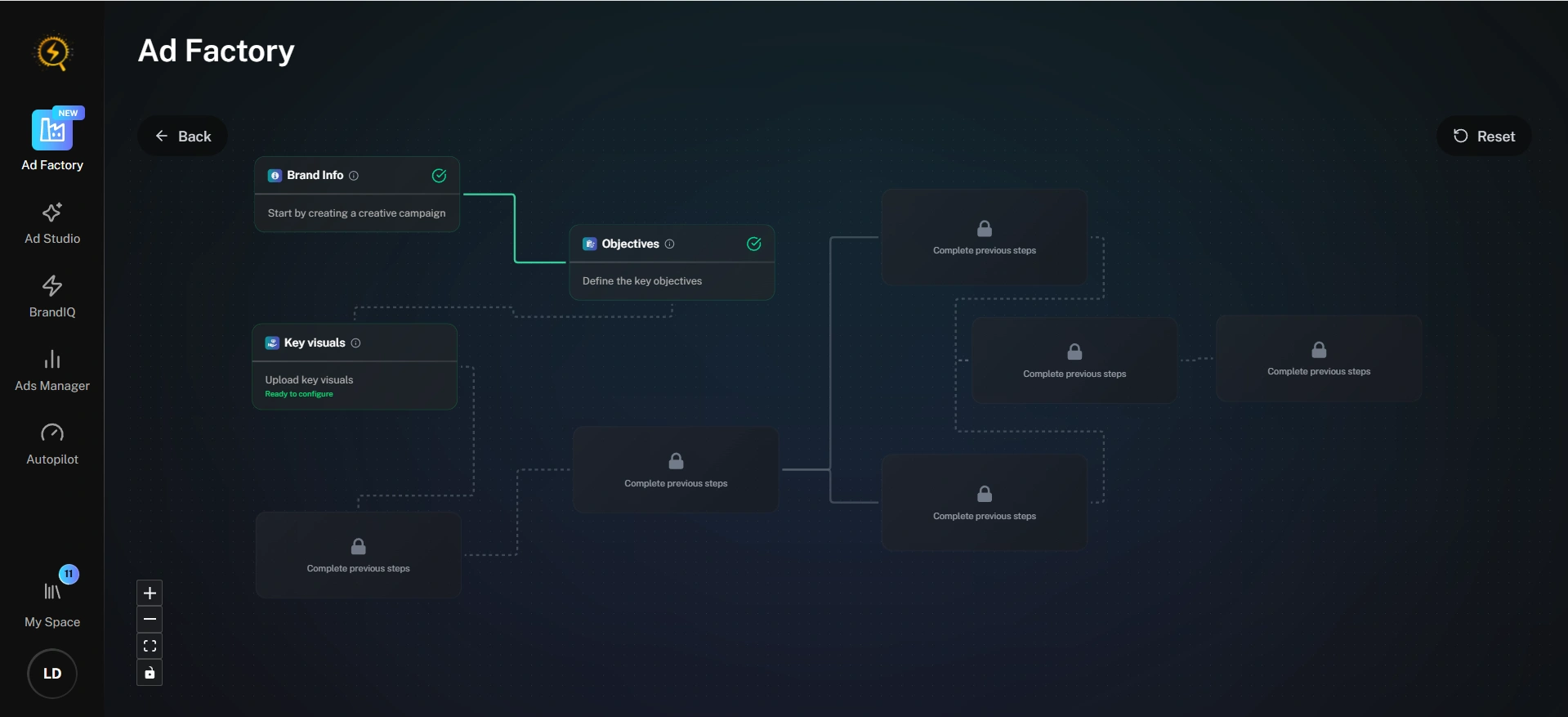
This is where the real speed came from.
We wrote a single master campaign brief. One document. One set of instructions. We fed it into Ad Factory, and the platform generated:
- Image ads in all required platform sizes
- Regional copy variations for all eight languages
- Video scripts adapted for cultural relevance per market
- Platform-specific formats: Meta, Google Display, YouTube, Reels, Stories
The output? Over 250 localized creatives. Produced in bulk. In one session.
Ad Factory does not just translate text. It restructures the entire ad logic for each language, adjusting sentence length, call-to-action urgency, and emotional hooks based on what performs best in that regional context.
This is the difference between translation and localization. Translation changes the words. Localization changes the conversation.
Step 3: Regional Video Production Without Cameras or Crews
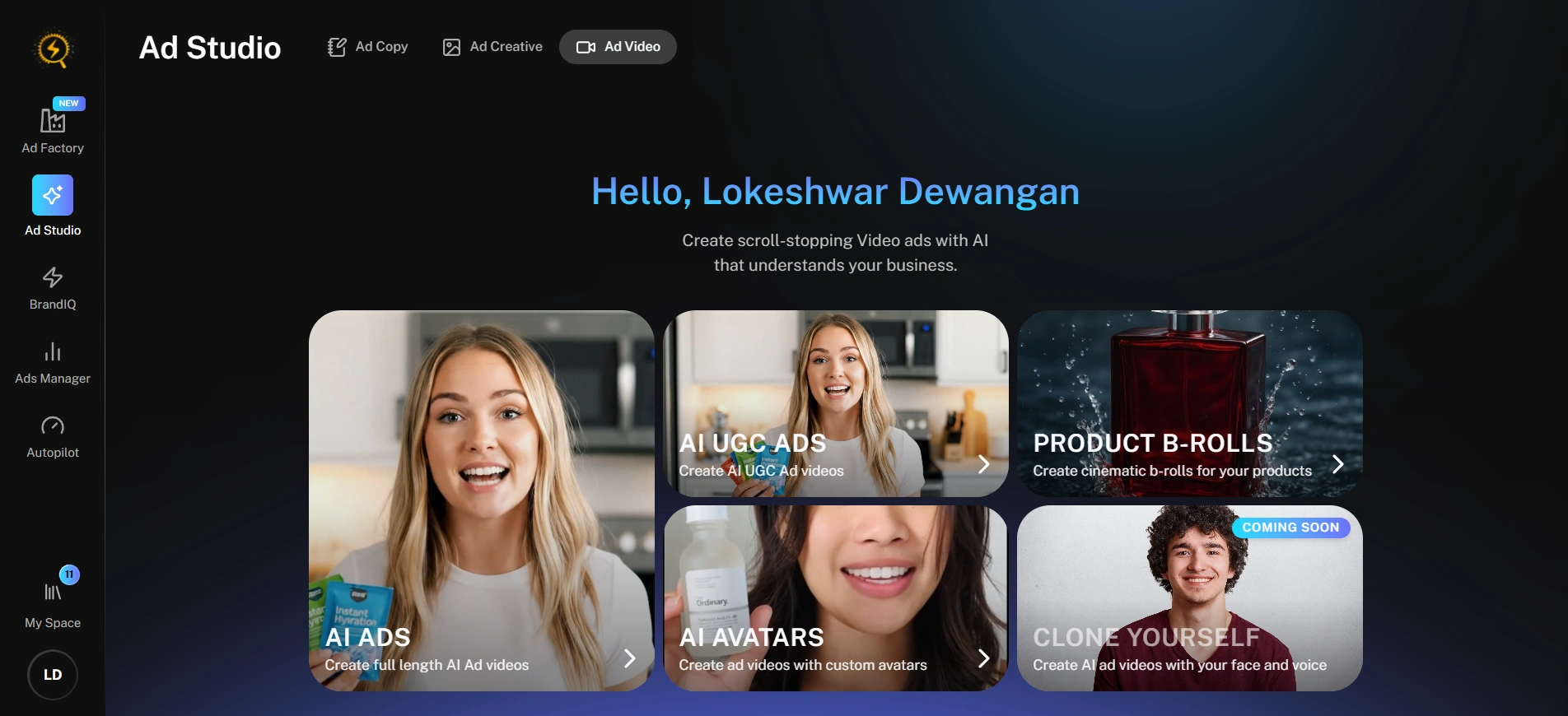
Video is the highest-performing format in regional markets right now. But video production is also the most expensive part of any campaign.
Our client needed three types of video content for each language:
- UGC-style ads that feel like real consumer testimonials
- AI avatar spokesperson videos with lip-synced regional audio
- B-roll product explainer clips for YouTube and Reels
Using the AI video generation tools, we produced all three formats for all eight markets. No casting. No studios. No editing teams. Each video was adapted not just linguistically but culturally: the pacing, the emotional appeal, and even the visual setting were adjusted to feel native to that region.
A Tamil audience expects a different emotional register than a Punjabi one. The AI handled these nuances automatically based on the language and regional performance data baked into the system.
Step 4: Scaling Winners with Auto-Pilot Optimization
Once the first wave of creatives went live, the data started coming in fast.
Instead of waiting for a campaign manager to manually review performance and brief a new round of creatives, the auto-pilot optimization layer took over.
Here is how it works technically:
- Top-performing creatives are flagged by engagement rate and conversion data
- The system identifies which language, hook, visual style, and CTA combination is winning
- New variations are automatically generated based on the winning pattern
- Underperforming creatives are deprioritized without manual intervention
This loop runs continuously. It is not set-and-forget. It is set-and-scale. Every time a winner emerges in one language, the system builds on it, faster than any human team could.
Introducing AdsGPT: Your AI-Powered Ad Creation and Intelligence Platform
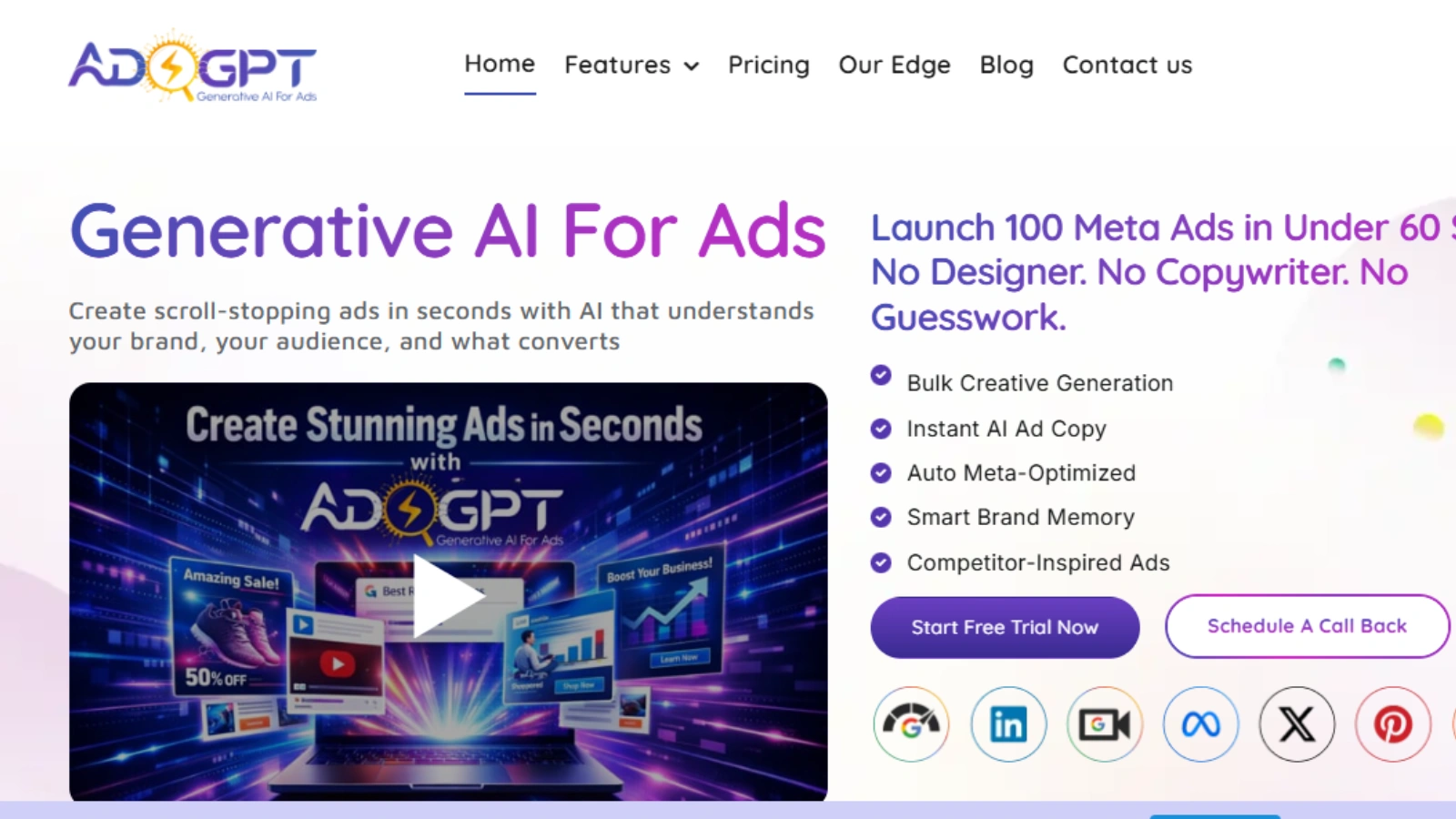
AdsGPT is the platform behind this entire workflow. It combines BrandIQ, Ad Factory, AI Video Generation, and Auto-Pilot into one dashboard, so you never have to manage five different tools for one campaign.
Here is what sets AdsGPT apart from other AI content generators:
500M+ competitor ad database: See every ad your competitors are running across Meta, Google, LinkedIn, and TikTok. Search any brand and instantly reverse-engineer what is working for them.
One-click remix: Find a winning competitor ad, click Generate Similar, and AdsGPT builds your version with your brand identity automatically applied.
9 ad platforms supported: Meta, Instagram, TikTok, Pinterest, Google Display, LinkedIn, YouTube, Reels, Shorts. One platform. Every placement.
Meta Ad Launch: Generate a creative, pick your CTA, and publish directly to your Meta campaign. No ad manager toggling required.
Start free with 35 creatives& 50 Video Generation. No credit card required. Visit AdsGPT to begin.
The Competitive Intelligence Layer: Knowing What Already Works
There is one more capability that gave our client a serious edge in regional markets, and most people underestimate it.
Before launching any new language market, we used the competitor intelligence database to search for what other brands were running in that region. With access to over 500 million active ads across major platforms, we could:
- See which creative formats were getting the highest engagement in Tamil-language markets
- Identify which emotional hooks were being used by competitors in Marathi campaigns
- Spot gaps where no one was running strong video content in certain regional languages
This is not guessing. This is making decisions based on real market data before spending a single rupee on ad spend.
An AI content generator that also feeds you competitive intelligence is not just a creative tool. It is a market research department built into your workflow.
The Results: What Actually Happened
Here is what the campaign delivered:
✓ Creatives produced: 250+ localized ads in one afternoon
✓ Language markets activated: 8 simultaneously
✓ Engagement uplift: 4.2x higher than English-only campaigns
✓ Production cost reduction: 80% versus traditional localization workflows
✓ Time saved: Weeks of production compressed into hours
The 4.2x engagement figure is the one that matters most strategically. It tells you that the regional audience was not just seeing the ads. They were responding to them. They were clicking, watching, and converting at rates that the English campaigns never achieved.
That is the power of speaking someone’s language. Not just linguistically, but culturally.
What This Means for Business Owners and Startups
If you are running a consumer brand, a D2C product, or a regional service, here is the strategic takeaway from this story:
| Regional audiences are not a niche. They are the majority.
The brand that localizes faster wins the customer before the competitor even shows up. And with an AI content generator handling the production, the speed advantage is now accessible to startups, not just enterprise brands with massive agency budgets. |
The traditional model required:
- A regional copywriter for each language
- A separate video production team per market
- A brand manager reviewing every creative for consistency
- A campaign manager optimizing each language separately
The AI model requires:
- One brand kit uploaded once
- One campaign brief written once
- One platform doing everything else automatically
This is not a small efficiency gain. It is a structural change in how advertising works. The brands that adapt to this model early will have a compounding advantage over the ones still doing things the old way.
The Technical Breakdown: How AI Content Generation Works at This Scale
For the more technically curious reader, here is what is happening under the hood when an AI content generator produces 250 localized creatives in an afternoon.
Language-Specific Copy Generation
The AI does not just run text through a translation API. It uses language models trained on regional advertising data to understand what sentence structures, idioms, and emotional appeals perform best in each language context.
For example, Tamil copy tends to be more formal and benefit-focused. Punjabi copy often uses more energetic, community-oriented language. Bengali copy frequently leans into aspirational framing. The model understands these nuances and adjusts the output accordingly.
Visual Format Adaptation
Different platforms require different aspect ratios, text-to-image ratios, and visual hierarchies. Ad Factory handles this automatically by generating each creative in all required platform sizes from a single visual concept. One design becomes 12 platform-ready versions.
Video Synthesis with Cultural Calibration
AI avatar technology uses text-to-speech models trained on regional voice data to produce natural-sounding audio in each language. Lip-sync is handled by a video synthesis layer that maps audio timing to avatar facial movements in real time. The result is a spokesperson video that looks and sounds native to the target region.
Performance Feedback Loop
The auto-pilot system connects to ad platform APIs to pull real-time performance data. It applies reinforcement logic: creatives that cross engagement thresholds trigger variant generation, while those that fall below threshold are flagged for removal. This loop runs on a defined cadence, typically every 24 to 48 hours, ensuring the campaign is always serving the highest-probability creative.
Who Should Be Using This Right Now
This approach is not reserved for large brands with large budgets. If anything, it is most valuable for:
- Startups entering regional markets for the first time and needing to test fast without burning cash on agencies
- D2C brands that have saturated metro audiences and need to expand into Tier 2 and Tier 3 cities
- Performance marketing agencies that want to serve more clients without scaling headcount
- Regional businesses that have always known their local market but never had the tools to run professional ad campaigns at scale
- SaaS companies targeting SMBs in regional India, where the decision-maker communicates primarily in a regional language
If your business has any regional dimension in India, the question is not whether to localize. The question is whether you can afford to localize slowly.
The Bottom Line
India’s growth story is being written in eight languages at once. The brands that win will not be the ones with the biggest budgets. They will be the ones with the fastest creative engines.
What we built for our client in one afternoon used to take months. Eight language markets. 250 creatives. Consistent brand identity across every single one. Four times the engagement of English-only campaigns. Eighty percent lower production costs.
This is what an AI content generator looks like when it is designed specifically for advertising at scale. Not a generic writing tool. Not a basic image generator. A full creative infrastructure that understands brand identity, regional language nuance, video production, and performance optimization, all in one place.
The regional market is waiting. The tools are ready. The only question is: when do you start?
Ready to localize your campaigns at AI speed?
AdsGPT gives you BrandIQ, Ad Factory, AI Video Generation, Competitor Intel, and Auto-Pilot in one platform.
Visit adsgpt.io to generate your first regional ad today.
MOST POPULAR