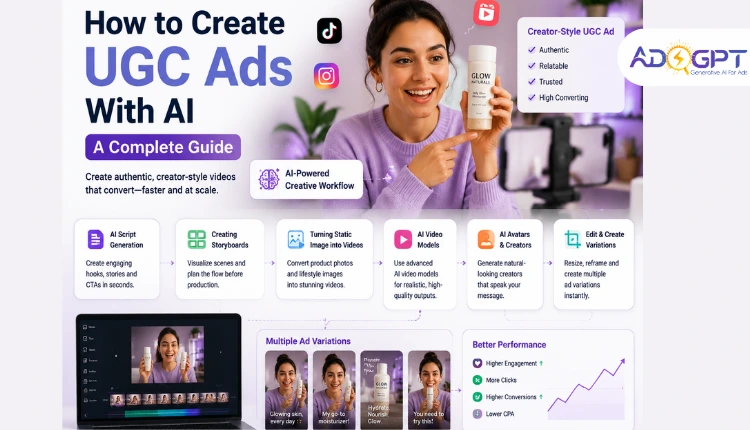
User-generated content (UGC) ads have become one of the most effective formats in modern digital advertising. Unlike traditional advertisements that often focus on polished brand messaging, UGC ads are designed to feel more authentic and relatable. They often feature product experiences, personal opinions, demonstrations, and creator-style storytelling that resemble the content people naturally watch on social platforms.
For brands, this format works because audiences often trust content that feels genuine. A customer review, product demonstration, or creator-style video can communicate value in a way that feels more personal than a traditional commercial.
However, creating UGC ads at scale can be challenging. Brands need multiple creative angles, different hooks, variations for different audiences, and fresh content to keep campaigns effective. Working with creators, planning shoots, recording videos, and editing multiple versions can require significant time and resources.
AI is changing this process by helping brands create UGC-style videos faster. From generating scripts and virtual presenters to creating product demonstrations and adapting videos for different campaigns, AI tools are making it easier for marketing teams to produce engaging ad creatives.
Why UGC Ads Work So Well in Performance Marketing
Performance marketing depends heavily on creative testing. Brands constantly experiment with different messages, visuals, and formats to understand what connects with their audience.
UGC ads are effective because they often feel less like traditional advertising and more like recommendations from real people.
They can help brands:
- Build trust with potential customers
- Demonstrate products naturally
- Explain benefits through storytelling
- Create platform-friendly content
For example, a skincare brand may perform better with a creator-style video showing someone using the product and explaining their experience rather than a simple product advertisement.
The challenge is creating enough variations to test different audiences and messages. This is where AI-powered workflows are becoming useful.
How AI Is Changing UGC Ad Creation
Traditional UGC production usually involves finding creators, preparing scripts, recording footage, and editing multiple versions. While this approach can produce authentic content, scaling it across many campaigns can be difficult.
AI tools are helping brands simplify different parts of the process.
Behind these workflows, different AI video models help generate visuals, improve motion, and create more realistic video sequences. Depending on the campaign goal, marketers can use different models for product demonstrations, creator-style videos, and short-form advertisements.
Marketing teams can now use AI to support:
- Script creation
- Video concepts
- Virtual presenters
- Product demonstrations
- Ad variations
- Editing workflows
This allows brands to experiment with more creative ideas without increasing production complexity.
AI does not replace the need for a strong marketing message. Instead, it helps teams turn those ideas into more video assets faster.
Creating UGC-Style Scripts With AI
A strong UGC ad usually starts with a clear story. The most effective videos often follow a simple structure:
- Identify a problem
- Introduce the product
- Show the experience
- Explain the benefit
- End with a clear action
AI tools can help marketers generate script variations based on different audiences and campaign goals.
For example, the same product can have multiple UGC angles:
A fitness product could be presented as:
- A personal transformation story
- A daily routine recommendation
- A problem-solution demonstration
- A customer experience review
Testing different approaches helps brands discover which messages perform best.
Using AI Avatars and Digital Creators for UGC Ads
AI avatars are becoming another option for brands looking to create creator-style videos without coordinating multiple shoots.
Virtual presenters can deliver product explanations, tutorials, and promotional messages while maintaining consistent presentation across campaigns.
This can be useful for brands that need frequent content updates or want to create videos in multiple languages.
However, successful UGC ads still depend on authenticity. The content needs to feel natural, relatable, and aligned with audience expectations rather than looking like a generic advertisement.
Creating Product Demonstrations With AI
Product demonstrations are one of the strongest UGC formats because they show customers how a product works.
AI video workflows can help brands create demonstration videos by combining product information, visuals, scripts, and editing.
For example, an ecommerce brand can create multiple videos showing different product benefits, use cases, and customer scenarios without producing every variation through traditional filming.
This is especially useful for products that require education before purchase, such as software tools, electronics, beauty products, and lifestyle items.
Scaling UGC Ad Production With AI Workflows
Creating one UGC ad is relatively simple. Creating dozens of variations for different audiences is where brands face challenges.
Performance marketing teams often need different:
- Hooks
- Product benefits
- Creator styles
- Video lengths
- Platform formats
AI-powered workflows help teams create and manage these variations more efficiently.
Invideo Agent supports this type of video creation workflow by helping marketers move from ideas, scripts, and references to complete videos. Instead of treating scripting, visuals, generation, and editing as separate steps, it helps connect the creative process.
For UGC campaigns, this can be useful when brands need creator-style videos, product demonstrations, and multiple ad variations while maintaining consistent messaging and visual direction.
With InVideo Agent Two, teams managing larger campaigns can coordinate more complex creative workflows while maintaining project context across different stages, helping keep campaign assets aligned as more variations are created.
Maintaining Brand Consistency Across UGC Ads
One challenge with producing large amounts of UGC-style content is maintaining brand identity.
Even when ads feature different creators, formats, or storytelling approaches, the overall brand message should remain consistent.
AI workflows can help marketers maintain consistency across:
- Product appearance
- Brand messaging
- Visual style
- Campaign direction
For example, an ecommerce brand running ads across multiple platforms may create different UGC videos, but the product details and key benefits should remain accurate in every version.
Also Read –
AI Tools for Creating Different Types of UGC Ads
Different AI tools support different parts of UGC production.
Some tools focus on generating video concepts and visuals, while others specialize in avatars, editing, or ad creation workflows.
Brands may use AI tools for:
Creator-Style Testimonials
AI can help create testimonial formats where the product story is presented in a conversational style. These videos often focus on customer problems, experiences, and results.
Product Explainer Videos
Brands can use AI to create educational videos that demonstrate features and explain how products work.
Social Media Ad Variations
AI makes it easier to adapt one campaign idea into multiple formats for platforms such as TikTok, Instagram, and YouTube Shorts.
Best Practices for Creating UGC Ads With AI
Using AI does not automatically guarantee successful UGC ads. Brands still need to focus on creative quality and audience understanding.
Some important practices include:
Focus on Authentic Storytelling
The strongest UGC ads feel natural. Avoid making videos look overly promotional and focus on real customer problems and experiences.
Test Multiple Creative Angles
Performance marketing improves when brands test different hooks, messages, and formats.
Keep Videos Platform-Friendly
Different platforms have different expectations. Short-form videos should capture attention quickly and communicate value clearly.
Maintain Product Accuracy
Whether using AI-generated creators or product demonstrations, the product should always be represented accurately.
The Future of AI-Powered UGC Advertising
AI is making UGC ad creation more scalable by reducing the barriers involved in video production.
Brands can now explore more creative ideas, produce more variations, and adapt campaigns faster than before.
The future of UGC advertising will likely combine human creativity with AI-powered production workflows. Brands will continue using AI to speed up content creation while focusing on authentic storytelling and meaningful customer connections.
Final Thoughts
UGC ads have become an important part of performance marketing because they combine authenticity with measurable advertising goals.
AI tools are helping brands create these ads faster by supporting everything from scripts and avatars to product demonstrations and campaign variations.
For marketing teams, the biggest opportunity is not simply producing more videos. It is creating better-performing content by combining scalable AI workflows with strong creative strategy.
MOST POPULAR