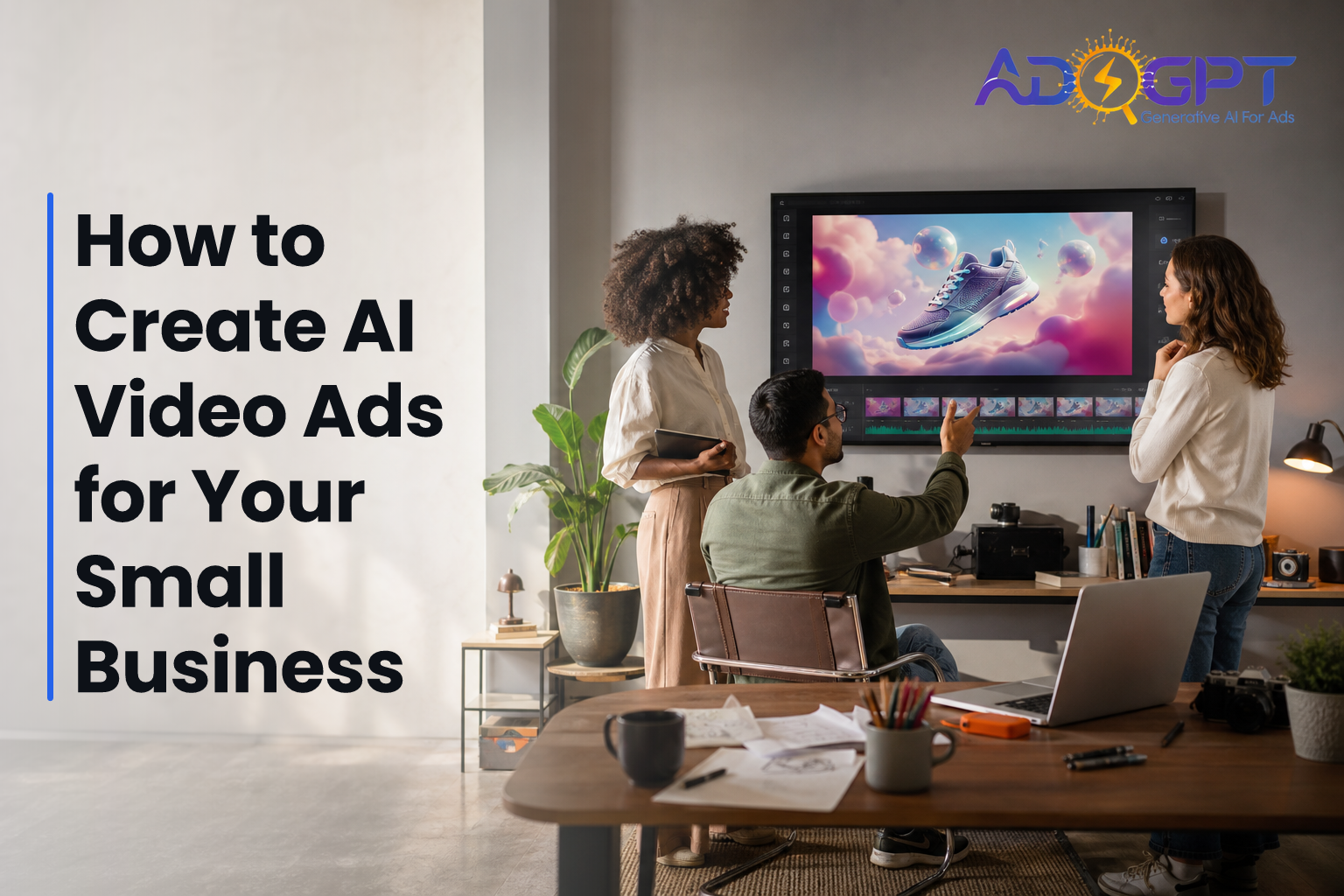
Your first video ad doesn’t need a camera, an ai video ad maker can script, cut, and brand it for you. Yes, you can produce a competitive ad in 2026 without a creative team if you follow a clear, test-and-learn plan.
Here’s the simple truth: strong video ads win on message clarity, tight framing, and platform fit, not on a $50,000 shoot. AI tools now draft scripts, generate UGC-style clips, assemble product B-roll, and even present with an avatar in minutes. As a result, your bottleneck shifts from production to strategy: goal, brief, format, and test.
Moreover, ROI depends on your offer and audience, not only on video quality. So you will learn faster by launching a lean ad in hours, then iterating based on real data. To help, this guide gives you a practical path, tool options, and common pitfalls to avoid. It’s built for a first-timer who’s smart, short on time, and ready to launch this week.
For context, “ROI” here means the ratio of profit to cost, a simple but useful yardstick for ads (see Return on investment). You’ll measure it later from your platform dashboard and sales data.
 → Variants → Edit/Brand → Export → Launch/Track; modern UI, brand-neutral, 2026 style)
- For background on formats and creative angles, see this practical guide on AI video ads.
- If you like to compare builders, bookmark the features to look for in a video ad maker.
Why Video Ads Matter for Small Businesses (And Why AI Changes the Game)
Can a small business with no creative team produce competitive video ads? Yes. You need a sharp offer, a clear hook in the first 3 seconds, and platform-ready assets. The production gap that used to cost thousands now costs minutes.
First, video compresses your message. A 15–30 second clip can show the problem, the fix, proof, and a call to act. Therefore, it can drive clicks and sales with fewer words and more proof in motion.
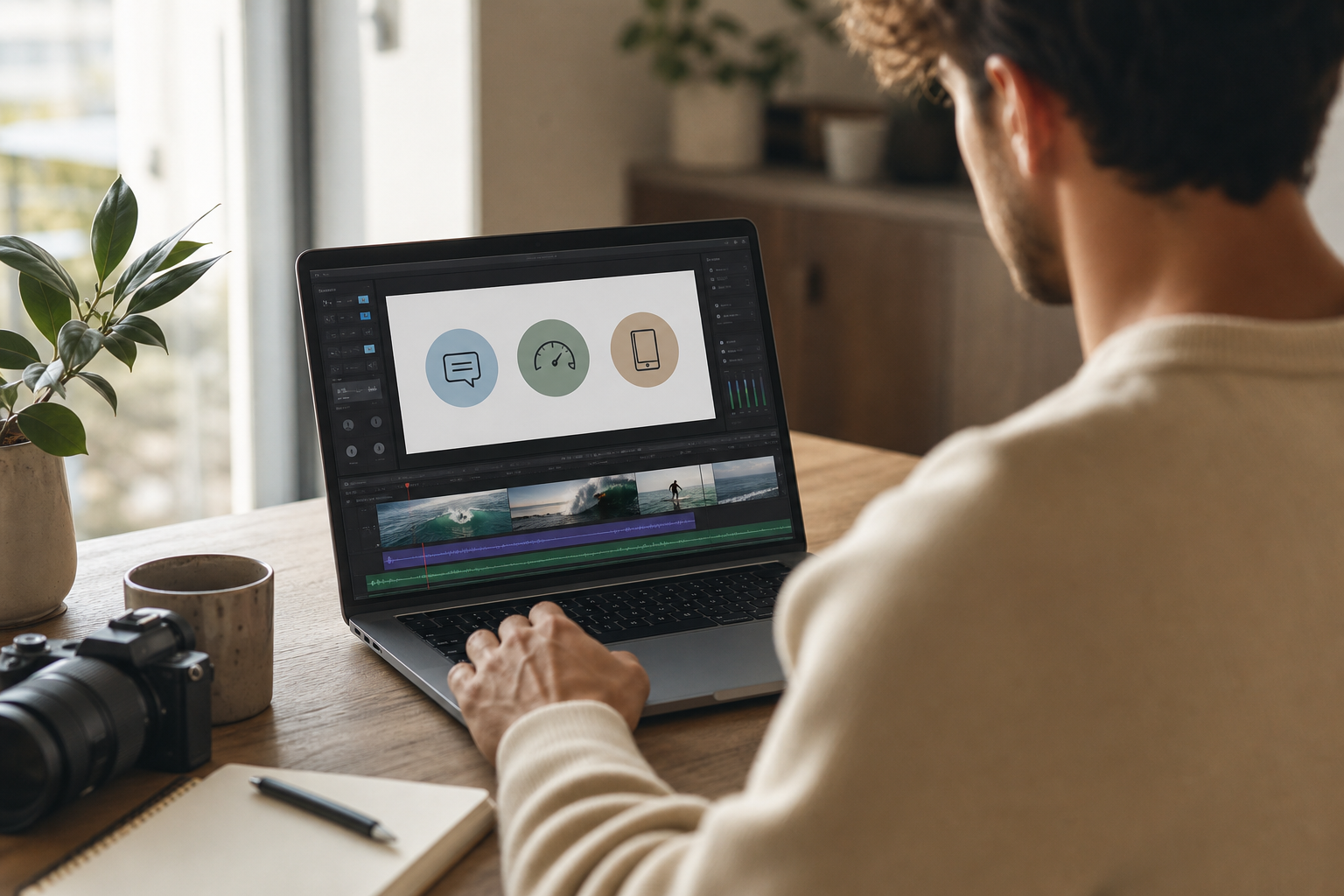
Second, AI cuts the cost and time wall. It can draft a short script from your product page, generate UGC-style scenes or product B-roll or an avatar presenter, and then auto-size and caption for multiple placements. In practice, that means you spend more time on the offer and hook while the tool handles stitching, timing, and specs.
Third, platforms respect the format when you respect their rules. You don’t have to guess those rules. For example, Google documents video ad types and placement details in its developer guides (Google Ads video overview).
What “AI Video Ad Maker” Actually Means
An AI builder blends three parts. It handles script and storyboard by taking a short brief and proposing hooks, lines, and scenes. It also manages media by creating or assembling UGC clips, product B-roll, or avatar takes. Finally, it covers post and brand match by adding captions, colors, fonts, logos, and music, then exporting the right sizes so you don’t manually re-cut.
Trust, Plans, and ROI Loop
In addition, modern tools can generate ads based on your brand identity, then adapt for 9 ad platforms without you re-cutting every file. That means you focus on message and offer instead of timelines and keyframes.
Furthermore, trust matters. If you prefer a platform used by real teams, note that some tools report 10K+ happy marketers and publish security claims such as SOC 2 Type II. Risk also drops when there’s a free plan with 35 ad credits and no credit card required on signup. Those details make it easier to try, learn, and keep what works.
Finally, your ROI will come from a loop: launch, read the data, fix the weakest link, and relaunch.
With AI in the chair, drafts take seconds, so you can test more ideas and find gains faster.
Also Read!
How to Choose the Best AI Ad Copy Generator for Your Agency
AdsGPT vs Jasper for Agencies: Which Is Better for AI Ad Copy Generation?
Step-by-Step: Creating Your First AI Video Ad in Under an Hour
You’ll move from idea to launch-ready file in about 45–60 minutes. Keep it light, aim for one strong hook, and let the tool handle cuts and captions. If you don’t have a favorite builder, pick an ai video ad maker that supports UGC, B-roll, and avatars, and exports to the platform you want to run first.
1) Define Your Goal and Platform
Pick one clear goal:
- Lead form fills
- Product page visits
- Add-to-cart
- Purchase
Then choose one platform to start (Meta or TikTok are great for consumer offers). Ensure you know the placements you want (Feed, Reels, or Stories) and the length cap you’ll target (15–30 seconds for your first test is sane). For specs and naming on YouTube/Google, scan the official Google Ads video overview once so you don’t guess.
2) Write a Clear Prompt or Brief
Give your tool a 6-point brief:
- Audience: who they are and the pain they feel
- Offer: product or promo with price or saving
- Proof: one fact, review, or outcome
- Hook: a 1–2 line opener that stops the scroll
- CTA: what you want them to do
- Brand: tone, colors, logo, do/don’t words
Example: Your audience could be busy parents with kids under 8, and the offer might be a spill-proof snack cup at $14. For proof, you can cite 1,200 five-star reviews and BPA-free materials. A strong hook like “Spills? Not this week.” will stop the scroll, followed by a CTA such as “Shop the 2-for-1 deal.” Keep the brand voice friendly and bright, and avoid jargon so the message stays clear.
3) Choose Ad Format (UGC, B-roll, Avatar)
Start with the format that fits your proof. Use UGC when you want hands-on demos and quick social proof lines. Choose B-roll for clean product shots with bold text callouts, and pick an avatar when a service intro or face-led script will build trust quickly. If unsure, generate one of each and let the data decide.
4) Generate and Review Variants
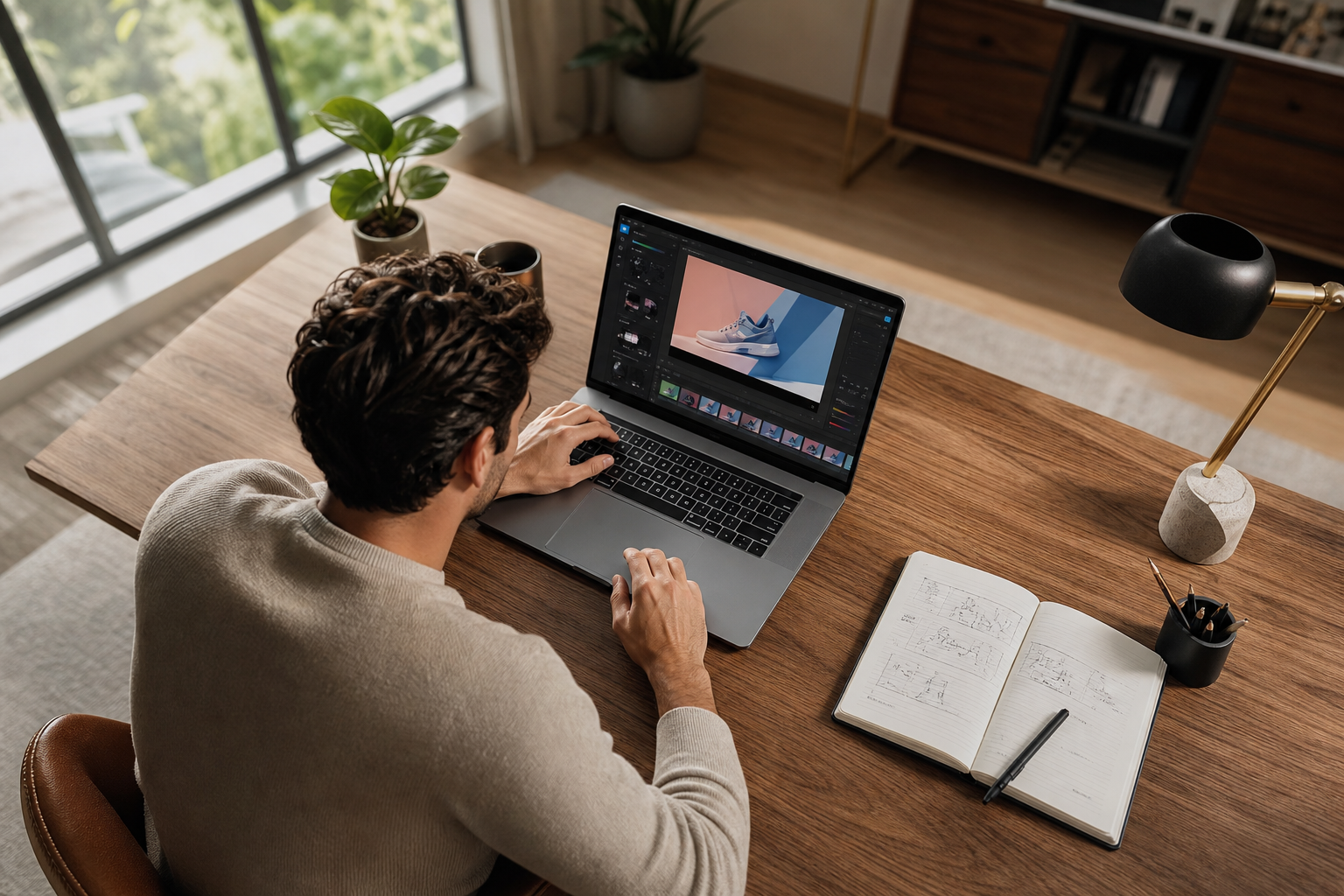
Ask for 3–5 variants. Focus on the hook line first, since it drives the stop rate and sets the tone for everything that follows. Then refine the first scene visual, because it frames the problem or promise in a single glance. Finally, adjust the CTA wording and on-screen text to match the offer and urgency you’re testing.
Then watch the first 3 seconds on mute. If the hook is not clear with captions alone, tweak and re-generate.
5) Edit and Brand-Match
Upload your logo, set colors and fonts, and add a short end card. Keep body text under 6–8 words per shot. Moreover, ensure captions match speech and are center-safe for Reels/Stories.
6) Export for Your Platform
Export vertical (1080×1920) for Reels/Stories/TikTok. Export square (1080×1080) if you plan Feed tests. Keep files under platform length caps. For YouTube Shorts, 60 seconds is the hard cap; for Reels and TikTok, plan 15–30 seconds for the first test.
7) Launch and Track
Upload the file to your chosen platform, set one audience, and use one ad set per variant. Track CTR, hold rate at 3 seconds, and cost per click in the first 72 hours. Therefore, you’ll know which hook to scale or fix.
Quick confidence check: If CTR is under 0.6% after 1,000 impressions on Meta, your hook or headline likely needs a change.
5 Mistakes Small Business Owners Make with AI Video Ads
Even good offers lose steam if you repeat these traps. The fix is simple: add brand context, match the platform, test variants, scout competitors, and keep learning from your data.
1) Using Generic Prompts Without Brand Context
If you skip your tone, logo rules, and “do/don’t” phrases, your ad feels off-brand. As a result, clicks drop even if the script is fine. Fix: paste your brand voice and three example lines into the prompt, and ask for “ads based on our brand identity” so the tool sets colors and fonts correctly.
2) Ignoring Platform-Specific Formats and Specs
Feeding a 16:9 video into Reels hurts watch time. Text outside the safe area gets cropped. Fix: export vertical for Stories/Reels/TikTok and square for Feeds, and keep on-screen captions within center guides so they remain readable.
3) Never Testing Multiple Variants
One idea rarely wins first time. If you run a single variant, you can’t learn fast. Fix: launch 3–5 hook variants with everything else held constant, then read the data after 72 hours to pick a direction.
4) Skipping Competitor Research
Your market already tells you what angles pull. If you ignore it, you test blind. Fix: use a large competitor ad database to spot hooks, visuals, and offers in your niche (filter by “last 30 days”), and if your tool shows performance by region, start with your top two geos.
5) Setting and Forgetting Without Analyzing Performance
If your CTR and view rate sag, the algorithm won’t save you. Fix: each Monday, pause the bottom 50% of variants, ship two fresh hooks, and measure CTR, CPC, and add-to-cart per variant so your stack keeps improving.
- For concrete creative angles to try next, skim these practical AI ad examples.
Also Read!
AI Video Ad Tools Worth Trying in 2026
You don’t need to lock in forever. Try one tool for two weeks, run a small test, and keep what works. Below is a neutral snapshot of four options used by small teams.
What to Compare (Video Ad Maker Criteria)
- Formats: UGC, product B-roll, avatars
- Speed: draft-to-video time
- Brand match: fonts, colors, logo lockups
- Exports: how many platforms it supports
- Price fit: free tier, starter tier, watermark rules
- Learning: competitor intel and training
| Tool (2026) | Video Formats | Brand Match | Exports | Notable Points |
|---|---|---|---|---|
| Canva AI | UGC-style templates, B-roll assembly | Brand kit tools | Multi-platform presets | Simple editor; great for non-designers |
| InVideo AI | Script-to-video, stock B-roll | Basic brand kit | Platform presets | Straightforward prompts for fast drafts |
| Synthesia | Avatar presenter videos | Styles and templates | Common sizes | Strong for talking-head explainers |
| AdsGPT | UGC, Product B-roll, Avatars | Ads based on your brand identity | Supports 9 ad platforms | Generates 60 high-converting ads in 60 seconds; 500M+ competitor ad database; Meta integration |
| One more to watch | Varies | Varies | Varies | Try if you need a niche feature |
If you prefer clear tiers and a free start, AdsGPT offers a free plan with 35 ad credits (no credit card), a Starter plan at $49 per month, and higher plans for growing teams. On paid plans, exports have no watermark. Video ads on the free tier have a 17-second limit, which is perfect for first tests. If you want an ai video ad maker that also helps you research, note the built-in competitor intel across a 500M+ ad library and insights by region. Use those to shape your next three hooks before you spend a dollar.
- If you’re weighing DIY vs hiring, this breakdown of agency costs vs AI builder will help you budget.
- For a broader landscape, see the best AI for ad creation review.
 , exports to 9 platforms, and pricing tiers; neutral brand colors)
Key Takeaways
You can ship a competitive video ad in under an hour by focusing on a clear goal, a sharp hook, and platform fit. An ai video ad maker slashes production time and cost, but your edge comes from testing 3–5 hooks and keeping the winners.
Start with one format.
UGC, B-roll, or avatar, then branch out based on 72-hour CTR and hold-rate data. Use competitor intel from large ad libraries and regional insights to shape hooks before you spend. Favor tools with a free plan (35 credits) and SOC 2 Type II claims so you can test safely and quickly.
What to Do This Week: Your First AI Video Ad Campaign
Here’s a simple 4-day plan you can actually finish.
Day 1.
- Offer: choose your highest-margin product or a tight promo (e.g., “Buy 1, Get 1 50% Off through Sunday”).
- Platform: choose Meta to start. Its placements (Feed, Reels, Stories) work well for short vertical videos and there’s native support to launch ads.
Day 2.
- In your ai video ad maker, write the 6-point brief (audience, offer, proof, hook, CTA, brand). – Create one UGC, one B-roll, and one avatar variant.
Keep them to 15–20 seconds. – Brand-match colors, fonts, and logo. Export vertical (1080×1920) for Reels/Stories.
Day 3.
- Create one ad set per variant. Use the same budget per ad set.
- On Meta, use the platform’s objective that matches your goal (e.g., Sales or Traffic). With Meta integration, you can push creatives straight from your tool to your ad account and save setup time.
Day 4.
- Metrics to check: 3-second hold rate, CTR, CPC, and add-to-cart or leads.
- Keep the top two variants. Kill the rest. Spin two new hooks based on the winner’s pattern.
Then repeat each week. As a result, you’ll build a high-performing creative stack in a month without blowing your budget.
- If you want help writing better prompts and briefs, skim this short guide on AI ad creation.
Security and trust note: If you care about data handling, choose a platform that states SOC 2 Type II. It signals strong controls across security and availability. Also, a free plan with 35 ad credits lets you try without risk or a watermark on paid tiers.
Ship Your First Ad Today →
Final thought: The tool gets you on the field. Your message wins the game. Start small, learn fast, and make the next variant better than the last.

MOST POPULAR