Artificial intelligence has transformed how we write, communicate, and create content. But perhaps one of the most fascinating developments is its ability to generate realistic, artistic, and highly customized images from simple text prompts.
Just a few years ago, creating a professional-quality image required photography skills, expensive software, or a graphic designer. Today, anyone can generate stunning visuals in minutes using an AI generated photo tool.
Whether you’re a blogger looking for unique visuals, a marketer creating campaign assets, a business owner designing promotional content, or a creator experimenting with digital art, AI image generation has opened up entirely new possibilities.
However, creating a great AI-generated image isn’t as simple as typing a few words and hoping for magic. The quality of your prompts, the tool you choose, and your understanding of how these systems work all play a major role in the final result.
In this guide, you’ll learn everything about creating an AI generated photo, the tools leading the industry, best practices for achieving professional results, and how AI-generated visuals are reshaping creative workflows in 2026.
In a hurry? Listen to the blog instead!
What Is an AI Generated Photo?
An AI generated photo is an image created by artificial intelligence based on text descriptions, reference images, or a combination of both.
Instead of capturing a photograph using a camera, AI models generate entirely new visuals by analyzing patterns learned from millions of images during training.
For example, if you enter:
“A golden retriever sitting on a beach during sunset, ultra-realistic photography”
the AI understands concepts such as:
- Golden retriever
- Beach
- Sunset lighting
- Realistic photography style
- Composition and perspective
Within seconds, it combines these elements to produce a completely new image that has never existed before.
Modern AI tools can generate:
- Portrait photography
- Product images
- Landscapes
- Marketing creatives
- Social media graphics
- Concept art
- Illustrations
- Fashion photography
- Architectural designs
This flexibility explains why AI-generated visuals are becoming an essential asset across industries.
Why AI Image Generation Is Growing So Fast
The popularity of AI image generation isn’t just a trend.
Businesses and creators are adopting these tools because they solve real challenges.
1. Faster Content Creation
Visual content often slows down production timelines.
Traditional image creation may involve:
- Planning
- Photography
- Editing
- Graphic design
- Multiple revisions
An AI generated photo can reduce hours of work to just a few minutes.
For content creators publishing frequently, this speed can dramatically improve productivity.
2. Cost Savings
Hiring photographers, illustrators, or purchasing premium stock images can become expensive.
AI image tools allow creators to produce custom visuals at a fraction of the cost.
For startups and small businesses with limited budgets, this advantage can be significant.
3. Unlimited Creative Possibilities
Need a futuristic city floating above the clouds?
A cat wearing a business suit?
A luxury office on Mars?
AI can create concepts that would be impossible—or extremely expensive—to photograph in real life.
4. Improved Personalization
Unlike stock photography, AI-generated visuals can be tailored specifically to your brand, campaign, or audience.
This level of customization helps businesses stand out in crowded markets.
How Does an AI Generated Photo Actually Work?
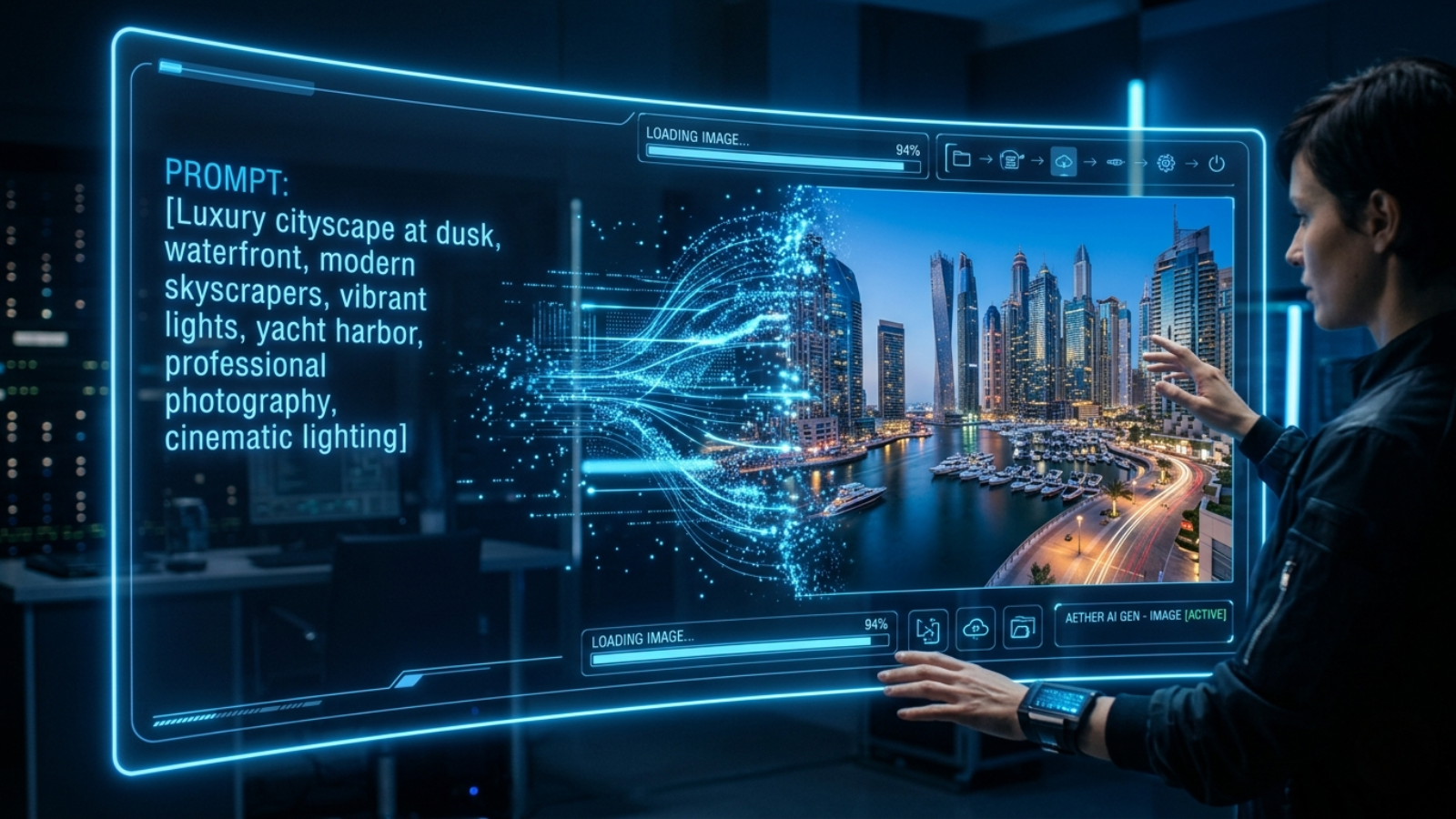
Although the process seems magical, it follows a structured system.
Step 1: Understanding the Prompt
The AI first analyzes your Text Prompt for image.
For example:
“Modern luxury office interior with natural sunlight and minimalist design.”
The model identifies:
- Subject: office interior
- Style: luxury
- Lighting: natural sunlight
- Design preference: minimalist
Every detail influences the final output.
Step 2: Building Visual Concepts
The system creates a mental blueprint based on patterns it learned during training.
It understands:
- Furniture arrangements
- Lighting behavior
- Architectural styles
- Color palettes
This allows the model to predict what the requested image should look like.
Step 3: Image Generation
Most modern systems use diffusion technology.
They begin with random visual noise and gradually transform it into a coherent image through thousands of refinements.
The result becomes increasingly detailed until it matches the prompt.
Step 4: Refinement
Many tools now allow users to:
- Change styles
- Adjust lighting
- Modify backgrounds
- Increase resolution
- Expand image dimensions
This makes the creation process much more interactive and professional.
Choosing the Right AI Image Generator
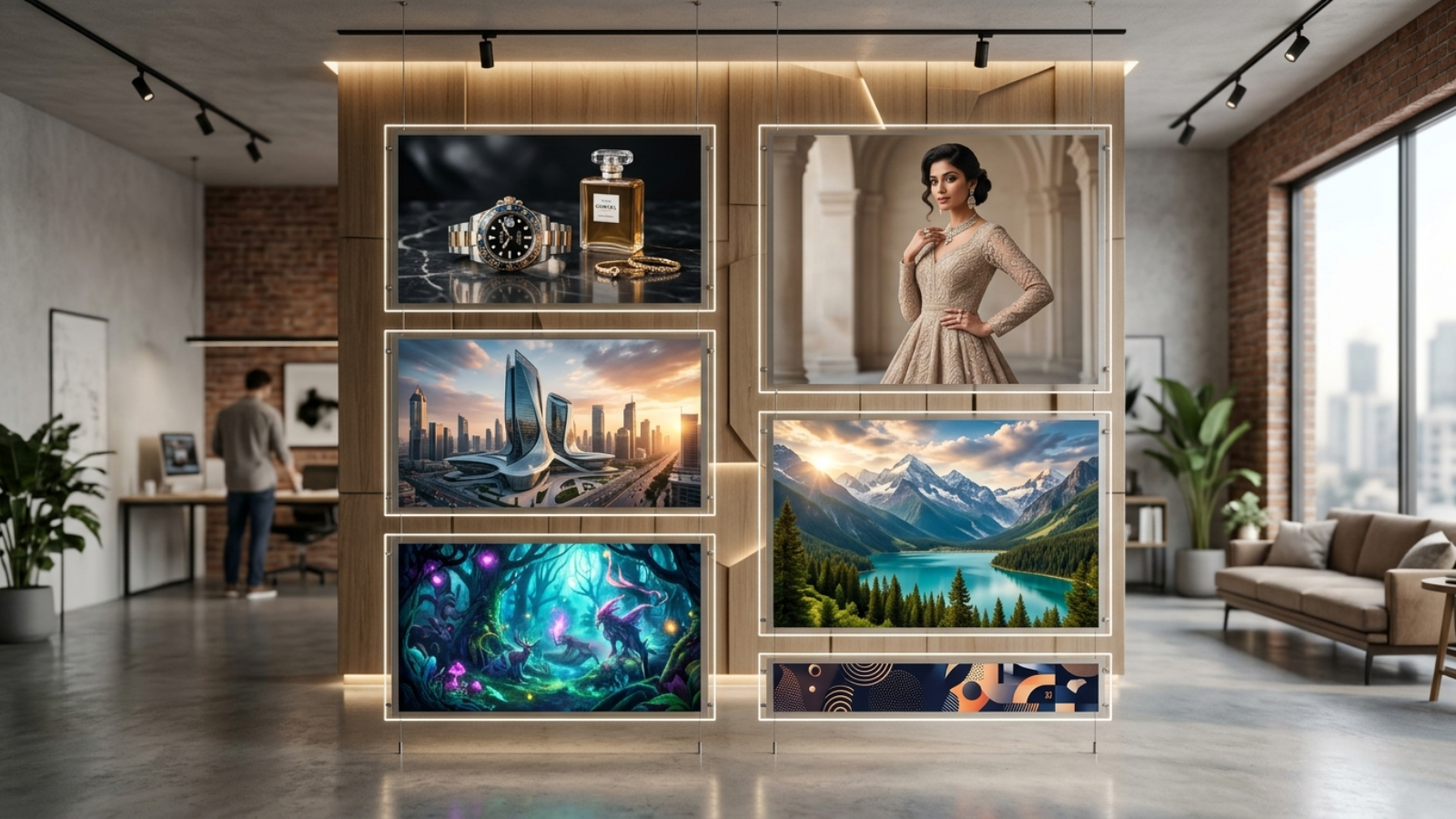
One of the biggest questions people ask is:
What Is the Best AI Image Generator?
The answer depends on your goals.
Different platforms specialize in different types of content.
Let’s explore the leading options available today.
1. DALL·E
Created by OpenAI, DALL·E is known for its strong prompt understanding and realistic image generation.
Best for:
- Marketing visuals
- Product concepts
- Creative illustrations
- Detailed scenes
2. Midjourney
Midjourney remains one of the most popular creative platforms.
Strengths include:
- Artistic styles
- Cinematic visuals
- Fantasy concepts
- Highly detailed artwork
Many designers consider it among the best ai image generator platforms available.
3. Adobe Firefly
Firefly focuses heavily on commercial usability.
Advantages include:
- Adobe integration
- Commercial-safe outputs
- Professional workflows
Ideal for agencies and businesses.
4. Google Imagen
Google’s latest image model delivers:
- Exceptional realism
- Strong text rendering
- High-quality image outputs
It’s becoming a serious contender for the title of what is the best ai image generator in 2026.
5. Leonardo AI
Popular among creative professionals.
Excellent for:
- Gaming assets
- Character concepts
- Fantasy artwork
- Design ideation
6/ Canva Magic Media
Perfect for beginners who want simple visual creation without a steep learning curve.
But it doesnt just stops here….
An AI generated photo is no longer just a visual—it’s the starting point of an entire marketing campaign.
Today, businesses are transforming AI-generated images into social media ads, display banners, product promotions, video creatives, and conversion-focused campaigns that drive real results. What begins as a simple prompt can quickly become a powerful marketing asset capable of capturing attention and influencing buying decisions.
As AI continues to evolve, brands are looking beyond image creation alone. They need solutions that can turn creative ideas into complete advertising experiences.
That’s where AdsGPT comes in. By transforming prompts, concepts, and AI-generated visuals into ready-to-launch ad creatives and videos, AdsGPT helps businesses move from inspiration to execution faster than ever before.
AdsGPT: Turn AI-Generated Photos Into High-Converting Ad Campaigns
Creating an AI generated photo is only the beginning. To generate real business results, brands need ad creatives that are optimized for engagement, conversions, and platform-specific performance.
AdsGPT helps marketers bridge the gap between AI-generated visuals and successful advertising campaigns by transforming ideas, prompts, and creative concepts into launch-ready ads in minutes.
Key Features of AdsGPT
1. AI-Powered Ad Creative Generation
Generate multiple platform-ready image ads from a single prompt. Create high-quality ad creatives in seconds without relying on designers or lengthy production cycles.
2. AI Video Ad Creation
Produce engaging UGC videos, product B-rolls, and AI avatar ads designed for platforms like TikTok, Instagram Reels, YouTube Shorts, and Meta Ads.
3. Competitor Ad Intelligence
Access insights from millions of active advertisements across major platforms to discover winning trends, analyze competitors, and generate similar high-performing creatives.
4. Brand-Aware Creative Generation
Maintain consistency across campaigns by automatically incorporating your brand colors, logo, messaging, and visual identity into every creative.
5. Multi-Platform Ad Support
Create and export creatives optimized for Meta, Google, LinkedIn, TikTok, Pinterest, YouTube, and other leading advertising platforms.
6. Product Shot Studio
Transform a single product image into professional lifestyle shots, hero images, and marketing-ready visuals without expensive photoshoots.
7. One-Click Campaign Launch
Move from creative generation to campaign deployment faster by streamlining the advertising workflow within a single platform.
Create Smarter Ads With AI
While an AI generated photo can help you create stunning visuals, AdsGPT takes things a step further by helping you turn those visuals into complete advertising assets that drive measurable results.
Ready to create high-converting ad creatives in minutes? Try AdsGPT and transform your ideas into campaigns that capture attention and deliver performance.
Free vs Paid AI Image Generators
Many users start their journey looking for a free ai image generator.
Fortunately, there are excellent options available.
Benefits of Free Tools
- No upfront investment
- Great for learning
- Suitable for occasional projects
- Easy experimentation
Limitations
Free plans often include:
- Generation limits
- Watermarks
- Lower resolutions
- Restricted commercial rights
When Paid Plans Make Sense
If you’re creating:
- Client work
- Business marketing materials
- Large content volumes
- Professional designs
A paid platform typically provides better value through enhanced quality and flexibility.
How to Write Better Prompts for AI Generated Photos
The difference between an average image and an exceptional one often comes down to the prompt.
Weak Prompt
“Office”
This gives the AI very little direction.
Better Prompt
“Modern executive office with floor-to-ceiling windows, natural sunlight, wooden desk, realistic photography, professional business environment.”
The second prompt provides:
- Subject
- Style
- Lighting
- Mood
- Composition cues
As a result, the output becomes far more useful.
Prompt Formula
A practical formula is:
Subject + Environment + Style + Lighting + Quality
Example:
“Luxury smartwatch on marble table, studio photography, soft lighting, ultra-realistic, commercial advertising style.”
This structure consistently produces stronger results.
Read More:
10 Creative Uses for AI Image Generation
How To Use An AI Image Prompt To Design Better Ad Creatives?
Common Use Cases for AI Generated Photos
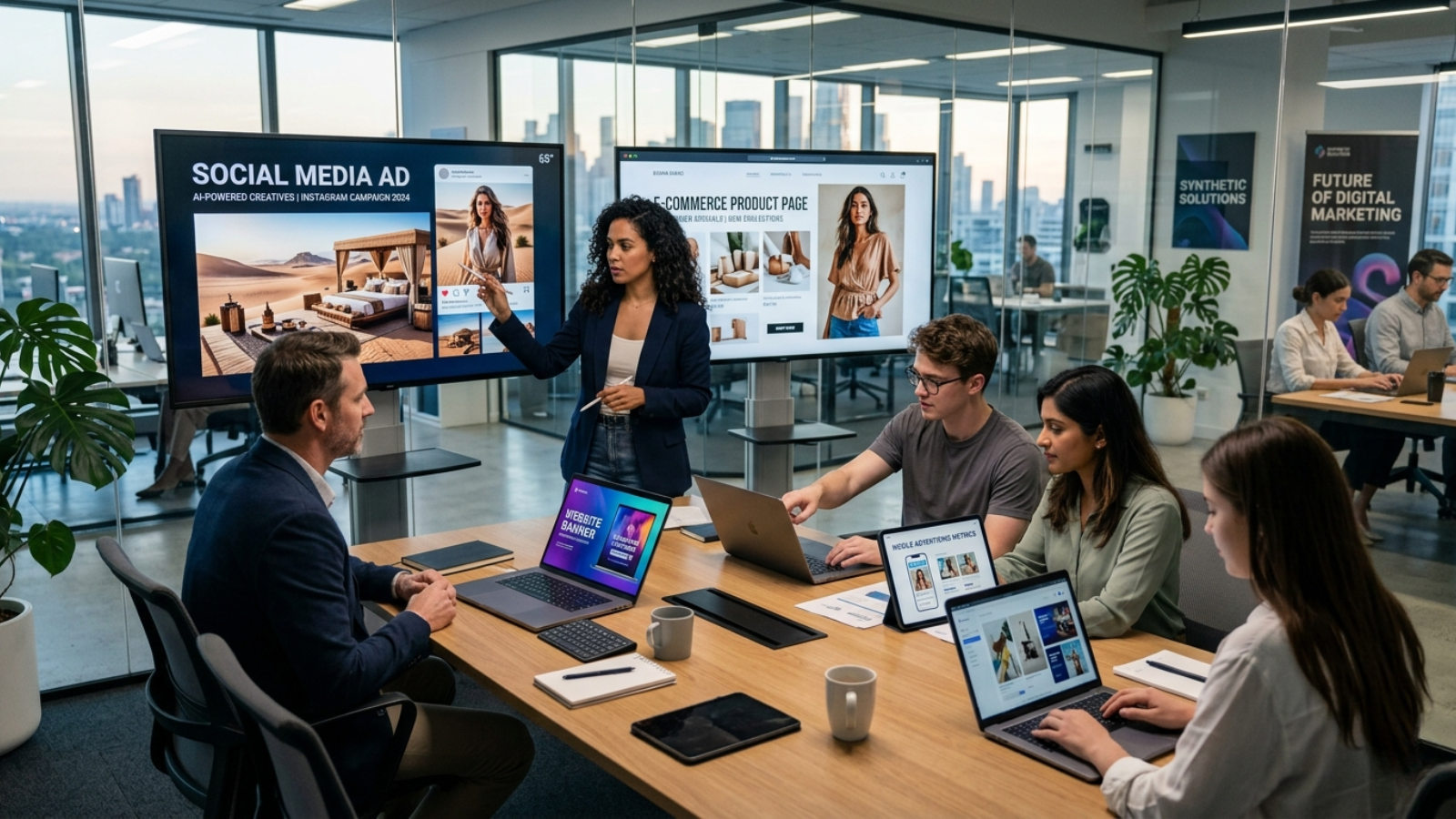
AI-generated visuals are now being used across numerous industries.
Blogging
Bloggers use AI images for:
- Featured images
- Article illustrations
- Custom graphics
Instead of relying on repetitive stock photos, creators can generate visuals tailored to specific topics.
Digital Marketing
Marketers create:
- Ad creatives
- Social media posts
- Landing page visuals
- Promotional graphics
This enables rapid campaign testing and experimentation.
E-commerce
Businesses generate:
- Product concepts
- Lifestyle imagery
- Packaging mockups
Without expensive photoshoots.
Education
Teachers and educators use AI-generated visuals to simplify complex concepts and make learning materials more engaging.
Design Inspiration
Many creative professionals use an image generator ai tool during brainstorming sessions to explore ideas quickly.
Challenges and Limitations of AI Generated Photos
While the technology is impressive, it’s not perfect.
1. Inconsistent Results
Even excellent prompts can sometimes produce unexpected outputs.
You may need multiple generations before achieving the desired result.
2. Generic Visuals
Over-reliance on AI can make content feel repetitive.
The best creators use AI as a starting point rather than the final destination.
3. Copyright Concerns
Businesses should review licensing policies carefully before using generated content commercially.
Different platforms have different rules.
4. Human Creativity Still Matters
AI can generate visuals.
It cannot fully replace:
- Brand strategy
- Creative direction
- Storytelling
- Emotional understanding
The strongest results emerge when human creativity guides AI capabilities.
Best Practices for Creating High-Quality AI Images
Be Extremely Specific
The more detail you provide, the better the outcome.
Instead of:
“Coffee shop”
Try:
“Cozy modern coffee shop interior with warm lighting, wooden furniture, customers working on laptops, realistic photography.”
Experiment Frequently
Don’t settle for the first result.
Generate multiple variations and compare outputs.
Maintain Brand Consistency
Use consistent:
- Colors
- Styles
- Visual themes
- Design elements
This helps establish a recognizable brand identity. A mood board can make this process easier by bringing colors, visual references, styles, and creative direction together before you start generating images.
Edit After Generation
Most professional workflows involve:
- Retouching
- Cropping
- Color correction
- Typography additions
Think of AI as the first step rather than the final one.
The Future of AI Generated Photos
The technology is evolving rapidly.
In 2026 and beyond, we can expect:
1. More Realistic Images
Photorealism continues improving to levels that rival traditional photography.
2. Better Text Rendering
One of AI’s historical weaknesses was handling text inside images.
Modern systems are becoming significantly more accurate.
3. Personalized Models
Businesses will increasingly train AI systems using their own brand assets and visual libraries.
4. Faster Workflows
Generation times continue decreasing while quality improves.
5. AI-Powered Creative Suites
Instead of standalone generators, we’re seeing complete ecosystems that combine:
- Image creation
- Editing
- Branding
- Video generation
- Content production
within a single workflow.
Final Thoughts
Creating an AI generated photo has never been easier—or more powerful.
Whether you’re experimenting with a free ai image generator, searching for the best ai image generator, or trying to understand what is the best ai image generator for your business, the key is learning how to guide the technology effectively.
The most successful creators aren’t using AI to replace creativity.
They’re using it to remove repetitive tasks, accelerate production, and unlock ideas that might otherwise remain unexplored.
As image generation technology continues advancing, one thing is clear: AI is becoming an essential creative partner rather than just another software tool.
The sooner you learn how to leverage an image generator ai platform effectively, the better positioned you’ll be to create engaging, original, and visually compelling content in the years ahead.
FAQs
- What is an AI generated photo?
An AI generated photo is a visual created by artificial intelligence using text prompts, reference images, or design instructions instead of a traditional camera. - What is the best AI image generator in 2026?
Popular options include DALL·E, Midjourney, Google Imagen, Leonardo AI, and Adobe Firefly. The best choice depends on your specific goals and creative needs. - Can I create an AI generated photo for free?
Yes. Many platforms offer a free AI image generator with limited credits, allowing users to create images without an upfront investment. - How do I get better results from an image generator AI tool?
Use detailed prompts that include the subject, style, lighting, environment, and quality preferences to generate more accurate and visually appealing images. - Can AI-generated photos be used for advertising and marketing?
Absolutely. Businesses use AI-generated photos for social media ads, product promotions, display campaigns, landing pages, and other marketing creatives to save time and reduce production costs.
MOST POPULAR