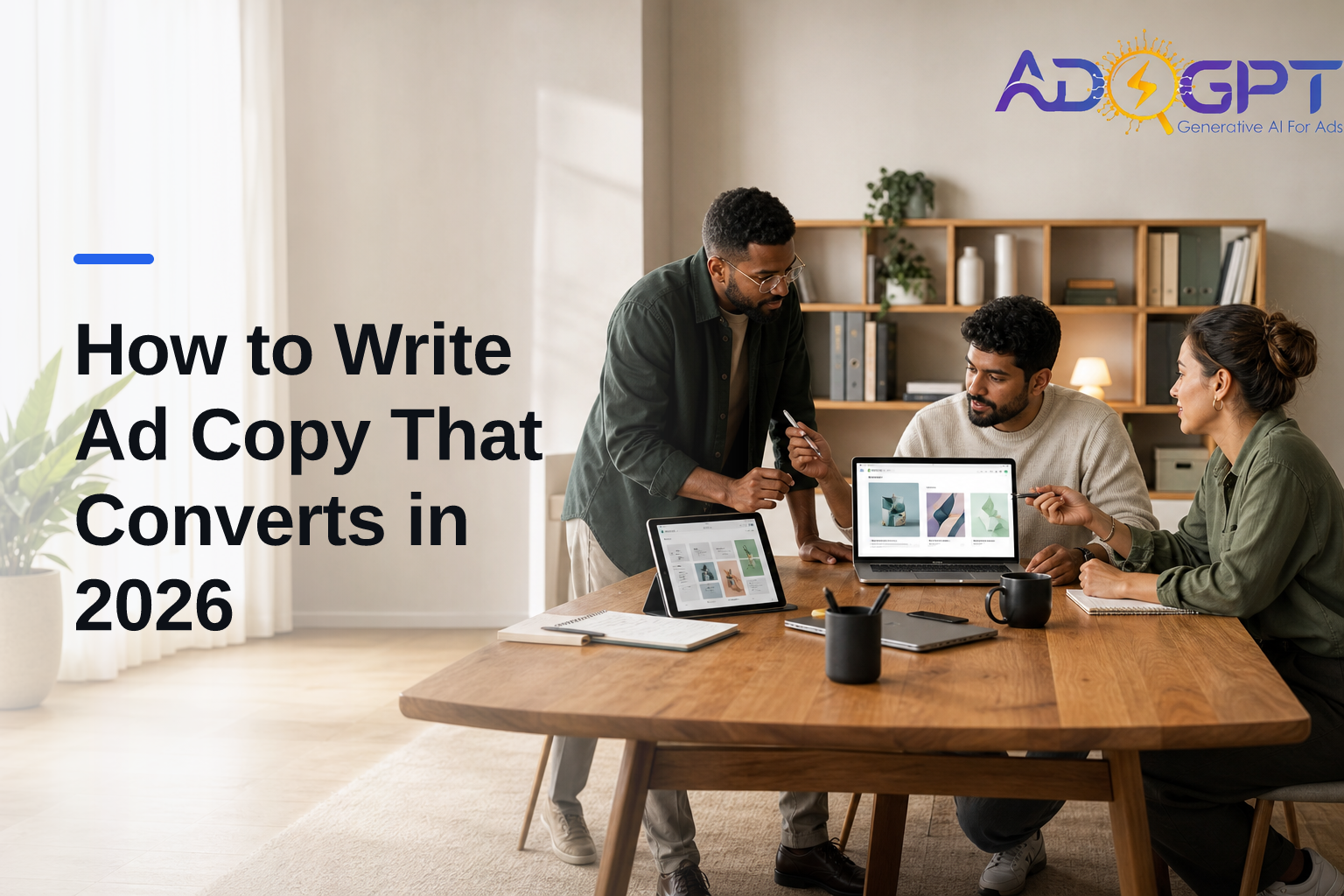
Most ads don’t fail for lack of budget; they fail because the words don’t sell. If you want to write ad copy that converts, start by focusing on one person, one promise, and one clear next step.
Here’s the short answer you can use today: speak to one tight pain or desire, name a real benefit with a number or detail, show proof, then ask for a single action. Finally, test it against a second version. In 2026, this simple loop still wins across Google, Meta, LinkedIn, and beyond because clarity beats clever.
For extra help, study real wins. You’ll find strong formats in these walk-throughs of ad copy examples and channel-specific guides for [facebook ad copy](https://adsgpt.io/blog/facebook-ad-copy-with- and linkedin ad copy. Use them as a starting point, not a script.

What Makes Ad Copy Actually Convert?
Ad copy is the short text in your ad: the headline, body, and call to action. Its job isn’t to “be creative.” Its job is to earn the click or the action. You can write ad copy converts by mixing a tight promise, clear proof, and a direct ask that fits the person and the place they see it.
The headline grabs the brain. It earns the next line with a benefit, not a pun. The body expands that benefit with a detail, a number, or an example.
The CTA tells the reader what to do next and why now. Each part has a job. Let each do only that job.
Psychology That Drives Clicks
- Urgency: add a reason to act now that is true (e.g., “Ships by Friday”).
- Specificity: name numbers, timeframes, or use-cases (“Cut prep time by 47 minutes”).
- Benefits over features: “Sleep through the night” beats “Memory foam.
For example, “4K camera, 128GB” lists features. “Crisp family photos in low light, even with wiggly toddlers” sells the outcome. Moreover, specificity builds trust fast. “Under 5 minutes to set up” feels real; “easy to use” is fluff.
“We moved from vague feature lists to one benefit plus one number and saw click-through jump from 0.9% to 2.4% in a week.” — Maya, ecommerce lead
Finally, match message to moment. A feed ad can tease a benefit and curiosity. A search ad should mirror the query with a direct promise and a price or proof. As a result, the right hook meets the right intent.
A Step-by-Step Framework for Writing Ad Copy
This 7-step playbook will help you write ad copy converts without guesswork. Follow it end to end, then loop back with tests.
Seven Steps at a Glance
- Research your audience
- Define one goal
- Write the headline first
- Lead with benefits
- Add proof and specifics
- Write one clear CTA
- Test variations
Step 1: Research Your Audience
Talk to five real users this week. Ask what they tried, what failed, and the moment they knew they needed help. Pull exact phrases. In addition, browse the Meta Ad Library and search terms your buyers use. Save lines that punch. Moreover, scan successful formats in this guide to ad copy generator prompts to see how angles shift by pain or persona.
Step 2: Define One Clear Goal Per Ad
Pick one conversion per ad: click to product page, book a demo, or start a trial. Therefore, kill everything that doesn’t drive that one action. If you have two goals, you have confusion.
Step 3: Write the Headline First
Write ten headlines, not one. For search, mirror the query plus a benefit (“On-Demand IT Support, 2-Minute Setup”). For feeds, pair benefit and curiosity (“Sleep by 10 pm Again. Here’s How.”). Then pick two to test.
Step 4: Lead With Benefits
Translate features into outcomes. “Stainless steel bottle” becomes “Ice-cold water for 24 hours.” “End-to-end encryption” becomes “Your client docs stay private.” As a result, readers picture their win, not your spec sheet.
Step 5: Add Proof and Specificity
Use numbers, names, and time.
- “10K+ marketers use this daily.
- “500M+ data points across 9 ad platforms.
- “Ships in 24 hours. Free returns for 30 days.
Step 6: Write a Clear CTA
Say what to do and why now. “Start Free Trial Today” or “Get Your Quote in 60 Seconds.” Avoid vague asks like “Learn More.” A Call to action (marketing) that sets a result (“See Your Score”) beats a bland button.
Step 7: Test Variations
Test one change at a time: headline vs. headline, CTA vs. CTA. Run two variants and pick a winner. Then test the next lever. For structure and rigor, read about A/B testing once, then keep your setup simple.

Pro tip: keep a swipe file of winners. Save screenshots, angles, and lines that hit. Over time, your tests get faster because you start from a proven base.
Also Read!
How to Write a Hook That Grabs Attention Every Time
How to Choose the Best AI Ad Copy Generator for Your Ecommerce Store
5 Ad Copy Mistakes That Kill Your Click-Through Rate
These five traps are fixable. However, they block your plan to write ad copy converts if you let them sit.
First, writing for “everyone.” Broad lines like “Solutions for all” feel like noise. Second, burying the value prop under brand speak. If your best promise lands in line five, it’s too late. Third, vague CTAs like “Learn more.” Fourth, ignoring platform rules on length, truncation, and line breaks. Finally, never testing variants, so weak lines linger for months.
Before/After Fixes
- Audience: “For busy teams” → “For 3-person finance teams closing books on Friday.
- Value prop: “Quality materials” → “Stain-proof sofa that wipes clean in 10 seconds.
- CTA: “Learn more” → “See Sizes and Price.
- Format: One 240-character blob on LinkedIn → 1 short hook, 1 benefit line, 1 CTA line tailored to LinkedIn’s layout. See formats in this linkedin ad copy guide.
- Testing: “We’ll test next quarter” → “Ship two variants today; review in 3 days.
Platform nuance matters. For Meta feeds, front-load the first 90 characters. For LinkedIn, add a tight line break stack.
For Google text ads, mirror the query and add a price or number in Headline 2. Moreover, save working patterns in a swipe file so teams don’t reinvent the wheel. If you market on Meta, compare patterns with these [facebook ad copy](https://adsgpt.io/blog/facebook-ad-copy-with- examples before you write.
Tools and Resources to Speed Up Your Ad Copywriting
You still do the thinking. Tools just speed the loop from idea to ready-to-test. These picks help you draft, check, and compare faster in 2026.
What to Use (and Why)
- Google Ads preview tool: check how headlines wrap across devices before you pay.
- Meta Ad Library: research angles, hooks, and claims your market sees every day.
- Hemingway Editor: strip fluff; aim for Grade 6–8 for most feed ads.
- AdsGPT: one option to draft and research. It generates 60 high-converting ads in 60 seconds, taps a 500M+ competitor ad database, supports 9 ad platforms, and includes an ad chat platform to discuss analytics. It offers a free plan with 35 ad credits, no credit card required, and serves 10K+ happy marketers while being SOC 2 Type II. Paid plans remove watermarks; video ads have a 17‑second limit.
- Swipe files: build your own with screenshots by niche, or use curated libraries to spot repeatable patterns.
In addition, tools that batch ideas let you compare ten hooks in one sitting. As a result, you’ll spot the strong angle faster. These tools help you write ad copy converts faster, but they don’t replace good research.
“We cut creative prep from 6 hours to 45 minutes by drafting 20 headlines, then testing the top 2 per channel.” — Leon, agency owner
Key Takeaways and What to Do This Week
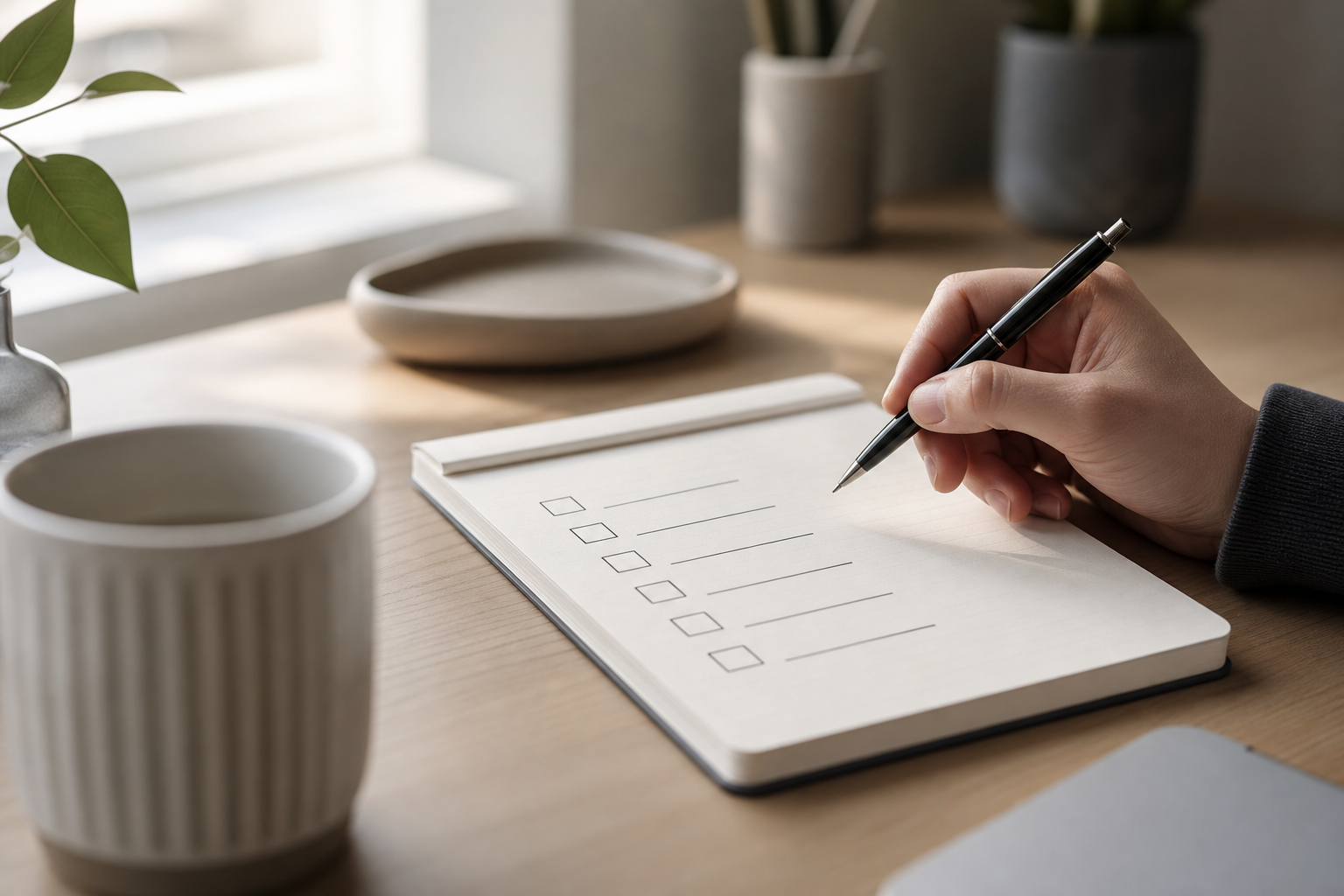
Key Takeaways
- One ad, one goal, one reader. Tight focus beats broad claims.
- Lead with a benefit, then prove it with a number, name, or time.
- Headlines win the scroll. Write 10; test 2.
- CTAs must say what happens next and why now.
- Test small, ship fast. Keep a swipe file to scale wins.
What to Do This Week
Day 1–2: Research three competitors and your reviews. Copy exact buyer phrases into a doc.
Day 3–4: Draft five headline variations and two body options per channel. Use examples in your swipe file and from ad copy examples.
Day 5–7: Launch two versions per ad set. Track CTR and CPC. Keep the winner; test the next lever. If you need speed, sketch prompts from this guide to an ad copy generator and spin up variants to compare.
As you loop, keep your focus in 2026: plain words, clear numbers, fast tests. By week’s end, you’ll write ad copy converts with less guesswork and more proof.

MOST POPULAR