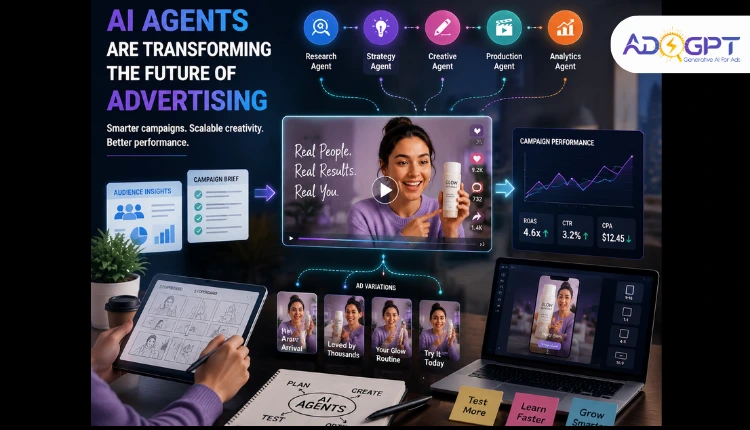
Advertising has always evolved alongside technology. From traditional print campaigns to digital targeting and automated bidding, every major shift has changed how brands connect with audiences.
Today, another transformation is taking place with the rise of AI agents. Unlike traditional AI tools that perform individual tasks, AI agents are designed to support broader workflows by understanding goals, maintaining context, and helping complete complex processes.
In advertising, this shift is changing how campaigns are planned, creative assets are produced, and performance insights are analyzed. Instead of using separate tools for research, copywriting, design, video creation, and optimization, marketing teams are beginning to explore connected AI workflows that support the entire campaign lifecycle.
The future of advertising is moving toward a model where AI agents work alongside marketers, helping them create better campaigns faster while keeping strategic decisions in human hands.
Moving Beyond Traditional AI Tools in Advertising
Early AI marketing tools were mainly focused on completing specific tasks. They could generate ad copy, suggest headlines, analyze customer data, or automate repetitive processes.
While these capabilities are useful, modern advertising requires coordination between multiple stages.
A successful campaign involves:
- Understanding the target audience
- Developing creative concepts
- Producing visuals and videos
- Creating multiple ad variations
- Measuring performance
- Improving future campaigns
AI agents are changing this by connecting these different steps. Instead of simply responding to individual requests, they can help manage larger workflows where context and previous decisions remain important.
This allows marketing teams to spend less time managing separate processes and more time focusing on creative strategy.
How AI Agents Are Changing Campaign Planning
Campaign planning requires marketers to make many decisions before an advertisement is created. Teams need to understand audience behavior, define messaging, select platforms, and decide what type of creative approach will work best.
AI agents can support this planning process by helping teams explore ideas, organize information, and develop campaign strategies.
For example, a brand launching a new product can use AI assistance to explore different audience segments, messaging angles, and campaign concepts before moving into production.
This helps marketing teams make more informed decisions earlier in the process.
However, AI does not replace marketing strategy. Human teams still need to define brand goals, understand customers, and decide which creative direction aligns with the company’s vision.
AI Agents Are Changing Creative Production
Creative production is one of the biggest areas where AI agents are creating new possibilities.
Advertising teams traditionally rely on separate workflows for writing scripts, designing visuals, recording videos, and editing final assets. Managing these stages can become difficult, especially when brands need dozens of creative variations.
AI agents are helping connect these activities.
This evolution is also leading to multi-agent workflows, where different AI agents can support specialized parts of the advertising process. One agent may assist with campaign research, another with creative development, and another with video production or performance analysis. By working together within the same workflow, these agents can help marketing teams manage complex campaigns more efficiently while keeping different stages connected.
Instead of using AI only for generating text, marketers can now use agent-based workflows to move from an idea or campaign brief toward complete creative assets.
For video advertising, Invideo Agent represents this shift from simple AI generation toward a more connected production workflow. It helps creators move from ideas, scripts, and references into structured video projects by connecting planning, visual development, generation, editing, and refinement.
This approach is useful for marketing teams creating advertisements that require multiple versions, consistent brand direction, and faster production cycles.
Creating More Advertising Variations for Testing
Performance advertising depends heavily on experimentation. A single creative concept may perform differently depending on the audience, platform, or messaging style.
Brands often need multiple versions of an advertisement to understand what works best.
AI agents can help marketers create more variations by supporting different parts of the creative process.
For example, a campaign may require:
- Different opening hooks
- Multiple video lengths
- Platform-specific formats
- Alternative product messages
- Different visual approaches
Instead of manually creating every variation, AI-powered workflows can help teams explore more creative options faster.
This allows marketers to test more ideas while reducing the time required for production.
Improving Personalization in Advertising
Modern audiences expect content that feels relevant to their interests and needs.
AI agents can help brands create more personalized advertising experiences by analyzing information and supporting the creation of targeted content.
For example, an ecommerce brand may create different advertisements for different customer groups. A new customer may see a product introduction video, while an existing customer may receive content focused on advanced features or promotions.
AI agents can help streamline the process of adapting creative content for different audiences while maintaining brand consistency.
AI Agents and Video Advertising Workflows
Video has become one of the most important formats in digital advertising. Brands use videos across social media, websites, paid campaigns, and product launches.
However, video production can be time-consuming because it involves multiple creative decisions.
AI agents are helping simplify video workflows by supporting:
- Script development
- Scene planning
- Visual references
- Video generation
- Editing decisions
- Creative variations
For marketing teams, this creates a more connected process where ideas can move from concept to final advertisement more efficiently.
With invideo Agent Two, teams working on larger campaigns can benefit from a workflow that remembers project context throughout the creative process. It can retain creative decisions, references, and project details through stored memory, helping maintain continuity as campaigns develop across multiple stages.
This context-aware approach can support larger advertising projects where teams need to coordinate areas such as visual planning, storytelling, cinematography, and effects without losing the original creative direction.
Optimizing Campaigns With AI Insights
Creating advertisements is only one part of the marketing process. Teams also need to understand how campaigns perform and identify opportunities for improvement.
AI agents can support optimization by helping marketers analyze campaign results and identify patterns.
They can help answer questions such as:
- Which creative elements are performing better?
- Which audience segments are responding?
- Which messages generate stronger engagement?
- What changes could improve future campaigns?
By connecting creative production with performance insights, AI agents can help brands create a continuous improvement cycle.
Instead of creating campaigns, launching them, and starting over, teams can use insights from previous campaigns to guide future creative decisions.
Also Read –
The Role of Human Creativity in AI-Powered Advertising
Although AI agents are transforming advertising workflows, creativity remains central to successful campaigns.
A strong advertisement still requires:
- A clear understanding of the audience
- A compelling brand story
- Strong creative judgment
- Emotional connection
AI agents can help marketers work faster and explore more possibilities, but human teams remain responsible for defining the message and creative direction.
The most effective advertising workflows will combine AI efficiency with human creativity.
Challenges of Using AI Agents in Advertising
While AI agents offer many advantages, brands also need to consider challenges such as maintaining originality, protecting customer data, and ensuring creative quality.
Generating more content does not automatically create better advertising. Teams still need strong review processes to ensure that AI-generated assets match brand standards.
Companies also need clear guidelines around how AI is used within creative workflows.
The goal is not simply producing more advertisements. It is creating better, more relevant advertising experiences.
The Future of AI Agents in Advertising
AI agents are moving advertising toward more connected and intelligent workflows.
In the future, marketing teams may rely on AI assistants that support the entire campaign journey, from initial research and creative planning to production, testing, and optimization.
This will allow brands to create more personalized campaigns, respond faster to market changes, and experiment with new creative ideas more efficiently.
The biggest change will not be AI replacing marketers. It will be marketers having more powerful systems that help them turn ideas into effective campaigns.
Final Thoughts
AI agents are transforming advertising by connecting the many stages involved in creating successful campaigns.
From campaign planning and creative production to testing and optimization, AI-powered workflows are helping brands work faster while maintaining greater consistency.
As these technologies continue to develop, businesses that combine AI capabilities with strong creative strategy will be better positioned to create advertising that is faster, smarter, and more relevant to their audiences.
MOST POPULAR