
Most marketers test the wrong variable, swapping everything at once. Freeze the body; swap only the first 3 seconds. Here’s the AI UGC hook-testing workflow.
Most creative tests are structured wrong from the start. Marketers swap the headline, visuals, offer, and voiceover all at once — and when one ad wins, they have no idea why.
That confusion costs real money in the next round, because the next “test” is just as blind.
The fix is simpler than it sounds, and it applies directly to UGC-style video ads, which is where most DTC and growth teams are investing their creative budgets right now. Freeze everything after the first three seconds.
Why the Hook Is the Only Variable That Matters First
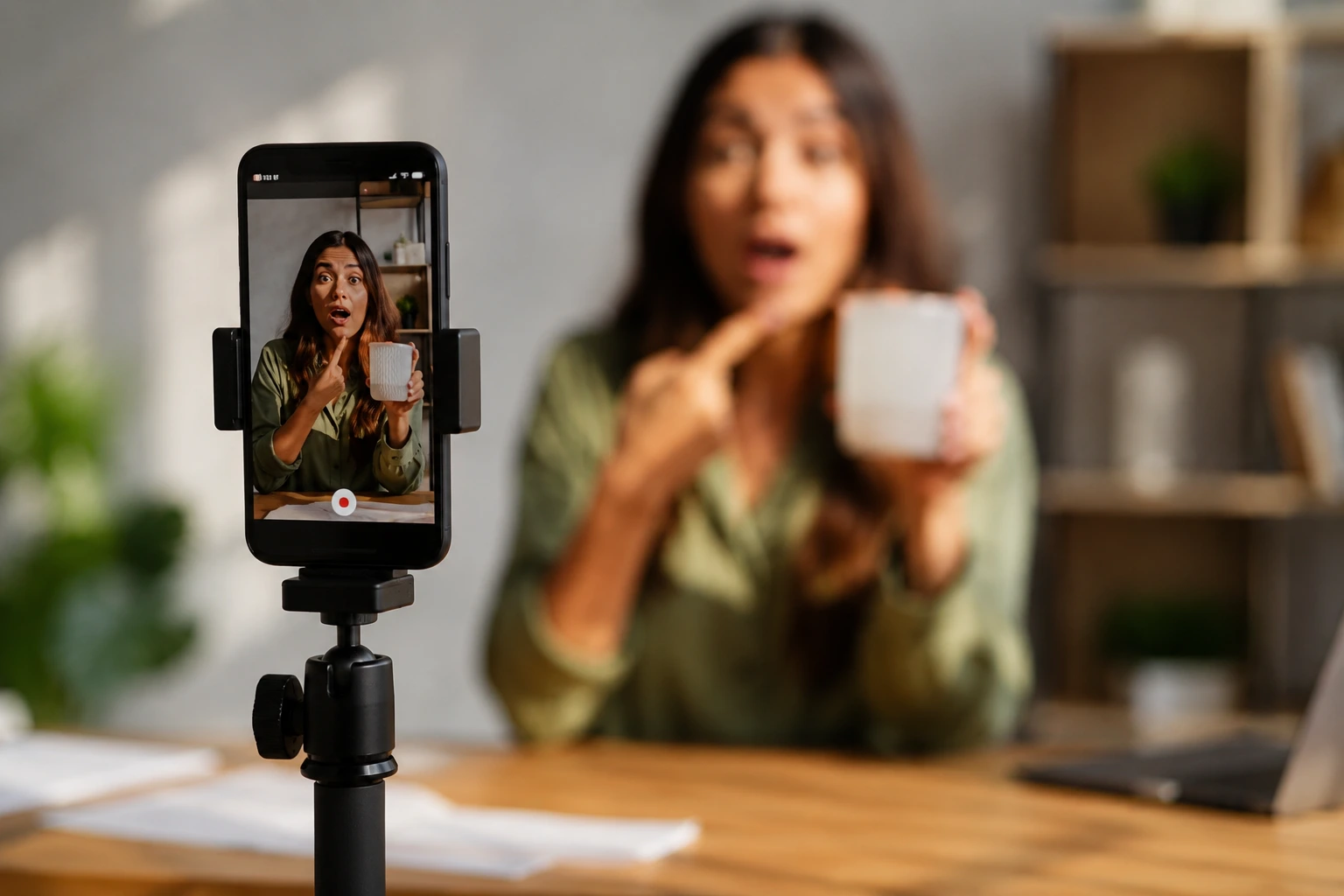
On every major social platform, the algorithm makes a binary judgment in the first few seconds: does this viewer stay or scroll?
That judgment shapes delivery, CPMs, and ultimately your ROAS. Everything else in the creative — the product demonstration, the testimonial, the CTA — only gets seen if the hook survives.
This is especially true on TikTok, where AI UGC content has shown 350% higher engagement rates in certain categories than polished brand ads. The variable driving that gap isn’t production quality. It’s the first impression — raw, direct, specific — that creator-style hooks deliver.
Instagram shows a more balanced split between AI UGC and traditional content. YouTube and Facebook tend to reward polished UGC for longer formats but favor fast, hook-first AI UGC for quick explainers. Platform behavior is not uniform, and that matters for where you run your hook tests first.
Meanwhile, UGC-style ads generate 4× higher click-through rates than traditional branded ads (Nosto, 2025). That uplift doesn’t come from better offers or more persuasive copy in the body — it comes from hooks that don’t feel like ads.
The Production Bottleneck That Makes This Hard With Traditional UGC

Here’s the problem: the traditional UGC workflow — finding creators, shipping product, waiting on drafts, negotiating licensing — takes weeks.
Running three hook variants against the same video body would mean commissioning three separate creators, coordinating identical body footage, and hoping every handoff goes cleanly. Almost nobody does it. The cost and coordination overhead make it impractical.
AI UGC eliminates that constraint. The body footage is generated once. The hook — a different avatar intro, a different opening line, a different visual framing — is generated separately and spliced in.
Three hooks tested against one body is a morning’s work, not a production sprint.
That’s why the number of people using AI to make videos doubled in one year, from 18% to 41%. The speed change is real, and it makes disciplined testing possible for the first time at reasonable budgets.
The Exact Hook-Testing Workflow
Here’s how to run this properly using AdsGPT’s UGC Video Ads workflow:
- Generate your base video first. Write a single prompt that covers the product demonstration, the social proof element, and the CTA. Use AdsGPT’s UGC Video Ads feature to produce the body in batch — keep this locked for the entire test. Don’t touch it between variants.
- Write three distinct hook concepts — not three versions of the same hook. This is the part most teams get wrong. Three hooks that all open with a question are one approach tested three times, not three variants. Each concept should pull a different psychological lever. Curiosity-led: “I returned four of these before finding one that actually worked.” Pain-led: “If your conversion rate dropped last month, watch this.” Result-led: “We cut our production costs by 80% doing this.” Different mechanisms, not different words.
- Generate each hook as a short clip with a matching AI avatar or visual treatment. Keep the avatar style consistent with the body so the splice reads as native. AdsGPT’s AI Avatar Ads feature lets you specify visual style and tone in the prompt — use that to lock parity across all three.
- Export sized-to-spec for your target platform. AdsGPT exports to eight platforms’ spec requirements — use this rather than reformatting manually, because aspect ratio and safe-zone errors create a confound in your test data.
- Run all three to the same audience with equal budget for at least 48–72 hours. Measure CPC. Not CTR alone — CPC, because it accounts for both click rate and the CPM you’re paying for delivery. The hook with the lowest CPC wins the mechanism. Now you understand something real about how your audience thinks.
One practical note: over 80% of social media users watch videos on mute, so your hook needs to land visually as well as verbally. Add captions. This is not optional — it is table stakes for UGC-style content on every platform.
What To Do With a Winning Hook
This is where the workflow pays compound returns. Once you’ve identified which hook mechanism wins, use AdsGPT’s Click Recreate feature to generate five fresh variations of that creative — same underlying hook logic, different executions. This is how you scale without immediately killing the creative with frequency fatigue.
The batch generation in AdsGPT means those five variations — across image ads, UGC video, and B-roll clips — come from a single prompt. You’re not briefing five different executions; you’re generating them in parallel and selecting from the output.
That used to mean briefing a designer, a copywriter, and a video editor — in sequence, each a separate handoff. The production-cost collapse is real: AdsGPT reports 80% lower production costs versus traditional agency workflows.
Once you have a winner with multiple scaled variants, AdsGPT’s Autopilot feature handles ongoing Meta ad optimization — auditing performance and adjusting around the clock with an undo log. That matters because hook fatigue has a short half-life on paid social.
Having the optimization layer running while you’re building the next round of hook tests is how you avoid the common trap of finding a winner and then watching it decay while you scramble to replace it.
The Bigger Picture on AI UGC Performance
The data on AI UGC is moving fast. AI-generated video content is projected to account for 30% of all digital ad creatives by 2028, up from an estimated 8% in 2025.
The brands building disciplined testing infrastructure now — hook testing methodology included — will have a structural advantage when that shift arrives, not just a tool advantage.
AdsGPT’s platform has crossed 1 million ads generated, with accounts reporting an average 4.8× ROAS improvement from winning creatives within 6 weeks.
Those numbers aren’t produced by generating more ads. They’re produced by finding what works faster — which is exactly what a disciplined hook-testing process does.
The AI UGC model is being adopted across e-commerce, SaaS, and retail for exactly this reason. Shorter cycle times from brief to testable creative mean more test cycles per quarter. More test cycles mean more signal. More signal means fewer wasted budget rounds.
The One Mistake That Invalidates Everything
Change something in the body between hook variants. That’s it. That’s the mistake that destroys the signal. If hook variant A has a different product shot, or a different testimonial line, or a different CTA than hook variant B, you haven’t run a hook test — you’ve run a mess.
Discipline on this single point is what separates teams that learn from tests from teams that just run them.
Lock the body. Test the hook. Act on CPC. Scale the winner and let Autopilot run the decay curve.
It’s not complicated. It’s just not how most teams do it.

MOST POPULAR