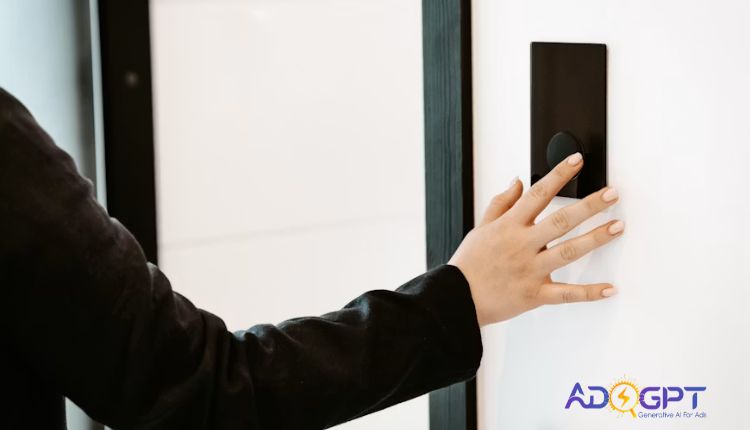
Access control has evolved far beyond keycards and PIN codes. Today, organizations need security systems that can identify threats in real time, adapt to changing environments, and provide complete visibility across their facilities.
The need has never been greater. According to IBM’s Cost of a Data Breach Report, the average global data breach now costs $4.88 million, the highest figure ever recorded. At the same time, Verizon’s Data Breach Investigations Report continues to show that stolen credentials and unauthorized access remain among the leading causes of security incidents. Physical security is becoming just as important as cybersecurity because a single unauthorized entry can lead to theft, data exposure, operational disruption, or safety risks.
Artificial intelligence is changing how organizations approach these challenges. Instead of simply locking and unlocking doors, a modern access control system can analyze activity, detect unusual behavior, automate permissions, and provide security teams with instant context during an incident.
In this article, you’ll learn how AI is making access control smarter, the biggest benefits it offers modern organizations, and why intelligent security is becoming the new standard for businesses of every size.
1. AI Makes Identity Verification More Intelligent
Traditional access control systems rely on credentials such as keycards, PINs, or access badges. While these methods are still effective, they have limitations. Cards can be lost, PINs can be shared, and unauthorized users can sometimes exploit weak authentication processes.
Artificial intelligence strengthens identity verification by analyzing multiple data points instead of relying on a single credential. AI-powered systems can combine biometric authentication, facial recognition, behavioral patterns, and access history to determine whether an access request appears legitimate.
For example, if an employee normally enters a building between 8:00 and 9:00 AM but suddenly attempts access to a restricted laboratory late at night, AI can recognize this unusual behavior and trigger additional verification or notify security personnel before granting access.
Modern platforms such as Coram demonstrate how an intelligent access control system can go beyond simply unlocking doors. Coram combines cloud-based access management with integrated video verification, allowing every door event to be paired with recorded or live video. Security teams can manage permissions, automate schedules, receive real-time alerts, and investigate incidents from a centralized dashboard while using existing locks and readers.
2. Real-Time Threat Detection Improves Security Response
One of AI’s greatest advantages is its ability to recognize suspicious activity as it happens.
Traditional systems often record events for later investigation. AI continuously analyzes access events and identifies anomalies that deserve immediate attention.
This includes situations such as:
- Repeated failed entry attempts
- Unauthorized after-hours access
- Forced door openings
- Doors left open longer than expected
- Tailgating, where multiple people enter using a single credential
Instead of requiring security staff to monitor every event manually, AI filters thousands of routine activities and highlights only those that require immediate attention.
This significantly reduces response times and helps prevent incidents before they escalate.
3. Smarter Access Decisions Reduce Human Error
Managing employee permissions manually becomes increasingly difficult as organizations grow.
New hires join regularly, contractors require temporary access, departments change responsibilities, and former employees must have their credentials revoked immediately.
Artificial intelligence helps automate many of these administrative tasks.
Instead of manually updating hundreds of permissions, AI can:
- Assign role-based access automatically
- Recommend permission changes
- Remove outdated credentials
- Detect excessive privileges
- Flag unusual permission requests
Automation reduces administrative workload while lowering the risk of human error, which remains one of the most common causes of security vulnerabilities.
4. AI Connects Physical Security With Video Intelligence
Access logs alone rarely provide enough information during an investigation.
Knowing that Door 4 opened at 9:42 PM answers only part of the question.
Security teams also need to know:
- Who entered?
- Was someone following behind?
- What happened immediately afterward?
- Was the credential owner actually present?
AI solves this problem by connecting access events with surveillance footage.
Instead of searching through hours of recordings, investigators can immediately view the video associated with a specific door event, making investigations much faster and more accurate.
This unified approach also improves compliance reporting and simplifies incident documentation.
5. Predictive Analytics Help Prevent Future Incidents
AI is no longer limited to reacting to security events.
Modern systems analyze historical access patterns to identify emerging risks before they become serious problems.
For example, AI may discover:
- Certain entrances experience repeated unauthorized attempts.
- Contractors frequently access areas outside approved schedules.
- Specific locations experience unusually high after-hours activity.
- Multiple facilities show similar security weaknesses.
These insights allow organizations to strengthen security policies proactively instead of waiting for incidents to occur.
Predictive analytics turns access control from a reactive tool into a strategic security asset.
6. AI Improves Security Across Multiple Locations
Organizations with multiple offices often struggle to maintain consistent security policies.
Each location may have different administrators, schedules, and operational requirements.
AI simplifies this complexity by providing centralized management while adapting policies to individual sites.
Security leaders can:
- Monitor all locations from one dashboard.
- Apply consistent security policies.
- Review organization-wide activity.
- Receive centralized alerts.
- Generate compliance reports automatically.
This makes scaling security much easier as businesses expand into new locations.
7. Continuous Learning Makes Security Stronger Over Time
One of AI’s biggest advantages is that it continuously improves.
Unlike traditional rule-based systems that only follow predefined instructions, AI learns from historical activity and changing behavior patterns.
As more data becomes available, the system becomes better at distinguishing between normal operations and genuine threats.
Over time, this results in:
- Fewer false alarms
- Faster threat detection
- More accurate risk assessments
- Better access recommendations
- Improved operational efficiency
This ability to learn and adapt makes AI-powered access control significantly more effective than static security systems that rarely evolve after deployment.
Frequently Asked Questions
What is an AI-powered access control system?
An AI-powered access control system uses artificial intelligence to analyze user behavior, automate access decisions, detect suspicious activity, and improve overall physical security through intelligent monitoring and real-time insights.
How does AI improve access control?
AI improves access control by automating permissions, identifying unusual behavior, detecting security threats in real time, linking access events with video evidence, and reducing manual administrative work.
Can AI reduce unauthorized access?
Yes. AI identifies unusual access attempts, monitors behavior patterns, detects tailgating and forced entry, and alerts security teams immediately, helping prevent unauthorized access before it leads to larger incidents.
Is AI access control suitable for small businesses?
Yes. Cloud-based AI solutions have made advanced access control more affordable for businesses of all sizes, allowing even smaller organizations to benefit from intelligent monitoring, automation, and centralized management.
Conclusion
Artificial intelligence is transforming access control from a simple door management solution into an intelligent security platform. By combining automation, behavioral analysis, real-time alerts, predictive insights, and integrated video verification, businesses can strengthen security while reducing operational complexity.
As organizations continue to face evolving security threats and growing compliance requirements, adopting an AI-powered access control system is becoming less of a competitive advantage and more of a business necessity. The question is no longer whether AI belongs in physical security, but how quickly organizations can use it to build safer, smarter, and more resilient workplaces.

MOST POPULAR