
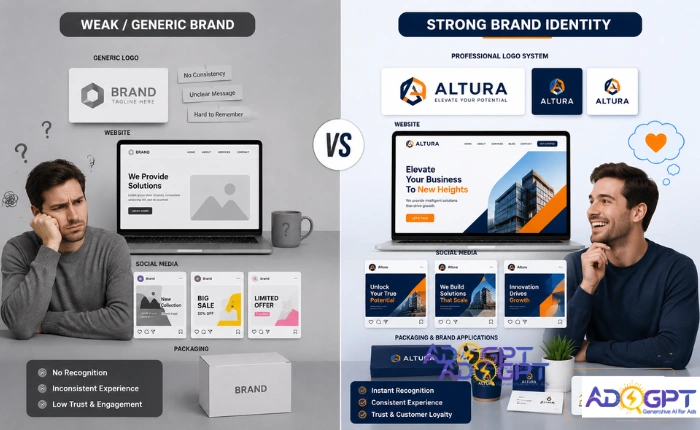
Two companies can offer nearly identical products. Yet one becomes instantly recognizable while the other fades into the background. Before a customer reads a single word of your copy or tries your product, their gut has already formed an opinion. That split-second judgment is shaped almost entirely by your brand identity design.
This isn’t about aesthetics. It’s about survival in a market where attention is scarce, and trust is earned fast.
Read Aloud!
Brand Identity Design in One Simple Definition
Brand identity design is the strategic creation of visual, verbal, and experiential elements that shape how customers recognize, remember, and trust a brand. It includes logos, colors, typography, messaging, brand voice, and consistency across every touchpoint.
The keyword is strategic. A logo is one piece. Typography is another. But brand identity stitches them into a coherent system that sends the same signal wherever a customer encounters you, whether that’s on a product page, in a social ad, or on a packaging label.
Think of it as the personality your business wears in public.
Why Some Brands Feel Instantly Trustworthy
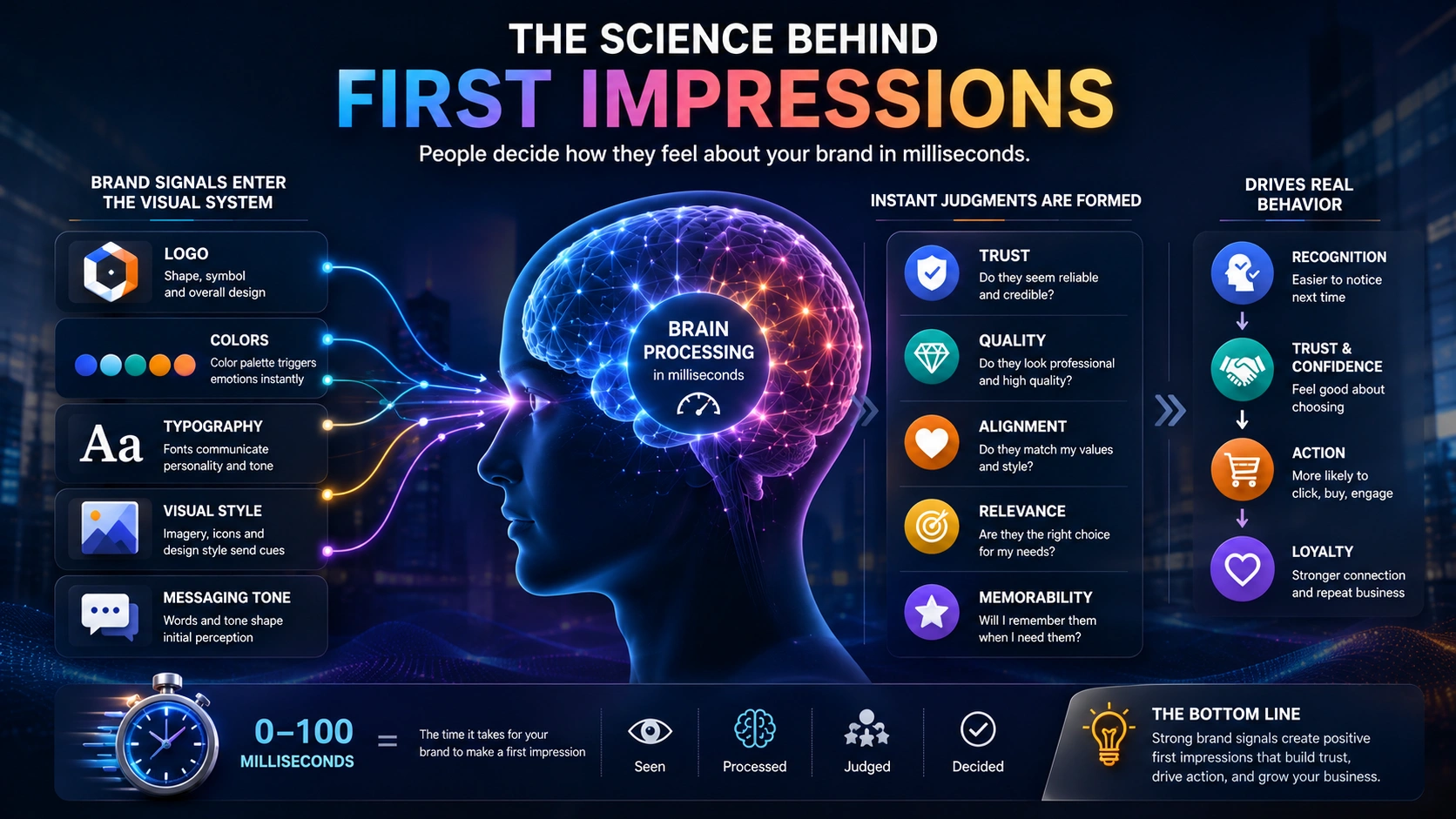
The Science Behind First Impressions
Humans process visual information far faster than text. Within milliseconds, the brain assigns attributes like trustworthy, premium, or generic based on visual cues alone. Consistent visual signals create cognitive shortcuts, making your brand easier to recognize and harder to forget.
Consistency Creates Credibility
A customer who sees your Instagram post, then your website, then your email should feel like they’re interacting with the same entity. When those experiences feel disconnected, doubt creeps in. Consistent brand identity signals that you’re organized, professional, and reliable.
Brand Identity Helps Customers Remember You
Recognition leads to preference. Familiarity reduces hesitation. When customers can recall your brand without effort, they’re more likely to choose you over an equally capable competitor they’ve never seen twice.
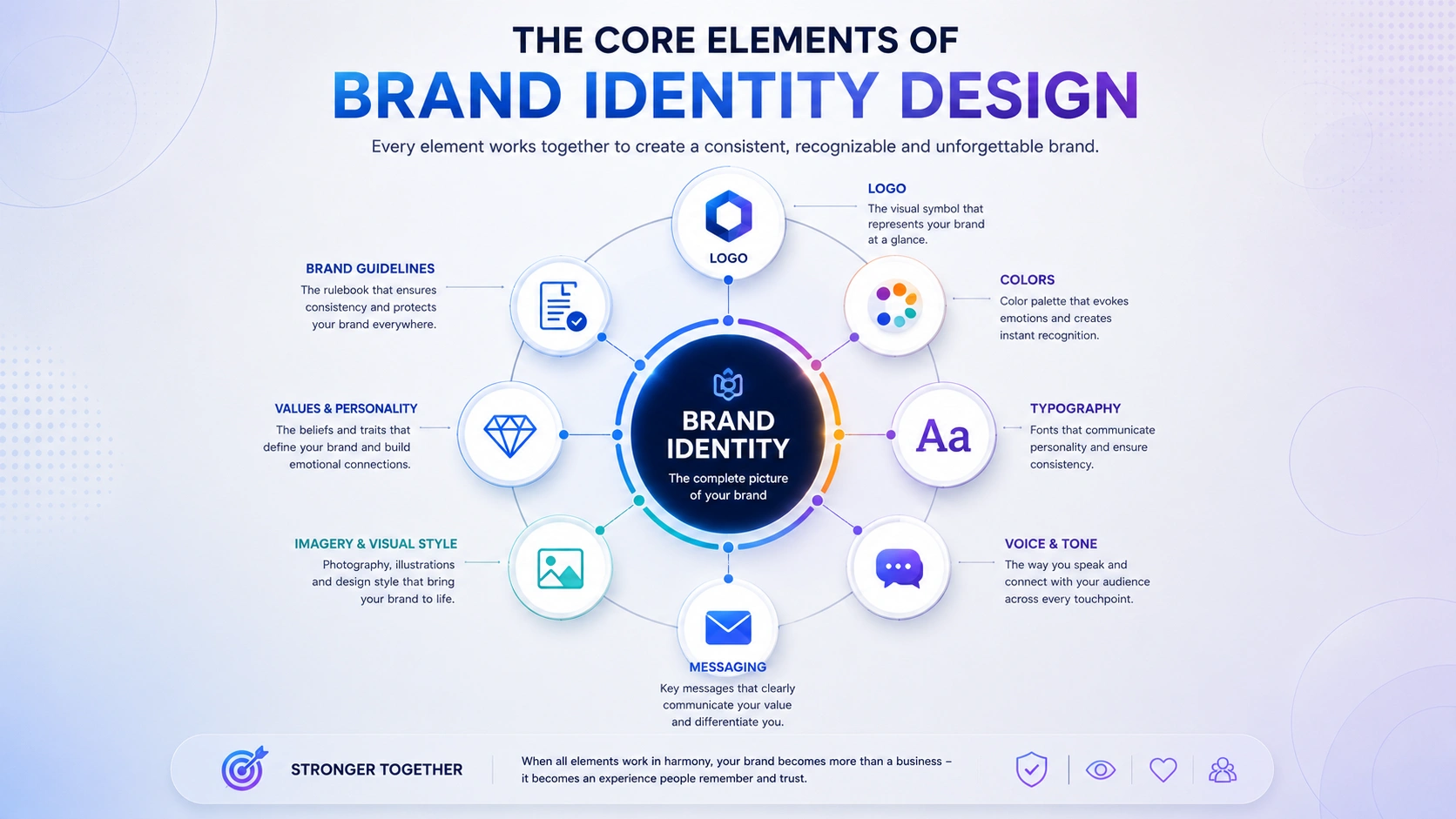
The Core Elements That Make Brand Identity Design Work
Logo and Visual Symbols
Your logo is the shorthand for everything your brand represents. It doesn’t need to say everything, but it needs to say something clearly. Simplicity and versatility matter more than complexity.
Color Palette and Brand Psychology
Color isn’t decoration. Blue communicates trust. Orange signals energy. Green suggests growth or sustainability. The colors you choose set emotional expectations before a word is read.
Typography and Visual Personality
Fonts carry personality. A serif typeface feels established and authoritative. A rounded sans-serif reads as friendly and modern. Typography choices quietly shape how customers feel about your brand.
Brand Voice and Messaging
How you say something is as important as what you say. A consistent brand voice, whether that’s confident and direct or warm and conversational, makes your communication feel intentional rather than accidental.
Imagery, Illustrations, and Design Style
The photos and illustrations you use signal values. Authentic photography feels different from stock imagery. Custom illustrations suggest creativity and investment. Every visual choice communicates.
Brand Values and Positioning
Customers increasingly buy based on alignment. What your brand stands for, and what it doesn’t, shapes long-term loyalty. Positioning defines where you sit in the competitive landscape.
Brand Guidelines That Keep Everything Consistent
Without documented rules, brand identity erodes over time. Guidelines give teams and partners a shared reference so every execution stays on-brand.
What Happens When Businesses Ignore Brand Identity Design?
Skipping a thoughtful identity doesn’t save money. It costs it. An inconsistent brand confuses customers, weakens trust, and forces every marketing campaign to work twice as hard to make an impression.
Consider two scenarios. A startup launches with a hastily designed logo and no clear color system. Their website looks different from their social posts. Their emails use a different font. Customers sense the inconsistency, even if they can’t name it. Compare that to a brand that shows up the same way everywhere. Within a few interactions, customers start to feel like they know them.
Weak branding also increases acquisition costs. When customers don’t recognize you, every ad starts from scratch. Recognition lowers the friction between attention and conversion.
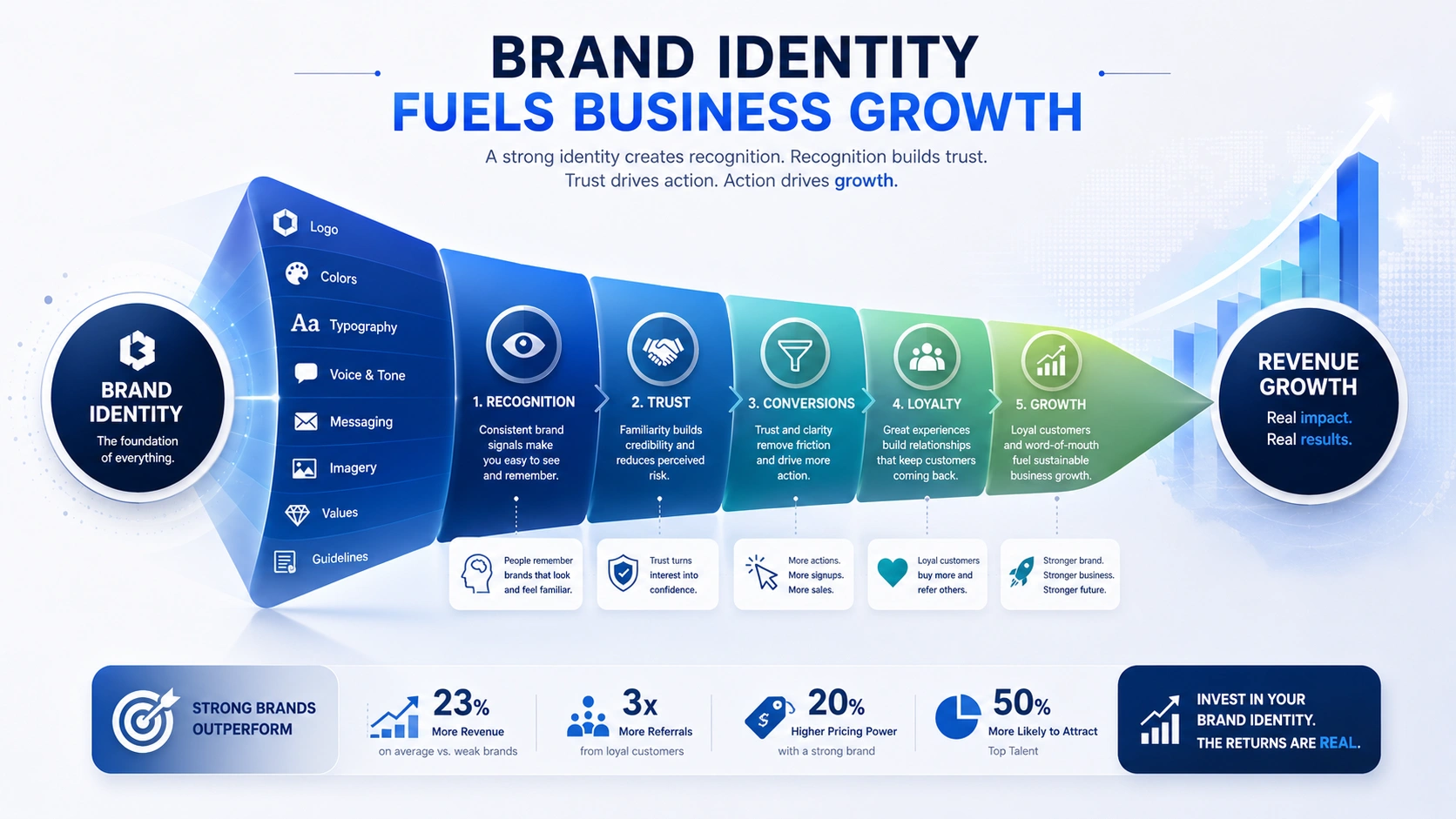
How Brand Identity Design Impacts Real Business Growth
Better Brand Recognition
Consistent visual cues train customers to spot you instantly. Over time, recognition builds without additional spend.
Higher Customer Trust
Professionalism signals reliability. A polished, cohesive identity tells customers you take your business seriously, which means you’ll likely take their experience seriously too.
Easier Marketing and Advertising
When brand identity is clear, creative production gets faster. Designers, writers, and ad teams work from shared rules rather than reinventing the wheel each campaign.
Stronger Customer Loyalty
People don’t just buy products. They affiliate with brands that reflect their values or aspirations. A strong identity gives them something to connect with beyond the transaction.
Premium Pricing Opportunities
Perception drives pricing power. Brands with a polished identity can often command higher prices for equivalent products because they signal greater value.
Competitive Differentiation
In crowded markets, being different is survival. A distinct brand identity carves out space in the customer’s mind that competitors can’t easily occupy.
How to Design a Brand Identity That Actually Works
Step 1: Understand Your Audience: Know who you’re designing for. Their preferences, values, and habits should shape every decision.
Step 2: Define Brand Values and Personality: What does your brand believe? What adjectives should customers associate with you? These answers guide every creative choice.
Step 3: Establish Positioning: Where do you sit relative to competitors? Positioning determines the tone and style of your identity.
Step 4: Create Visual Identity Assets: Logo, colors, typography, and imagery. Build a system, not just a collection of elements.
Step 5: Develop Messaging and Voice: Write a brand voice guide. Define how you sound across different contexts, from ads to customer support.
Step 6: Build Brand Guidelines: Document everything. Make it easy for anyone touching your brand to get it right.
Step 7: Apply Consistently Across Every Touchpoint: Consistency is the work that never stops. Every application of your identity either strengthens or weakens it.
When Does It Make Sense to Seek Professional Help?
Many businesses can build the foundations of a brand internally, but there comes a point where professional brand identity design services can provide the strategic direction and consistency needed for long-term growth. This is especially true when launching a new business, entering a competitive market, or planning a rebrand.
Working with a brand identity design agency can help businesses develop a cohesive visual identity, stronger market positioning, and comprehensive brand guidelines that keep every customer touchpoint aligned.
Where Brand Identity Design Shows Up in Everyday Business
Brand identity isn’t just for the marketing team. It lives everywhere:
Websites and Landing Pages reflect your visual and verbal identity at the moment of highest intent.
Social Media is where consistency is most often broken, and most visibly.
Advertising Campaigns either reinforce or dilute who you are, depending on creative discipline.
Product Packaging is often a customer’s first physical encounter with your brand.
Sales Presentations signal whether you’re a professional partner or an afterthought.
Customer Support Experiences reveal whether brand values are lived or just stated.
Email Marketing is a recurring touchpoint where tone and design either build or erode recognition.
Common Brand Identity Design Mistakes That Cost Businesses Growth
Treating a Logo as the Entire Brand: A logo is the starting point, not the destination. Without a system around it, it’s just a graphic.
Following Design Trends Blindly: Trends date quickly. A brand built on what’s fashionable today risks feeling stale in eighteen months.
Inconsistent Messaging: When your ads say one thing, and your website says another, customers notice. Confusion rarely converts.
Ignoring Audience Expectations: What works in one industry may alienate customers in another. Research what your specific audience expects and respect it.
Skipping Brand Guidelines: Without rules, every new hire or agency partner interprets your brand differently. Entropy sets in.
Constantly Changing Visual Identity: Frequent redesigns reset recognition. Change should be intentional and evolutionary, not reactive.
Read More!
AI For Advertising: Innovative Examples, Tools, And What’s Next?
4 Powerful Digital Ad Creative Strategies For Your Campaigns
How AdsGPT Helps Businesses Strengthen Brand Identity
Building a strong brand identity requires more than great design—it requires consistent messaging across every customer touchpoint. As marketing channels multiply, maintaining that consistency becomes increasingly difficult without the right systems in place.
AdsGPT helps businesses create and scale marketing content while staying aligned with their brand voice, positioning, and communication goals.
Key Features
- AI-Powered Ad Copy Generation for Google Ads, Meta Ads, LinkedIn Ads, and other marketing channels.
- Brand-Aligned Messaging that helps maintain a consistent tone and positioning across campaigns.
- Multiple Creative Variations generated from a single campaign idea for faster testing and optimization.
- Audience-Specific Copy Creation tailored to different customer segments without losing brand consistency.
- Landing Page Copy Generation that aligns ad messaging with on-page experiences.
When every ad, campaign, and customer interaction reflects the same brand message, businesses build stronger recognition, trust, and long-term brand equity.
The Future of Brand Identity Design in an AI-Driven World
Visual design remains important, but modern brand identity increasingly depends on how brands appear across search engines, AI assistants, and digital ecosystems. When someone asks an AI tool about a product category, brands with clear, consistent positioning are more likely to be mentioned. Brand signals now extend beyond logos into language patterns, content consistency, and community presence.
Adaptive branding systems that can maintain core identity while flexing across new formats and platforms will define the next era of brand building. The brands that invest in identity now are building equity that compounds.
Brand Identity vs Brand Image vs Branding: Understanding the Difference
The gap between brand identity and brand image is where most branding challenges live. If you know how to design a brand identity well, you reduce that gap. But execution is what closes it.
A Strong Brand Starts Long Before Customers Buy
Customers remember experiences, not just logos. They remember how a brand made them feel across multiple interactions over time. That cumulative impression either builds loyalty or erodes it.
Brand identity design is the foundation that makes consistent experiences possible. It’s not a one-time project. It’s an ongoing commitment to showing up the same way, clearly and confidently, wherever your customers are. The businesses that treat identity as an investment rather than an expense tend to find that recognition, trust, and loyalty follow.
Worth asking: does your current identity actually reflect the value your business delivers?
Frequently Asked Questions
What is brand identity design?
It’s the strategic system of visual, verbal, and experiential elements that shapes how customers recognize and remember a brand. This includes logos, colors, typography, voice, and guidelines.
Why is brand identity design important for businesses?
It builds recognition, establishes trust, differentiates you from competitors, and makes every marketing effort more effective.
What are the main elements of brand identity design?
Logo, color palette, typography, brand voice, imagery style, brand values, and brand guidelines.
How is brand identity different from branding?
Brand identity is what you create. Branding is the ongoing practice of applying and communicating it. Brand image is what customers perceive as a result.
Do I Need Professional Brand Identity Design Services?
Small businesses can often start with a basic identity system, but as a company grows, professional brand identity design services can help create a more consistent and scalable brand experience across marketing, sales, and customer interactions.

MOST POPULAR