There’s a reason some brands are scaling faster than ever… while others are struggling to keep up.
It’s not budget.
Nor is it your team size.
It’s how intelligently they’re using AI marketing tools.
We’re entering a phase where marketing is no longer driven by intuition alone. It’s powered by data, automation, and predictive intelligence, all working together in real time.
And the shift is massive.
According to McKinsey, generative AI could contribute up to $4.4 trillion annually to the global economy. At the same time, over 70% of top-performing executives believe their competitive advantage now depends on advanced AI capabilities.
That means one thing:
👉 The gap between businesses using AI effectively and those that aren’t is widening fast.
So if you’re still treating AI like an experiment, you’re already behind.
This guide isn’t about hype.
It’s about how to actually use AI marketing tools to dominate in 2026.
In a hurry? Listen to the blog instead!
What Are AI Marketing Tools (And Why Most People Misunderstand Them)
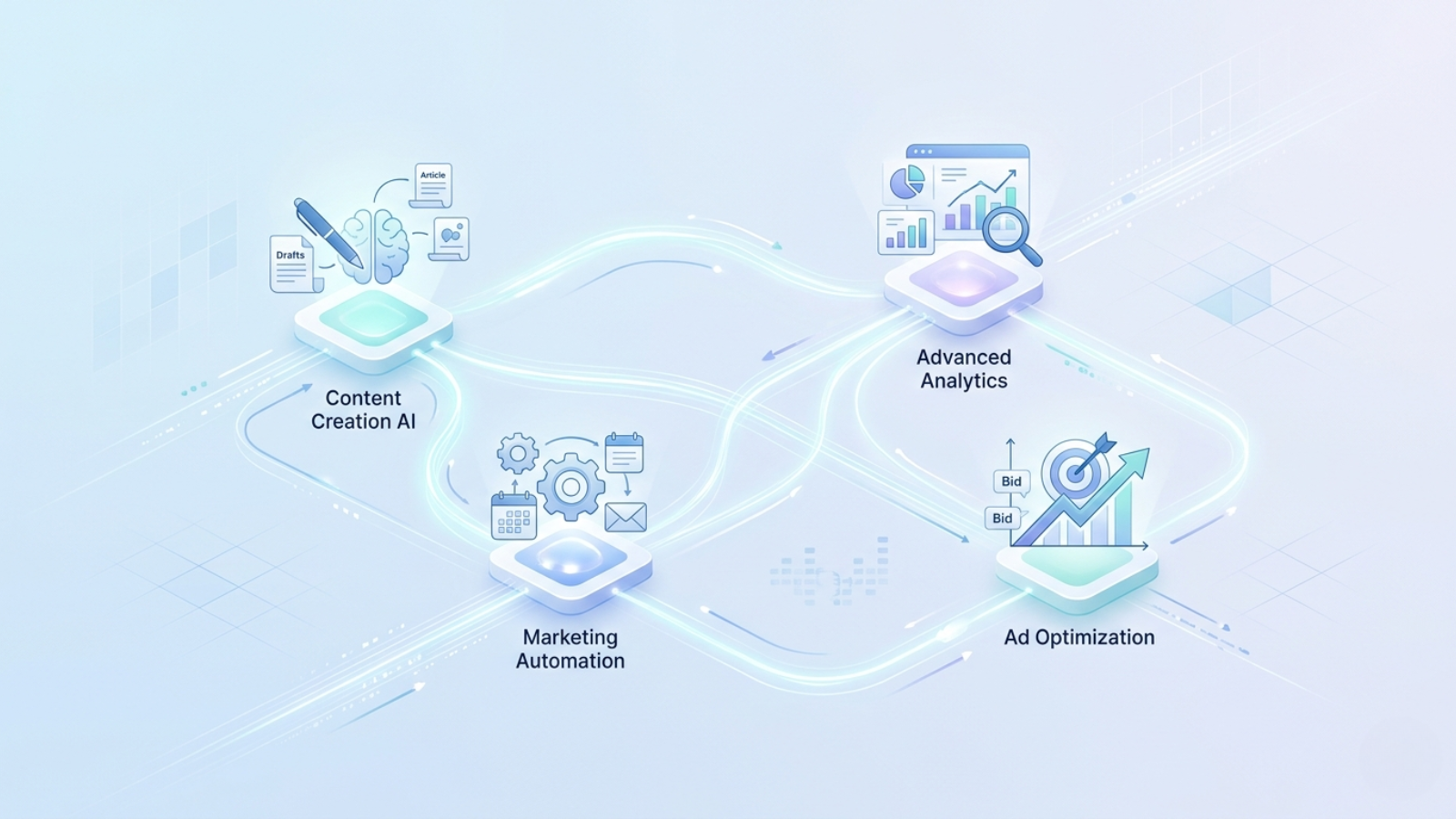
Most blogs will tell you that AI marketing tools help automate tasks.
That’s true, but incomplete.
The real power of marketing AI tools lies in their ability to:
- Process massive datasets instantly
- Identify patterns humans can’t detect
- Recommend actions based on predictive outcomes
In simple terms:
👉 AI doesn’t just do the work, it tells you what work to do next.
That’s a completely different level of leverage.
And that’s why the best AI marketing tools aren’t just improving execution, they’re reshaping strategy itself.
The Real Reason AI Marketing Tools Are Dominating in 2026
Let’s go deeper than surface-level benefits.
1. From Reactive Marketing → Predictive Marketing
Traditional marketing looks at what already happened.
AI flips that.
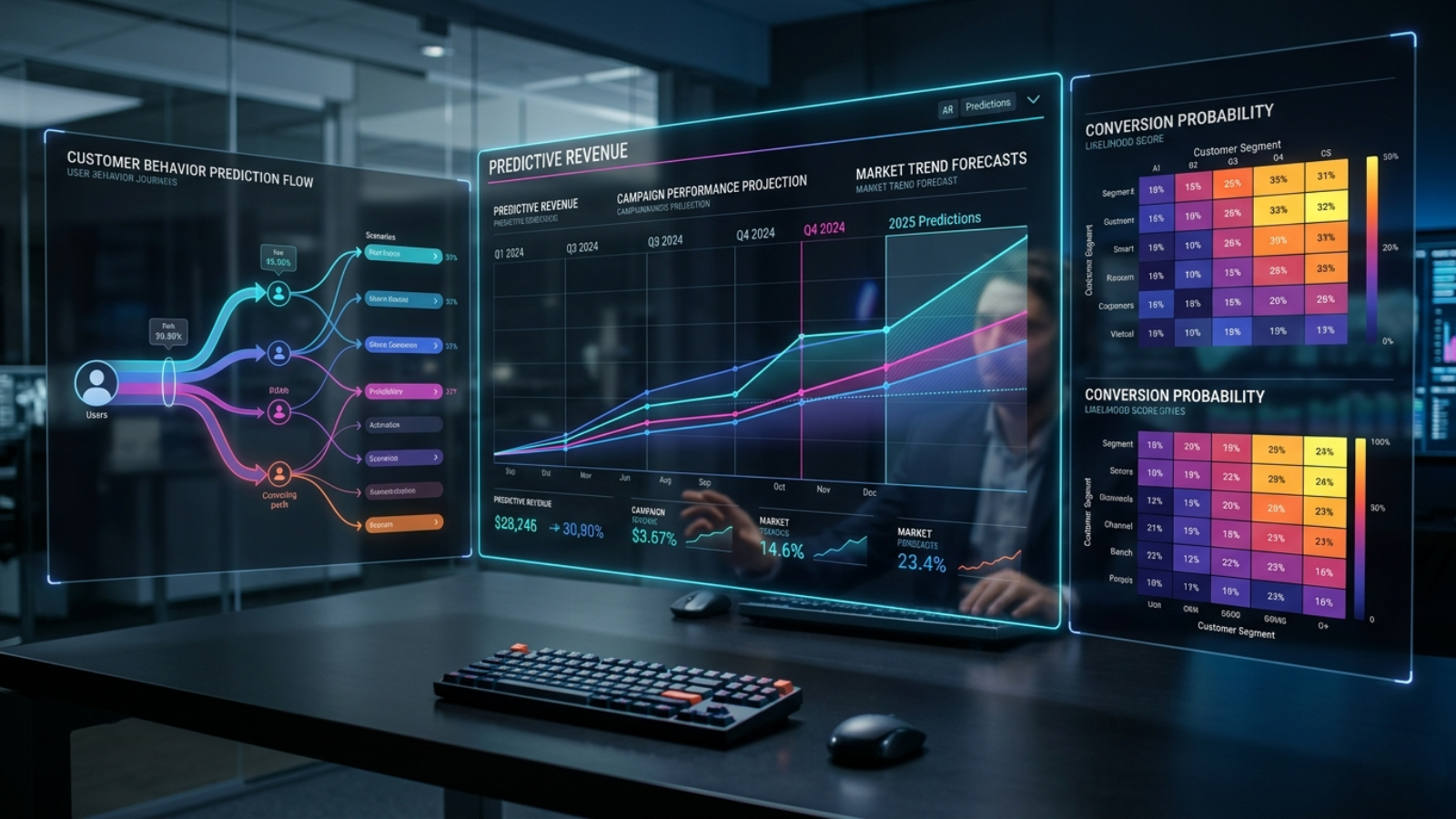
Using predictive analytics, AI marketing tools can forecast:
- Which leads are most likely to convert
- Which campaigns will perform best
- When a customer is about to churn
This shift from reactive → predictive is where the real competitive edge lies.
Because when you know what’s coming, you don’t just compete, you control the outcome.
2. Decision Velocity Is the New Competitive Advantage
Speed used to be important. Now it’s everything.
In fast-moving markets, the brand that:
- Tests faster
- Learns faster
- Adapts faster
…wins.
The best AI tools for marketing compress decision-making time from weeks to minutes.
Instead of waiting for reports, you get:
- Real-time insights
- Automated recommendations
- Instant optimizations
This is what allows smaller teams to outperform larger competitors.
3. Infinite Personalization Without Infinite Effort
Customers don’t want “better marketing.”
They want relevant experiences.
AI enables 1:1 personalization at scale, something that was impossible before.
With the right best AI marketing tools, you can dynamically adjust:
- Website content
- Email messaging
- Product recommendations
- Ad creatives
Based on individual user behavior instantly.
This is no longer a luxury. It’s the baseline.
4. Marketing Becomes a System, Not a Set of Campaigns
Here’s a deeper shift most people miss:
AI transforms marketing from a series of isolated campaigns into a continuous, self-improving system.
Instead of launching campaigns manually, you build loops:
- Data → Insight → Action → Optimization → Repeat
The more data flows in, the smarter the system gets.
That’s how companies using what are the best ai tools for marketing create compounding growth.
Advanced Use Cases That Separate Leaders From Followers
Let’s go beyond the basics.
AI-Powered Content Ecosystems (Not Just Content Creation)
Most marketers use AI to generate content.
Top performers use it to build content ecosystems.
That means:
- One idea → multiple formats (blog, reels, emails, ads)
- Continuous optimization based on performance
- Automated content distribution
This turns content from a one-time effort into a growth engine.
Intent-Based Audience Targeting
Forget demographics.
AI focuses on intent signals, what users are actually about to do.
By analyzing browsing behavior, engagement patterns, and past actions, ai marketing tools can identify:
- High-intent buyers
- Window shoppers
- At-risk customers
And tailor messaging accordingly.
This is where conversion rates explode.
Real-Time Campaign Evolution
Instead of launching a campaign and waiting…
AI allows campaigns to evolve while they’re running.
It automatically adjusts:
- Creatives
- Targeting
- Budget allocation
Based on live performance data.
This eliminates guesswork completely.
AI-Driven Customer Journeys
Instead of fixed funnels, AI creates dynamic journeys.
Every user experiences a different path based on their behavior.
This includes:
- Personalized email flows
- Adaptive landing pages
- Smart retargeting
How to Use AI Marketing Tools Strategically (Not Just Tactically)
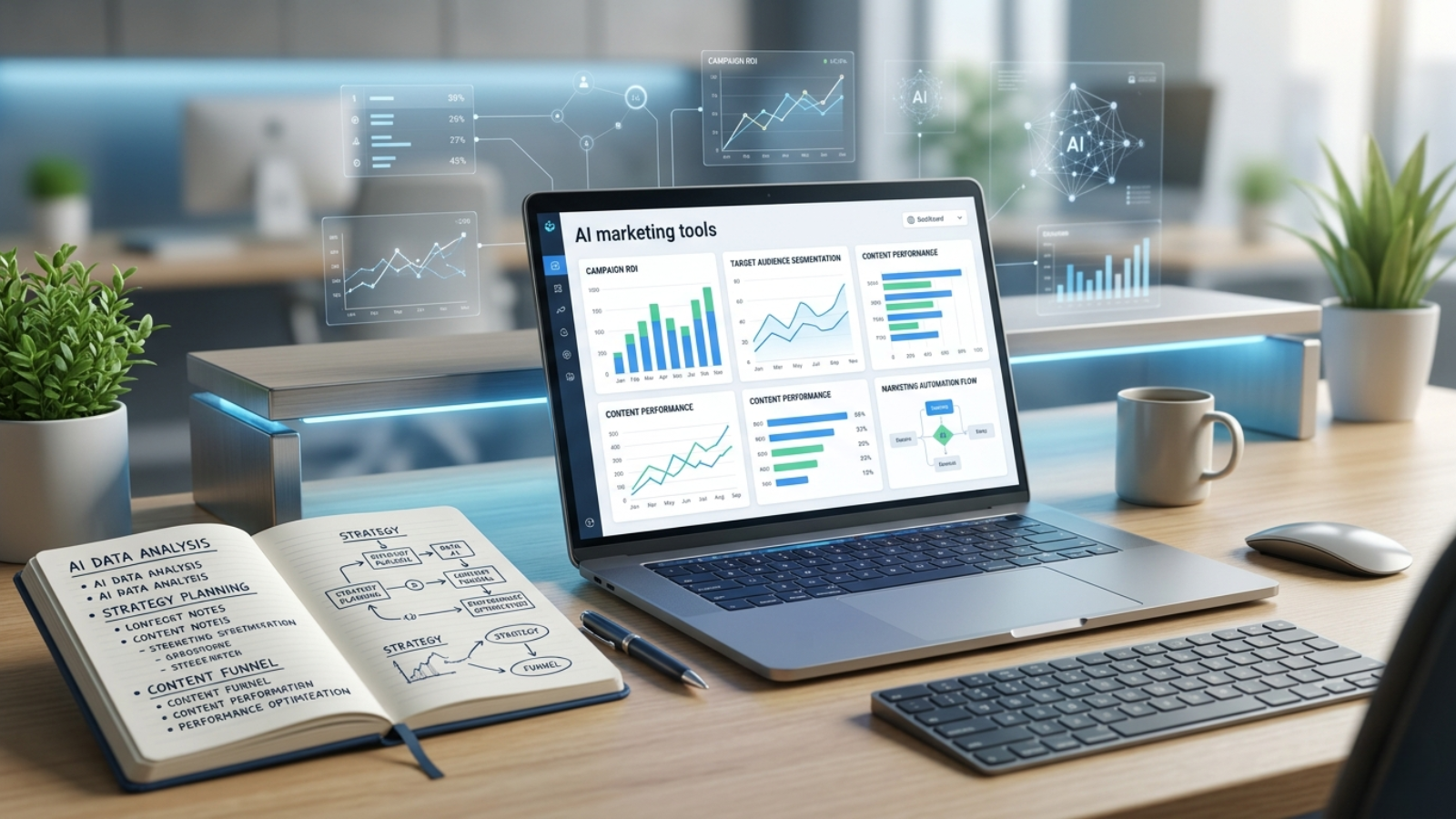
Step 1: Start With Clear Goals
Before jumping into tools, define:
- What do you want to improve?
- Lead generation?
- Conversions?
- Customer retention?
Without clarity, even the best AI marketing tools won’t deliver results.
Step 2: Fix Your Data First
AI is only as good as the data it uses.
Messy, incomplete, or outdated data = poor results.
Clean, structured, and relevant data = powerful insights.
This is non-negotiable.
Step 3: Choose the Right Tools (Not Just Popular Ones)
Here’s where most people go wrong.
They chase trends instead of strategy.
The best AI tools for marketing aren’t the most hyped, they’re the ones that solve your specific problem.
Focus on:
- Ease of integration
- Data compatibility
- Scalability
This is where most teams hit a practical roadblock.
Choosing the right AI marketing tools is one thing, executing campaigns at speed is another.
Creating multiple ad creatives, testing variations, and adapting across platforms quickly becomes a bottleneck.
That’s where tools like AdsGPT step in, turning strategy into execution without slowing you down.
Step 4: Integrate AI Into Your Workflow
Don’t treat AI as an add-on.
Embed it into your daily processes:
- Content planning
- Campaign optimization
- Customer engagement
That’s how you unlock real impact.
Step 5: Train Your Team
AI doesn’t replace marketers, it upgrades them.
Your team needs to understand:
- How to use the tools
- How to interpret insights
- When to rely on human judgment
Companies that invest here always outperform.
Step 6: Monitor, Test, Optimize
AI isn’t “set it and forget it.”
Track:
- Performance metrics
- Adoption rates
- Output quality
Continuously refine your approach to stay ahead.
How AdsGPT Fits Into Your AI Marketing Strategy in 2026
Once you’ve defined your goals, fixed your data, and chosen the right tools, the next challenge is execution.
Because knowing what to do isn’t the bottleneck anymore.
👉 Executing fast enough is.
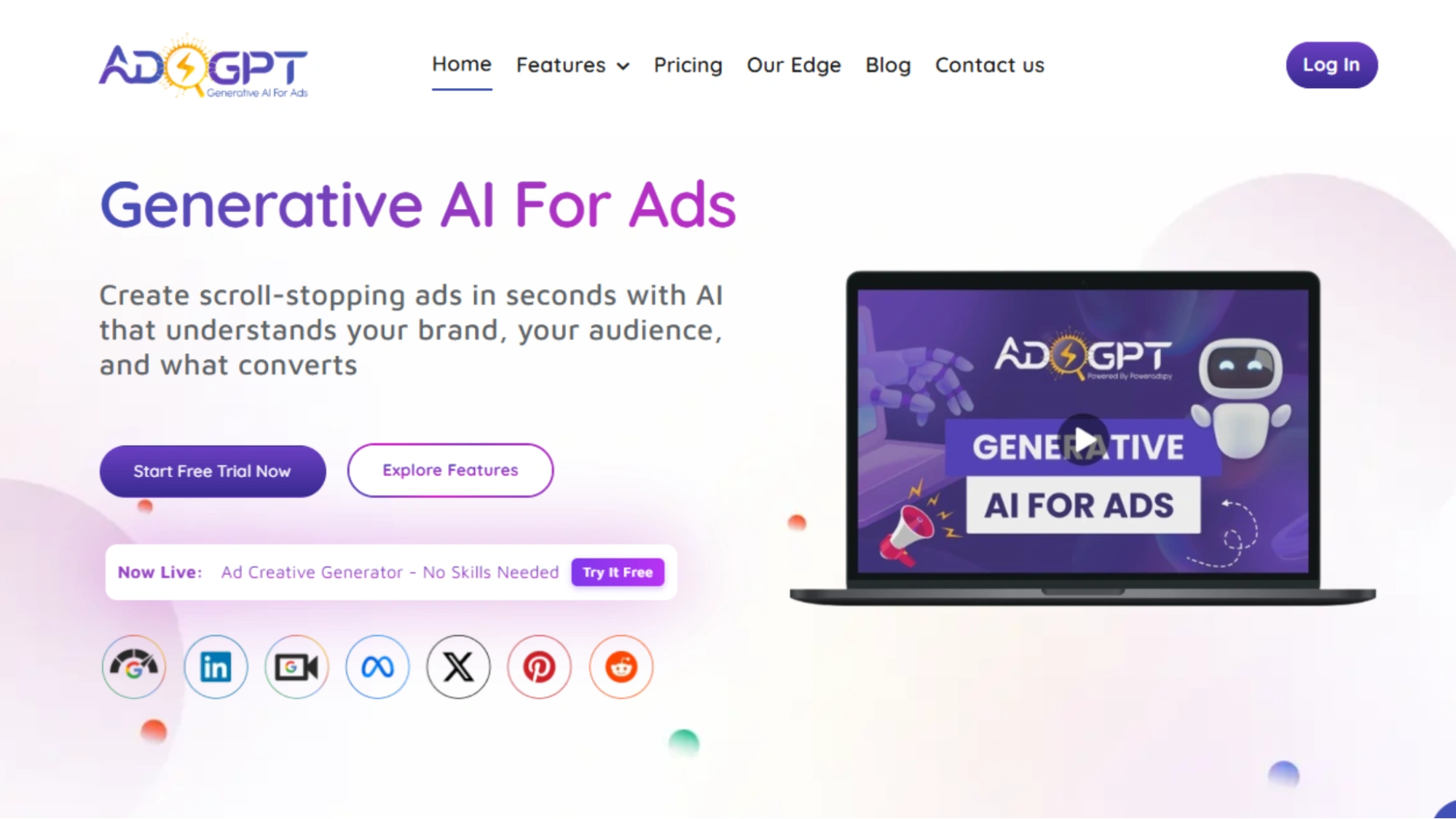
This is where AdsGPT fits in.
It’s built to turn strategy into live, high-performing ad creatives in minutes, removing the delays that usually come from design, copywriting, and production workflows.
Instead of managing multiple tools or teams, you can move from idea → creative → launch → iteration in a single flow.
Key Capabilities
- Instant Creative Production
Generate image ads, UGC-style videos, B-roll creatives, and avatar ads from a simple prompt, ready to use across platforms.
- Data-Backed Ad Creation
Leverage insights from millions of real ads to understand what’s working and generate improved variations without guesswork.
- Multi-Platform Execution
Create ads optimized for Meta, Google, LinkedIn, TikTok, YouTube, and more, without manual resizing or reformatting.
- Faster Launch Cycles
Go from concept to live campaign in minutes, making it easier to test and iterate continuously.
- Built for Scaling What Works
Quickly generate variations of winning creatives and double down on performance, without creative bottlenecks.
- Consistent Brand Output
Maintain brand identity across every creative by aligning visuals, tone, and messaging automatically.
Putting It Into Action
The real advantage of using AI marketing tools isn’t just better insights, it’s faster execution.
Because in 2026, the brands that win won’t just have better strategies…
👉 They’ll be the ones who can execute, test, and scale those strategies faster than everyone else.
That’s exactly where AdsGPT gives you an edge.
Common Mistakes That Kill AI Marketing Results
Even with the best AI tools for marketing, many businesses fail. Here’s why:
1. Chasing Tools Instead of Strategy
It’s easy to get distracted by new tools every week. But without a clear strategy, you’re just adding complexity.
The real question isn’t “Which tool should I use?”
It’s 👉 “What problem am I solving?”
Winning teams use fewer tools, but use them with precision.
2. Poor Data Quality
AI runs on data. And bad data doesn’t just slow you down, it misleads you.
Incomplete customer profiles, outdated datasets, or siloed systems can lead to wrong targeting and wasted spend.
Clean, structured, and connected data is what turns ai marketing tools into a competitive advantage.
3. Over-Automation
Automation is powerful, but too much of it makes your brand feel robotic.
Customers can tell when messaging lacks emotion or context.
The goal isn’t to automate everything.
It’s to automate the right things while keeping human creativity and storytelling intact.
4. Lack of Team Training
Even the best AI marketing tools fail if your team doesn’t know how to use them.
AI outputs are only as valuable as the person interpreting them.
Teams that invest in learning:
- Ask better questions
- Get better insights
- And ultimately make better decisions
5. Expecting Instant Results
AI is not a magic switch it’s a system that improves over time.
The biggest gains come from:
- Continuous testing
- Feeding better data
- Refining workflows
Businesses that stay patient and consistent are the ones that see exponential returns.
Must Read:
AI Tools For Marketing: Simple Ways To Improve Your Strategy
How to Use AI Marketing Tools to Dominate in 2026
The Future: Where AI Marketing Tools Are Headed
We’re moving toward a world where marketing becomes increasingly autonomous and intelligent.
- Campaigns will self-optimize in real time
- AI will predict trends before they fully emerge
- Customer experiences will adapt dynamically across every touchpoint
But the real shift is deeper than technology.
👉 It’s about how businesses think and operate.
Because access to AI will be common.
Execution won’t be.
👉 The future won’t be dominated by those who use AI.
👉 It will be dominated by those who use AI better than everyone else.
That’s the real game.
Final Thoughts
If you’ve read this far, one thing should be clear:
AI marketing tools are not just an upgrade, they’re a transformation.
They fundamentally change how you:
- Think about marketing decisions
- Analyze opportunities
- Execute campaigns
- And scale results
But tools alone won’t make you dominant.
Your real edge comes from:
- Strategic thinking over random execution
- Smart implementation instead of blind adoption
- Continuous optimization instead of one-time effort
Because in 2026…
👉 The winners won’t be the ones with access to AI
👉 They’ll be the ones who know how to use it with clarity, speed, and intent
And that’s what separates growth… from domination.
Frequently Asked Questions (FAQs)
1. What are the best AI tools for marketing?
The best AI marketing tools are those that help with content creation, automation, data analysis, and ad optimization. The right choice depends on your goals and workflow.
2. How are AI marketing tools used in real campaigns?
They are used to automate tasks, analyze data, personalize content, and optimize campaigns in real time for better performance.
3. Are AI marketing tools suitable for small businesses?
Yes, they help small businesses save time, reduce costs, and compete with larger brands through smarter marketing.
4. Do AI marketing tools replace marketers?
No, they support marketers by handling repetitive tasks while humans focus on strategy and creativity.
5. How do I choose the right AI marketing tools?
Identify your biggest need, then choose tools that solve it, integrate easily, and help you scale efficiently.
MOST POPULAR