

The spring season is also one of the strongest marketing windows of the year. It symbolizes new beginnings, fresh inspiration, and a noticeable shift in consumer behaviour as individuals reset goals, budgets, and priorities, making it an ideal time for brands to rethink their Instagram Prompt Ideas and overall content strategy.
But despite this built-in momentum, a surprising number of spring campaigns fail to perform. Budgets are spent, ads go live, content looks seasonal on the surface, and yet the results fall flat.
The issue isn’t spring itself. It’s how brands approach it. Many marketers rush execution without a clear plan, recycle tired seasonal gimmicks, or treat spring as a short-term sales push instead of a structured growth opportunity. Others enter too late, misread audience intent, or fail to maintain consistent messaging across channels, turning what could have been a high-impact season into a missed one.
Understanding why spring campaigns underperform is the first step toward fixing them. With early planning, audience-led messaging, and performance-driven execution, spring stops being “just another season” and starts becoming a serious revenue driver.
Listen To The Podcast Instead!
The Most Common Reasons Spring Campaigns Miss the Mark:
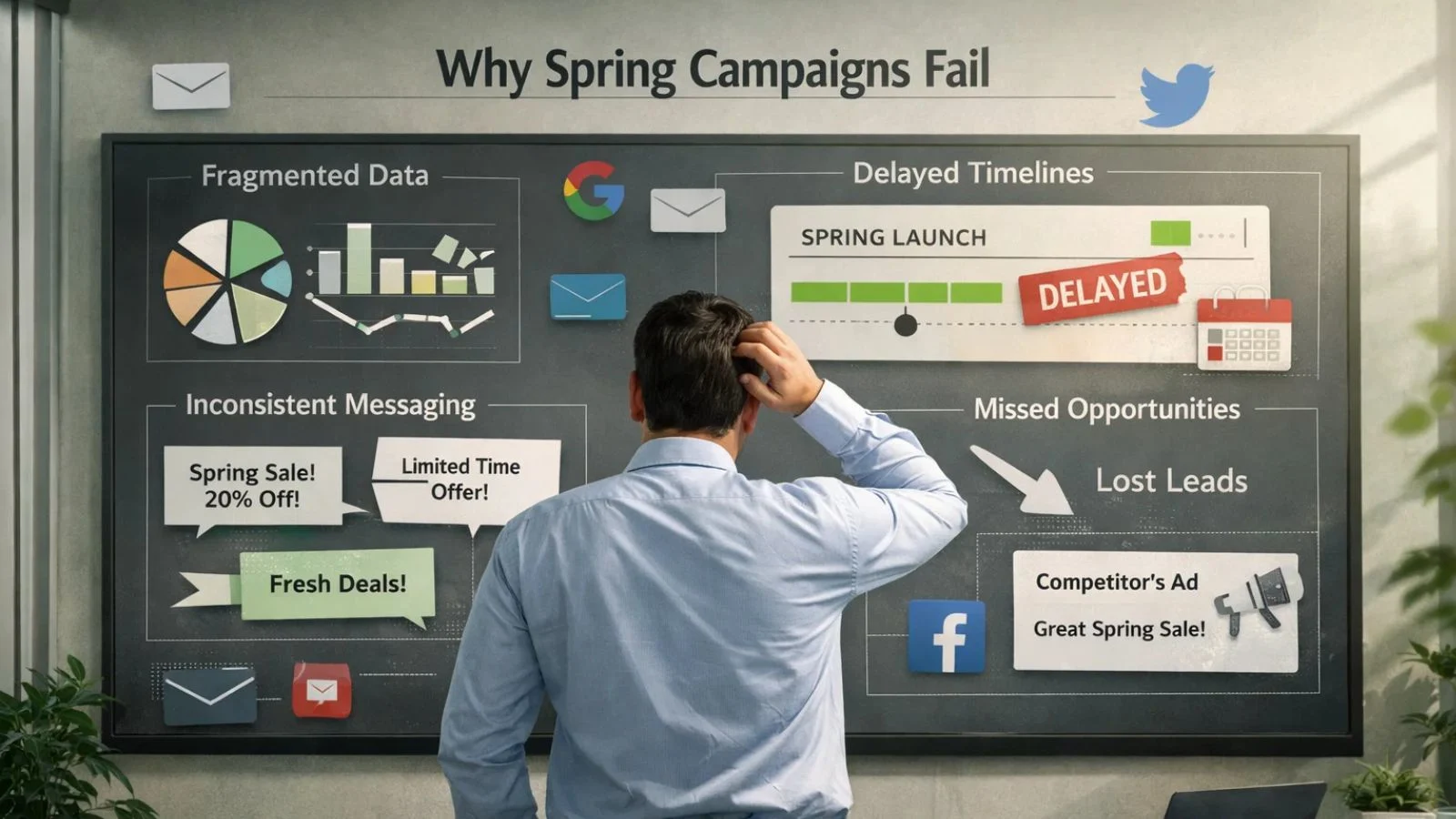
Spring campaigns frequently fail not because of poor ideas but rather because they are not executed in a way that is consistent with the actual thoughts and actions of audiences during this time of year.
Small strategic gaps can subtly lower impact and performance, from hurried timelines to generic messaging. The most frequent causes of spring campaign failures for brands are listed below, along with the typical points at which things go wrong.
1. Starting Too Late:
Timing plays a critical role in spring marketing success. Many brands begin planning in March, assuming that’s when spring interest starts. In reality, consumers begin shifting their mindset toward spring as early as late January.
By the time late planning turns into a live campaign, competitors who prepared earlier have already secured attention, placements, and budgets. Strong spring campaigns are typically planned in December or January, allowing enough time for creative development, partnerships, testing, and pre-season awareness.
2. Relying on Generic Seasonal Themes:
Spring visuals like flowers, sunshine, and pastel colours are widely used, which is exactly the problem. When every brand relies on the same seasonal cues, messaging blends and loses distinction.
High-performing spring campaigns go beyond surface-level aesthetics. They connect seasonal ideas like renewal, growth, and fresh starts to specific customer needs or goals. Campaigns such as “Spring Clean Your Finances” or “Grow Your Skills This Season” feel purposeful, not decorative.
3. Ignoring Your Audience’s Spring Priorities:
Spring doesn’t mean the same thing to every audience. A fitness brand may lean into outdoor routines, while a financial services brand should focus on tax planning or budgeting for upcoming travel. Campaigns underperform when they treat spring as a universal celebration. Brands that succeed invest time in understanding how different audience segments experience the season and adjust their messaging to match those real-world priorities.
4. Poor Multi-Channel Coordination:
When messaging varies across email, social media, paid ads, and landing pages, the result is confusion and diluted impact. One channel might highlight a promotion, another focuses on brand awareness, while the website communicates something else entirely. Effective spring campaigns maintain consistency across all touchpoints, from visuals and tone to offers and calls-to-action. This alignment builds recognition, reinforces trust, and improves conversion rates.
5. Weak or Missing Call-to-Action:
Strong visuals and clever copy only work if the next step is clear. Many spring campaigns focus heavily on design and storytelling but fail to guide the audience toward a specific action. Whether the goal is newsletter sign-ups, product purchases, or event registrations, the call-to-action should be direct, compelling, and easy to complete. Clear direction is often the difference between engagement and inaction.
How To Build Spring Campaigns?
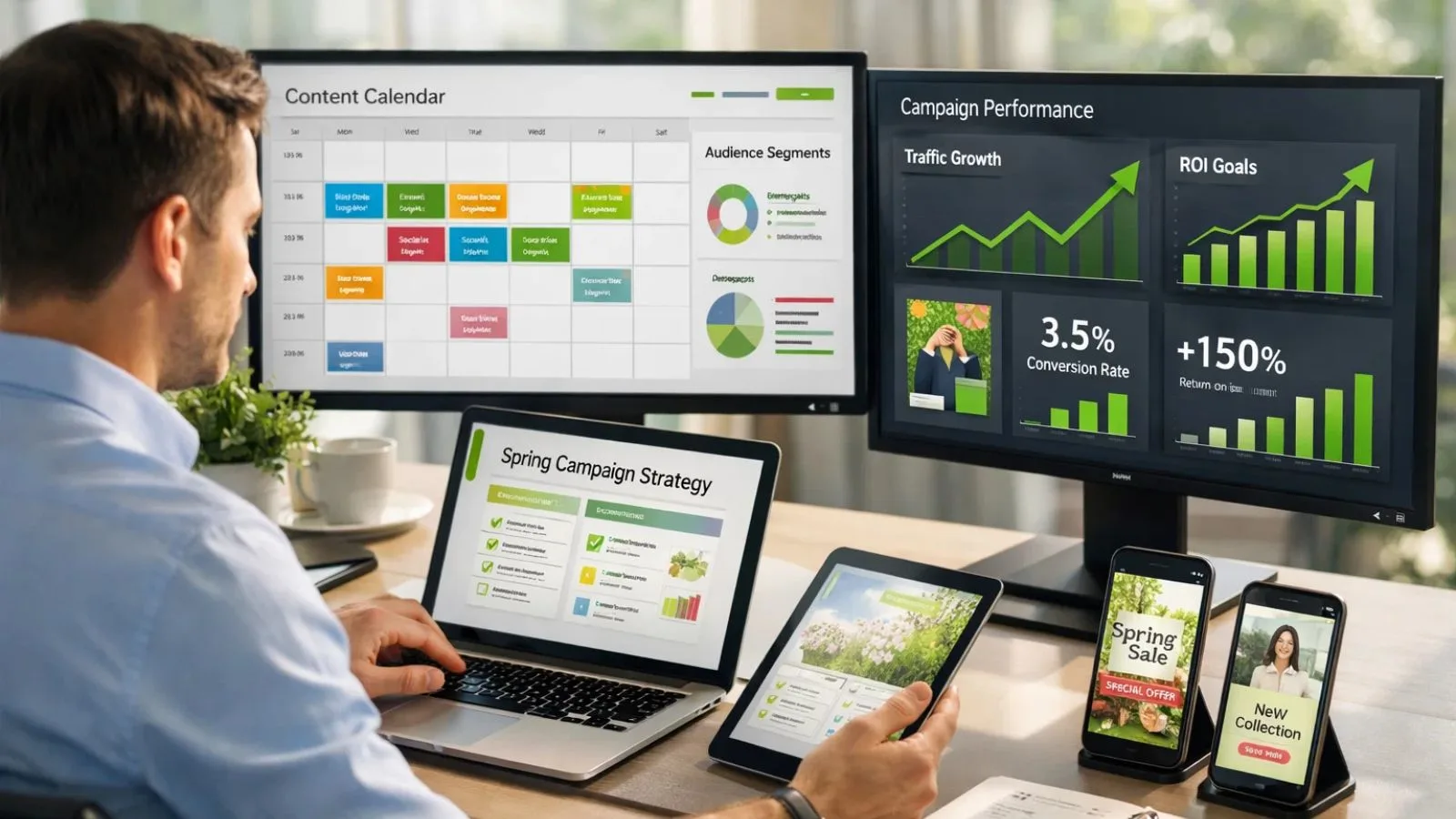
Feelings and images aren’t the only components of a successful spring campaign. It is based on structure. You need a clear framework that directs all of your decisions, from messaging to media spend, before you dive into creatives, offers, or ad formats. The brands that succeed in the spring don’t rely on impromptu ideas; they have a planned approach.
1. Start with Clear Objectives:
Before brainstorming creative concepts, define what success looks like.
Are you trying to clear winter inventory?
Launch a new product line?
Re-engage dormant customers?
Build brand awareness?
Your objectives influence everything that follows, from campaign messaging to performance metrics. Strong spring campaigns start with measurable goals that align directly with broader business priorities, not vague seasonal ambitions.
2. Research and Segment Your Audience:
Generic spring marketing doesn’t resonate because spring means different things to different people. Segment your audience based on what matters to them during this season:
- New parents may be preparing for outdoor activities with babies
- Homeowners are focused on yard work and outdoor entertaining
- Students are planning spring break or preparing for final exams
- Professionals may be prioritizing Q2 goals or tax deadlines
When developing spring marketing ideas, tailor your messaging to these specific needs. Campaigns feel more relevant and perform better when audiences feel understood rather than broadly targeted.
3. Create a Content Calendar:
Spring campaigns lose momentum when they’re treated as one-off launches. Plan your campaign week by week to maintain consistent visibility. Your calendar should include:
- Teaser content in late winter to build anticipation
- A focused launch phase with strong messaging
- Mid-campaign engagement content to sustain interest
- Urgency-driven messaging as the season winds down
This approach keeps your brand present throughout spring instead of creating a short-lived spike that quickly fades.
4. Leverage User-Generated Content:
Spring is a highly shareable season. Encourage customers to showcase how they use your products or services during this time. You can do this by:
- Creating a branded hashtag
- Running a seasonal photo or video contest
- Featuring customer stories across ads, email, and social channels
User-generated content adds authenticity, builds trust, and extends your reach organically. It’s one of the most cost-effective ways to amplify spring campaigns without increasing ad spend.
5. Optimize for Mobile:
As the weather improves, people spend more time browsing and shopping on their phones. If your spring campaigns aren’t mobile-optimized, you’re leaking conversions.
Ensure landing pages load quickly, forms are easy to complete on small screens, and visuals display correctly across devices. Mobile friction kills momentum fast, especially during seasonal campaigns where attention spans are shorter.
Also Read:
AI Write for Me: How to Instantly Create Content Using AI
Ultimate List Of Instagram Prompt Ideas For Captivating Posts
How AdsGPT Can Supercharge Your Spring Success:

Running a successful spring campaign requires speed, precision, and constant optimization, and that’s exactly where AdsGPT delivers real value. AdsGPT is an AI-powered ad creation platform designed to help brands launch high-performing campaigns faster and with less manual effort.
Instead of spending days brainstorming and writing ad copies, AdsGPT generates multiple platform-ready ad variations in minutes, tailored to your brand voice, audience, and campaign objectives. It supports major advertising channels and adapts messaging to fit each platform’s format and user behavior.
AdsGPT also helps marketers take inspiration from top-performing industry ads, reducing guesswork and improving creative relevance. With built-in analytics and performance insights, teams can quickly identify which creatives and messages resonate most and refine campaigns accordingly.
By cutting down creative production time and enabling rapid testing, AdsGPT allows brands to execute smarter spring campaigns while keeping costs under control and results measurable.
Measuring What Is Important:

Too many marketers start spring campaigns and then find it difficult to demonstrate their worth. Before releasing your product, establish precise KPIs:
- Awareness campaigns: Monitor increases in brand search volume, reach, and impressions.
- Engagement campaigns: Track social interactions, time spent on the website, and click-through rates.
- Conversion campaigns: Calculate the revenue, conversion rate, and cost per acquisition.
Establish accurate tracking right away. Make use of analytics dashboards, conversion pixels, and UTM parameters to see performance in real time.
Formula For Your Spring Campaign:
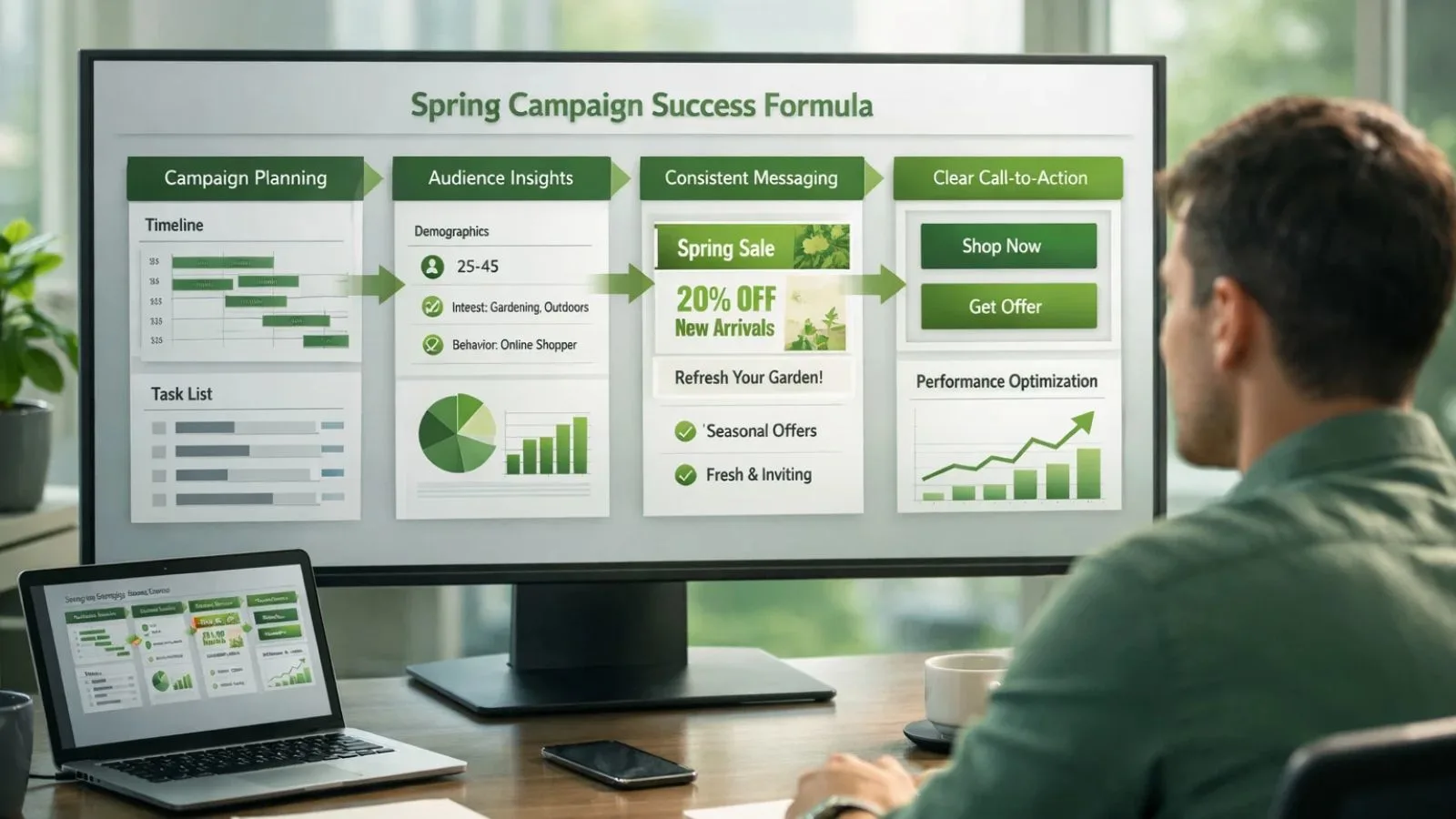
The key factors that distinguish successful spring campaigns from unsuccessful ones are preparation, customisation, and perseverance.
Plan so that you’ll be prepared when your audience is. Avoid using generic seasonal clichés and instead gain a thorough understanding of what spring means to your particular clientele. Develop unified campaigns that use the same messaging across all platforms.
Make it very clear what you want people to do. and continuously improve using actual performance data. Connecting your brand to the rebirth, hope, and forward motion that spring signifies in people’s lives is the goal of spring marketing, which goes beyond simply making the most of a particular season.
Conclusion:
Images of sunshine and lovely flowers are not enough for successful spring campaigns. They require coordinated execution, audience comprehension, strategic planning, and ongoing optimisation. You can position your brand to capitalise on the momentum of the season by steering clear of common pitfalls like late starts, generic messaging, and poor channel coordination.
Spring-winning brands put in a lot of effort up front, conducting audience research, making detailed calendars, producing genuine content, and monitoring important metrics. Your spring marketing initiatives can yield outstanding results if you use the appropriate strategy and tools like AdsGPT to optimise execution.
FAQ’s:
Q1: When should I start planning spring campaigns?
Ans: Begin planning in December or January to launch effectively by late February or early March when consumer spring interest peaks.
Q2: How long should spring campaigns run?
Ans: Most effective campaigns run 6-8 weeks, from late February through April, with messaging evolving from anticipation to urgency.
Q3: What budget should I allocate to spring campaigns?
Ans: Allocate 15-20% of your quarterly marketing budget to spring initiatives, adjusting based on your industry’s seasonal relevance.
Q4: How do I make my spring campaign stand out?
Ans: Focus on connecting spring themes to your audience’s specific challenges and aspirations rather than using generic seasonal imagery.


MOST POPULAR