

Listen To The Podcast Now!
What Is Competitive Advertising?

So, what is competitive advertising? Simply put, it’s when a brand directly or indirectly mentions their competitors to show why it’s the better choice.
Instead of just saying “Our burgers are delicious,” a company might say “Our burgers have more beef than Brand X” or run an ad showing their product outperforming the competition.
You’ve seen this everywhere, even if you didn’t realize it had a name. It’s the car commercial that shows a side-by-side comparison. It’s the smartphone ad that lists features the “other guys” don’t have. It’s that cheeky billboard across from a competitor’s store.
The whole point? To make your choice crystal clear for customers who might be sitting on the fence. Rather than making them do homework to figure out which brand is better, you’re laying it all out for them.
Why Do Companies Love This Strategy?
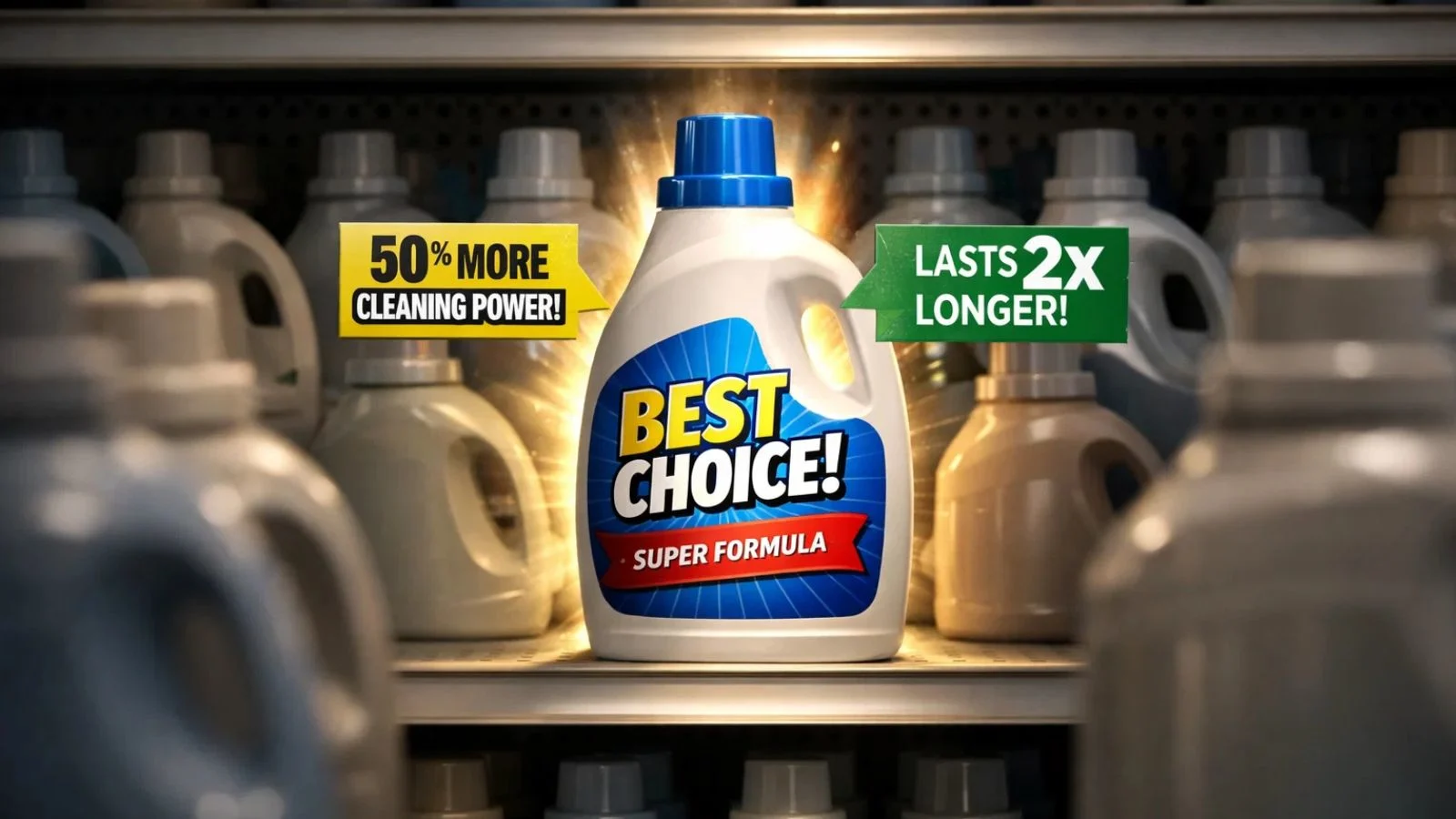
Here’s why competitive advertising keeps showing up in your feed, on billboards, and during commercial breaks:
1. It Cuts Through The Noise Fast:
Walk into any store and you’ll see dozens of similar products screaming for attention. When everything looks the same, competitive advertising creates an instant “aha!” moment. You’re not just another option, you’re THE better option, and here’s exactly why.
2. It Gives Smaller Brands A Fighting Chance:
If you’re a start-up going up against an industry giant, how do you get noticed? By comparing yourself to that giant, you automatically elevate your status. It’s like saying “Yeah, we’re in the same league as those guys, and actually, we’ve got some tricks up our sleeve they don’t.”
3. It Actually Helps People Make Decisions:
Think about your own shopping habits. How many times have you Googled “[Product A] vs [Product B]” before buying? People want comparisons. Competitive advertising just does that legwork for them, making it easier to pull the trigger on a purchase.
4. It Gets People Talking:
A boring ad gets scrolled past. A competitive ad? That starts conversations. People share it, debate it, and sometimes it even goes viral. The Wendy’s Twitter account roasting competitors is a perfect example, their snarky competitive jabs get millions of impressions without spending millions on ads.
Real-World Examples That Hit Different:
Looking at competitive advertising examples shows you both the genius moves and the cautionary tales:
The Pepsi Challenge:

Set up taste tests in malls and filmed people choosing Pepsi over Coke in blind tests. It was genius, they used Coke’s own dominance against them.
Apple’s “I’m a Mac” Campaign:
Featured the casual Mac guy and the stuffy PC guy. Pure gold. Apple never had to bash Microsoft directly, they just personified the difference in a funny, relatable way.
Burger King:

Ran a promotion where you could get a Whopper for one cent, but only if you were physically near a McDonald’s location. Talk about bold! They literally turned McDonald’s restaurants into their own promotional tool.
Avis: “We’re Number Two, So We Try Harder”:
Owned their underdog position and turned it into a strength. The message was clear: being second means we work harder to earn your business.
The Tricky Ethics Stuff:

Now, before you go writing an ad trashing your competitors, pump the brakes. Competitive advertising can go sideways fast if you’re not careful about the ethical side of things.
1. Tell The Truth, The Whole Truth:
This should be obvious, but you’d be surprised. Every claim you make about a competitor needs to be 100% accurate and provable. You can’t just make stuff up or twist the facts to make yourself look better. That’s not competitive advertising, that’s lying, and it’ll bite you hard.
2. Don’t Be A Jerk About It:
There’s a difference between confident and cocky. You can show why your product is better without being mean or petty. Ads that mock or belittle competitors often backfire because customers think “Wow, they seem desperate” or even feel bad for the brand being attacked.
3. Think About How It Looks:
Sometimes brands get so caught up in one-upping competitors that they forget how it comes across. If every single ad you run is about tearing down the competition, people start wondering if you actually have anything good to offer on your own.
The Legal Stuff You Can’t Ignore:

Here’s where competitive advertising gets serious. You can’t just say whatever you want about competitors and call it marketing.
In the US, the FTC (Federal Trade Commission) has clear rules: your claims must be truthful, backed up with evidence, and not misleading. Even if everything you say is technically true, if the overall impression is false, you’re in trouble.
For example, you can’t compare your premium product to a competitor’s basic model and pretend it’s an apples-to-apples comparison. That’s misleading, even if you didn’t technically lie.
You also need to be careful with trademarks. Generally, you can mention a competitor’s name in truthful comparisons, but you can’t use their logo or branding in ways that confuse customers about who’s behind the ad.
Different countries play by different rules too. Some places are totally cool with aggressive competitive ads, while others restrict even mentioning competitors by name. Do your homework before going global with a competitive campaign.
Also Read:
How To Use Real Estate Advertising For Faster Growth?
Why Storytelling in Advertising is More Important Than Ever?
How AdsGPT Makes This Easier:

Running competitive campaigns is hard because you need two things at the same time: fast inspiration from what’s already working in your market and the speed to turn that inspiration into fresh ads that match your brand.
That’s where AdsGPT helps. Instead of manually digging for ideas, AdsGPT lets you browse competitor ads for inspiration, pick an ad that stands out, and then generate a similar-style ad copy in seconds, so you’re not starting from scratch every time.
It also keeps your work organized by saving your generated copies, so you can revisit, reuse, and refine your best angles over time (instead of losing versions in docs and chats).
And because AdsGPT is positioned as an “ad chat” platform, it’s built for marketers who want to generate ad copy, ask questions, and discuss/understand ad analytics in one place, so the workflow is less messy and more execution-focused.
AdsGPT features:
Competitor Ad Inspiration: Explore competitor ads, choose one, and generate a similar copy quickly.
- Ad Copy Generation: Create multiple ad copy options fast (useful for testing angles/CTAs).
- Ad Creative Generation: Generate ad creatives (not just text) as part of the platform offering
- Track Your Creations / History: Saves your generated copies so you can manage and improve over time.
- Analytics + Reporting (Platform’s focus): Built to help you talk through ad analytics, insights, and comparisons inside the tool.
How To Do This Right:
Want to nail competitive advertising without the headaches? Here’s your playbook:
1. Start With Real Data:
Don’t make claims you can’t back up. Use independent testing, customer reviews, or verified stats. The stronger your proof, the harder your message hits.
2. Talk Benefits, Not Just Specs:
Don’t just say you’re faster or cheaper, explain what that means for the customer. “30% faster” becomes “Get dinner on the table in 20 minutes instead of 30.”
3. Stay True To Your Brand:
If your brand is friendly and approachable, don’t suddenly turn into an attack dog in competitive ads. Keep your personality consistent even when taking shots at rivals.
4. Watch The Reactions:
Pay attention not just to clicks and conversions, but to what people are saying. Are they cheering you on or calling you out? Is your competitor firing back? Be ready to adjust.
5. Know When To Move On:
Competitive advertising works best as a strategic play, not your entire identity. Use it to establish your position or challenge the status quo, then shift back to focusing on what makes you great.
Wrapping It Up:
Competitive advertising is like hot sauce, used right, it adds serious flavour to your marketing. Used incorrectly, it ruins everything and leaves a bad taste.
When you focus on honest comparisons, respect the rules, and actually deliver value instead of just talking smack, you can use competitive messaging to grab attention and win customers.
The best brands aren’t the ones that just trash their competitors; they’re the ones who confidently show why they’re better while keeping their integrity intact. In a crowded market, that confidence combined with class is what separates the winners from the wannabes.
FAQ’s:
Q1: Is competitive advertising actually legal?
Ans: Yep, totally legal in most places as long as you’re truthful and can prove your claims. Just make sure you check the specific rules in your country or industry before launching anything bold.
Q2: What’s the difference between competitive and comparative advertising?
Ans: Honestly, people use these terms pretty interchangeably. If we’re splitting hairs, comparative advertising specifically means you’re naming names and doing direct comparisons.
Q3: Can this backfire on my brand?
Ans: Absolutely, if you come off as mean, desperate, or dishonest. The key is confidence with class, showing your advantages without being a jerk about it.
Q4: Is competitive advertising right for every brand?
Ans: Not always. It only works when you have a clear, provable advantage. Without real differentiation, comparisons can expose weaknesses instead of building trust.


MOST POPULAR