

Brands are constantly searching for authentic ways to connect with their audiences in the digital landscape. User generated content has emerged as a powerful alternative to traditional marketing strategies, challenging even the dominance of influencer partnerships. Consumers are growing increasingly skeptical of polished advertisements and turning instead to real experiences shared by real people.
With the rise of AI Generated Content, brands must now navigate an even more complex landscape where authenticity is harder to define, and audiences are more discerning than ever. The question isn’t about choosing one over the other; it’s about understanding which strategy aligns best with your goals, budget, and audience. In this comprehensive guide, we’ll break down both approaches, examine their strengths and weaknesses, and help you determine which delivers better results for your brand.
Listen To The Podcast Now!
What Is User Generated Content?
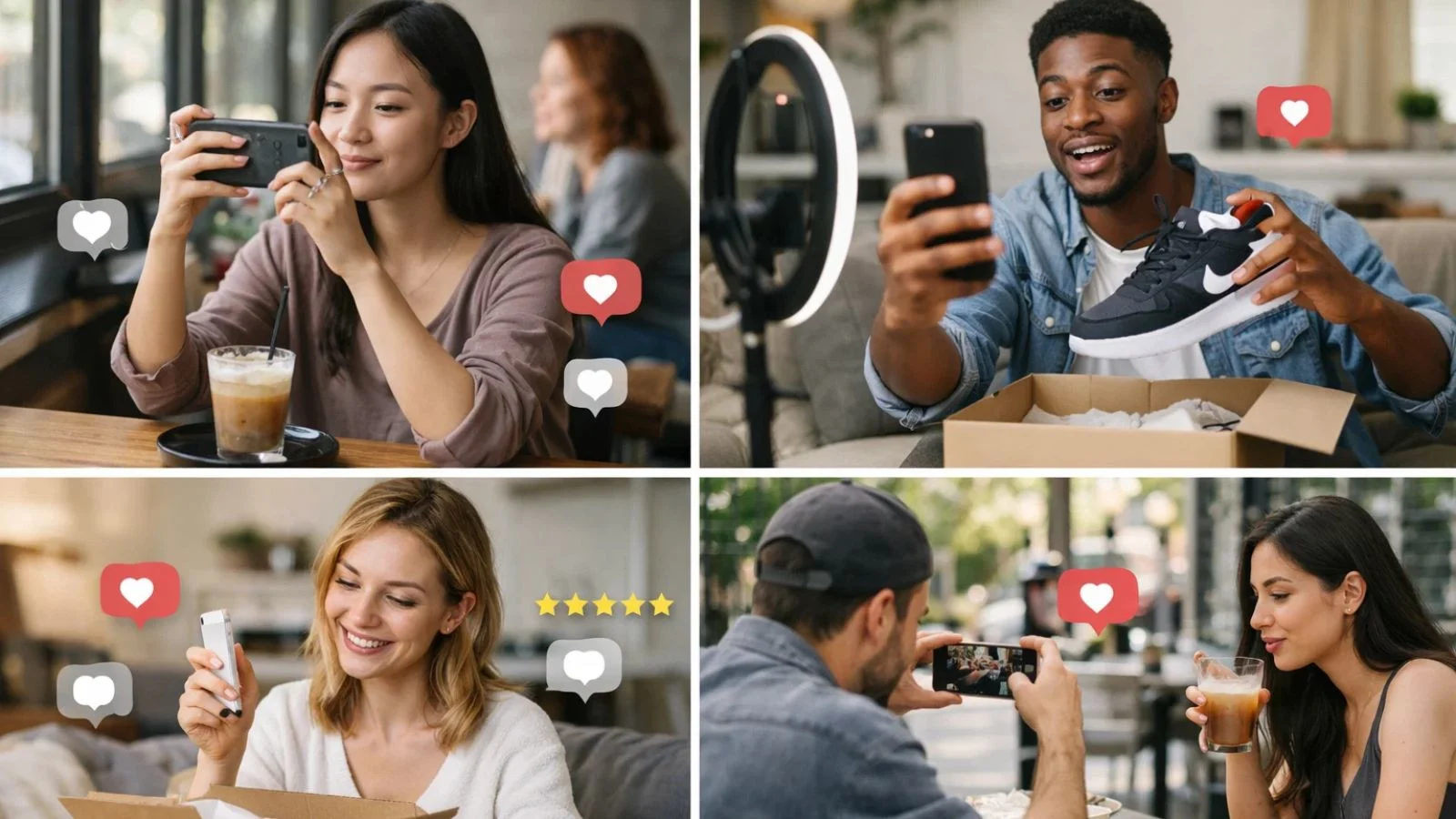
What is user-generated content?
It’s any content, photos, videos, reviews, testimonials, or social media posts, created by your customers rather than your brand. Unlike professionally produced marketing materials, user generated content comes directly from the people who use your products or services. Unboxing videos on YouTube, customer photos on Instagram, product reviews on Amazon, these are all examples of authentic content created by real users.
The power of user generated content lies in its genuine nature. When a customer shares their experience with your product, they’re not reading from a script or following brand guidelines. They’re expressing real opinions, showing real use cases, and providing social proof that resonates with potential buyers who are in similar situations. This authenticity creates trust in ways that traditional advertising struggles to achieve.
Understanding Influencer Marketing:
Influencer marketing takes a different approach. Brands partner with individuals who have established credibility and significant followings within specific niches. These influencers create content promoting products or services to their audiences, leveraging their influence to drive awareness and conversions.
The influencer landscape ranges from mega-celebrities with millions of followers to micro-influencers with highly engaged niche communities. Brands compensate influencers through payment, free products, or affiliate commissions. While influencers are third parties, their content is still a form of paid advertising, carefully crafted, strategically placed, and designed to drive specific outcomes.
The Cost Factor: Budget Realities:

One of the most significant differences between user-generated content and influencer marketing is cost. User generated content is remarkably cost-effective. Your customers create it voluntarily, often motivated simply by their enthusiasm for your brand.
Your main investment involves encouraging participation, curating content, and obtaining usage rights. Influencer marketing requires substantial financial investment. Macro-influencers can charge thousands or even hundreds of thousands of dollars per post.
Even micro-influencers typically expect compensation ranging from a few hundred to several thousand dollars, depending on their reach and engagement rates. For small businesses and startups with limited budgets, this pricing structure can be prohibitive.
Authenticity and Trust: The Real Currency:
Consumers have become savvy at recognizing sponsored content and approach it with healthy skepticism. User generated content wins decisively in the authenticity department. Research from Stackla found that 79% of people say user-generated content highly impacts their purchasing decisions, while only 13% say the same about influencer content.
When potential customers see real people using and enjoying your products, it creates powerful social proof. They can envision themselves having similar experiences. This authentic connection builds trust in ways that even the most skilled influencer cannot replicate. However, influencer marketing has value when partnerships are authentic and aligned with brand values, especially when influencers genuinely use and believe in the products they promote.
Reach and Scale Considerations:
Influencer marketing excels at reach. Partner with the right influencer, and your brand instantly gains exposure to thousands or millions of potential customers. This immediate visibility makes influencer campaigns attractive for product launches, brand awareness initiatives, or entering new markets.
User generated content marketing builds reach more gradually but sustainably. As more customers share their experiences, your content library grows organically. Each piece of user-generated content can be repurposed across multiple channels, such as your website, social media, email campaigns, and advertisements. Over time, this creates a compounding effect where your reach continuously expands without proportional increases in spending.
Content Volume and Consistency:

Creating consistent content is challenging and expensive. Professional photo shoots, video production, and creative development require significant resources. User generated content solves this problem by providing a continuous stream of fresh material.
When you encourage customers to share their experiences, you’re essentially crowdsourcing your content creation. Influencer partnerships typically deliver content in discrete campaigns.
You receive specific deliverables, perhaps a series of posts over a defined period, but once the campaign ends, so does the content flow unless you negotiate additional partnerships. User-generated content, when properly cultivated, becomes a self-sustaining content engine that produces material continuously.
Measuring ROI and Performance:
Both strategies offer measurable results, but the metrics differ. Influencer campaigns provide clear, immediate data: impressions, reach, engagement rates, click-throughs, and conversions attributed to specific influencer posts. This makes calculating ROI relatively straightforward, though attribution isn’t always perfect.
User generated content examples show that measuring its impact requires a broader approach. Beyond direct conversions, you’ll track metrics like participation rates, sentiment analysis, content usage across channels, and long-term brand perception shifts. While more complex to measure, user-generated content often delivers sustained value that extends far beyond initial publication dates.
Also Read:
How AdsGPT Enhances Your Content Strategy:
Creating compelling ad campaigns requires skill and creativity, whether you’re leveraging user generated content or working with influencers. AdsGPT streamlines this process by combining AI-powered content generation with marketing expertise.
Key features of AdsGPT include:
- AI-powered ad copy generation that creates engaging headlines, descriptions, and calls-to-action tailored to your audience
- Multi-platform optimization for Google Ads, Facebook, Instagram, and other advertising channels
- A/B testing suggestions to help you identify the highest-performing creative variations
- Brand voice consistency, ensuring all generated content aligns with your established messaging
- Time-saving automation that reduces ad creation time from hours to minutes
By incorporating AI user-generated content capabilities, AdsGPT helps brands amplify their authentic customer voices while maintaining professional polish. Whether you’re creating ads featuring customer testimonials or developing influencer campaign briefs, AdsGPT ensures your messaging resonates with your target audience while saving valuable time and resources.
User-Generated Content Examples That Drive Results:

Leading brands have mastered user generated content marketing with impressive results. GoPro built an entire marketing strategy around customer videos showcasing extreme sports and adventures.
Their customers became their content creators, producing thousands of hours of exciting footage that demonstrated product capabilities far better than traditional advertising could. Starbucks’ White Cup Contest encouraged customers to decorate their coffee cups and share photos, generating thousands of creative submissions.
This campaign transformed ordinary customers into brand ambassadors while creating massive social media engagement. Airbnb’s community-driven content features real travelers’ experiences, creating authentic narratives that traditional advertising couldn’t match.
These user generated content examples demonstrate versatility across industries. Fashion brands repost customer outfit photos, fitness companies share transformation stories, and tech companies highlight innovative use cases from their user communities. The common thread is real people sharing genuine experiences that resonate with potential customers.
The Hybrid Approach: Best of Both Worlds:
The most sophisticated brands don’t view this as an either-or decision. They integrate both strategies strategically. Influencers can jumpstart user generated content campaigns by encouraging their followers to participate.
Meanwhile, exceptional user generated content can be amplified through paid promotions or by sharing it with influencer partners. This hybrid model maximizes strengths while minimizing weaknesses.
Use influencers for immediate reach and credibility, then encourage their audiences to create their own content. Leverage user generated content for ongoing authenticity and cost-effectiveness, while strategically deploying influencer partnerships for major launches or specific campaigns.
Making Your Decision: Which Strategy Fits Your Brand?
Choose user-generated content as your primary strategy if you have an engaged customer base, a limited budget, and prioritize long-term authenticity over immediate reach. It’s ideal for brands with visually appealing products, strong community elements, or customers who naturally share their experiences.
Prioritize influencer marketing if you need rapid awareness, are launching in new markets, have a budget for partnerships, or operate in niches where key opinion leaders significantly influence purchasing decisions. It’s particularly effective for complex products requiring explanation or lifestyle brands where aspiration drives purchases.
Consider your timeline as well. Influencer campaigns deliver quick results, while user generated content strategies build momentum gradually. Your industry, product type, and target audience all influence which approach delivers better outcomes for your specific situation.
Conclusion:
Both user generated content and influencer marketing have distinct advantages. User generated content offers authenticity, cost-effectiveness, and sustainable content creation that builds trust through genuine customer experiences. Influencer marketing provides immediate reach, professional polish, and targeted exposure through established voices. The “better” choice depends entirely on your brand’s goals, resources, and audience preferences. For most marketers, success comes from strategically integrating both approaches, using influencers to amplify reach while nurturing user generated content communities that provide ongoing authenticity and engagement.
FAQ’s:
Q1: Can small businesses afford influencer marketing?
Ans: Yes, through micro-influencer partnerships. Focus on niche influencers with engaged audiences rather than celebrity-level reach. Many micro-influencers accept product exchanges or modest fees.
Q2: How do I encourage customers to create user generated content?
Ans: Run contests, create branded hashtags, feature customer content on your channels, offer incentives, and make sharing easy by providing clear calls-to-action and simple submission processes.
Q3: Which strategy converts better?
Ans: Studies show user generated content often drives higher conversion rates due to authenticity, but influencer marketing can generate more initial awareness. The best results typically come from combining both approaches.
Q4: How long does it take to see results from user generated content?
Ans: Building a consistent stream of user generated content usually takes 2-3 months. Unlike influencer campaigns that create immediate spikes, UGC builds momentum gradually and compounds over time.


MOST POPULAR