
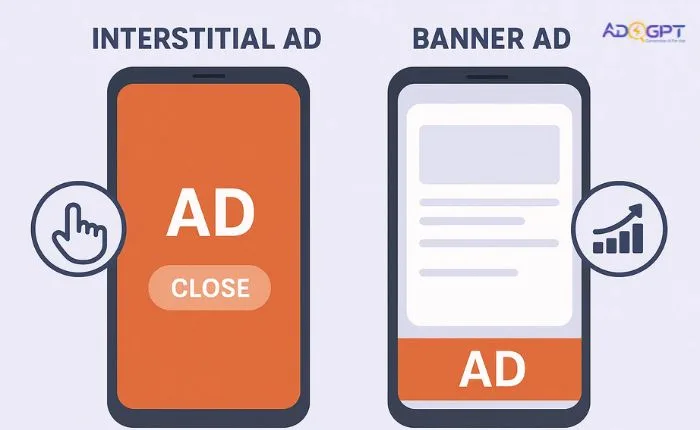
The world of digital advertising, choosing the right ad format can make or break your monetization strategy. Two of the most popular options publishers and app developers face are interstitial ads and banner ads.
While both serve the purpose of generating revenue, they deliver vastly different user experiences and performance metrics. Understanding which format aligns with your goals is crucial for maximizing earnings without compromising user satisfaction.
The debate between these two advertising formats has intensified as mobile usage continues to dominate internet traffic. As Mobile Ads Skyrocket Your Business Growth, publishers are constantly searching for the sweet spot between profitability and user engagement. This guide will break down both formats, compare their strengths and weaknesses, and help you determine which one drives better results for your specific needs.
Listen To The Podcast Now!
Understanding Banner Ads:
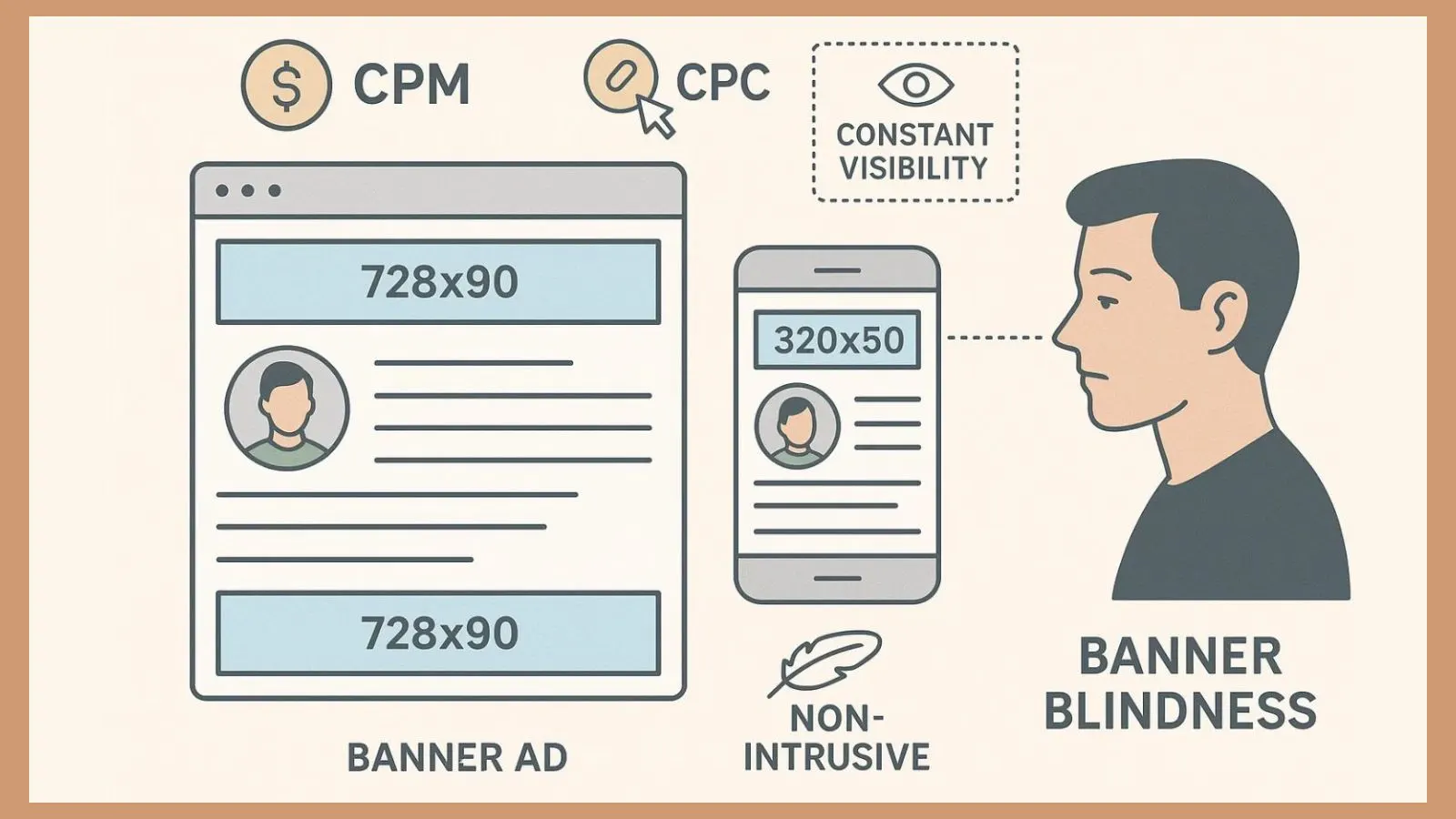
Banner ads have been a staple of digital advertising since the early days of the internet. These rectangular advertisements appear at the top, bottom, or sides of a webpage or app screen. They remain visible while users browse content, making them a non-intrusive advertising option.
The most common banner ad sizes include 320×50 pixels for mobile devices and 728×90 pixels for desktops. They’re designed to blend with content while still catching the user’s attention. Banner ads typically generate revenue through impressions (CPM model) or clicks (CPC model).
Advantages of Banner Ads:
- Non-intrusive user experience
- Constant visibility throughout the browsing session
- Easy to implement and manage
- Suitable for brand awareness campaigns
Disadvantages of Banner Ads:
- Lower click-through rates compared to other formats
- Banner blindness where users ignore them
- Limited screen visibility on mobile devices
- Generally lower CPM rates
What Are Interstitial Ads?
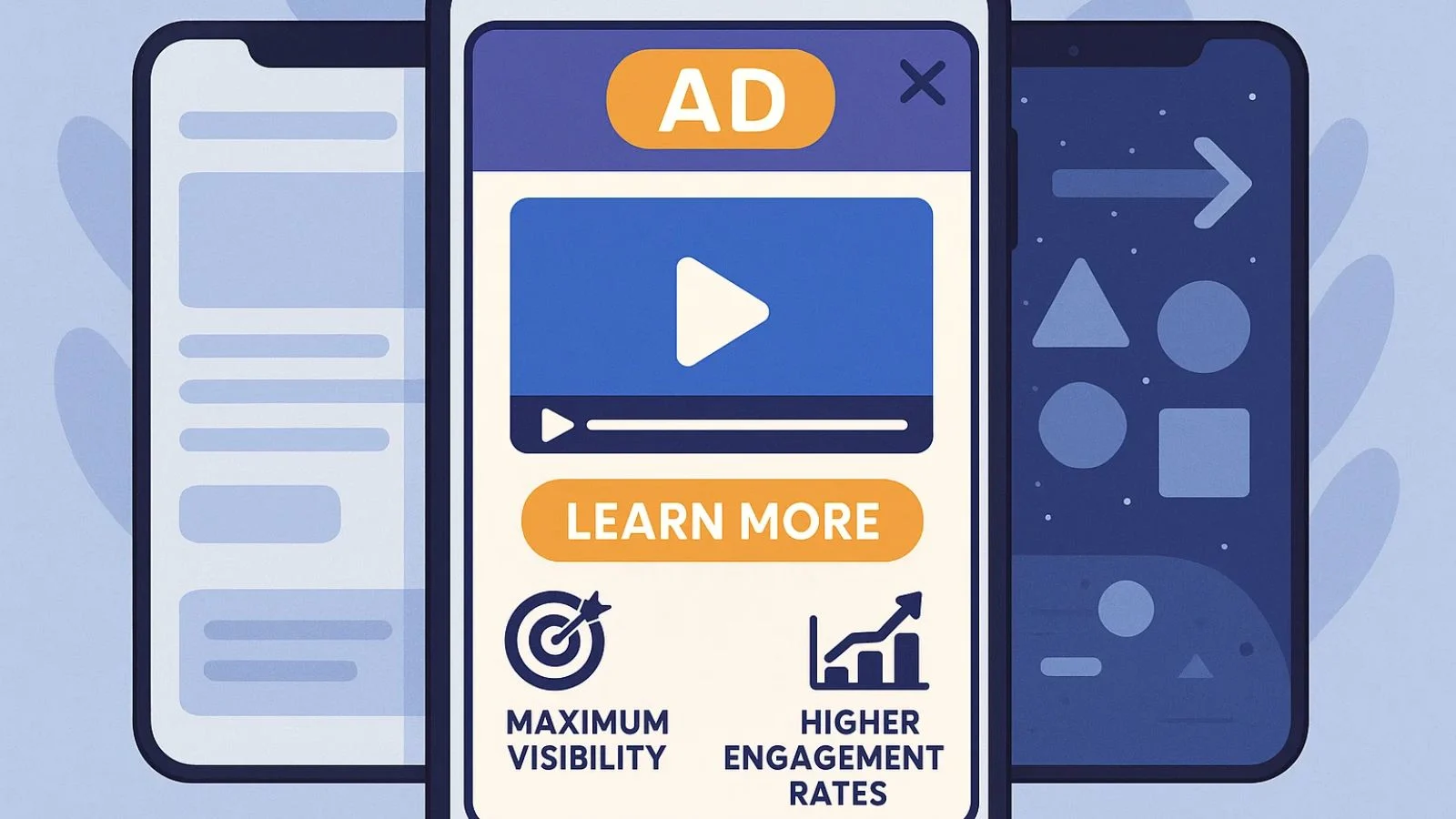
Interstitial ads are full-screen advertisements that appear at natural transition points in an app or website’s user flow. Unlike banner ads that sit alongside content, these ads take over the entire screen, demanding the user’s complete attention before they can continue with their activity.
These ads typically appear during moments like app launches, between game levels, after completing an action, or while navigating between articles. They include a close button (usually after a few seconds) that allows users to dismiss the ad and return to their content.
Key Characteristics:
- Full-screen coverage ensures maximum visibility
- Rich media capabilities including video and interactive elements
- Higher engagement rates due to unavoidable presence
- Strategic placement at natural break points
- Better performance on mobile devices
Interstitial Ads Example: Real-World Applications:
To better understand how these formats work in practice, let’s explore some interstitial ads example across different industries:
1. Gaming Apps:
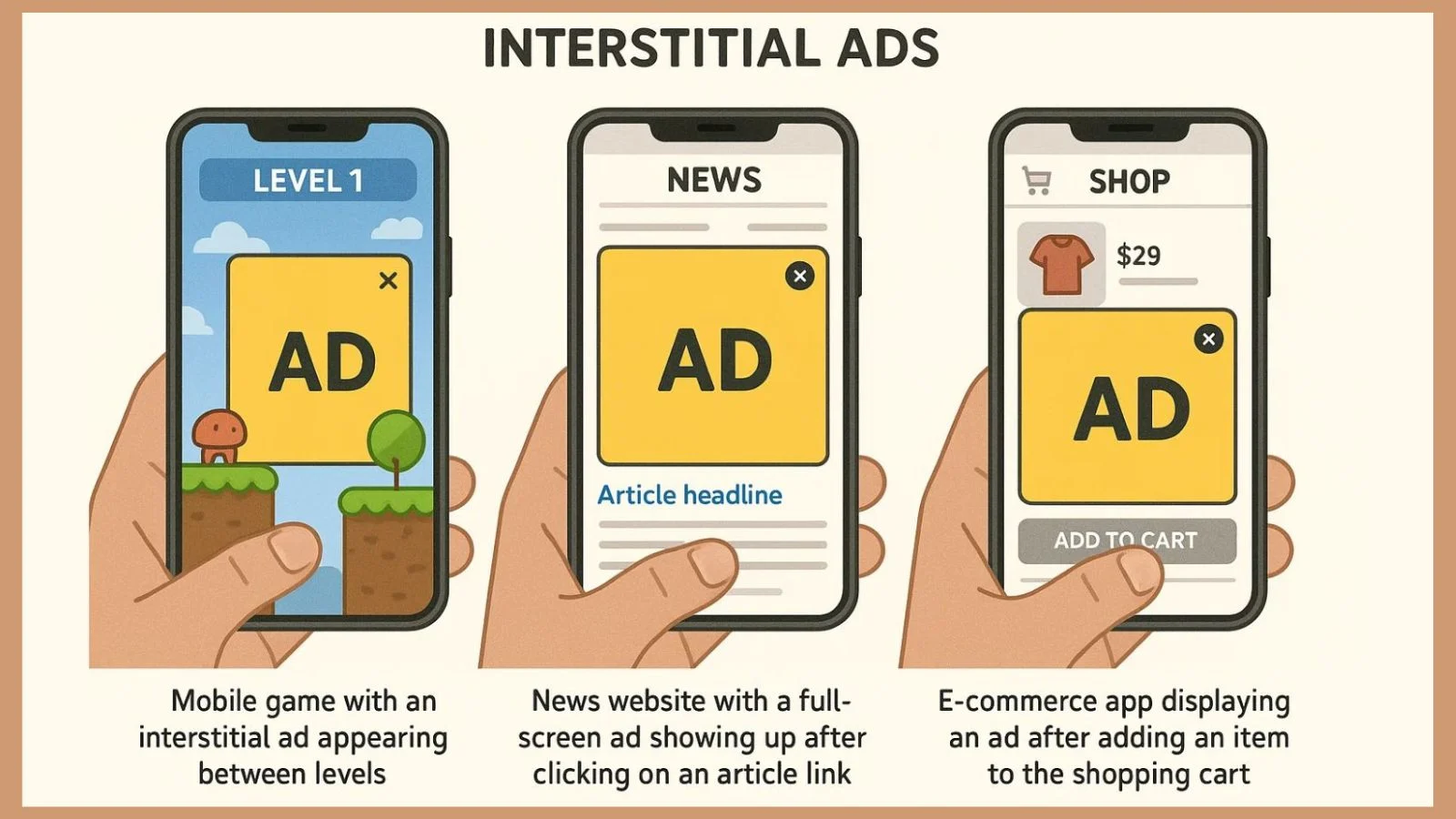
Mobile games frequently use interstitial ads between levels or after game-overs. When a player completes level 5, a full-screen ad appears before level 6 begins. This placement feels natural because users expect a brief pause during transitions.
2. News Websites:
Online publishers might display an interstitial ad when users navigate from the homepage to an article. The ad appears for 5-7 seconds before the reader can access the content they clicked on.
3. E-commerce Platforms:
Shopping apps sometimes show interstitial ads when users move between categories or after adding items to their cart, promoting special offers or related products.
These examples demonstrate how strategic placement transforms interstitial ads from annoying interruptions into acceptable advertising moments.
Mobile Interstitial Ads: The Mobile-First Advantage:
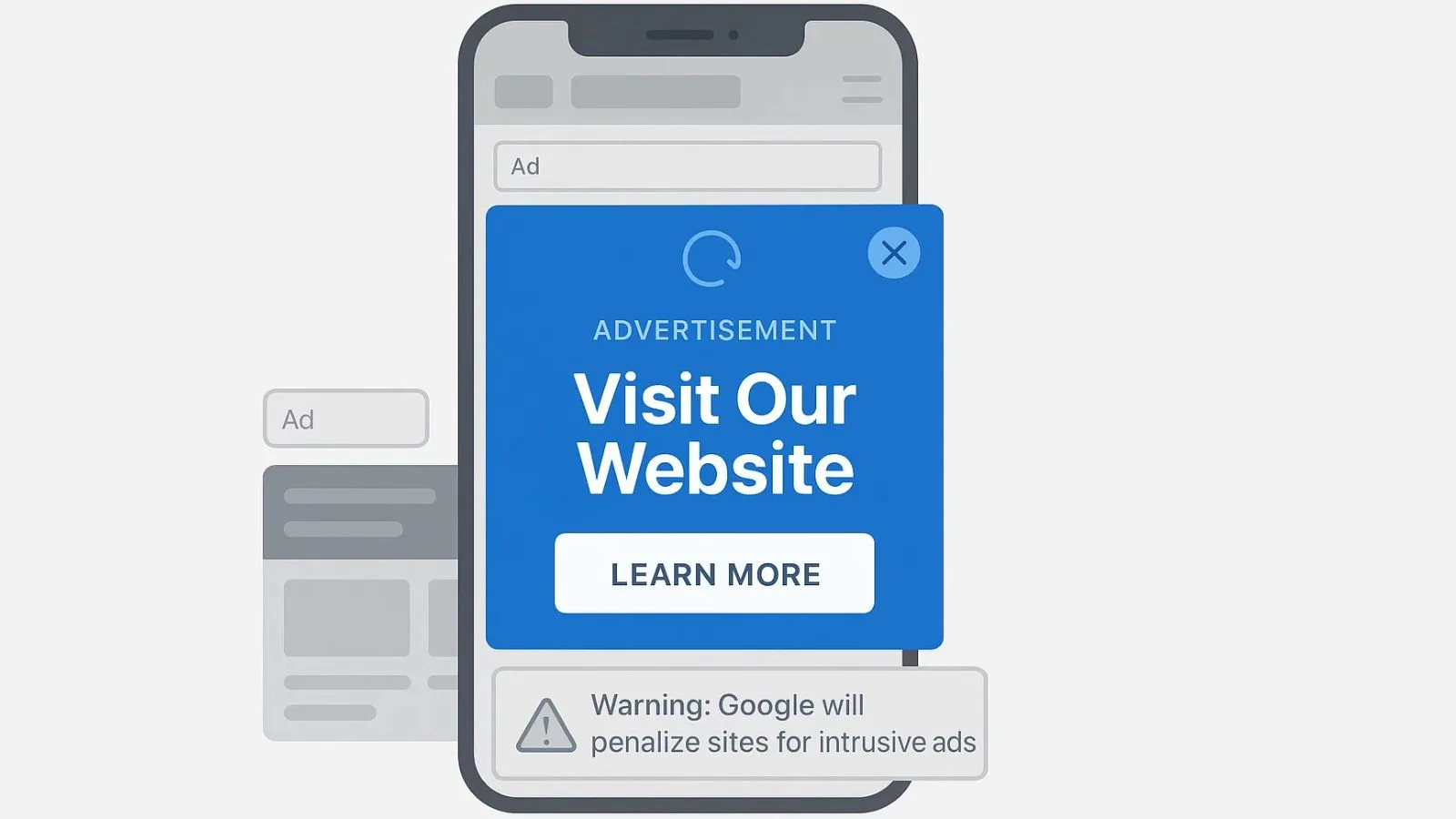
The rise of mobile browsing has particularly favoured the interstitial format. Mobile interstitial ads leverage the smaller screen size to create immersive advertising experiences that simply aren’t possible with tiny banner ads on smartphones.
On mobile devices, banner ads become almost invisible, often measuring just 50 pixels in height. Users can easily scroll past them or develop banner blindness. In contrast, mobile interstitial ads command full attention by utilizing the entire screen, making them impossible to ignore without active dismissal.
Mobile app developers have found tremendous success with this format because it aligns with natural user behaviour. When someone opens an app, switches between sections, or completes a task, they’re already in a transitional mindset. A well-timed interstitial ad during these moments feels less disruptive than one might expect.
However, Google has implemented strict policies regarding mobile interstitials on websites. Intrusive interstitials that appear immediately upon page load can result in SEO penalties. This has led publishers to be more strategic about timing and frequency.
Performance Comparison: CTR and Revenue:
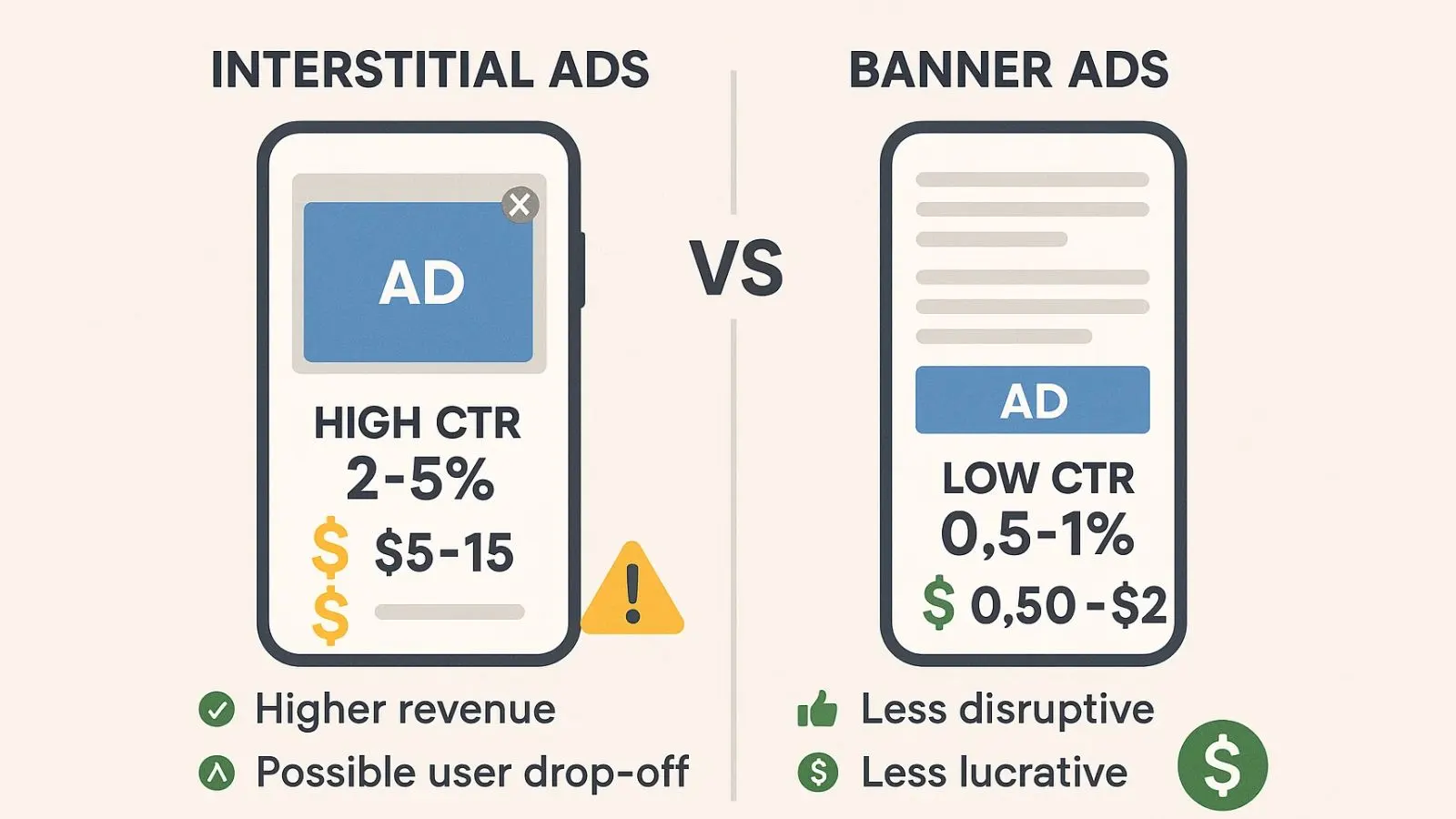
When comparing click-through rates, interstitial ads significantly outperform banner ads. Industry data shows that interstitial ads typically achieve CTRs between 2-5%, while banner ads usually hover around 0.5-1%. This dramatic difference stems from the unavoidable nature of full-screen formats.
From a revenue perspective, the CPM rates for interstitial ads often exceed those of banner ads by 5-10 times. Publishers can earn $5-$15 CPM with strategically placed interstitial campaigns, compared to $0.50-$2 CPM for standard banner placements.
However, raw numbers don’t tell the complete story. While interstitial ads generate higher immediate revenue per impression, excessive use can drive users away. Banner ads, though less lucrative per impression, can be displayed more frequently without significantly impacting user experience.
User Experience Considerations:
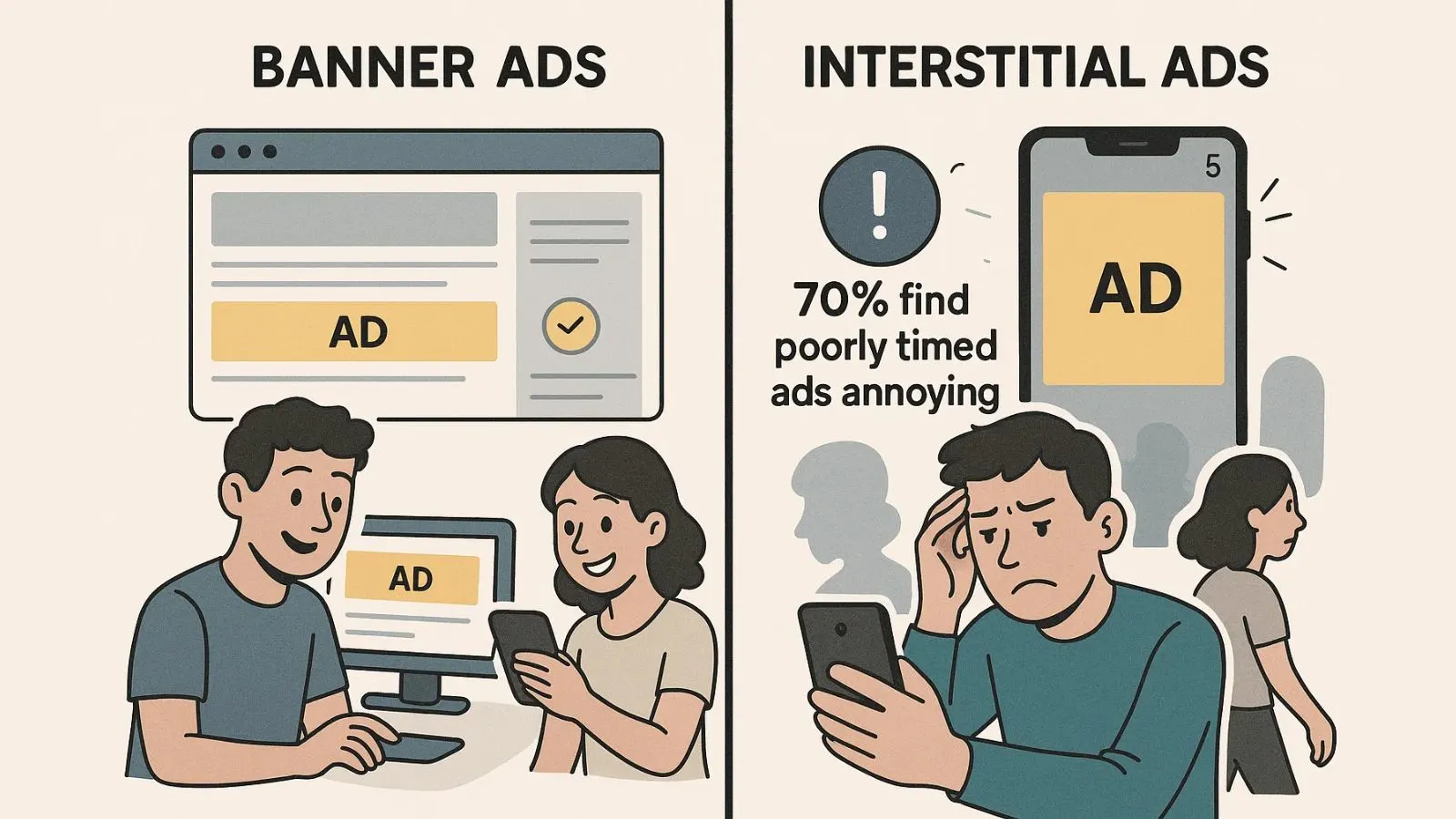
The user experience debate is where opinions diverge sharply. Banner ads win points for being unobtrusive, allowing users to consume content without interruption. They create a smoother browsing experience, particularly for users who value seamless navigation.
Interstitial ads, conversely, deliberately interrupt the user flow. When implemented poorly, appearing too frequently or at awkward moments, they can frustrate users and drive them to abandon your app or website entirely. Studies show that 70% of users find poorly timed interstitial ads annoying.
The key lies in strategic implementation. When interstitial ads appear at natural break points with reasonable frequency, user acceptance improves dramatically. Users understand that free content comes with advertising, and most are willing to tolerate brief interruptions if they’re not excessive.
Interstitial Video Ads: The Premium Format:
Among interstitial formats, interstitial video ads represent the premium tier of mobile advertising. These full-screen video advertisements combine the high engagement of interstitial placement with the compelling nature of video content.
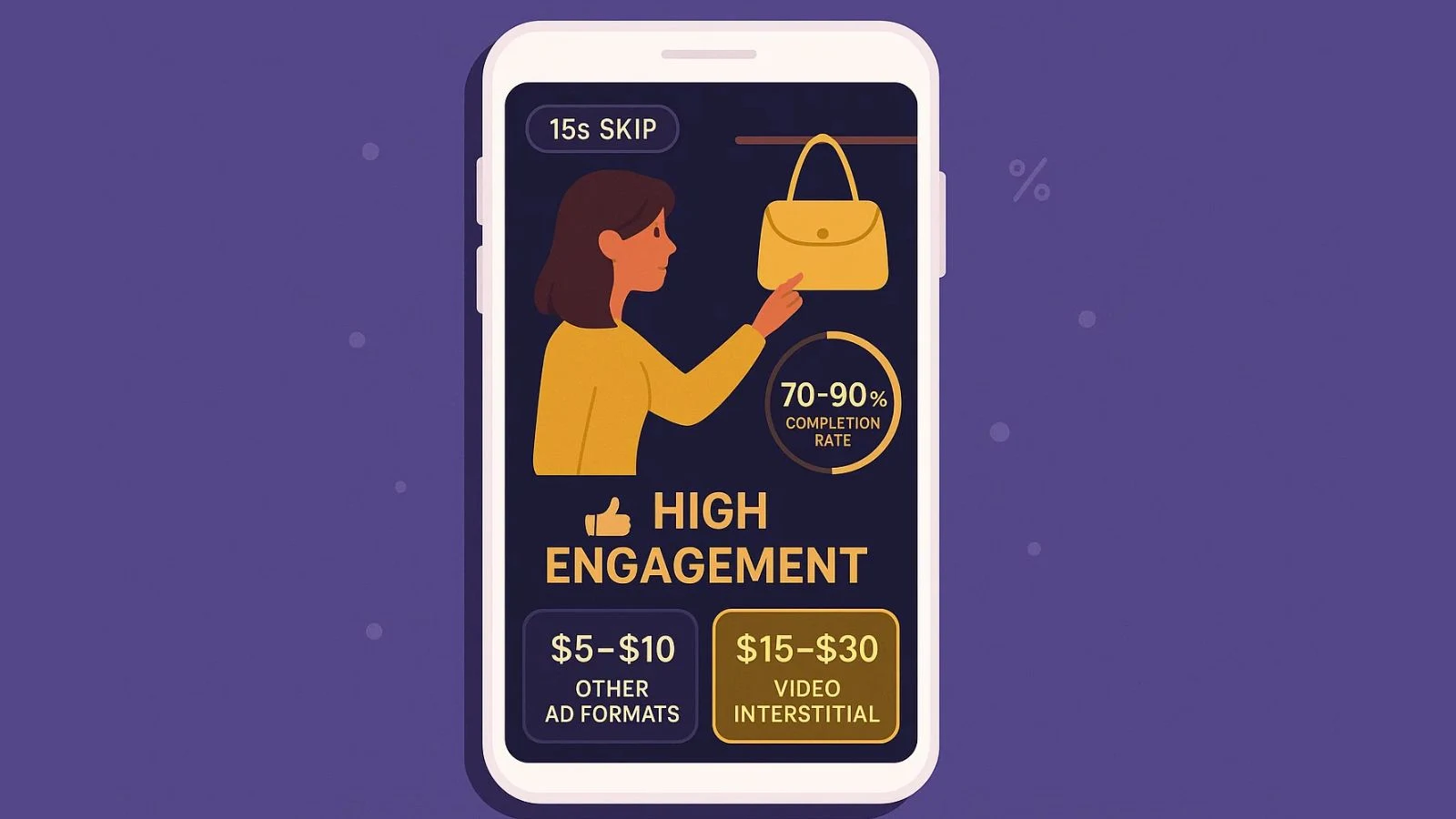
Video interstitials typically run for 15-30 seconds and can be either skippable or non-skippable. They’re particularly effective in mobile gaming, where users expect brief breaks between gameplay sessions. The video format allows advertisers to tell more complete stories and demonstrate products in action.
From a publisher’s perspective, video interstitials command the highest CPM rates in the industry, often reaching $15-$30 or more for premium inventory. Advertisers love video interstitials because they deliver completion rates of 70-90%, meaning most users watch the entire ad.
Also Read:
How AdsGPT Optimizes Your Ad Strategy?
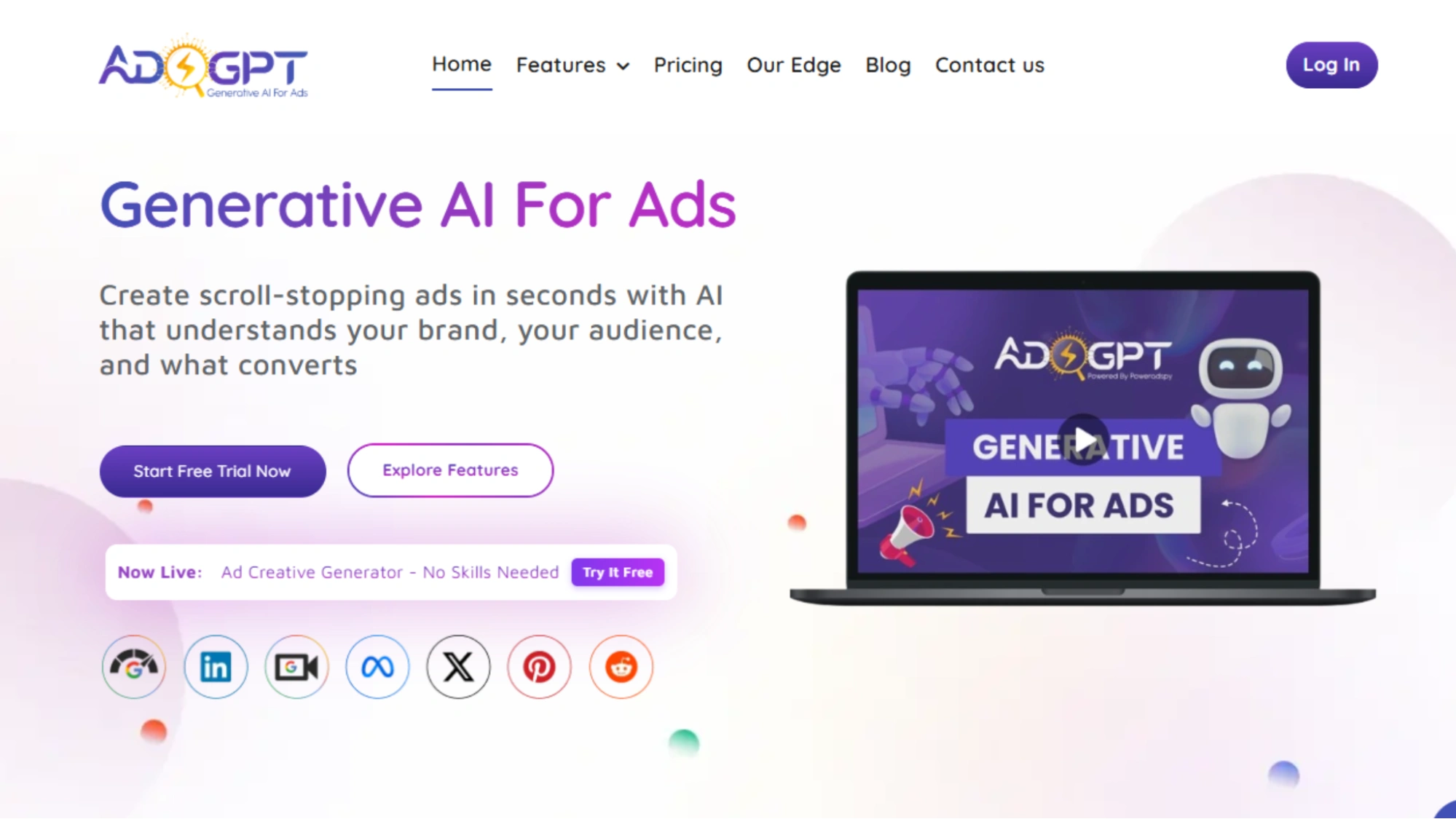
Managing the complexity of different ad formats while maximizing revenue and maintaining user satisfaction can be overwhelming. This is where AdsGPT transforms your advertising approach through intelligent automation and optimization.
AdsGPT leverages advanced algorithms to analyze competitors’ ad campaigns. Thereby, you get to know which type of ads are performing the best. By doing some research on your competitors’ successful ad campaigns, you can replicate their strategies to design your own campaign.
Building on these insights, AdsGPT goes a step further by turning data into action. Instead of just showing what works, it helps you create ads that are designed to perform. Using generative AI, AdsGPT allows you to generate high-quality ad copies and visuals tailored to your campaign goals, platform, and audience preferences.
The platform continuously analyzes performance patterns, audience behavior, and competitor trends to suggest optimized ad formats, messaging angles, and creative styles. Whether you need scroll-stopping ad images, compelling headlines, or conversion-focused descriptions, AdsGPT’s AI version produces ready-to-use creatives in minutes—eliminating guesswork and saving valuable time.
More than just an ad creation tool, AdsGPT acts as a strategic partner. It delivers data-backed ideas, tested frameworks, and foolproof strategies that help you build winning campaigns with confidence. By combining competitor intelligence with AI-driven creativity, AdsGPT ensures every ad you launch is informed, optimized, and positioned for maximum impact.
Conclusion:
Both interstitial ads and banner ads have their place in a comprehensive monetization strategy. Interstitial ads deliver higher engagement rates, superior CPMs, and better visibility, particularly on mobile devices. Banner ads offer a consistent presence, lower user friction, and flexibility for continuous display.
The best approach often combines both formats strategically, leveraging interstitial ads during natural transition points while maintaining banner ads for ongoing visibility. Success lies in understanding your audience, respecting user experience, and continuously optimizing based on performance data.
FAQ’s:
Q1: How often should I show interstitial ads?
Ans: Limit interstitial displays to once every 60-120 seconds of user engagement. More frequent displays significantly increase abandonment rates.
Q2: Do interstitial ads hurt SEO?
Ans: Google penalizes intrusive interstitials that appear immediately on page load. Properly timed interstitial ads at natural transition points do not negatively impact SEO.
Q3: Which format has better click-through rates?
Ans: Interstitial ads typically achieve 2-5% CTR compared to 0.5-1% for banner ads, due to their full-screen nature.
Q4: Can I use both formats simultaneously?
Ans: Yes, hybrid strategies often work best. Use banner ads for consistent visibility and interstitial ads at strategic moments for maximum impact.


MOST POPULAR