
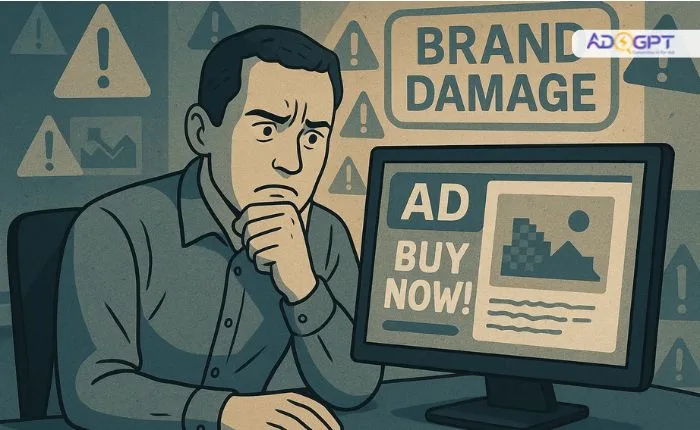
Advertising is one of the most powerful tools in any business’s marketing arsenal. However, it’s not without risks. While the right ad campaign can significantly boost your brand visibility and drive sales, bad ads can have disastrous consequences.
A poorly executed ad might seem harmless at first, but it can quickly spiral into a PR disaster, damaging your brand’s reputation and losing you customers. The challenge lies in identifying bad ads before they go live.
If you’re not careful, these ads can squander your marketing budget and leave you scrambling to recover. Learning how to spot bad ads before they cause harm is essential for any marketer or business owner looking to protect their brand’s image and ensure long-term success.
Listen To The Podcast Now!
What Actually Makes an Ad “Bad”?

Not every underperforming ad is a bad ad. Sometimes it just needs tweaking. But truly bad ads actively hurt your business in ways that go beyond poor conversions. This is especially clear when you look at How Brands Leverage Social Media, the successful ones align message, audience, and platform, while weak ads do the opposite.
Bad ads confuse people about what you’re selling, annoy them with irrelevant content, or worse, offend them entirely. Your targeting might be so off that you’re pushing retirement planning ads to teenagers. Your visuals may look rushed and cheap, or your message might be so vague that people don’t know what you want them to do. The real problem is simple: bad ads ignore audience needs and focus too much on what the business wants to say instead of what customers actually need to hear.
Warning Signs You’re About to Launch a Bad Ad:

1. Your Message Isn’t Clear:
If someone looks at your ad for five seconds and can’t tell what you’re offering, you’ve got a problem. Your audience shouldn’t have to work hard to understand your point. Good ads answer basic questions immediately: What is this? Why should I care? What do I do next?
2. You’re Showing Ads to the Wrong People
This happens more often than you’d think. You might have created an amazing ad, but if it’s reaching people who have zero interest in your product, it becomes one of those bad ads that drains your budget. Selling high-end business software to college students? Promoting nightclub events to retirees? That’s money down the drain.
3. The Design Looks Amateur:
We’ve all seen them, ads with blurry images, weird fonts, or colours that clash so badly they hurt your eyes. In today’s world where everyone has a decent camera in their pocket, there’s no excuse for sloppy design. When your ad looks cheap, people assume your product is cheap too.
4. You’re Using Clickbait Tactics:
“You won’t believe what happens next!” or “This one weird trick…” might get clicks, but they destroy trust. When people click through and realize you’ve misled them, they remember. And not in a good way. Those quick clicks aren’t worth the long-term damage to your reputation.
Real-World Examples of Ads That Went Wrong:

We can learn a lot from bad advertising examples. Big companies with huge budgets have launched campaigns that became cautionary tales. Some of the worst ads in history happened because marketers didn’t think about how different audiences might interpret their message.
Some brands have released ineffective ads that completely missed the mark culturally. Others created confusion by being too clever for their own good, the audience spent so much time trying to figure out what the ad meant that they forgot what was being sold.
Then there’s the inappropriate ad category, campaigns that made light of serious issues or relied on stereotypes. These don’t just fail; they create PR nightmares that cost way more than the original ad budget.
Always test your ideas with real people outside your company before spending thousands on a campaign.
The Keyword Trap in Google Ads:

Here’s something many advertisers get wrong: they think more keywords mean better results. But is adding too many keywords bad for Google Ads? Absolutely.
When you stuff your campaign with dozens of loosely related keywords, your ads start showing up for searches that have nothing to do with your actual offering. You’re paying for clicks from people who will never buy from you. That’s how good campaigns turn into bad ads that waste money without delivering results.
The smarter approach is choosing fewer, highly relevant keywords that match what your ideal customer is actually searching for. Quality beats quantity every time.
Let the Numbers Tell You the Truth:

Your analytics dashboard is like a report card for your ads. If you’re paying attention, the data will tell you when you’ve got bad ads before they completely tank your budget.
Click-through rate too low?
People are seeing your ad but choosing to ignore it. Something about it isn’t working.
Clicks but no conversions?
Your ad might be attracting clicks, but either your targeting is off or your landing page doesn’t match what the ad promised.
High bounce rate?
Visitors are clicking and immediately leaving. That’s a red flag that your ad set wrong expectations.
Is the cost per customer too high?
You’re spending more to acquire customers than you can afford. Time to rethink your approach.
Check these numbers regularly. An ad that works today might stop working next month as audiences get tired of seeing it or market conditions change.
Also Read:
How AdsGpt Speeds Up Your Ad Creation:
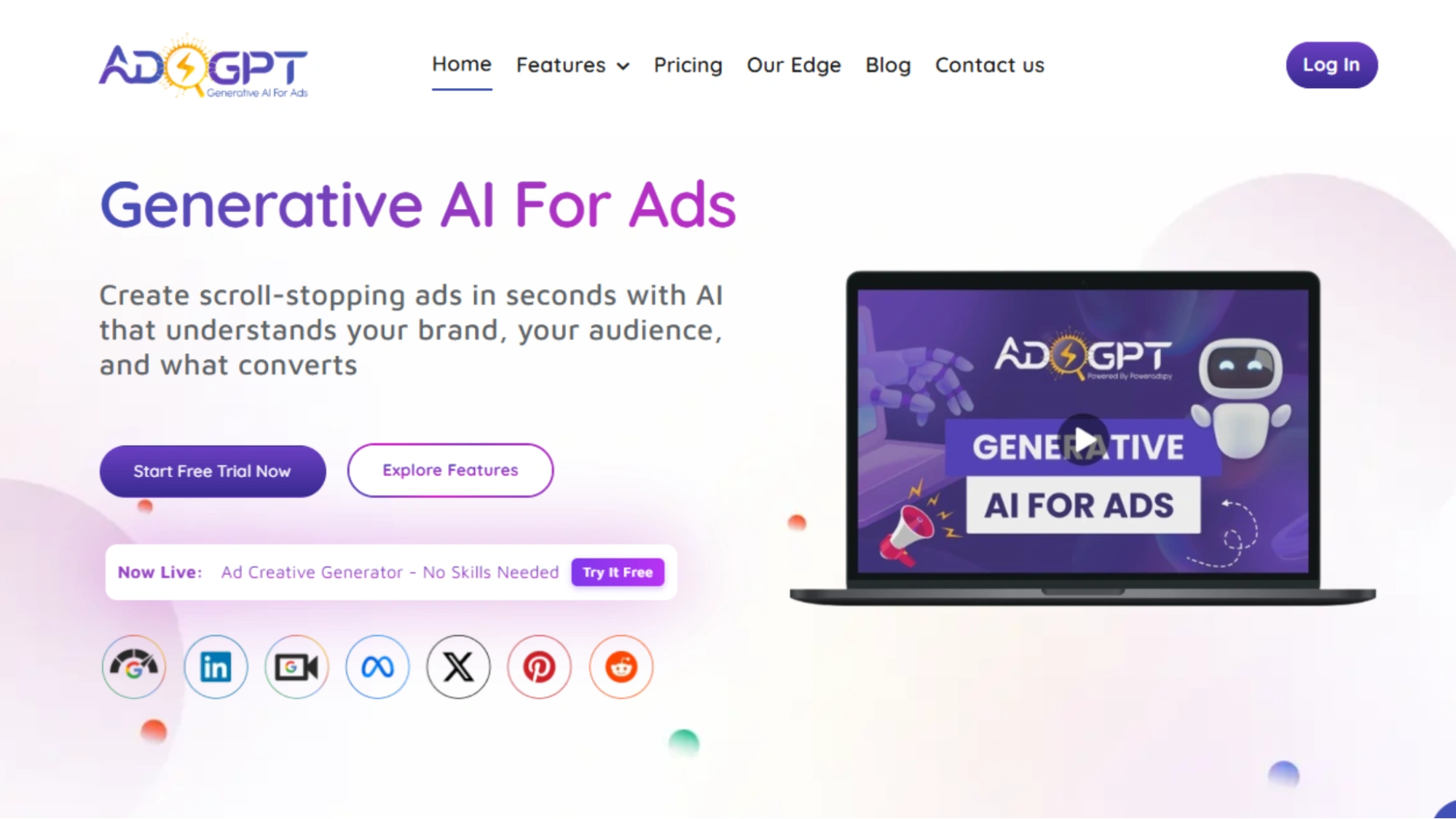
Creating ads that genuinely work requires expertise, experience, and honestly, a lot of time staring at blank screens. This is where tools like AdsGpt come into play, not as a magic solution, but as a practical assistant that speeds up the creative process.
AdsGpt is an AI-powered tool that generates ad copy and visuals specifically tailored for different advertising platforms. Think of it as having a creative team member who can quickly draft multiple versions of your ad while you’re still finishing your coffee.
Whether you’re running Google Search Ads, Meta campaigns, LinkedIn promotions, or ads on other major platforms, it creates copy optimized for each network’s specific format and audience behaviour.
Here’s what makes it useful: instead of spending hours brainstorming headlines and testing different angles, you can input your product details and campaign goals, and the tool generates multiple variations for you to choose from. It’s like having a starting point instead of facing that intimidating blank page.
One feature that marketers find particularly helpful is the competitor ad analysis capability. You can look at what’s working for others in your industry and generate similar variations that fit your brand. It’s not about copying; it’s about understanding what resonates and adapting those insights to your own campaigns. Therefore, this platform not only generates ad creatives but can also be used to gain inspiration from competitors or other advertisers.
Build Your Own Safety Net:

Even with great tools, you need a solid review process. Here’s what works:
- Get multiple opinions. Show your ads to people from different departments, sales, customer service, even accounting. They’ll catch things you missed.
- Test with real customers. Before launching widely, show your ads to a small group that matches your target audience. Their feedback is gold.
- Think globally, act locally. If you’re running ads in different regions, make sure your message makes sense everywhere. What’s funny in one culture might be offensive in another.
- Check everything works. Click every link. Fill out every form. View your ad on different phones and browsers. Technical failures make your brand look incompetent
- See what competitors did. Learn from their wins and losses. If a competitor tried something similar and it flopped, you probably don’t want to go down that path.
The Bottom Line:
Spotting bad ads before they hurt your brand isn’t rocket science, but it does require paying attention and being willing to challenge your own ideas. The best marketers know that their first draft is rarely perfect.
They test, they ask questions, they look at data, and they’re not afraid to scrap an idea that isn’t working. Remember that even experienced pros create bad ads sometimes. The difference is they catch them early.
Use common sense, trust your metrics, consider tools like AdsGPT for an extra layer of protection, and always put yourself in your customer’s shoes. When in doubt, ask yourself: “If I saw this ad, would I click? Would I feel good about the brand behind it?” If the answer is no, keep working on it.
FAQ’s:
Q1: What’s the fastest way to tell if I’ve created a bad ad?
Ans: Show it to five people outside your company who match your target audience. If they’re confused about what you’re offering or what action to take, you need to simplify your message.
Q2: How long should I run an ad before deciding it’s not working?
Ans: Give it at least 3-7 days to collect meaningful data. However, if you spot obvious errors or inappropriate content, pause it immediately.
Q3: Can a bad ad ever be fixed, or should I start over?
Ans: It depends. Sometimes a simple tweak to the headline or image fixes everything. Other times, the concept is fundamentally flawed and starting fresh is faster.
Q4: What’s the biggest mistake people make with ads?
Ans: Talking about what they want to say instead of addressing what their audience actually needs. Make it about your customer, not about you.


MOST POPULAR