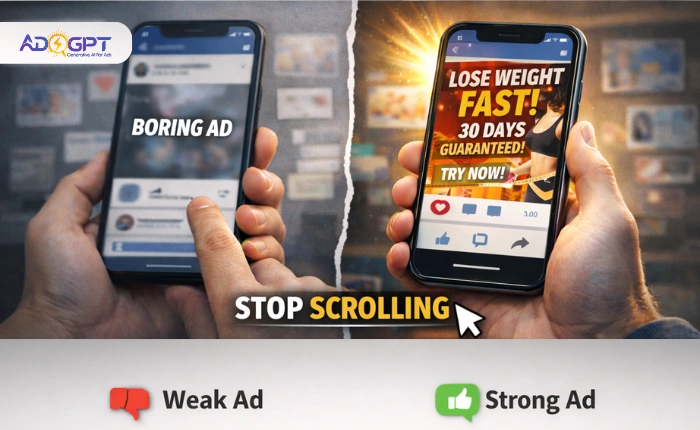
Your Ad creatives determine whether anyone stops scrolling or keeps moving without a second thought.
If performance suddenly dips, the instinct is to blame targeting or the algorithm. That feels technical and controllable. Bids can be adjusted. Audiences can be expanded. Placements can be refined. Those actions create a sense of progress.
But the more uncomfortable possibility is that the creative itself isn’t connecting anymore.
The first visual frame. The opening sentence. The promise is being implied. That’s where the decision happens- often in less than a second. Before someone reads your offer, before they evaluate your price, they decide whether you’re worth their attention at all.
When that split-second reaction is weak or unclear, no optimization downstream can fully recover it. Improving creatives isn’t about polishing design or chasing trends. It’s about removing friction between attention and understanding. It’s about making the value obvious quickly. When someone sees your ad, they shouldn’t have to decode it. They should immediately recognize relevance.
That clarity is what turns scrolling into stopping and stopping into action. Let’s unpack what that actually means.
In a hurry? Listen to the podcast now
What Are Ad Creatives: Beyond the Basic Definition?
If you’ve searched what are ad creatives or tried to understand the ad creatives meaning, you’ve probably read a definition like this: they’re the visual and written elements of an advertisement.
That’s accurate but incomplete.
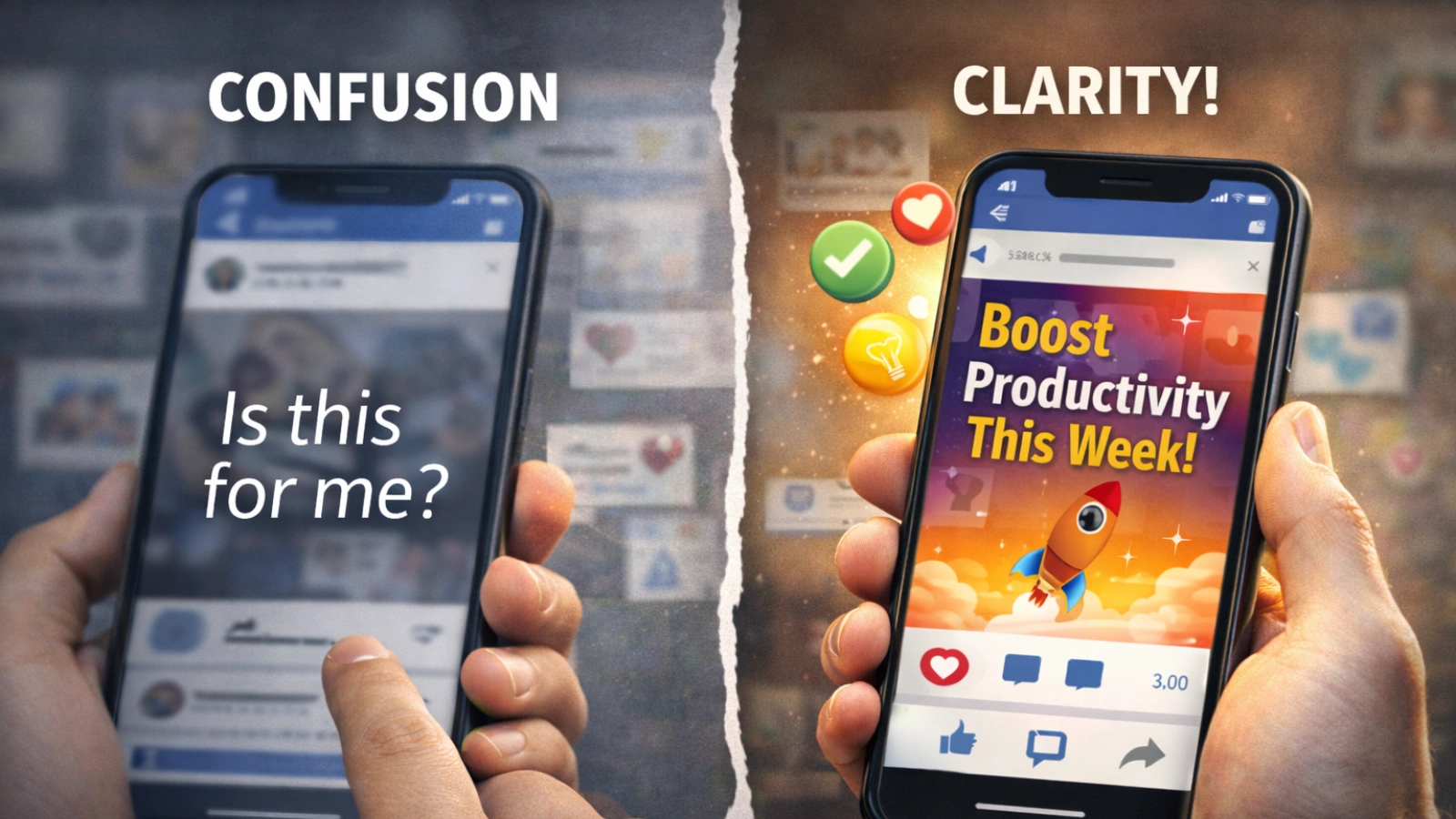
They are the way your offer shows up in someone’s life for a few seconds, not just images and copies. Ads are your positioning, your clarity, your emotional trigger compressed into one moment. They answer a silent question instantly:
“Is this for me?”
If the answer isn’t obvious, people scroll. That’s why creatives matter so much. Platforms reward engagement. Engagement only happens when something feels relevant and clear.
Why Good Ad Creatives Still Fail
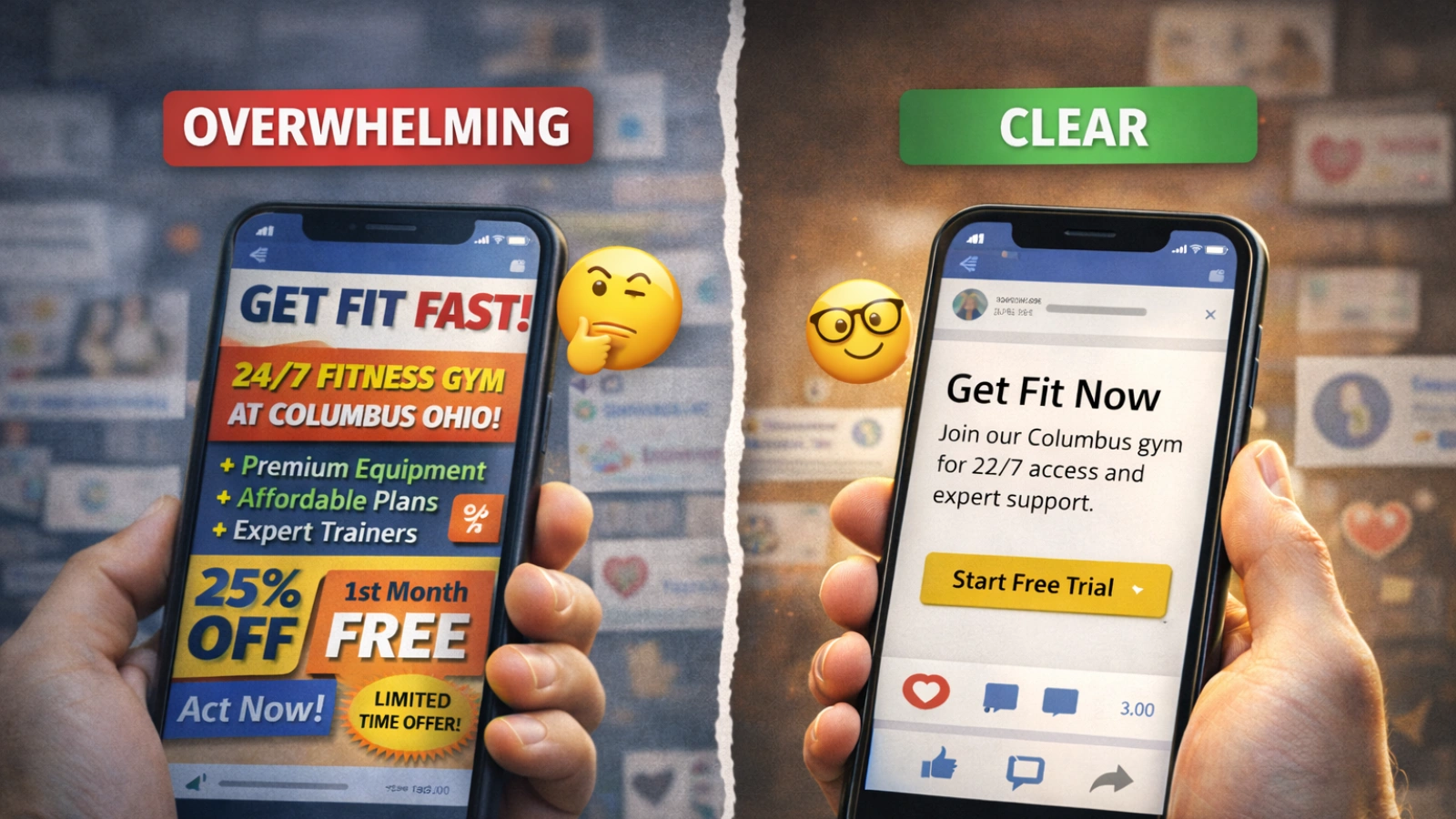
Here’s something that surprises many teams: effort doesn’t guarantee performance. You can invest in design. You can write thoughtful copy. You can brainstorm for hours. And it can still fall flat.
Why?
1. The Hook Isn’t Strong Enough
Most people don’t read ads. They glance. If your headline sounds like marketing language, it blends into everything else. A line like “Unlock Your Potential Today” feels generic because it is.
Specificity wins. A headline that names a problem or result feels personal.
2. You’re Saying Too Much
Clarity beats comprehensiveness. When a creative tries to communicate every feature, every benefit, and every differentiator at once, the message becomes muddy.
A strong ad creative campaign focuses on one clear promise.
3. The Message and the CTA Don’t Align
If the ad builds curiosity but jumps straight to “Buy Now,” it feels rushed. If it educates but doesn’t guide the next step, it feels incomplete. Consistency builds trust.
How to Create Ad Creatives That Actually Work
When people ask how to create ads, they’re often hoping for a template. Templates help. But strategy matters more.
Start With the Problem, Not the Product
Before opening a design tool, clarify:
-
Identify the specific frustration your audience is experiencing
-
Understand the outcome they are actively trying to achieve
-
Recognize the belief or hesitation that may be holding them back
When you’re clear on those answers, writing becomes easier. Designing becomes easier. Testing becomes smarter.
Choose One Angle Per Creative
This is where discipline matters.
One creative might emphasize speed. Another might focus on cost savings. A third might highlight ease of use.
But each individual ad should feel focused. Trying to cover every benefit at once usually weakens impact.
Design for Real Behavior
Different platforms require different thinking.
For example, Facebook ads compete inside a crowded feed. They need to feel natural. Overly polished brand visuals sometimes underperform because they feel like ads. Authenticity often outperforms perfection. Think about how your audience actually scrolls. Design for that reality.
The Psychology Behind High-Performing Ad Creatives
You don’t need a psychology degree. But you do need to understand how attention works.
People Notice What’s Different
If every competitor uses the same stock photos and buzzwords, your ad disappears. A subtle pattern interrupt- an unexpected visual, a sharper headline – can dramatically increase engagement.
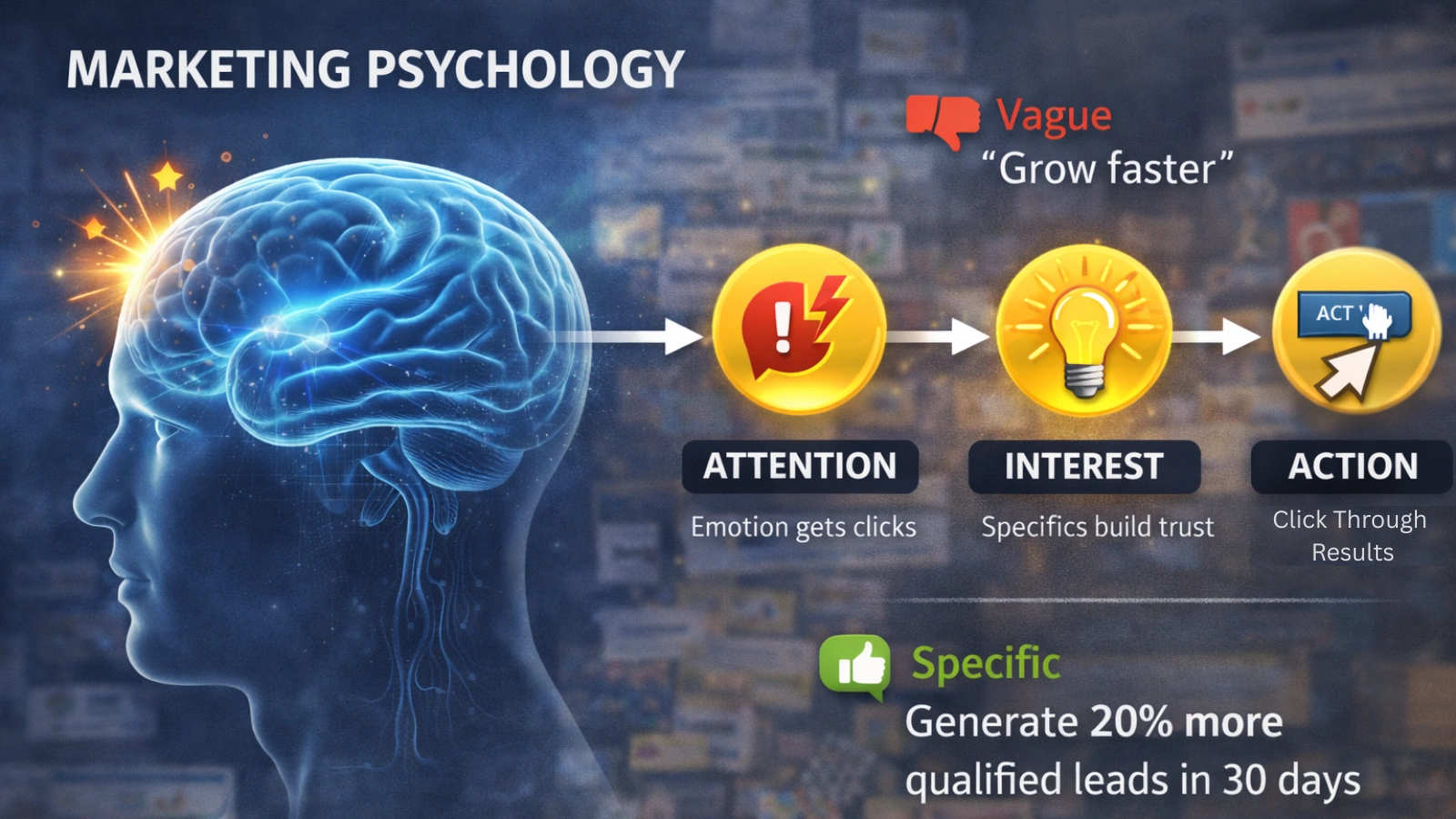
Specific Claims Feel Safer
“Grow faster” is vague.
“Generate 20% more qualified leads in 30 days” feels measurable.
Specificity builds credibility.
Emotion Drives the First Click
Logic explains decisions later. Emotion initiates them. Your creatives should tap into relief, ambition, urgency, curiosity, or even mild frustration. Without emotional movement, people keep scrolling.
The Role Of Testing (And Why It’s Not Optional)
Improving creativity isn’t guesswork. It’s an iteration. Instead of launching five unrelated ideas, test deliberately:
- Same visual, different headline
- Same headline, different image
- Short copy vs. long copy
Small, controlled changes reveal what actually influences performance. The best-performing ad campaigns aren’t random successes. They’re refined through structured experimentation.
AI Ad Creatives: Smart Shortcut or Empty Hype?
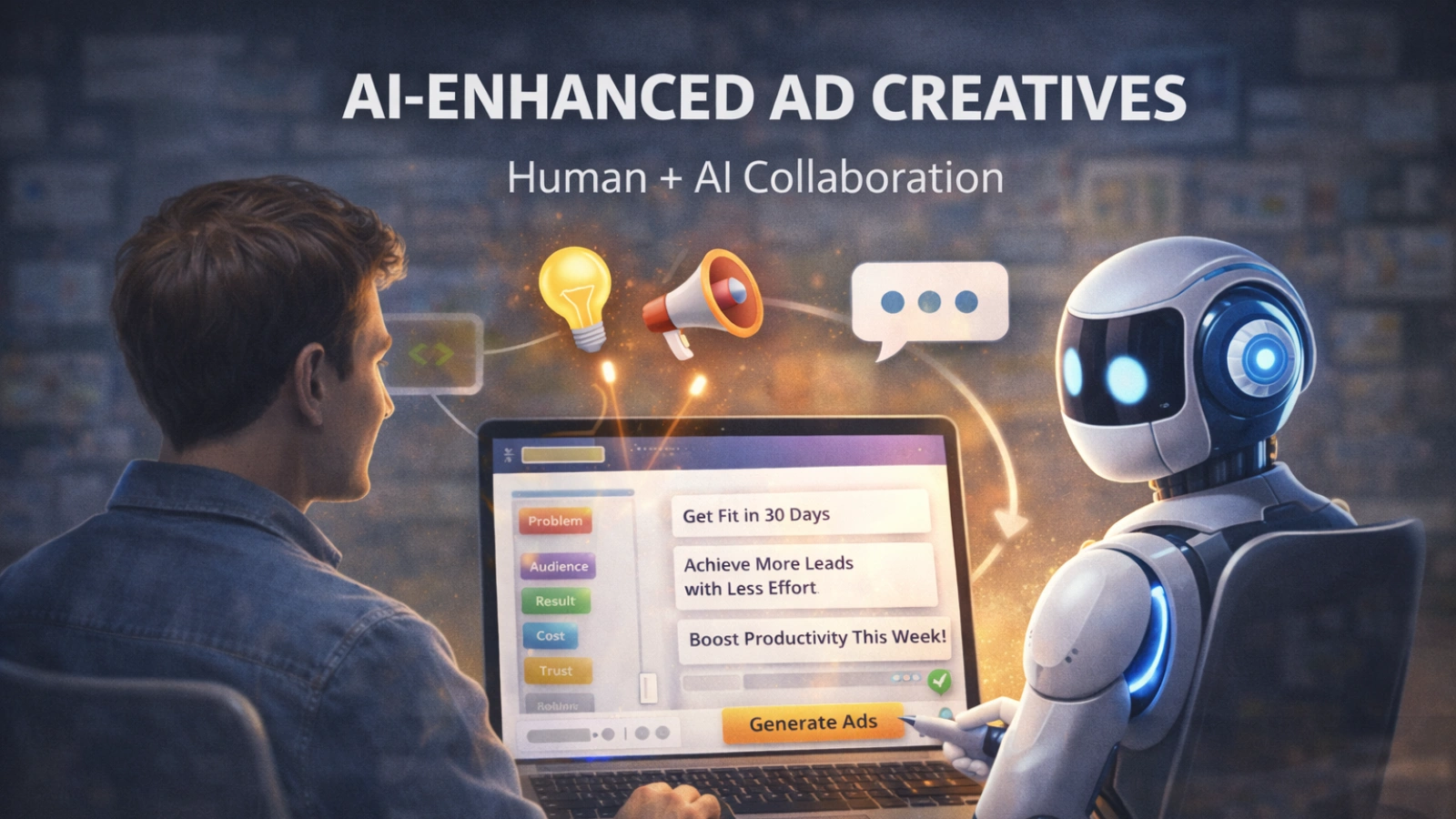
The rise of AI in these areas has changed how teams work.
AI tools can generate headlines, angles, and even visuals in seconds. That speed is powerful. It allows more testing and faster iteration.
But raw AI output often feels generic. It doesn’t fully understand nuance, audience psychology, or brand tone. The smartest approach is hybrid. Use AI to expand ideas. Then refine with human judgment. When combined thoughtfully, speed and strategy complement each other.
The Lifecycle of Ad Creatives (And Why They Fade)
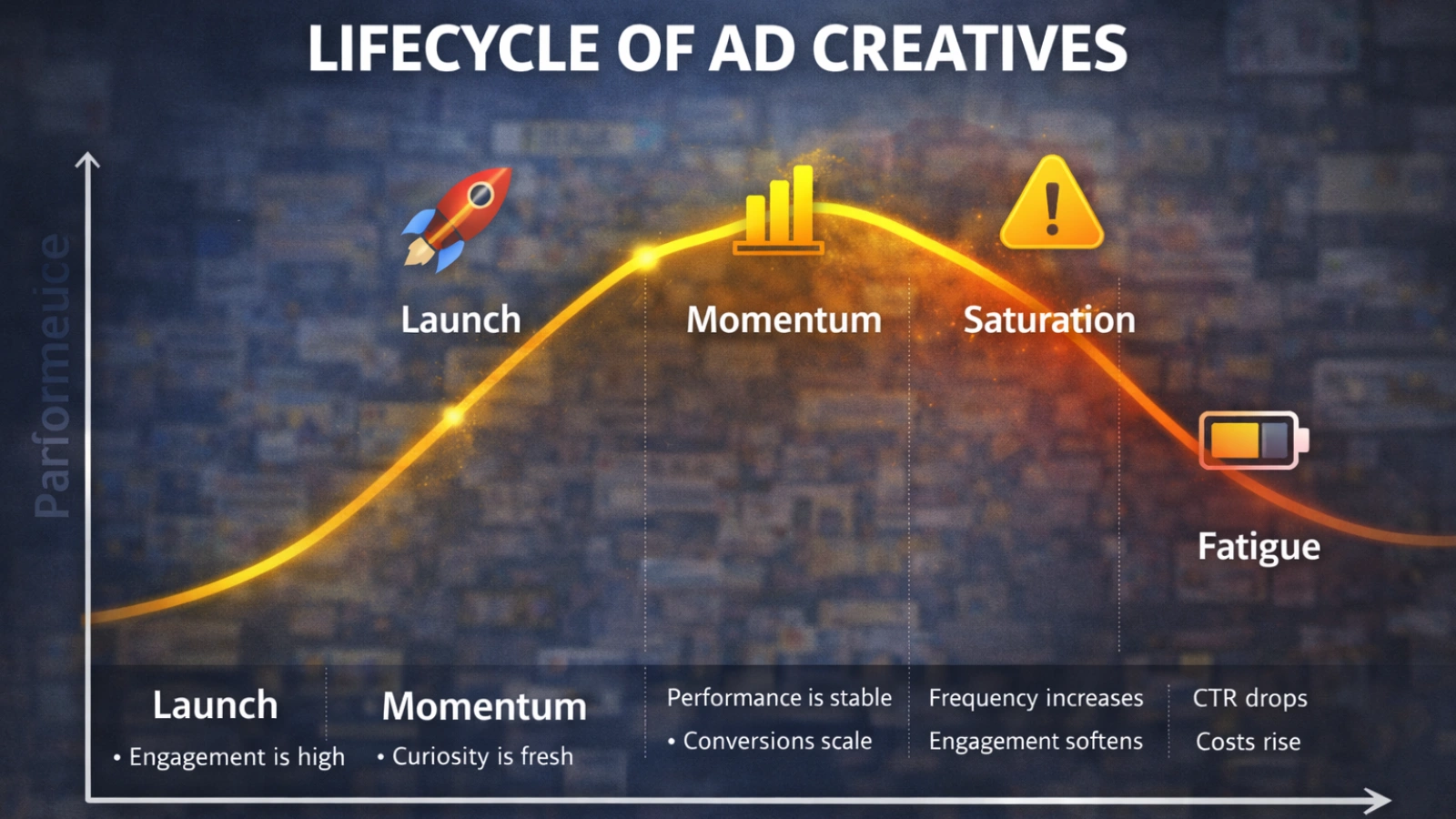
Even strong ad campaigns don’t last forever. Understanding their lifecycle helps you manage performance instead of reacting emotionally.
Phase 1: Launch
Engagement is high. Curiosity is fresh. Algorithms gather data.
Phase 2: Momentum
Performance stabilizes. Conversions scale. Costs become predictable.
Phase 3: Saturation
Frequency increases. Engagement begins to soften.
Phase 4: Fatigue
CTR drops. Conversions are slow. Costs rise. This decline doesn’t mean the creative was bad. It means your audience has adapted. Smart teams plan variations before fatigue hits.
They rotate:
- New hooks
- Slight visual shifts
- Alternative framing angles
This keeps the offer consistent while refreshing attention. Understanding this cycle makes improving ads proactive instead of reactive.
Tools That Help You Improve Creativity Faster
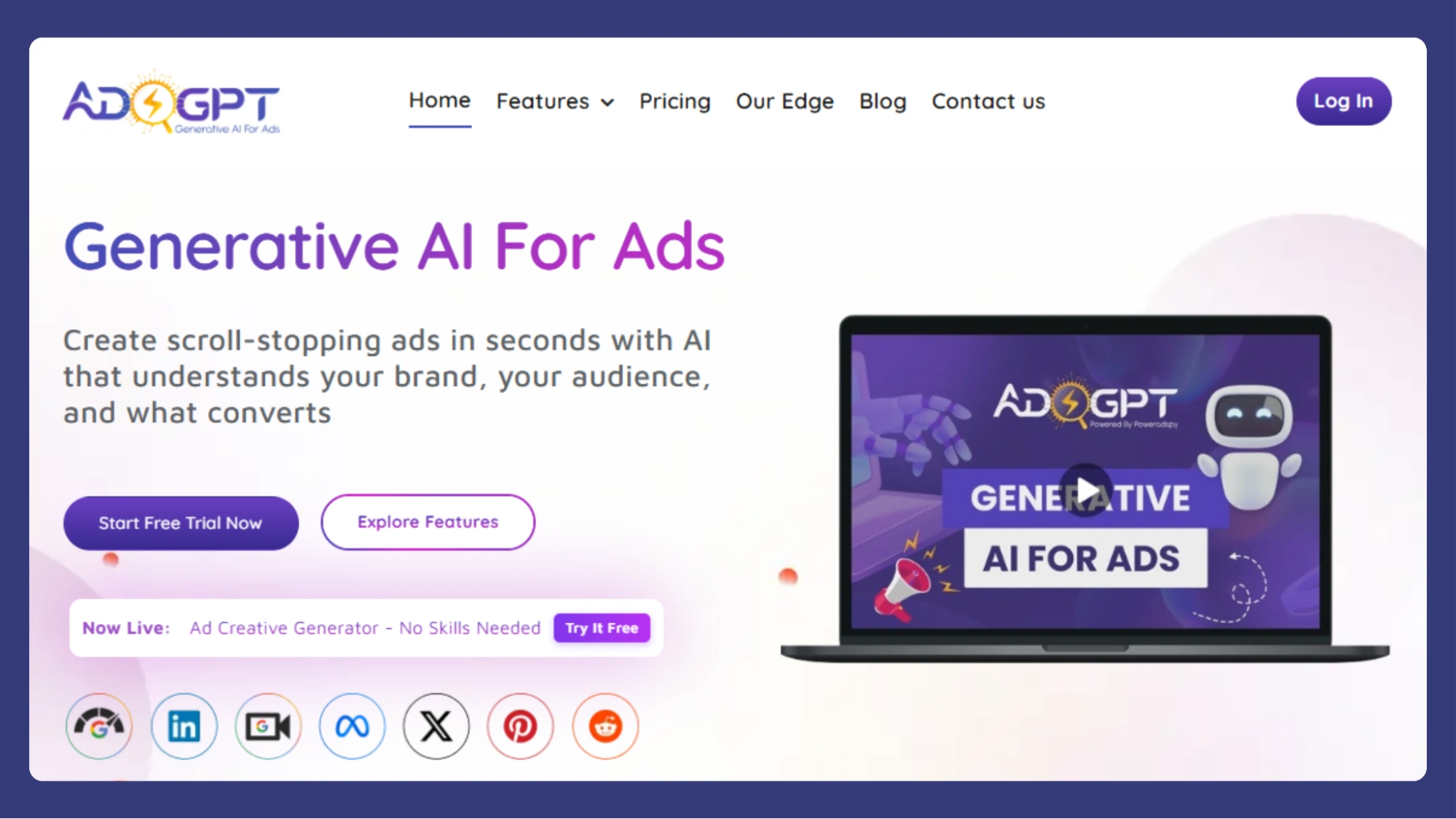
AdsGPT
If you’re serious about improving your ads, speed, and structure. Brainstorming from scratch every time slows momentum. That’s where AdsGPT becomes useful.
AdsGPT is built specifically to generate and refine high-performing ad creatives. It doesn’t just produce random variations. It organizes ideas around proven conversion principles, which makes the output far more practical.
Here’s what the platform focuses on:
- Multiple ad copy variations and images
The system can generate several versions of headlines, primary text, and calls to action for the same campaign, giving marketers multiple options to test. - Structured headline and copy generation
Instead of writing ads manually, the tool produces ready-to-use ad copy formats that can be used for experimentation and campaign testing. - Creative generation support
It can assist in producing basic ad creative concepts and variations, helping teams develop visual directions alongside the copy. - Platform-ready ad formats
Generated content can be adapted for common advertising environments such as Facebook, Instagram, Google, and other digital placements. - Clear, concise ad messaging
The generated copy is designed to present the offer quickly, so viewers understand the product or service within a few seconds.
AdsGPT doesn’t replace strategy or creative judgment. It acts as a force multiplier. It reduces the time between idea and execution, allowing you to test more variations without sacrificing structure.
When used thoughtfully, it helps you improve ad creatives faster — not by cutting corners, but by sharpening the process.
Improving Facebook Ad Creatives in a Competitive Feed
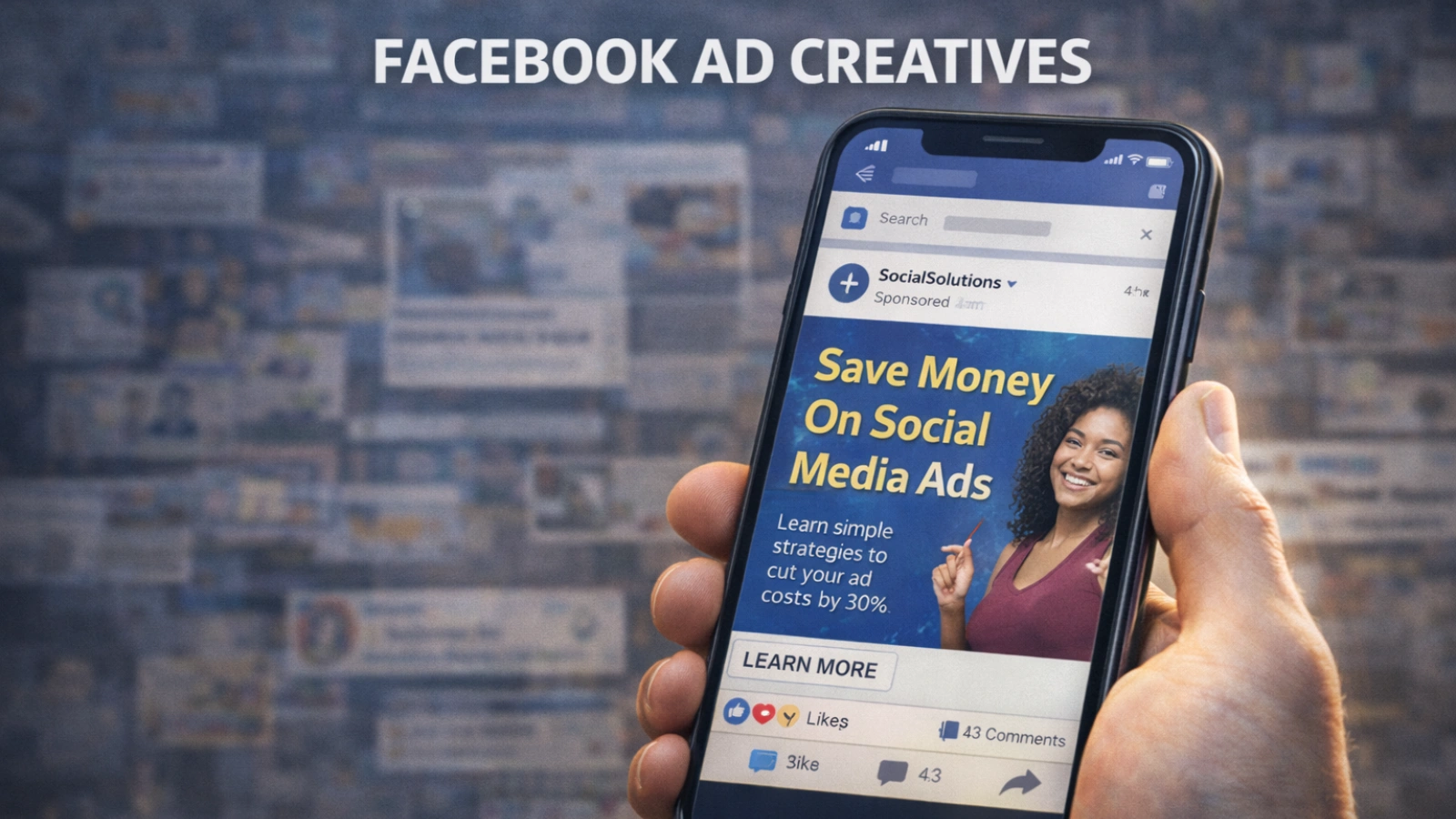
Facebook is crowded. Attention is scarce.
Here’s what tends to work:
Keep Visual Messaging Simple
One bold idea per image. Let white space do its job.
Lean Into Human Elements
User-generated style videos often outperform highly produced commercials. They feel more trustworthy.
Refresh Before Performance Crashes
Creative fatigue is real. Even strong ads lose impact after repeated exposure. Monitor frequency and engagement trends. If performance declines without other changes, it’s often time to rotate.
Why Performance Drops Over Time
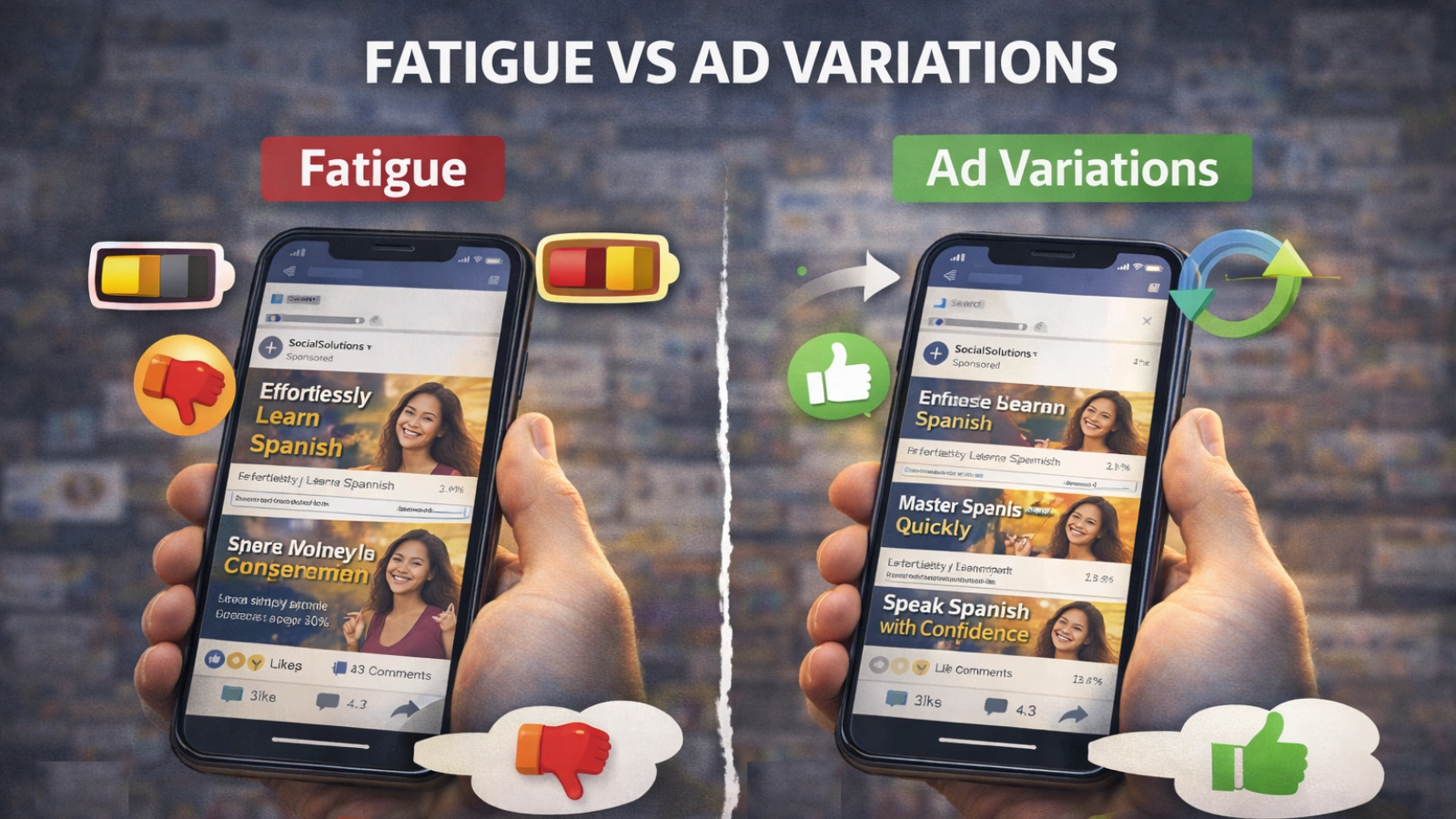
You might assume targeting is wrong. Often, it’s fatigue. When audiences see the same message repeatedly, emotional response fades. Curiosity declines.
That doesn’t mean you need entirely new campaigns every week. It means preparing variations in advance. Change the hook. Adjust the visual. Test a different angle. Keep the offer consistent while refreshing the presentation.
When Creative Makes the Biggest Difference
Creative shines when:
- The offer solves a real problem
- The audience is clearly defined
- The message matches intent
It struggles when:
- The product lacks differentiation
- The landing page feels disconnected
- The targeting is too broad
Creative is a multiplier. If your foundation is strong, it amplifies results. If not, it exposes weaknesses.
A Simple Framework for Ongoing Improvement
Instead of reacting emotionally to fluctuating results, build a cycle:
- Audit existing ads for clarity.
- Identify one friction point.
- Create structured variations.
- Test with clear success metrics.
- Scale what works. Retire what doesn’t.
Repeat consistently.
Improvement becomes predictable when you remove guesswork.
Read More!
Marketing AI Tools: The Ultimate Solution For Smarter Campaigns
AI Ad Creatives: How They Improve Reach and Performance – AdsGPT
Common Misunderstandings About Ad Creatives
“Beautiful design always wins.”
Not true. Clarity often outperforms aesthetics.
“Long copy doesn’t work.”
Sometimes it works exceptionally well, especially for complex offers. Structure matters more than length.
“AI will replace creative teams.”
AI accelerates production. Strategy still requires human insight. Understanding these nuances prevents wasted time and budget.
Final Thoughts
If your campaigns feel inconsistent, don’t default to blaming the algorithm. Look at your creativity honestly.
Strong ads are clear, focused, emotionally relevant, and aligned with platform behavior. They’re tested methodically. They evolve intentionally. Improving them isn’t about chasing trends. It’s about sharpening communication. When your message resonates, performance follows.
FAQ
1. What are ad creatives in practical terms?
They are the visual and written elements people see in an advertisement, designed to communicate value and prompt action.
2. How often should I refresh ad creatives?
For active campaigns, review weekly and plan refreshes every few weeks to prevent fatigue.
3. Are AI ad creatives safe to rely on?
They’re useful for generating ideas and speeding up production, but human refinement is essential.
4. Why do Facebook ad creatives stop performing?
Repeated exposure reduces engagement over time. Fresh variations help maintain momentum.
5. What’s the fastest way to improve my ad creatives?
Focus on one clear message, test structured variations, and analyze data instead of guessing.

MOST POPULAR