
An AI commercial generator is becoming a common tool in modern marketing workflows, especially as campaign timelines continue to shrink.
Marketing teams rarely struggle with ideas because they lack creativity. More often, the real challenge is time. Campaign deadlines arrive quickly, platforms demand constant content, and what once took weeks now needs to happen in days. That pressure has led many teams to experiment with AI-powered creative tools.
At first, the concept may seem unusual. Advertising has always been tied to human creativity, intuition, storytelling, and emotional insight. Because of that, the idea of software generating ad concepts naturally raises a question.
Can something automated really contribute to creative work? For many marketers, the answer has turned out to be yes- although not in the way people initially imagine.
An AI commercial generator doesn’t replace creative thinking. Instead, it helps start the process by generating rough ideas, scripts, or messaging directions that teams can review and develop into real campaigns.
Listen Aloud!
What An AI Commercial Generator Actually Does
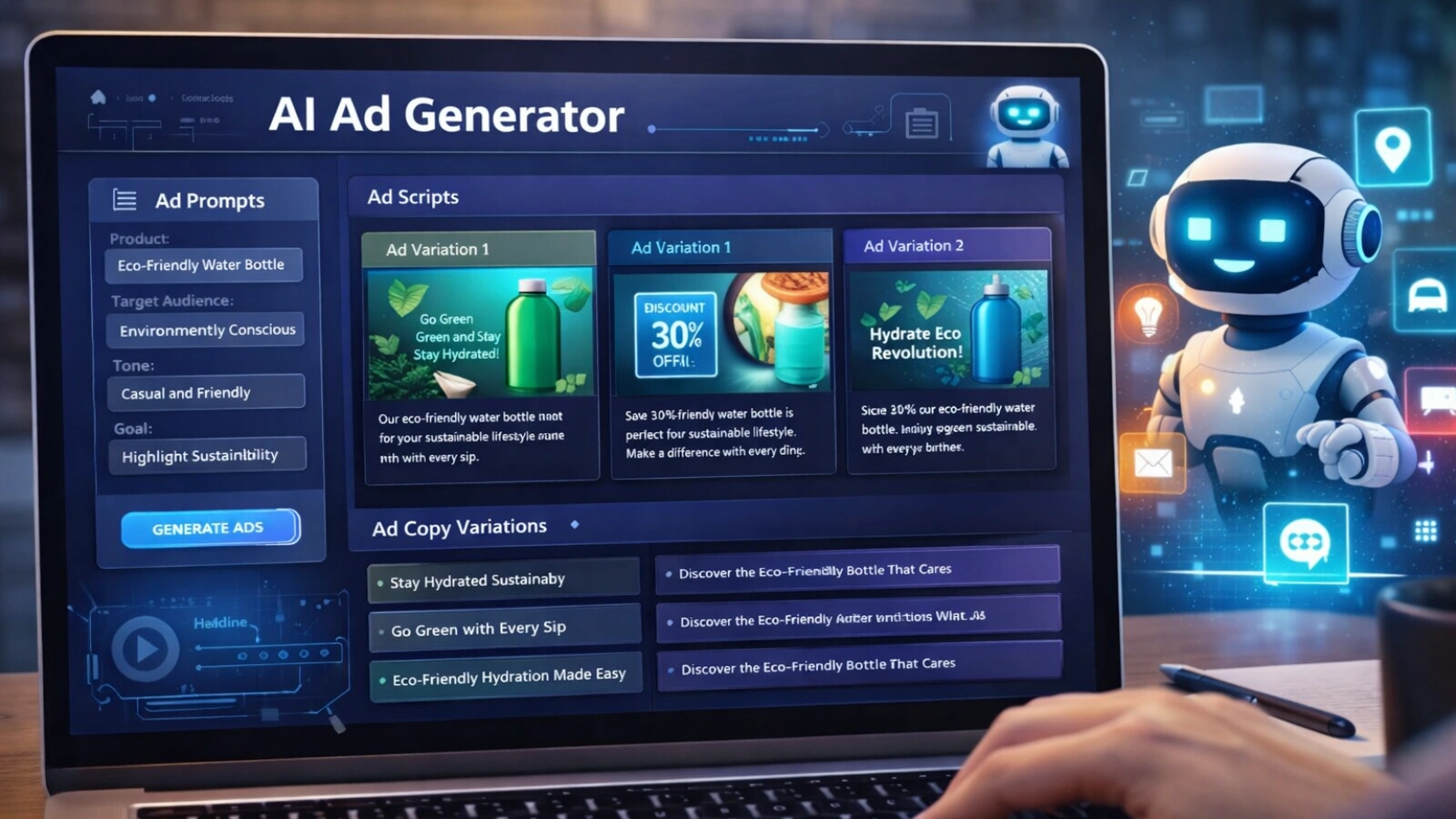
Before going further, it helps to clarify what an ai commercial generator really does. Basically, software designed to produce advertising concepts based on prompts. A marketer provides information about a product, audience, tone, or campaign goal. The system then generates possible ad scripts or promotional ideas using an AI commercial generator.
The technology behind these tools relies on machine learning models trained on large collections of marketing content. By studying patterns in advertising language, the system learns how persuasive messaging tends to work. When someone enters a new prompt, the tool draws on those patterns to construct new content.
Many platforms also function as an ai ad generator, meaning they can produce several variations of an advertisement at the same time. Instead of writing one concept manually, a marketer might receive ten different options in seconds. Some systems also include copywriting capabilities. In those cases, the platform acts as an ai ad copy creator, generating short ad headlines, captions, or product descriptions.
The important thing to remember is that the output is rarely perfect on the first try. Most teams still revise and refine what the system generates. But starting from a draft is very different from starting from nothing.
Why Marketers Are Turning To AI Tools

The growing interest in AI driven advertising tools is not really about replacing creative teams. It is mostly about keeping up with the pace of modern marketing. Content production has expanded dramatically in the last decade. A single campaign might include social media ads, video commercials, banner ads, email promotions, and landing pages.
Each piece needs messaging.
When teams rely entirely on manual creation, the process becomes slow very quickly. This is where an ai ads generation tool can make a noticeable difference. Instead of drafting each piece individually, marketers can generate early concepts for several formats at once. Some ideas will need work. Others might already be close to usable.
Either way, the time required to reach that first draft becomes much shorter. Another benefit appears when teams begin experimenting with messaging. A typical brainstorming session might produce five or six campaign ideas. An AI commercial generator can generate dozens.
Not all of them will be useful. Some will feel generic. A few might be slightly off tone. But occasionally the system surfaces an angle that the team had not considered. That moment alone can justify the tool’s role in the workflow.
Practical Ways AI Can Improve Advertising Campaigns

The advantages of using an ai commercial generator become clearer when looking at how teams apply it in real marketing situations.
Faster Creative Starting Points.
One of the hardest parts of writing advertising content is simply starting. Many campaigns begin with rough drafts that require multiple revisions before they resemble a polished message. AI tools shorten this phase significantly. Instead of building an idea line by line, marketers begin with a generated concept and shape it into something stronger.
The difference might only save an hour on one advertisement. Across a full campaign, that time adds up quickly.
More Message Variations.
Advertising often works best when multiple versions of a message are tested. A single product might be marketed through different angles. One ad highlights convenience, another focuses on price, while a third emphasizes quality.
Creating those variations manually can take time. An ai ad generator can produce them quickly. Marketers can then test which version resonates most with the target audience.
Support for Ad Copy Creation
Short promotional text is surprisingly difficult to write well. Headlines and captions must be concise while still persuasive. An ai ad copy creator helps by suggesting multiple phrasing options. Some may need editing, but the process becomes faster when marketers are choosing from options rather than drafting everything themselves.
Easier Adaptation Across Platforms
Advertising rarely appears in a single format anymore. A commercial script may eventually become a social media post, a display ad, or an email headline. AI tools can assist by adapting the core message into several formats.
In this context, an ai commercial generator helps maintain consistent messaging even when content appears across different platforms.
When AI Tools Work Best in Advertising

AI advertising tools perform particularly well during the early stages of campaign creation. This is when teams need ideas, rough scripts, or possible messaging directions. Generating those concepts quickly helps creative teams focus their energy on refining the strongest ideas rather than building everything from scratch.
These tools also prove useful during campaign testing. When marketers want to explore different message variations, an ai ads generation tool can produce several options for experimentation. Still, human judgment remains essential.
AI may provide the raw material, but marketers decide which concepts reflect the brand and which should be discarded. That collaboration between technology and human creativity is where the best results usually appear.
A Closer Look at AdsGPT for AI Ad Creation
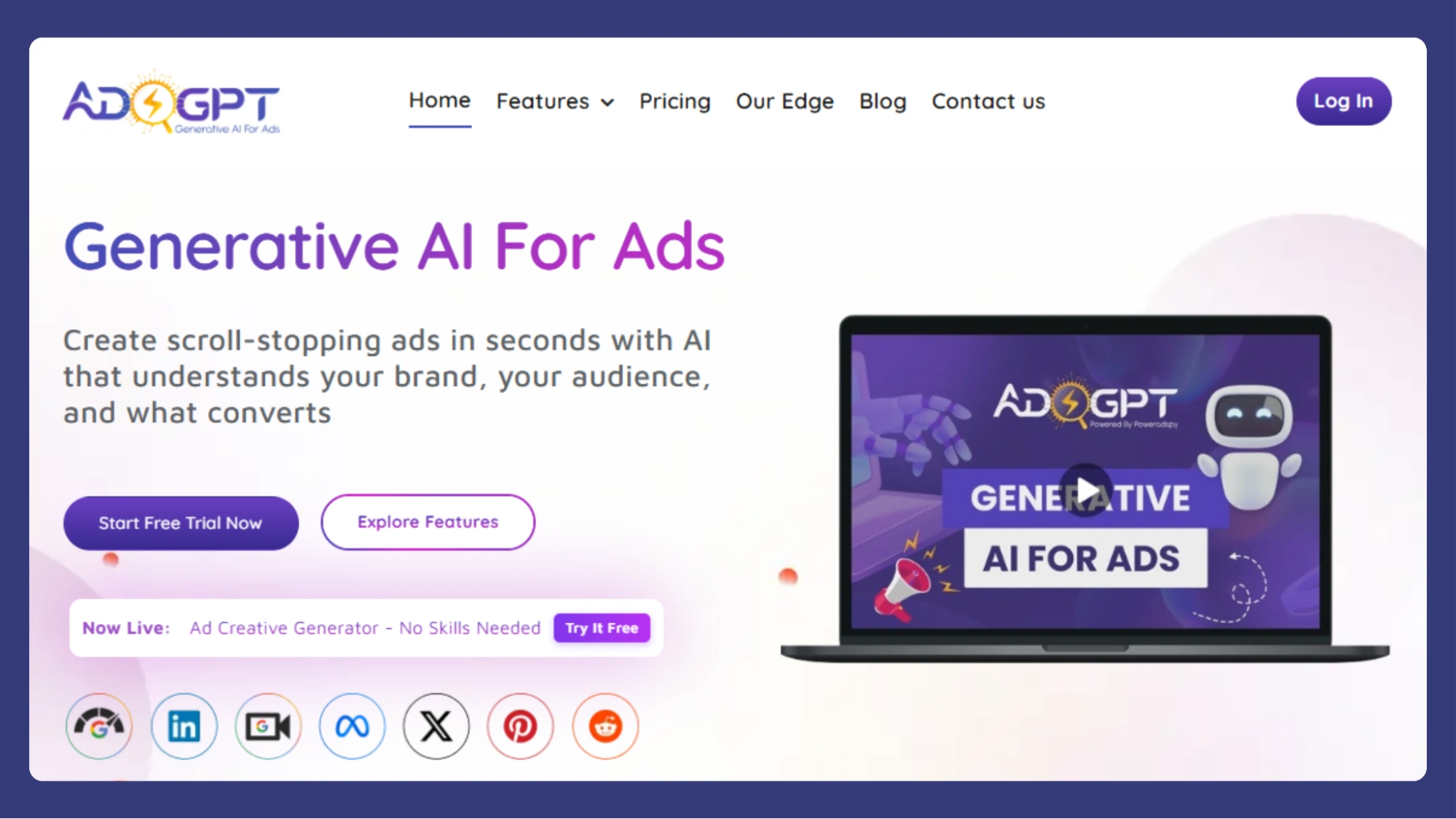
Among the platforms designed to assist with AI generated advertising, AdsGPT focuses specifically on helping marketers create and organize ad concepts more efficiently. The platform is built to simplify the early stages of campaign development rather than replace the creative process.
Some features that make AdsGPT useful for marketing teams include:
- Automated ad idea generation: Users can describe a product or campaign goal and quickly receive several advertising concepts.
- Integrated copywriting support: The system can work as an ai ad copy creator, producing headlines, taglines, and promotional messaging.
- Multiple ad variations: Marketers can generate different versions of the same advertisement to test messaging performance.
- Organized campaign workflow: Ideas and drafts remain structured within the platform, making collaboration easier.
- Faster creative development: By generating early drafts quickly, AdsGPT helps teams spend more time refining campaigns instead of starting from scratch.
For teams producing ads regularly, tools like this can remove a surprising amount of friction from the creative process.
Common Misunderstandings About AI Advertising
Even though AI tools are becoming more common, several misconceptions still appear in conversations about them. One assumption is that AI will eventually replace creative professionals. In reality, advertising still relies heavily on human insight.
Understanding cultural context, emotional tone, and brand identity requires judgment that software alone cannot replicate. Another misunderstanding is that AI generated ads require no editing.
Most marketers quickly discover the opposite. AI output works best as a first draft. The strongest campaigns usually emerge after teams refine the generated content. When people approach technology with that mindset, the results tend to improve.
Also Read!
How To Master Commercial Production For High-Impact Results?
Tips for Getting Better Results From AI Ad Tools
Teams often get more value from an ai commercial generator when they adjust how they use it. One simple improvement involves writing detailed prompts. The clearer the input, the more relevant the generated ideas usually become. Another helpful approach is to experiment with variations. Generating multiple versions of a concept often reveals angles that were not obvious initially.
Finally, it helps to treat the tool as a collaborator rather than an automatic solution.
The goal is not to let AI produce final campaigns. The goal is to accelerate the early creative stages so marketers can focus on strategy and storytelling.
The Future of AI in Advertising

Artificial intelligence will likely continue shaping how advertising is created, but the relationship between technology and creativity will remain collaborative. Tools like an ai commercial generator remove some of the repetitive effort involved in campaign creation. That allows marketers to focus more on the ideas that actually influence audiences.
As these systems improve, they may begin offering deeper insights as well. Instead of only generating content, future platforms may help analyze audience reactions and refine messaging automatically. For marketing teams navigating increasingly crowded digital spaces, that kind of support could become extremely valuable.
In the end, advertising still depends on creativity. AI simply helps the process move faster.
Conclusion
AI is steadily changing how advertising campaigns begin, but its real value lies in supporting creativity rather than replacing it. An AI commercial generator helps marketers overcome the blank-page problem, generating multiple ideas quickly. Also, explore new messaging directions with less effort.
When combined with human insight, these tools can speed up brainstorming, simplify ad copy creation, and make campaign testing far more efficient. As marketing continues to move faster, technologies like an AI ad generator or AI ads generation tool will likely become a normal part of the creative workflow. The most effective campaigns will come from teams that use AI to accelerate ideas while still shaping the final message themselves.
Frequently Asked Questions
What does an AI commercial generator do?
An ai commercial generator creates advertising concepts, scripts, and promotional ideas based on campaign details provided by the user.
Can AI generate complete advertisements?
AI tools can generate strong starting points, but most campaigns still require human editing and creative direction before they are ready for publication.
Are AI advertising tools useful for small businesses?
Yes. Smaller teams often benefit from AI tools because they can generate marketing content quickly without needing a large creative department.
How accurate are AI generated ads?
Many generated ads provide useful drafts, although marketers typically adjust tone, messaging, and structure before finalizing them.
Will AI replace advertising professionals?
No. AI assists with idea generation and content drafting, but strategic thinking, brand storytelling, and campaign planning still depend on human expertise.
MOST POPULAR