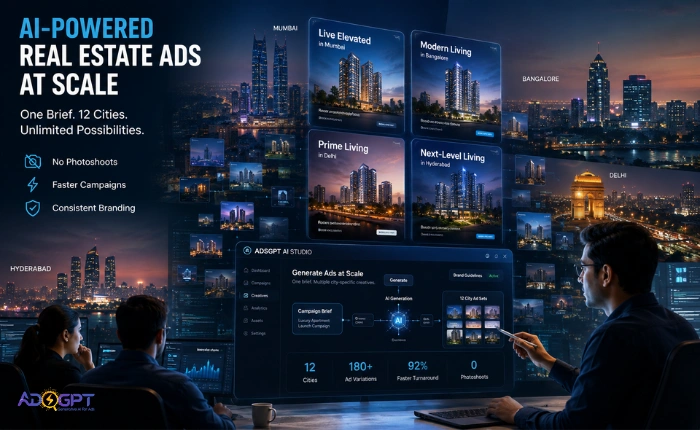
Real estate ads become difficult to scale the moment a brand expands into multiple cities. One campaign turns into twelve. One property shoot becomes weeks of coordination, approvals, editing, and budget discussions.
That pressure is exactly what one growing real estate company faced when it planned launches across Mumbai, Bangalore, Pune, Hyderabad, Chennai, Delhi, Ahmedabad, Jaipur, Kolkata, Kochi, Chandigarh, and Indore. Their marketing team was already stretched thin. Producing fresh real estate ads for every location using traditional methods simply was not realistic.
The surprising part was not the budget. It was the workflow itself.
The company realized the old production model could not support fast-moving campaigns anymore. Every city required different visuals, local references, updated banners, and platform-specific ad formats. By the time one campaign was ready, another city needed creative assets.
That is when the team started testing AI-generated creative workflows through AdsGPT.
Instead of organizing photoshoots, waiting for edited property images, and recycling old banners, they shifted toward a faster system built around scalable real estate ads.
Read Also!
Why Traditional Property Ad Production Breaks at Scale

Most real estate teams assume creative delays are a staffing problem. In reality, the problem usually starts with the production structure itself.
Traditional real estate ads depend heavily on location shoots. Every campaign needs photographers, editors, coordinators, property staging, approvals, weather adjustments, and multiple rounds of revisions. That process might work for one launch. It starts falling apart when expansion happens quickly.
This particular brand experienced that firsthand.
Their Bangalore campaign looked polished and modern. Meanwhile, their Pune creatives felt rushed because the photography vendor had limited time on-site. Hyderabad assets arrived late. Delhi banners used inconsistent lighting styles. The brand no longer looked unified.
The issue became larger than aesthetics.
Their internal team spent more time managing production logistics than improving campaign performance. Marketing meetings turned into scheduling discussions. Creative approvals slowed down. Media buyers waited for assets before campaigns could even launch.
Real estate ads are supposed to help brands move faster into new markets. Instead, the production cycle became the bottleneck.
The Hidden Business Cost of Slow Ad Creative
Creative delays rarely appear inside performance reports, but they quietly affect revenue.
One city launch for this company was delayed nearly three weeks because the scheduled photographer became unavailable during the monsoon season. The campaign budget was ready. Landing pages were finished. Sales teams were prepared.
The ads were the only missing piece.
Those delays created a chain reaction.
Competitors launched promotions first. Social campaigns lost timing advantages. Retargeting windows narrowed. The team ended up reusing older real estate ads just to keep campaigns active.
That shortcut caused another problem.
Audiences began seeing the same visuals repeatedly across platforms. Engagement rates dropped. Click-through performance weakened. Even strong offers started feeling repetitive.
When “Good Enough” Stops Being Good Enough
Many brands survive for years using acceptable creative.
The problem is that acceptable no longer competes well.
Modern buyers scroll through hundreds of visuals daily. Freshness matters. Localization matters. Emotional relevance matters. If a Bangalore audience sees the same generic apartment banner used in Mumbai, the campaign instantly feels less connected.
Other companies were already producing localized real estate ads faster than this brand could manage through manual production.
At that point, the company stopped asking how to improve photoshoots. They started asking whether photoshoots were still necessary for every campaign.
How AdsGPT Changed the Way This Brand Makes Real Estate Ads
The shift did not happen overnight.
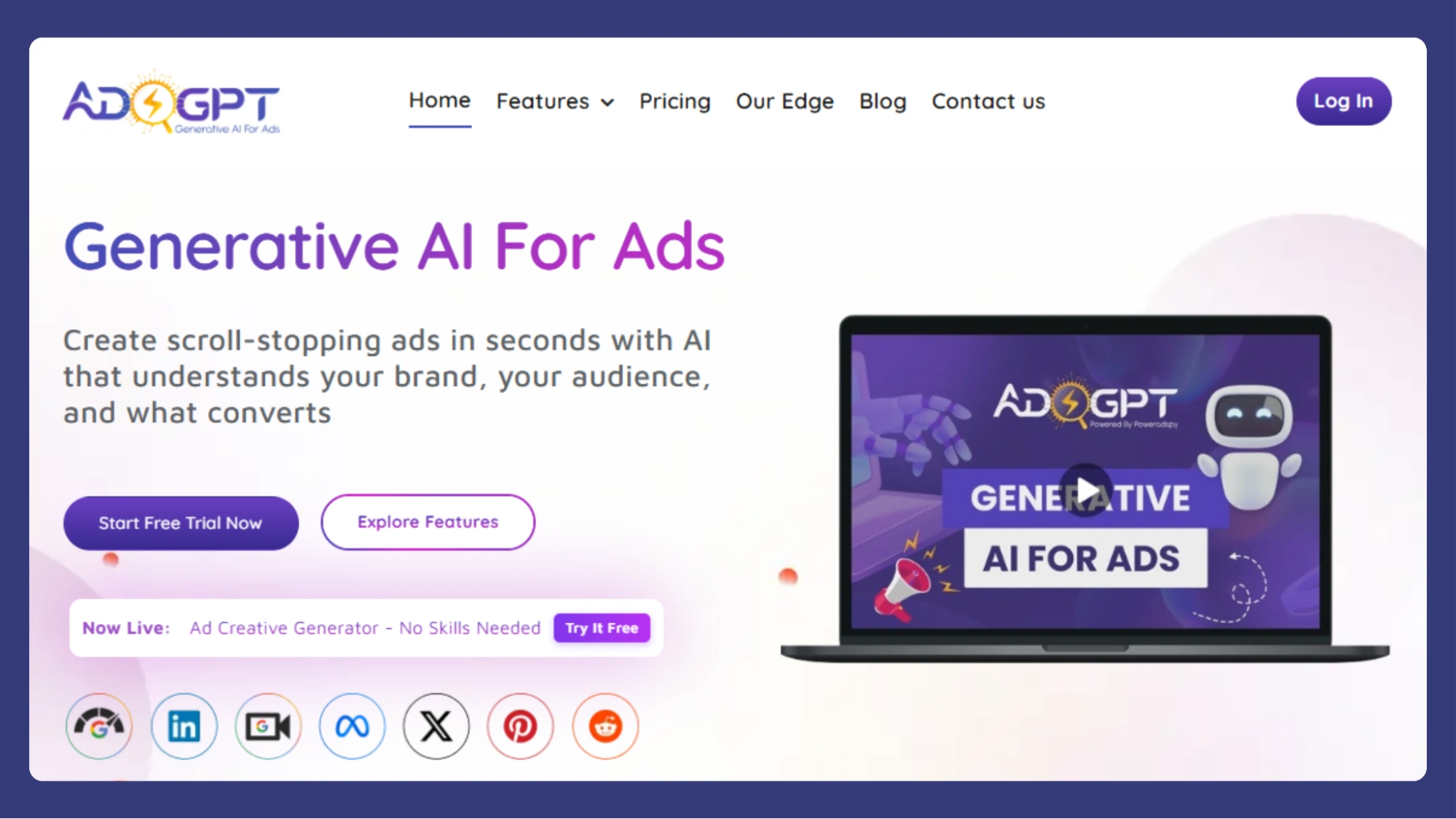
Initially, the team only wanted backup creative for smaller campaigns. They tested AdsGPT during a regional launch where timelines were extremely tight. Instead of briefing photographers, they briefed an AI workflow.
The results changed how they approached creative production.
Within days, the team generated multiple city-specific real estate ads with consistent branding, similar lighting styles, localized visual cues, and platform-ready dimensions.
More importantly, campaigns moved faster.
The creative team stopped spending entire weeks coordinating production vendors. Instead, they focused on campaign strategy, audience testing, and creative refinement.
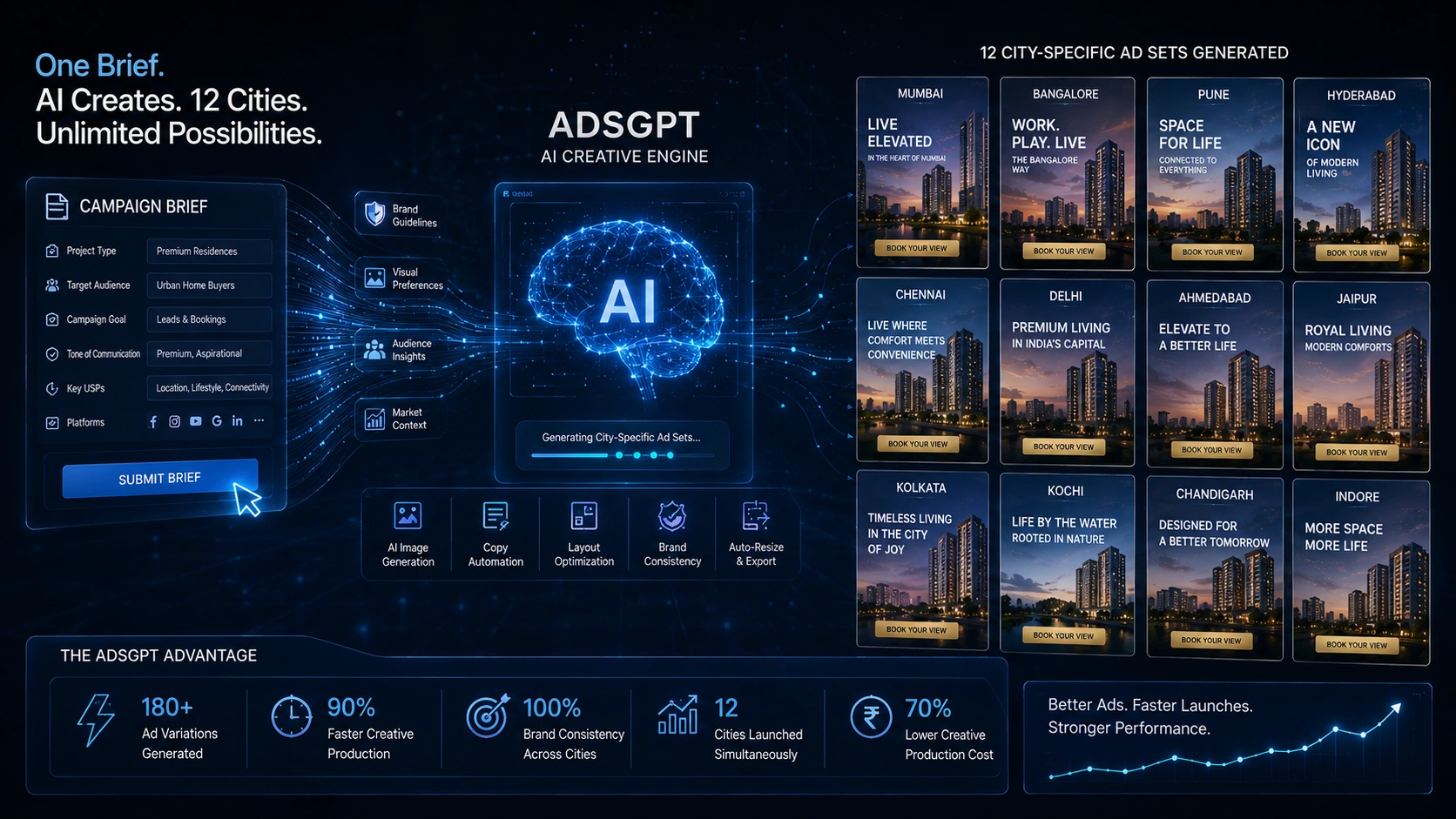
From One Brief to 12 City-Specific Ad Sets
The process became surprisingly structured.
The brand first uploaded its visual guidelines, including fonts, color preferences, logo placement rules, and preferred property presentation styles.
Then the team prepared a city-specific context:
- Target buyer profile
- Local lifestyle references
- Property category
- Platform requirements
- Campaign objective
AdsGPT used those inputs to generate multiple versions of real estate ads tailored for each market.
For example, Bangalore campaigns emphasized modern work-life aesthetics and tech-driven lifestyles. Mumbai creatives leaned toward premium urban convenience. Jaipur campaigns highlighted spacious living and family-oriented messaging.
The system also solved another issue many brands struggle with.
Visual consistency.
Instead of receiving drastically different outputs from multiple agencies, the company maintained a recognizable identity across every campaign.
The workflow looked something like this:
- Upload campaign brief
- Define city-level customization
- Generate ad concepts
- Review and refine visuals
- Export platform-ready creatives
The team still reviewed everything manually. That mattered.
AI accelerated production, but human judgment kept the campaigns aligned with brand standards.
The company also experimented with an image ad maker during early testing phases, mainly to compare output speed and customization flexibility. Eventually, they preferred a more guided workflow because it offered stronger brand consistency.
What You Need to Get Started With AI-Generated Creative
Many companies assume AI-generated campaigns require technical expertise.
That was not true here.
The biggest difference came from preparation, not software complexity.
The team organized:
- Brand guidelines
- Past campaign references
- Audience insights
- Property positioning
- Platform-specific dimensions
Those inputs dramatically improved the quality of the final real estate ads.
The company also learned an important lesson early.
Vague prompts create generic visuals.
When the team described emotional outcomes clearly, the campaigns improved significantly. Instead of requesting “luxury apartment visuals,” they described the feeling buyers should experience.
That subtle shift changed the output quality.
An AI advertisement generator can speed up production, but it still depends on a strong strategic direction. Brands that treat AI as a replacement for thinking usually end up with forgettable campaigns.
The company also developed a simple rule.
If the campaign depended heavily on exact architectural accuracy, they used real photography. If the goal was fast campaign visualization, lifestyle positioning, or concept exploration, AI-generated real estate ads worked extremely well.
12 Cities. Zero Photoshoots. Here’s What the Numbers Showed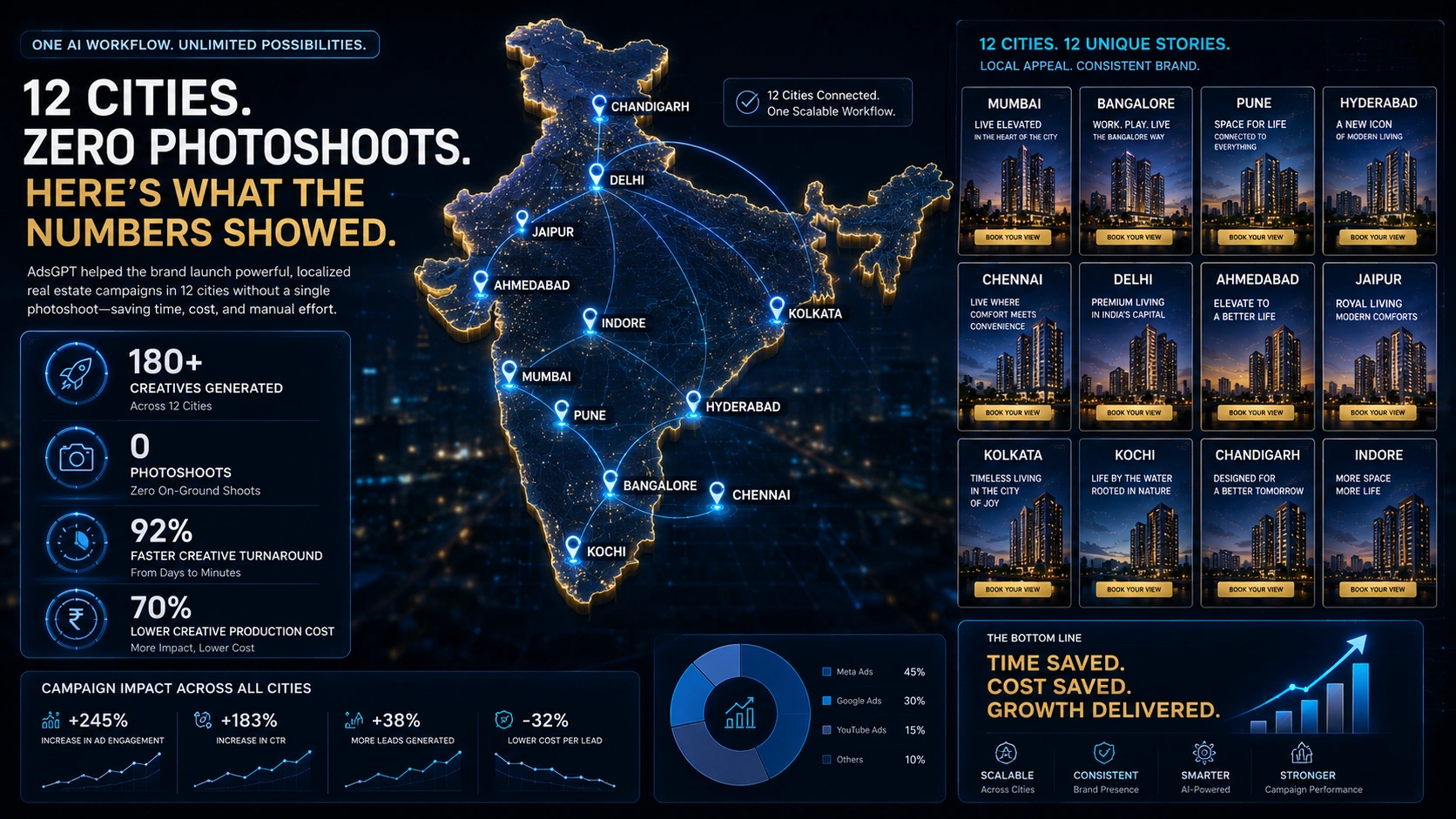
The operational impact became obvious within the first quarter.
The brand produced over 180 creative variations across multiple platforms without organizing a single physical photoshoot.
Campaign launch timelines dropped significantly.
What previously required several weeks now took days.
Their marketing team also noticed a less measurable but equally important improvement.
The brand finally looked consistent everywhere.
Mumbai campaigns no longer felt disconnected from Bangalore creatives. Chennai visuals matched the broader identity. Even regional campaigns carried the same visual language.
Performance data reflected the shift.
Fresh creative cycles allowed the company to test more frequently. That increased learning speed. Underperforming real estate ads could be replaced quickly instead of remaining active for weeks.
The media buying team especially appreciated that flexibility.
Instead of waiting for revised assets from external vendors, they could request updated creative concepts rapidly and keep campaigns moving.
Read More!
Why AI Personalization Marketing Is The Future Of Advertising?
Why AI-Generated Ad Creative Works Especially Well in Real Estate
Real estate marketing has always depended on imagination.
People rarely buy property because of floor plans alone. They respond emotionally to the possibility. Buyers want to picture morning light through windows, comfortable living spaces, modern kitchens, peaceful balconies, and a neighborhood lifestyle.
That emotional layer matters more than many marketers realize.
AI-generated real estate ads work well because they focus heavily on atmosphere and emotional framing. Traditional stock images often feel generic because thousands of companies use the same visuals.
AI-generated campaigns can feel more intentional.
The creative can be shaped around a specific audience mood, regional aspiration, or lifestyle narrative.
That flexibility becomes especially valuable during expansion campaigns where speed and localization matter equally.
The company even tested different emotional directions across cities.
Some campaigns focused on ambition and career growth. Others emphasized comfort, family life, or investment potential. The ability to adapt visuals quickly gave the brand a stronger creative testing framework.
What Most Brands Get Wrong When They Switch to AI Ad Creation
The biggest mistake is assuming AI removes the need for creative direction.
It does not.
Some teams generate hundreds of variations without clear testing goals. Others skip brand guidelines entirely and end up with inconsistent outputs.
This company avoided those problems because it treated AI as part of a structured process.
Their review system stayed active. Designers checked typography, alignment, messaging accuracy, and visual tone before campaigns launched.
Another common mistake involves volume.
More real estate ads do not automatically improve performance.
Without a testing strategy, teams often create creative overload. Campaign analysis becomes harder because too many variables change simultaneously.
The company limited each campaign to a focused set of strong variations instead of generating endless versions.
That discipline helped maintain quality.
They also learned that AI-generated visuals still require human understanding of regional culture, buyer expectations, and platform behavior. Automation helped them move faster, but strategic judgment still shaped the outcome.
The Future of Real Estate Advertising Isn’t a Bigger Budget
For years, brands believed better campaigns required bigger production budgets. This company learned the real challenge was speed.
Once production delays disappeared, the team could launch faster, test more creative ideas, and localize campaigns across cities with ease.
AI-generated real estate ads did not replace human creativity. They removed operational friction.
And for this brand, that shift changed everything.
Frequently Asked Questions
Can AI really replace real estate property photography for ads?
Not completely. Real photography still matters for exact property representation and highly detailed listings. AI-generated real estate ads work best for scalable campaigns, concept visuals, lifestyle positioning, and rapid testing.
How many ad variants can I generate for a single property listing?
Brands can realistically create dozens of variations from one campaign concept. The key is focusing on meaningful differences rather than generating random changes.
Is AI-generated real estate ad content compliant with Meta and Google guidelines?
Generally, yes, as long as the campaigns avoid misleading claims and accurately represent offers. Human review remains important before publishing.
How do I maintain brand consistency when running ads across 10+ cities?
Strong brand guidelines matter more than the generation tool itself. Consistent typography, colors, layout systems, and messaging frameworks help unify campaigns.
How is AdsGPT different from a generic image ad maker?
The difference mainly comes from the workflow structure. Generic tools often prioritize speed alone, while AdsGPT focuses more heavily on campaign alignment, localization, and scalable brand consistency for this company.

MOST POPULAR