
Product ads sit at the center of modern performance marketing. They connect buyers with specific solutions at the exact moment intent appears. In crowded digital spaces, that precision matters. When executed well, they drive measurable growth. When handled poorly, they drain the budget with little return.
The difference rarely comes down to luck. It usually comes down to clarity, audience alignment, and disciplined execution. Strong campaigns are built deliberately. They are structured around buyer intent, supported by testing, and refined through real performance data.
This guide breaks down how to build effective campaigns, optimize them responsibly, and scale using AI tools without losing strategic control.
Listen To The Podcast Now!
What Are Product Ads?
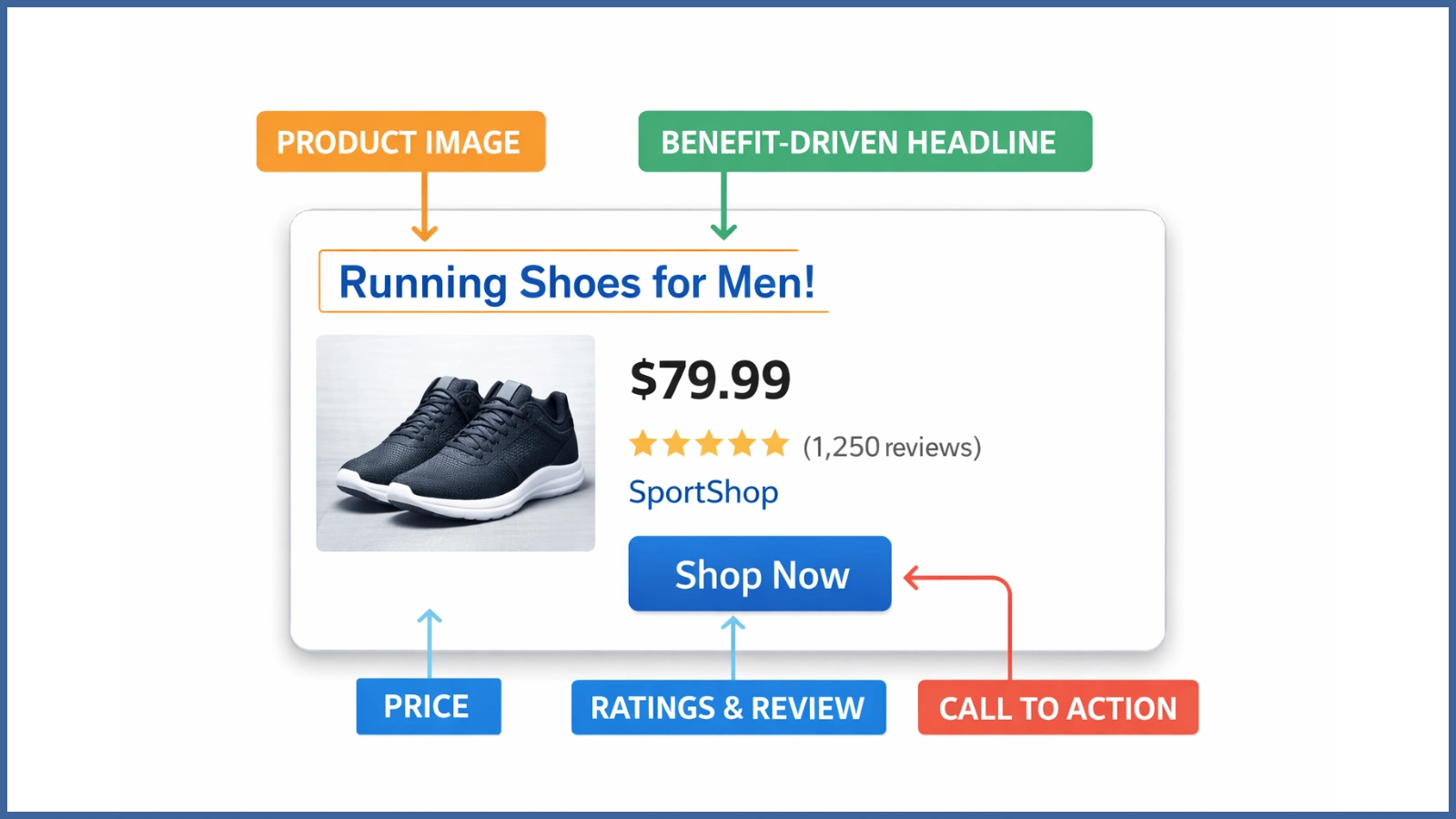
At their core, ads are paid placements designed to promote a specific item or service. They include practical details like pricing, visuals, and a clear path to action.
Unlike broader awareness campaigns, they focus on measurable response. A click. A purchase. A subscription.
You’ll find them across search engines, marketplaces, social platforms, and mobile apps. Their purpose is straightforward: reduce the distance between interest and decision.
Most include:
- A focused product image
- A benefit-driven headline
- Pricing or promotional details
- A direct call to action
- A landing destination
They work because they connect visibility with intent. When someone is already considering a solution, the right message at the right time makes all the difference.
Types of Product Ads You Should Know
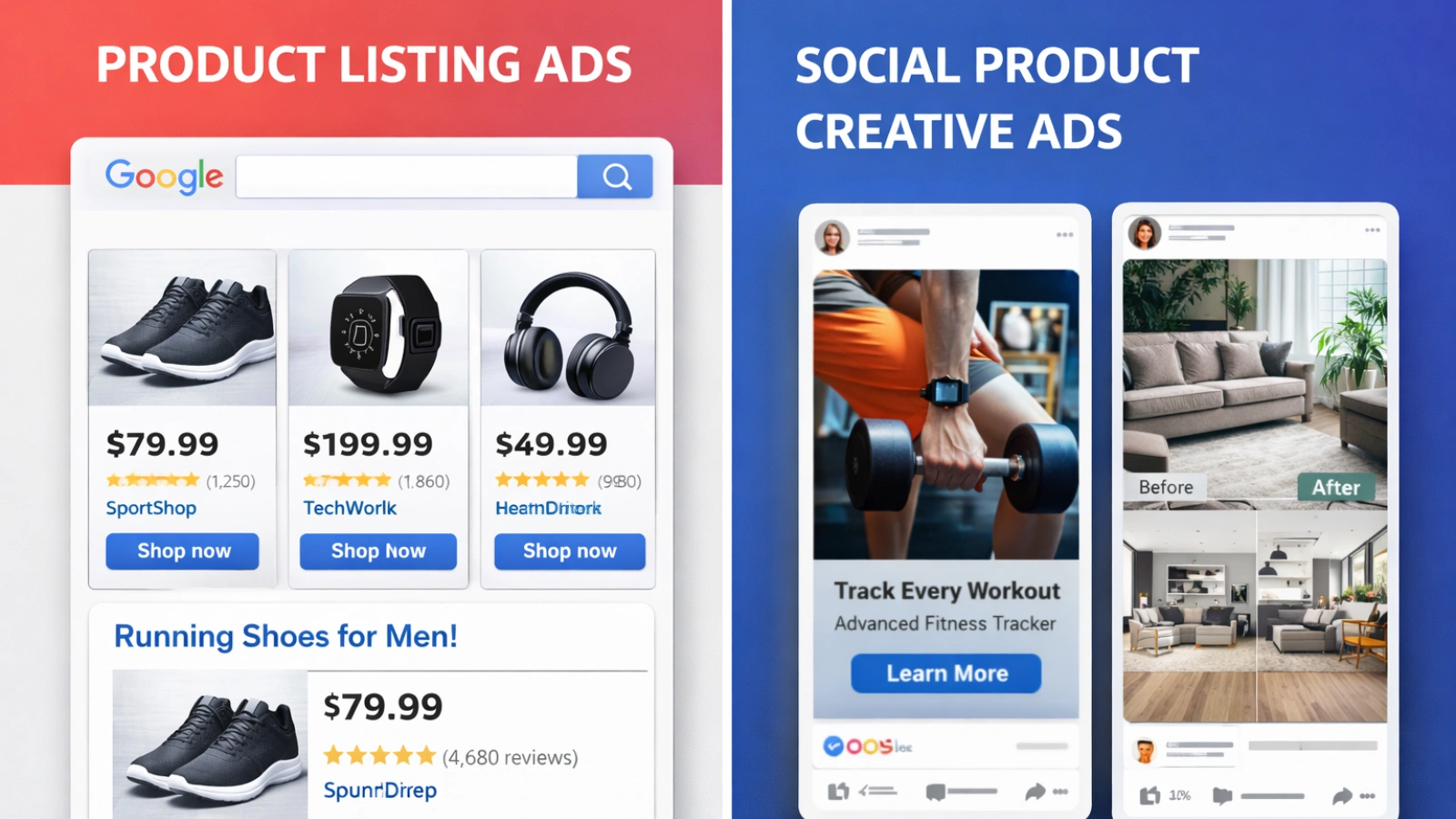
Not every format behaves the same way. Understanding structure and placement helps you choose wisely.
Product Listing Ads
Product listing ads typically appear in search results and shopping feeds. They pull data directly from a structured product feed.
You’ll usually see:
- Product image
- Title
- Price
- Seller name
- Reviews
These placements perform best when buyers already know what they want. They are comparing options. Your goal is to appear relevant, credible, and competitive in that moment.
Social Product Creative Ads
On social platforms, presentation often matters more than structure. These are commonly called product creative ads because design and storytelling drive engagement.
Instead of simply displaying an item, you show it in use. A quick demonstration. A relatable scenario. A before-and-after moment. Movement and context tend to outperform static catalog images.
When pricing differences are minimal, creative differentiation becomes decisive.
App and Dynamic Formats
For mobile apps and SaaS platforms, dynamic formats adjust messaging automatically based on behavior signals. Headlines, visuals, and offers change depending on user actions.
These types of product ads are particularly effective for retargeting. They remind users of what they explored and reintroduce the value proposition without feeling intrusive.
The Anatomy of High-Converting Campaigns
Successful campaigns don’t happen by luck. The best-performing product ads usually follow clear, proven principles.
Visual Focus
The image should communicate instantly. Remove distractions. Show context when possible. People process visuals far faster than text.
Clear Value
Headlines should highlight a primary benefit, not a long list of features. Clarity often beats cleverness.
Trust Signals
Ratings, testimonials, and usage data reduce hesitation. Trust lowers resistance.
Direct Action
The call to action should reflect the buyer’s stage. “Start Free” feels different from “Explore Options.”
Every element should support forward movement.
Building Campaigns Step by Step
A structured approach minimizes wasted effort.
1. Define the Objective
Are you driving purchases, demos, installs, or subscriptions? The objective influences targeting, budget allocation, and messaging.
Without clarity, even polished product ads struggle to deliver consistent returns.
2. Understand Buyer Intent
Segment audiences based on awareness level. Someone researching a problem needs different messaging than someone comparing vendors.
Intent alignment often influences performance more than minor creative tweaks.
3. Refine the Core Message
Avoid stacking multiple promises in a single ad. Choose the strongest outcome and make it obvious.
The most effective product ads feel focused rather than overloaded.
4. Match Creative to Channel
Search placements reward precision and structure. Social feeds reward relatability and motion. Adapt the format while keeping messaging consistent.
5. Launch and Iterate
Track CTR, conversion rate, and acquisition cost from the beginning. Small improvements compound over time.
Data should guide the evolution of your campaigns, not assumptions.
Using Generative AI to Accelerate Production

Teams are increasingly using generative AI for ads to expand testing capacity without increasing headcount.
AI can help:
- Draft headline alternatives
- Suggest positioning shifts
- Generate visual concepts
- Repurpose long-form content into shorter variations
An AI ad generator makes experimentation faster and more manageable. Instead of spending hours rewriting copy, teams can focus on refining direction.
However, automation does not replace strategy. AI enhances execution, but positioning must remain deliberate.
When used thoughtfully, AI helps scale product ads more efficiently without sacrificing quality control.
Why Psychology Drives Results
Creative performance is rarely random.
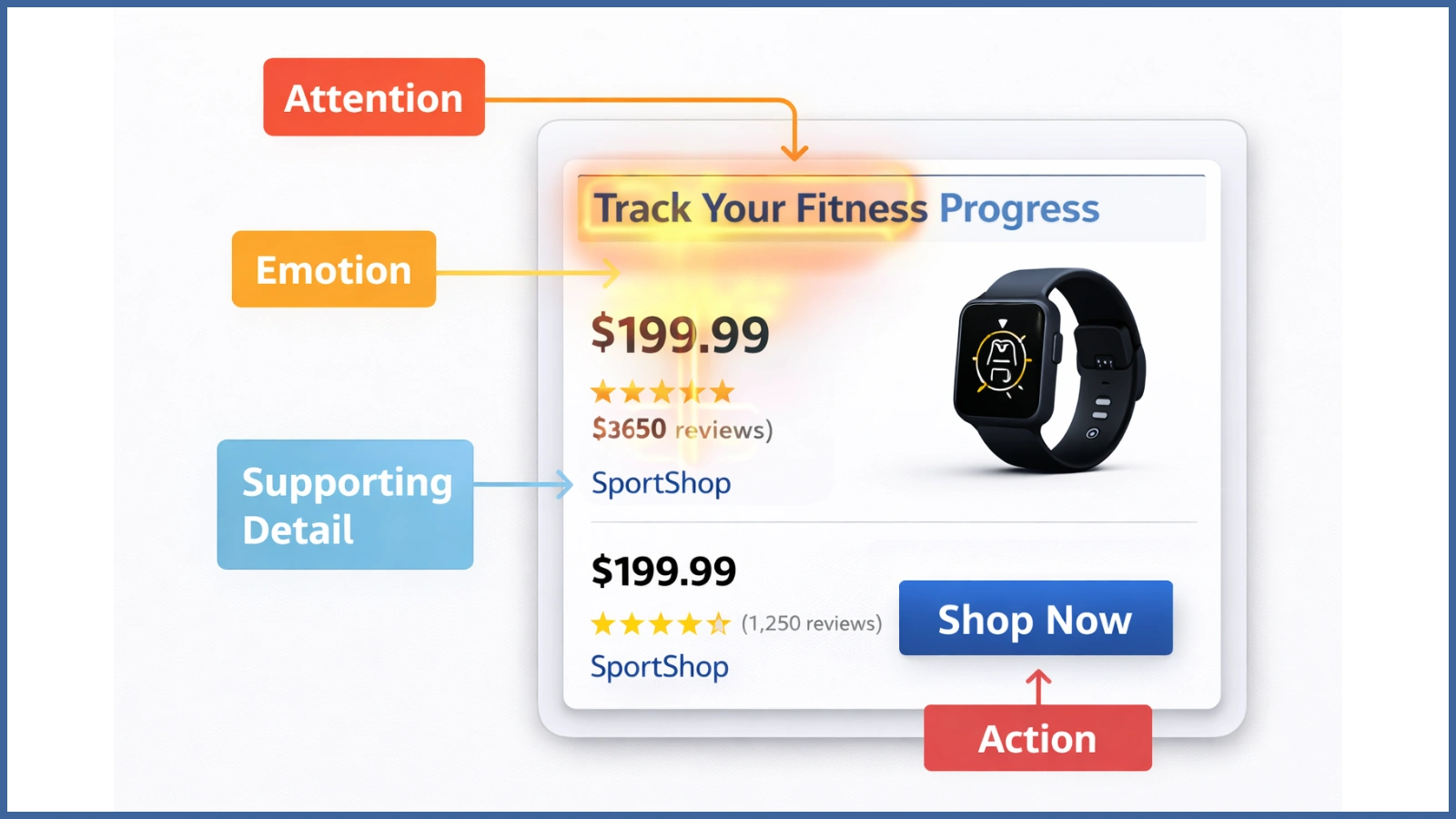
Attention
You have seconds to capture interest. Contrast, movement, and emotional cues help interrupt scrolling.
Emotion
Even practical purchases involve emotion. Simplicity, relief, and confidence influence decisions more than we admit.
The strongest product ads reflect the internal conversation buyers are already having.
Structure
Guide the eye intentionally. Headline first. Then focal visual. Supporting detail next. Clear CTA at the end. Structure reduces confusion and improves comprehension.
Optimizing Product Listing Ads
Feed-based campaigns require precision.
Improve Titles
Be descriptive and natural. Avoid unnecessary keyword repetition. Clarity improves relevance signals.
Strengthen Visuals
High-resolution images increase click-through rates. Clean framing matters more than decorative effects.
Revisit Pricing
Competitive pricing influences both visibility and conversion. Small adjustments can improve overall product ad performance.
Incremental refinements often outperform dramatic changes.
Metrics That Deserve Attention
Not all numbers carry equal weight.
Click-Through Rate
Low CTR usually indicates creative or targeting misalignment.
Conversion Rate
If traffic converts poorly, the landing experience may need improvement. Even strong ads cannot overcome friction after the click.
Return on Ad Spend
Helpful for evaluating efficiency, but it should not be viewed in isolation.
Lifetime Value
Retention and repeat purchases can justify higher acquisition costs. Context matters more than any single metric.
Managing Creative Fatigue
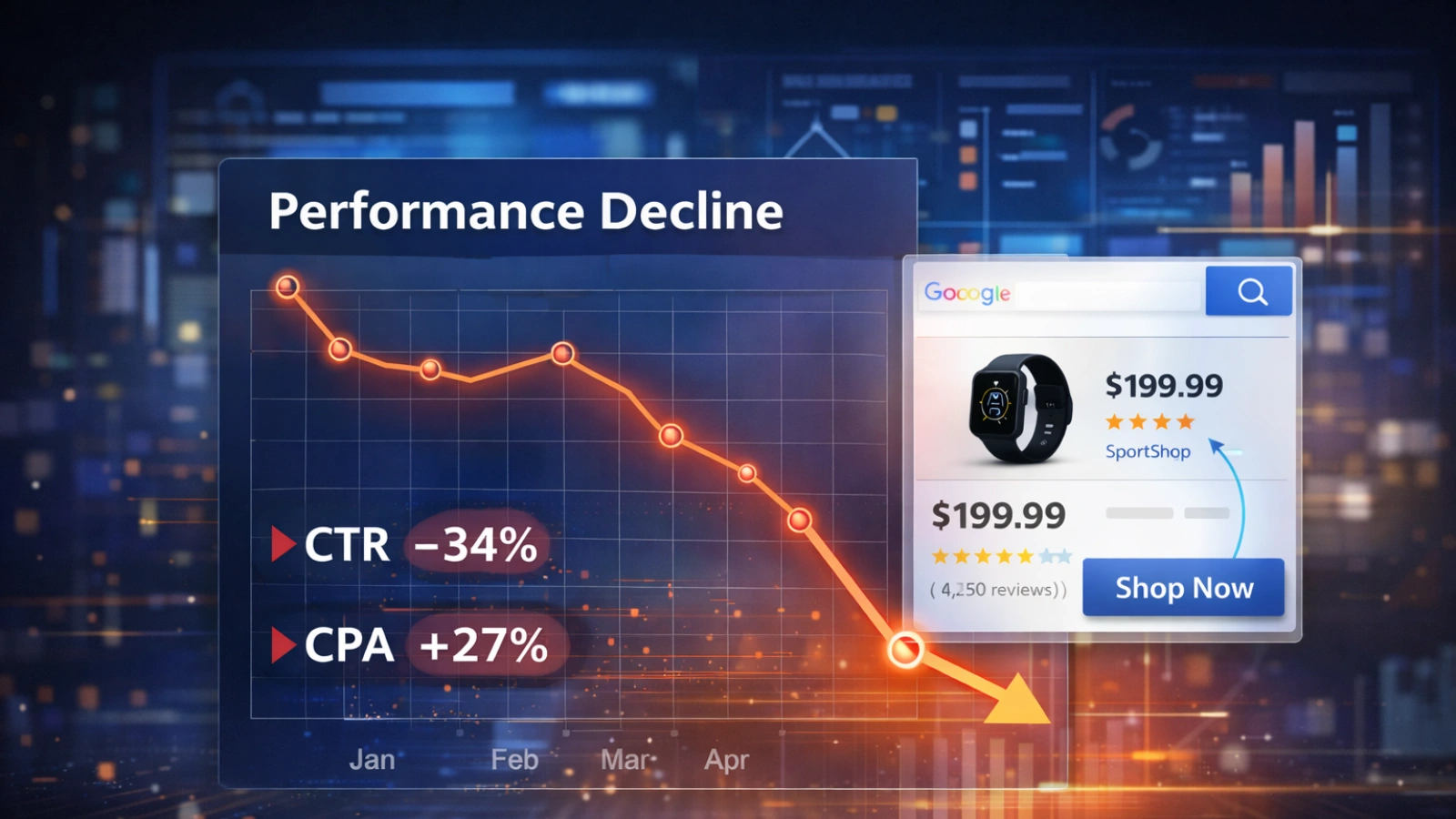
Even well-performing campaigns eventually slow down.
Watch for gradual engagement decline or rising acquisition costs. These trends often signal fatigue.
Refreshing messaging, visuals, or positioning helps maintain relevance. Testing new angles keeps ads competitive in evolving markets.
AI can generate variations quickly, but thoughtful review ensures alignment.
Creative fatigue is rarely dramatic. It usually shows up quietly. A steady drop in click-through rate. A slight increase in cost per acquisition. A campaign that once scaled easily now struggles to hold performance. The audience hasn’t disappeared. They’ve simply seen the message too many times.
Repetition reduces impact. What once felt fresh begins to blend into the background. In crowded feeds, familiarity without variation becomes invisible.
One common mistake is assuming the entire strategy needs replacing. Often, fatigue affects execution more than positioning. The core offer may still resonate. The framing just needs adjustment.
Small changes can reset attention:
- A new hook that reframes the primary benefit
- Different imagery showing the product in another context
- Shorter, sharper headlines
- Adjusted calls to action that match user intent
- Swapping static visuals for motion-based formats
These refinements help product ads feel current without disrupting brand consistency.
It also helps to treat creative development as a continuous process rather than a reactive fix. Build variation into campaigns from the start. Launch with multiple angles instead of a single execution. When one variation slows, others can take over without performance collapsing.
AI tools can support this cycle by generating alternative headlines, visual concepts, or messaging directions quickly. However, automation should enhance strategy, not replace judgment. Not every generated idea aligns with positioning. Not every variation fits the brand tone.
Generative AI For Ad Generation
Imagine an AI platform that turns scattered ad inspiration and performance data into campaigns that actually convert. Instead of leading with features, messaging should emphasize outcomes.
For example:
- Faster campaign setup
- Improved conversion efficiency
- Reduced manual workload
One of the great tools is AdsGPT. It can demonstrate how the platform streamlines workflows using automation and structured insights.
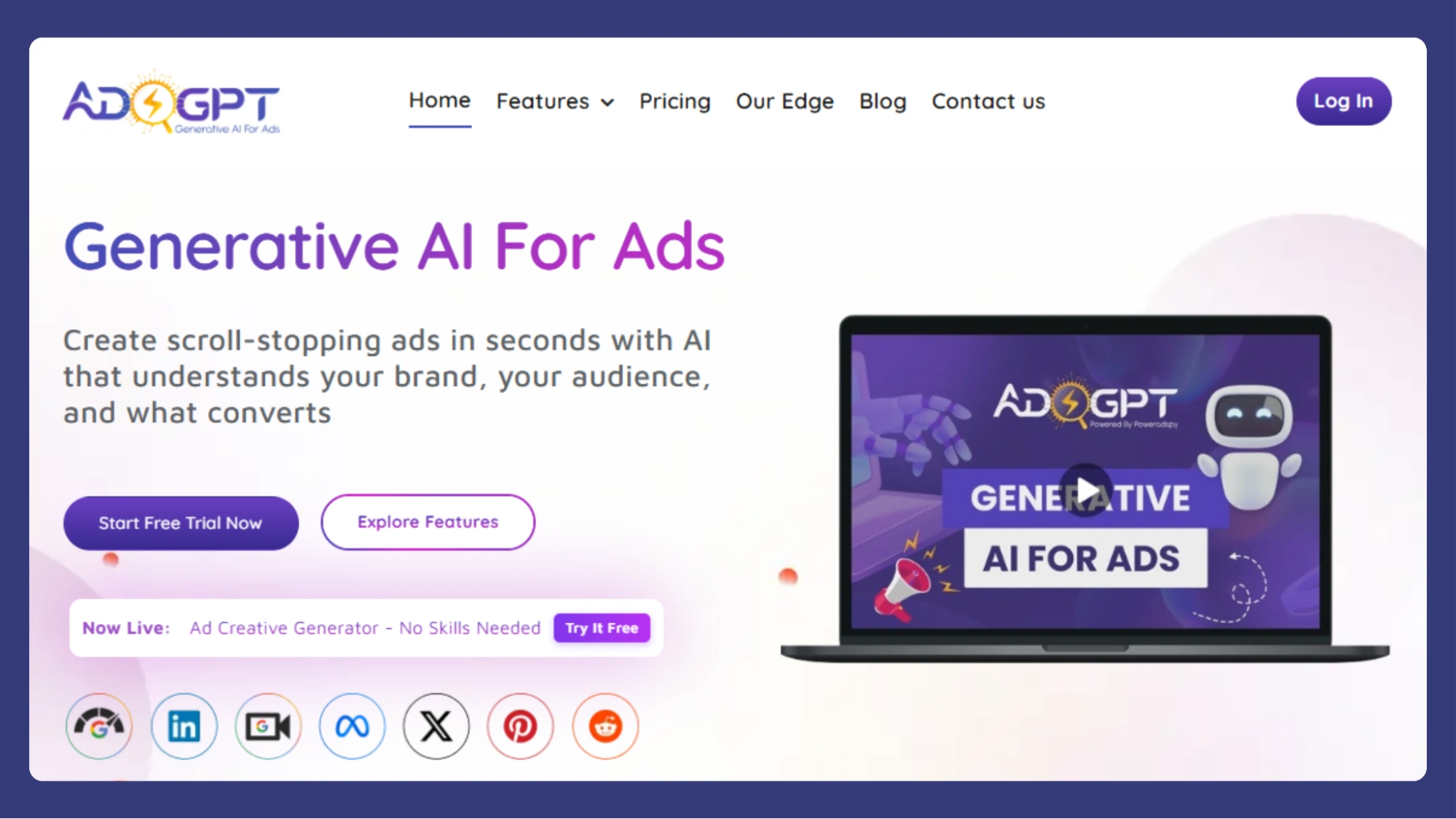
What AdsGPT Offers
To support outcome-driven positioning, AdsGPT includes:
- AI-powered copy generation for structured variations
- Creative angle recommendations based on audience behavior
- Automated testing support for controlled experimentation
- Performance insights tied to engagement metrics
- Audience-level messaging refinement
- Campaign organization assistance
- Early fatigue detection signals
- Prompt frameworks that make using generative AI for ads more systematic
By focusing on measurable outcomes rather than technical jargon, the platform enables teams to scale product ads with greater confidence.
Common Mistakes to Avoid
- Overloading messaging with too many benefits reduces clarity.
- Ignoring platform nuances weakens performance.
- Misaligned landing pages undermine trust built by product ads.
- Skipping structured testing limits long-term growth.
- Small gaps in discipline often compound over time.
Building a Sustainable Approach
Consistency matters more than isolated wins. Develop a repeatable cycle:
- Research audience needs
- Craft benefit-led messaging
- Produce multiple variations
- Test methodically
- Review performance
- Refine and relaunch
Sustainable product ads emerge from steady iteration rather than one-time breakthroughs.
Automation improves efficiency, but strategic direction should remain human-led.
The Expanding Role of AI
AI-driven systems continue to evolve. When integrated thoughtfully, they support personalization, identify trends, and streamline optimization.
Used responsibly, AI strengthens product ads instead of replacing creative teams.
Scaling today depends less on team size and more on structured workflows.
Read More!
Final Thoughts
Effective product ads require balance. Clear positioning. Intent alignment. Measured optimization.
Start with strong fundamentals. Keep messaging focused. Test consistently. Adjust based on evidence.
When strategy and execution align, product ads become one of the most reliable growth channels available to modern brands.
FAQ
- What separates product ads from standard display campaigns?
They highlight specific items and purchase intent rather than broad awareness messaging. - How often should campaigns be refreshed?
Review performance every few weeks. Declining engagement often signals the need for updates. - Are product listing ads suitable for SaaS brands?
They can work for structured offers, though creative-led formats may communicate complex value more effectively. - Can AI completely manage campaign optimization?
AI assists with testing and analysis, but strategic direction still requires human oversight. - What most influences campaign success?
Audience-message alignment. Even well-designed creative underperforms when it misses buyer intent.


MOST POPULAR