
Most commercial ads don’t fail because of small budgets or poor production quality. They fail because they don’t connect with the right audience, don’t capture attention quickly enough, or don’t give people a clear reason to care or take action. In a world where viewers are constantly scrolling, skipping, and multitasking, even a well-made ad can disappear if it doesn’t engage instantly.
The ads that actually work take a different approach. They are built with clear intent, shaped around real audience insights, and designed to hold attention from the very first second. They focus on one strong message, use emotion to create a connection, and guide the viewer toward a clear next step.
In this guide, you’ll learn the patterns behind high-performing commercial ads, from strategy to execution. Instead of guessing what might work, you’ll understand how to create ads that are clear, memorable, and built to drive real results.
In a hurry? Listen to the blog instead!
What Makes a Commercial Ad Truly Impactful?

Impactful commercial ads are not about fancy visuals or big budgets. It’s about how clearly and strongly it connects with people.
The best ads focus on one simple idea. If the message is clear, people understand it quickly and remember it. Good ads also make you feel something. It could be humor, excitement, nostalgia, or even urgency. That feeling is what makes the ad stick.
Strong ads think about the audience first. Instead of just talking about the product, they show why it matters to the viewer. They often tell a short story, because stories are easier to follow and remember than plain information.
Timing and placement matter too. Even a great ad won’t work if it reaches the wrong people or shows up at the wrong time. But having the right strategy alone is not enough. The message and the execution need to be strong as well.
How to make commercial ads?
To make effective commercial ads, start by understanding your audience and what they care about. Focus on one clear message and create a simple story around it.
Grab attention in the first few seconds, use emotion to connect, and show how your product helps in real life. Keep it clear, add a strong call-to-action, and keep testing to improve results.
The 10 Proven Strategies Behind High-Performing Commercial Ads

Great commercial ads don’t just look good; they connect with people in a clear and meaningful way.
The ones that work best follow a few simple principles that make them easy to notice, understand, and remember.
1. Start With the Audience, Not the Product
Most brands make the same mistake. They start by talking about what they sell and expect people to figure out why it matters. That rarely works. People don’t put in that effort.
First, be clear about who you’re talking to. What are they worried about? What do they really want but haven’t found yet? What small, everyday problem does your product solve? When you start here, the focus shifts. The ad becomes about the audience’s life, not your product. Your product then fits in naturally as the solution.
Ads that focus on the audience perform better because people pay attention to things that feel relevant to them. Relevance is what grabs attention before anything else.
- Hook Attention in the First 3 Seconds
You have about three seconds to get someone’s attention. Sometimes even less. That’s how people behave when they’re scrolling or skipping ads. If you don’t catch them right away, they’re gone.
A strong hook doesn’t need to be loud or dramatic. It just needs to feel different enough to make someone pause. This could be a surprising visual, a line that creates curiosity, a sound that stands out, or a moment that feels very specific and personal.
People naturally ignore what feels familiar and notice what feels new. That’s why this works. It’s especially important on platforms like Instagram or YouTube, where skipping is easy.
- Tell a Story People See Themselves In
Information helps people understand, but stories help people connect. Ads that only list features or stats might make sense, but they don’t usually lead to action.
The best ads tell a simple story, even in a short time. Someone has a problem. Something changes. Things improve. The product plays a role, but it’s not the whole story.
What matters most is relatability. When viewers see themselves in the situation, they stop watching passively and start connecting with what’s happening. That’s what turns an ad into something memorable.
- Focus on One Clear Message (Not Everything at Once)
It’s tempting to include everything. Your product has many benefits, your brand has a story, and you have limited time. So you try to say it all. That usually backfires.
Too many messages confuse people. When viewers have to figure out what you’re trying to say, they lose interest. A single clear message is much easier to understand and remember.
Ask yourself one simple question: if someone remembers only one thing from this ad, what should it be? Build everything around that.
- Use Emotion as Your Core Driver
Logic helps explain things, but emotion is what drives action. People don’t buy just because they understand a product. They buy because of how it makes them feel.
Common emotions used in ads include humor, nostalgia, aspiration, and sometimes fear. Humor makes people comfortable. Nostalgia builds trust. Aspiration connects to who people want to become. Fear can highlight a problem that needs solving if used carefully.
The key is choosing the right emotion for your audience and product. What works for one brand might not work for another. Decide how you want people to feel after watching, then build your ad around that.
- Make It Visually Distinct and Recognizable
There are thousands of ads out there. If yours looks like everything else, it’s easy to ignore.
Your visual style matters. This includes colors, fonts, pacing, voice, and the overall look and feel. When you stay consistent, people start recognizing your brand quickly, even without seeing the name.
Strong brands don’t rely on chance. They build a clear and consistent visual identity over time. That consistency makes them easier to remember.
- Show, Don’t Just Tell
It’s easy to make claims. It’s much stronger to show proof. Any brand can say its product is the best. Fewer actually show it in action.
Use real examples. Show before-and-after results. Demonstrate how the product works. Show it being used in everyday situations.
This helps answer a key question people have: “What will this look like for me?” When you show that clearly, people don’t have to guess or take your word for it.
- Optimize for the Platform (Not Just the Idea)
A great idea can still fail if it’s not made for the platform it runs on. Different platforms work in different ways, and people behave differently on each.
For example, many people watch social media videos without sound. On YouTube, viewers can skip after a few seconds. On TV, people are more likely to watch the full ad but interact less.
These differences matter. They affect how you structure your ad, how fast it moves, and when you show the main message. Always think about where the ad will appear, not just what it says.
- Include a Clear and Compelling Call-to-Action
Some ads look great, but don’t tell people what to do next. That’s a missed opportunity.
A call-to-action guides the viewer. It should feel natural, not pushy. Simple lines like “Try it free,” “Learn more,” or “See how it works” work better than aggressive commands.
You can also add small nudges, like limited-time offers or social proof, to encourage action. Just make sure it feels honest.
Also, think about timing. Someone seeing your ad for the first time may need a softer step than someone who already knows your brand.
- Test, Learn, and Improve Constantly
The first version of your ad is rarely the best one. The strongest ads come from testing and improving over time.
You don’t need complex systems. Even simple A/B testing helps. Try two versions with one small change, like a different opening or call-to-action, and see which performs better.
Over time, you learn what your audience responds to. That insight is more valuable than guessing. Brands that keep testing and improving consistently get better results than those that treat ads as one-time efforts.
Real-Life Applications: Where These Commercial Ad Strategies Actually Work

These strategies aren’t just theory. They translate directly into real campaigns across different business types and platforms.
A small bakery running Instagram video ads doesn’t have a production budget. But it can use a simple phone video showing fresh bread being pulled from the oven, with warm lighting and a single caption that says “Order by 10 AM, pick up by noon.” That’s a hook, a story, a clear message, and a CTA all in under 15 seconds.
A personal brand consultant running YouTube commercial ads might open with a question their target audience is already asking themselves: “Why are you still invisible online?” That’s a pattern interrupt, an emotional trigger, and an audience-first opening rolled into one.
An e-commerce skincare brand launching a new product can use commercial ads examples from its existing customer base, featuring real before-and-after results with a brief personal story from an actual user. That’s demonstration, storytelling, and social proof working together.
A local plumbing service could run a Facebook video showing a homeowner’s panicked face, followed by a technician arriving fast and solving the problem cleanly. Relatable scenario, emotional arc, product demonstration. No fancy production required.
Platform matters in each case. The Instagram bakery ad is vertical. The YouTube ad earns the skip by being immediately interesting. The Facebook ad runs without sound and still communicates the story through visuals alone. Strategy meets context.
How to Create Commercial Ads Step-by-Step
Creating commercial ads doesn’t have to be complicated or overwhelming.
When you break it into simple steps, it becomes much easier to plan, create, and improve over time.
Step 1: Define Your Goal
Decide what success looks like before you start. Are you trying to build awareness or drive action? Each needs a different style, message, and call-to-action, so keep the goal clear.
Step 2: Know Your Audience Deeply
Don’t stop at basic demographics. Understand their daily life, problems, and what they truly want. The more specific you are, the stronger your ad will be.
Step 3: Choose the Right Format
Pick a format based on your goal and where your audience spends time. Short videos, display ads, or long-form content all work differently depending on the context.
Step 4: Plan Your Idea
Start with one clear message and build around it. Write in a natural way and map out key scenes so your idea is easy to execute.
Step 5: Keep Production Simple
You don’t need perfection. Clear visuals, good audio, and a real, honest feel often perform better than overly polished ads.
Step 6: Launch and Improve
Set clear metrics, track performance, and learn from the results. The best ads come from testing, improving, and repeating the process.
Maximize Your Ad Potential with AdsGPT
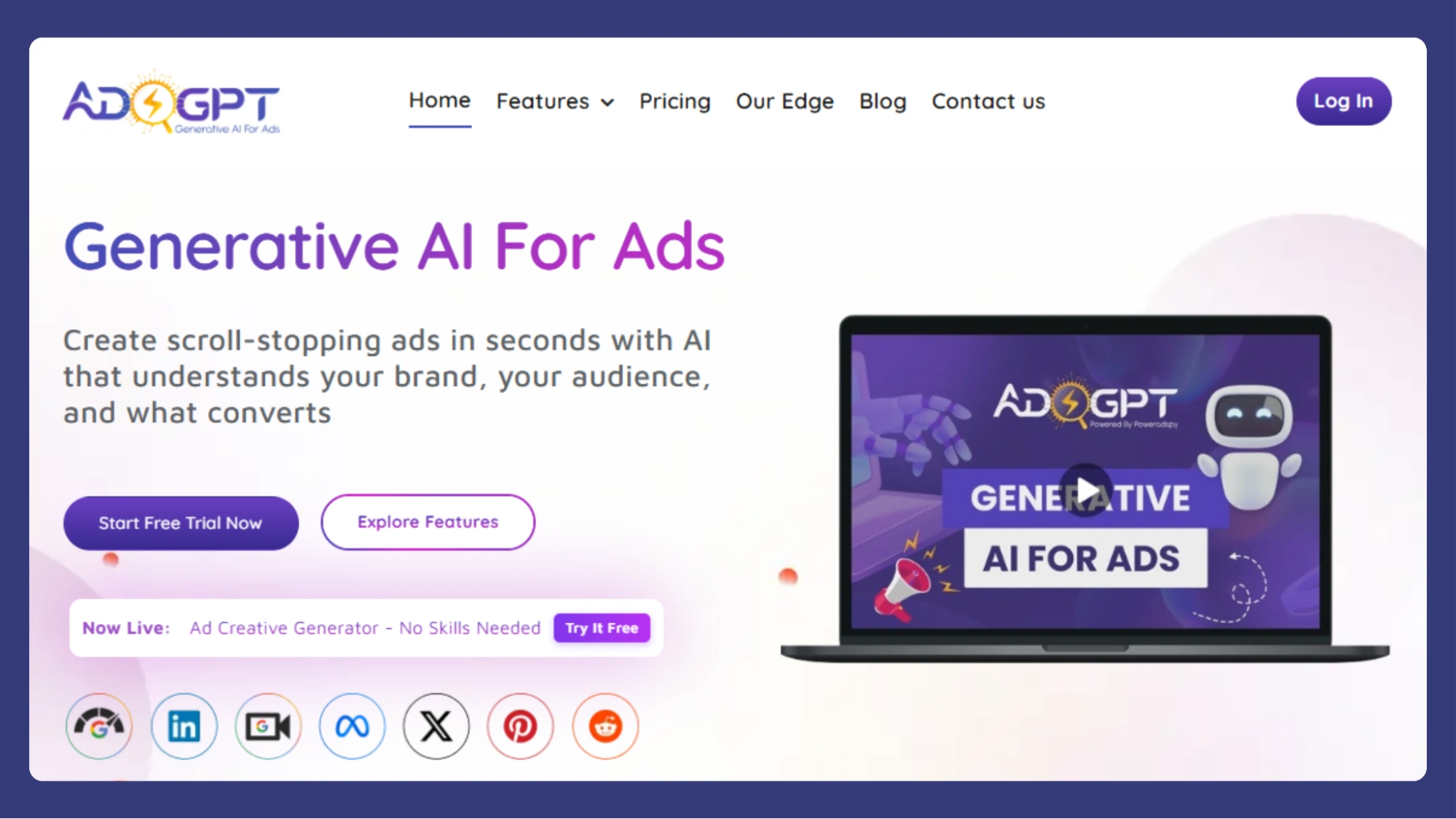
In today’s fast-paced digital landscape, ads must capture attention quickly and connect with the right audience. AdsGPT makes it effortless to create high-impact ads. With just a prompt, AdsGPT generates platform-ready ad creatives and videos in under 60 seconds, ensuring your ads stand out and engage effectively.
Key Features:
- Generate 60 Ads in 60 Seconds: Speed up your ad creation process.
- AI-Powered Video Ads: Including UGC, B-roll, and avatars.
- Customizable for Your Brand: Ads tailored to reflect your brand’s identity.
- Supports 9 Ad Platforms: Including Meta and more.
- Free Trial: Create 35 free creatives, no credit card required.
AdsGPT empowers you to create ads that instantly capture attention, helping you connect with your audience and drive results.
Also Read:
How To Use AI Tools For Advertising & Smarter Ad Creation?
How Can An AI Commercial Generator Improve Your Ads?
Common Mistakes That Make Commercial Ads Ineffective
Being too clever instead of clear is the mistake that kills the most otherwise promising campaigns. Clever is satisfying to make. Clear is what actually works.
Ignoring audience needs means building an ad around what the brand wants to say instead of what the audience needs to hear. The audience doesn’t owe you attention. Earn it by being relevant to them.
A weak opening is especially costly now. Viewers have endless alternatives one tap away. If the first two seconds of your ad don’t give them a reason to stay, they won’t.
Overloading the ad with information is usually a confidence problem. Brands that aren’t sure which benefit matters most try to communicate all of them. Choose one and commit.
No clear CTA leaves interested viewers without a path forward. Even a soft, low-pressure CTA is better than nothing.
Copying trends blindly without adapting them to your brand is a fast way to look dated before the trend even ends. Borrow what’s working in the culture, but run it through your brand’s specific point of view first.
Every one of these mistakes is avoidable once you know how to look for it. The goal isn’t to make ads that feel impressive. It’s to make creative commercial ads that actually move people to act.
Conclusion
Most commercial ads don’t need more creativity or bigger budgets; they need more clarity and intention. When you understand your audience, focus on one strong message, and build your ad around real human behavior, everything else becomes easier.
The strategies in this guide are not one-time tactics. They are repeatable principles you can apply, test, and improve over time. The more you use them, the better your instincts become and the stronger your results get.
At the end of the day, effective commercial ads are not about impressing people. They are about connecting with them, holding their attention, and guiding them to take action. If you stay focused on that, your ads won’t just run; they will work.
FAQ
- How long should a commercial ad be?
The ideal length depends on the platform. Short ads (6–15 seconds) work best for social media, while 15–30 seconds is common for YouTube and TV. The key is to deliver your message quickly before attention drops.
- What is the best platform to run commercial ads?
There’s no single “best” platform. It depends on your audience. Instagram and Facebook work well for visual and impulse-driven products, while YouTube is better for storytelling and detailed messaging.
- How much budget do I need to start running commercial ads?
You can start with a small budget and scale over time. Many businesses begin with ₹5,000–₹20,000 for testing. The goal is to learn what works before increasing spend.
- What tools can I use to create commercial ads easily?
Tools like Canva, Adobe Premiere Pro, and CapCut make it easy to create ads without advanced skills. Even smartphone apps can produce high-quality results.
- What are commercial video ads, and why are they effective?
Commercial video ads are short video-based promotions designed to showcase a product or service. They are effective because video combines visuals, sound, and storytelling, making it easier to grab attention, explain value quickly, and create an emotional connection with the audience.

MOST POPULAR