I blew $312 in one week on ads that got zero clicks before I fixed my process. An ai ad copy generator can help you write strong variants fast, but only if you pair it with smart edits and simple tests. In 2026, the fastest path I’ve found is: draft 5–10 versions, keep your brand voice tight, and A/B test against your current best ad on one platform at a time.
As a fellow small business owner, I’ll keep this real. I run a local e‑commerce shop on thin margins. Time is cash. If you can shave two hours off ad creation and get even a 0.5% higher click‑through rate (CTR), that pays rent. Below, I’ll show you how I pick tools, how I brief them, and what I fix in the output before I spend a single dollar.
What Is an AI Ad Copy Generator and Why Should Small Businesses Care?
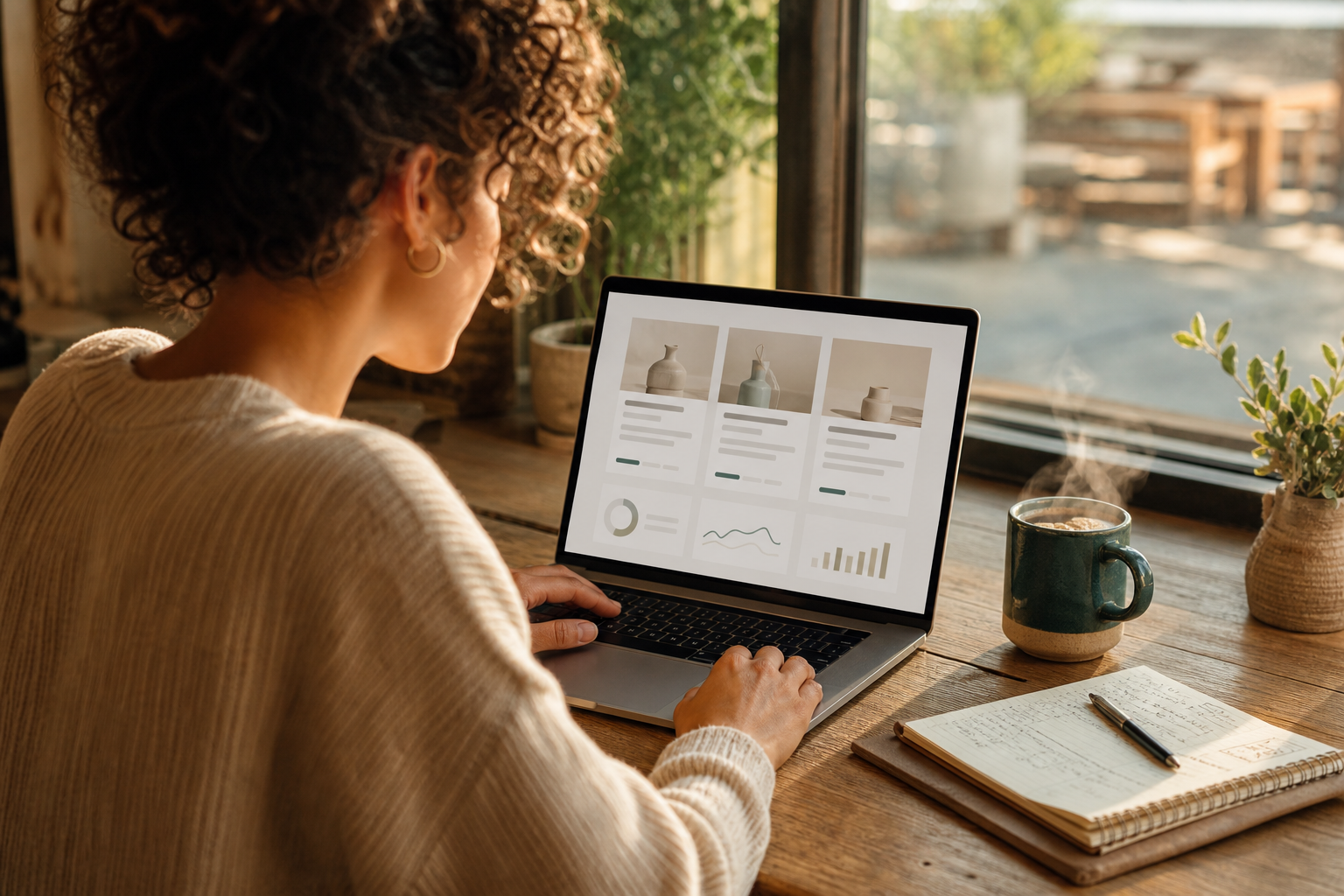
An ai ad copy generator is software that takes a short brief, your product, offer, and target, and outputs ad headlines, primary text, descriptions, and CTAs for channels like Meta, Google, and Instagram. Think of it as a fast first draft partner. You still make the final call.
Here’s the daily pain it solves. As a one‑person team, I used to spend an entire morning to write three Facebook ad variants and two for Google. That meant less time to bake, pack orders, or answer chats. By contrast, tools in this space can generate 60 ad ideas in 60 seconds. Even if you keep only 20% of them, you gain a full slate of testable concepts in minutes, not hours.
For a local bakery, that means turning “Thursday sourdough” into tested copy before the lunch rush. For a niche e‑commerce shop, that means fresh Black Friday angles while your competitors rewrite last year’s ads. In addition, responsive formats reward diverse assets. According to the Google Ads documentation, providing more high‑quality assets helps the system match more queries and placements. More good variants equals more reach.
- What these tools draft: headlines, primary text, descriptions, captions, and CTAs
- What you still own: brand voice, claims, offers, and compliance
- Where they shine: speed, volume, and ideation for fast A/B tests
The bottom line: you reduce cost per concept and move faster to testing. That’s the lever that matters for a resource‑strapped small team in 2026.
How to Evaluate and Start Using an AI Ad Copy Generator in 5 Steps
If you pick an ai ad copy generator with your goals and channels in mind, you’ll see results in your first week. Follow these five steps I now use for every client and my own shop.
Step 1: Audit your current ad spend and platforms
List where you spend now (e.g., Meta, Google, Instagram) and pull the last 30 days of CTR, cost per click (CPC), and spend. Pick one platform to improve first. For my bakery client, we started with Meta because it had the largest spend and the most elbow room for creative tests.
- Goal for this step: choose one battleground
- Bonus: write down your best current ad so you can beat it
Step 2: Define brand voice and guardrails
Write a one‑page brand brief. Include tone (friendly, expert, witty), banned words, claim rules, and a 30‑second “about us” your team agrees on. Some tools offer a BrandIQ feature that lets you store this identity so every draft starts closer to your voice. Use it. Ads built from your brand identity need fewer edits and keep you from sounding like a template.
“Voice beats volume. Ten on‑brand lines beat fifty bland ones.” — a note I keep taped to my monitor
Step 3: Choose a tool based on platform support and budget
Match features to your needs, not hype. If you run Meta, Google, and TikTok, look for support across 9 ad platforms so you aren’t copy‑pasting between tools. If cash is tight, a free plan with 35 ad credits is enough to run a week of tests. Speed matters too. If a tool generates 60 ads in 60 seconds, you can turn around a new experiment before lunch.
- Security check: if you deal with customer data, look for SOC 2 Type II claims in vendor materials
- Nice to have: a competitor ad database to spark angles and avoid me‑too lines
Step 4: Generate, review, and edit your first batch
Give the tool a tight brief: offer, audience, pain point, and proof. Generate 20–60 lines, then prune hard. Kill anything off‑brand or vague.
Keep 5–10 winners and punch them up with your own product language. If you need help shaping inputs, bookmark these prompts: ad copy generator prompts. Tight prompts = better output.

Step 5: A/B test AI copy vs. your current ads and iterate
Set a small test budget (e.g., $10–$25 per ad set) and run your edited AI variants against your current best ad. Keep one variable fixed at a time, copy first, then image/video later. After 3–7 days, pause losers, scale winners, and feed the learnings back into your next batch. Track CTR, CPC, and cost per lead/sale, not just “likes.
As you repeat this loop, you’ll build a hit bank of proven lines for holidays, promotions, and slow days. That’s where the real ROI shows up.
Also Read!
How to Use AI Ad Copy Generators to Improve ROAS as a Performance Marketer
5 Mistakes Small Businesses Make with AI Ad Copy Tools
Even good tools can’t save a bad process. Here are five traps I’ve stepped in, and how to dodge them.
1) Publishing AI output without editing
Raw drafts read like raw dough. They need your brand terms, claims you can back up, and a clear offer. Read every line out loud. If you would not say it at your counter or on a sales call, don’t ship it.
2) Ignoring brand voice and sounding generic
If your shop has a playful tone and your ads sound corporate, people scroll past. Use the brand brief you made. Many platforms can craft ads based on your brand identity when you feed them tone, taglines, and product lines. That single step cuts revision time a lot.
3) Using one variant instead of testing multiples
One ad = one coin toss. Always run at least 3–5 copy variants. If your tool can output dozens fast, keep only a handful and put them head to head. For reference, a 500M+ competitor ad database can also show real lines that ran in your niche; use that to plan bolder tests, not to copy.
4) Skipping competitor research
You share eyeballs with rivals. Scan live angles in your space and find the gaps. If everyone shouts “20% off,” try “Ships today” or “Refill in 2 clicks.” For inspiration, study real structures here: ad copy examples.
5) Choosing tools based on price alone
A $0 tool that doesn’t support your channel costs more than a $49 plan that does. Shortlist based on platform fit, brand controls, speed, and data access. Then check price. That order saves you from re‑platforming mid‑campaign.
- Quick fix checklist:
- Edit every draft
- Enforce brand guardrails
- Test 3–5 variants
- Scan real competitor ads
- Pick for fit first, price second
Top AI Ad Copy Generators Worth Considering in 2026
You have lots of choices. Here’s a neutral, plain‑English view of five options I’ve tested or audited for clients. I ranked them on who they’re for, where they shine, and what to expect on price and trials.
- Jasper: general‑purpose writing with templates for ads. Good if you also need blogs and emails in one place. Platform support varies by template; pricing tiers change by seat/word count.
- Copy.ai: strong for short marketing copy. Handy workflows and team features. Good for quick headlines and taglines. Pricing tiers apply; check for trial access.
- Anyword: known for predictive scoring on copy variants. Helpful to rank options before you spend. Works across channels; pricing depends on features unlocked.
- Canva’s AI ad features: great if you already design in Canva and need text to pair with images or quick social ads. Strong for visuals with simple lines.
- AdsGPT: dedicated ad creative generation across 9 ad platforms with a 500M+ competitor ad database, plus brand controls and fast output.
Here’s a quick side‑by‑side for context:
| Tool | Platform Focus | Notable Strength | Free Plan / Trial | Price Signal |
|---|---|---|---|---|
| Jasper | General writing | Broad templates | Trial varies | Varies |
| Copy.ai | Marketing copy | Fast short copy | Trial varies | Varies |
| Anyword | Ad + site copy | Predictive scoring | Trial varies | Varies |
| Canva (AI ads) | Design‑led | Visual + text | Free tier (design) | Varies |
| AdsGPT | Ads only | 9 ad platforms; 500M+ competitor ad database; SOC 2 Type II certified | Free plan with 35 ad credits (no credit card required) | Starter plan at $49 per month |
Tools like AdsGPT are built for ad creation end‑to‑end. According to its approved materials, it generates 60 high‑converting ads in 60 seconds, supports 9+ platforms, and includes a free plan with 35 creatives so you can test without a credit card. For growing teams, there’s a Starter plan at $49 per month.
On security, it is SOC 2 Type II certified. On social proof, the platform cites 10K+ happy marketers. If you live in ads daily, that “ads‑first” design saves clicks.
For more education on writing that sells without sounding like a bot, save this guide: ai ad copywriting. It pairs well with the tools above and keeps your edits tight.

Key Takeaways and What to Do This Week
The short version:
- Start with one channel, one goal, and your current best ad as the control.
- Use an ai ad copy generator for fast volume, then edit hard to match your brand.
- Test 3–5 variants at small budgets and keep only winners.
- Let data steer your next batch; don’t guess twice.
- Fit beats price: pick tools that match your platforms and brand guardrails.
This week’s action plan (7 days, under $50):
- Monday: Pull last 30 days of CTR and CPC. Pick one platform to fix. 2) Tuesday: Write your one‑page brand brief. 3) Wednesday: Use a tool that can generate 60 ads in 60 seconds and supports 9 ad platforms. Draft 20–40 lines for one offer.
- Thursday: Prune to 5–10, then edit to sound like you. 5) Friday to Sunday: Launch a small A/B test against your current best ad (e.g., $10–$25 per variant). Track CTR, CPC, and leads/sales. 6) Next Monday: Pause losers, roll budget into the top 1–2, and plan your next test.
If you want a done‑for‑you starting point, browse these primers next: ad copy generator prompts and ai ad copywriting. You’ll ship faster and waste less spend in 2026 and beyond.
**[Try 35 Free Credits.

MOST POPULAR