
500M+ competitor ads are already indexed by top tools. If you’re picking an ai ad copy generator in 2026, choose the one that covers multi-platform output, enforces brand voice, plugs into research, and supports fast, team-scale work.
Agencies don’t buy toys. You buy outcomes you can repeat across ten, fifty, or a hundred clients. Your shortlist should fit four agency realities: you manage many brands at once, you need brand-safe outputs, you run ads across several networks, and you ship fast with review loops. Solo tools can be great for a side project. However, they stall under the demands of a client roster and SLAs.
Here’s the answer in one line: the best pick is the platform that supports 9+ ad platforms, gives brand guardrails (style guides, tone locks), connects to competitor data, and speeds up copy production without skipping human QC. Everything else is nice-to-have.
Moreover, you should test with live briefs, not generic prompts. For example, run the same Q4 promo across Search, Meta, and TikTok with tight brand rules. Then compare draft quality, time-to-first-ad, and edit count. As a result, you’ll see which tool holds up under a real agency week.
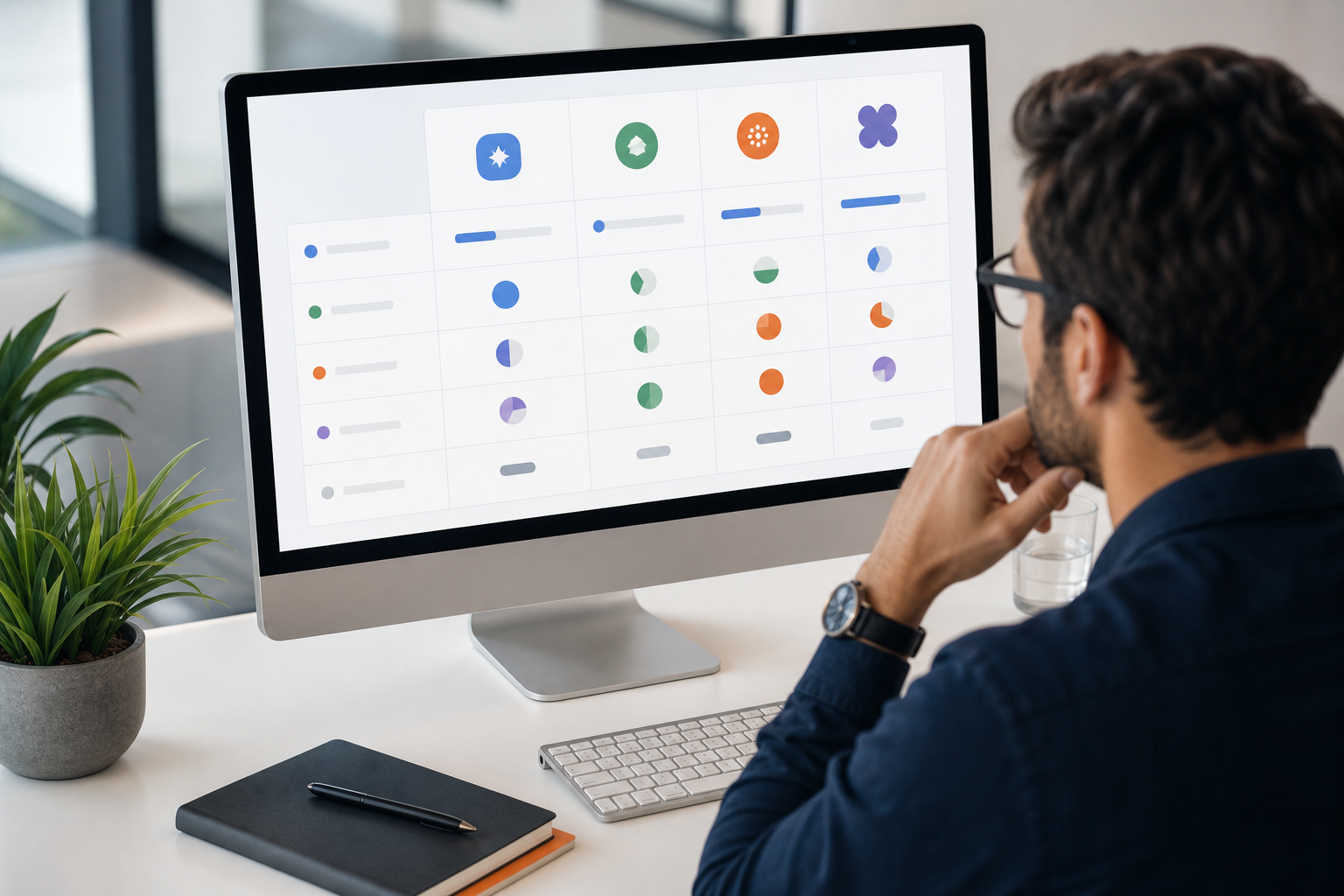
What Agencies Actually Need from an AI Ad Copy Generator
Agencies need guardrails, volume, and cross-platform reach. Solo creators want a few punchy lines. You need on-brand copy across formats and networks, plus a way to scale quality control without adding headcount.
First, make sure the tool supports 9 ad platforms or more. Your media plan shifts week to week. Therefore, your tool must output native-ready copy for Search, Display, social feeds, Stories/Reels, Shorts, and pre-roll. One channel coverage is not enough when a client’s budget is split across three to five networks.
Second, insist on “Ads Based on Your Brand Identity.” That means inputs like tone, banned phrases, compliance rules, and audience nuances that stick across all outputs. In addition, look for BrandIQ-style features that learn from past winners, apply voice rules, and keep long-form and short-form lines consistent. If a brand’s “no discounts” policy slips once, you eat the makegood.
Third, you need platform versatility that goes beyond character counts. Specifically, the tool should adapt offers and hooks to each placement. A Google Search RSA needs value-first lines. A Reels caption needs a quick hook plus a CTA in the first line. As a result, you save rewrite time and increase first-approval rates from clients.
Agency vs. Solo Needs
- Solo: One brand, one voice. Agency: Dozens of brands with clashing tones in one week.
- Solo: One platform focus. Agency: Search, paid social, and video variants the same day.
- Solo: Speed. Agency: Speed plus audit trails, approvals, and client-ready logs.
- Solo: Idea sparks. Agency: Enforceable brand identity and reusable frameworks.
- Solo: “Good enough.” Agency: Predictable outputs that reduce edits and rework.
On the creative side, tie your research loop to copy. For help, see real-world ad copy examples to benchmark headline structures, body length, and CTA phrasing. Then translate those patterns into reusable prompts and brand rules.
How to Evaluate an AI Ad Copy Generator: A 6-Step Framework for Agencies
You don’t need twenty criteria. You need six that map to agency work and can be scored in one meeting. Use a 1–5 scale per step. A final score of 24+ is a strong buy for 2026.
Step 1: Multi-platform output (score 1–5)
Test whether the tool produces native-ready ads for Search, Display, and at least seven social/video placements. Score 5 if it supports 9 ad platforms with placement-aware variants. Give it a 3 if it needs heavy edits for even two networks. Mark it a 1 if it only handles one channel.
Step 2: Brand voice controls (score 1–5)
Check for persistent brand rules: tone sliders, banned words, CTA lists, and a “BrandIQ” style memory that holds across sessions. Moreover, run three drafts for the same brand a day apart and compare. Score 5 if the tool keeps voice and legal rules locked by default. Score 1 if it drifts on basic tone.
Step 3: Competitor intelligence (score 1–5)
Your team writes better with context. Therefore, prefer tools with a 500M+ competitor ad database and filters by industry, geo, and date. Score 5 if you can move from intel to first drafts in one flow. Score 2 if “inspiration” is a random swipe file with no filters.
Step 4: Volume and speed at scale (score 1–5)
Run a stress test: same brief, generate 60 ads in 60 seconds across placements. Then measure edit time to final. Score 5 if you can go from prompt to a 60-ad set in under a minute with low edit debt. Give it a 3 if speed is high but quality tanks. Mark it a 1 if the tool times out.

Step 5: Team collaboration and security (score 1–5)
Agencies live in comments, versions, and approvals. In addition, you need security assurances your clients expect. Score 5 if the platform offers roles/permissions, version control, export history, and SOC 2 Type II. Score 2 if there’s only a shared login and no audit trail.
Step 6: Pricing per seat/client (score 1–5)
Run a 12-month model. Specifically, you want flexible pricing plans suitable for solo creators to scaling agencies. Score 5 if you can mix seats and client workspaces without a forced jump to enterprise. Score 2 if pricing punishes growth or bundling.
Pro tip: Keep tests fair. Use the same brief, target, and offer across tools and measure winning variants with live split tests. For the testing method, see A/B testing.
Furthermore, codify your rubric. Save it as a shared doc and reuse it for each vendor review. As a result, you’ll avoid bias from flashy demos and stick to what helps your team ship.
Also Read!
AdsGPT vs Jasper for Agencies: Which Is Better for AI Ad Copy Generation?
5 Mistakes Agencies Make When Adopting AI Ad Copy Tools
Even smart teams hit the same potholes. Here’s how to avoid rework and disappointed clients.
- Choosing tools built for solopreneurs
If a product can’t handle roles, approvals, or multiple brand kits, you’ll hit a wall in month one. Instead, shortlist tools with workspaces, team seats, and export logs. Moreover, test with two clients at once to see where it breaks. - Ignoring brand guardrails
Skipping brand rules leads to rewrites, rejections, and makegoods. Set tone, banned phrases, and legal lines on day one. Then run a spot check every week. For practical inputs, you can borrow structures from these ad copy generator prompts. - Skipping competitor research features
Writing in a vacuum wastes time. Therefore, require built-in research or a fast import from your intel stack. A 500M+ competitor ad database helps your team spot hooks, claims, and proof points that already win in your client’s niche. - Not testing across all client verticals
One good result can mislead you. Run tests across at least three client types (e.g., ecommerce, B2B SaaS, local services). As a result, you’ll see if the tool only shines on lifestyle brands but fails on compliance-heavy accounts. - Over-relying on AI without human review loops
AI drafts speed work. However, human review protects the brand. Set a two-step QC: strategist checks claims and offer fit; editor checks voice and compliance. Furthermore, keep a swipe file of client-approved lines to feed back into prompts. For more channel nuance, see this guide to facebook ad copy
Guardrail reminder: Document what “on-brand” means per client. If it’s not in writing, it won’t be in the ads.
Top AI Ad Copy Generators Worth Evaluating in 2026
This is a neutral shortlist to help your pilot. Test these with the same brief and score them with the 6-step framework above.
- Jasper
Pros to test: broad content templates, brand voice profiles, and a friendly UI for non-writers. Check how well it adapts long-form brand tone into short ad lines across placements. - Copy.
Pros to test: fast ideation and multiple angles per prompt. See whether the platform can hold strict voice rules across many ad variants without style drift. - AdCreative.
Pros to test: image and video ad workflows. Validate how copy variants match visual concepts and how well it maps to each placement’s specs without manual edits. - AdsGPT
Pros to test: 9+ Ad Platforms, a 500M+ Ad Database, Meta Integration, Autopilot features, and the ability to Generate 60 High-Converting Ads in 60 Seconds. In addition, social proof shows 10K+ Happy marketers. Evaluate how competitor intel flows into on-brand drafts and how speed affects edit time. - “General-purpose LLM workbench” tools
Pros to test: flexible prompts and custom instructions. Stress test for drift, reusability of brand kits, and multi-user collaboration. Score low if you need copy-paste gymnastics to turn chat into client-ready ads.
Moreover, bring your own rubric and keep the test short. Two brands, one week, one report. As a result, you’ll find what fits your team rather than what looked slick in a demo.
For channel-wide efficiency beyond copy, this primer on the ai ad generator can help you frame image and video variant needs alongside text.

Key Takeaways
- Score tools on six things: platforms, brand voice, competitor intel, speed, collaboration/security, and pricing.
- Aim for support across 9+ platforms and brand-locked outputs to cut edits and protect clients.
- Use a 500M+ competitor ad database to turn research into clear hooks, not guesswork.
- Demand speed (60 ads in 60 seconds) without losing quality or audit trails like SOC 2 Type II.
- Run a tight pilot across at least two client verticals before you buy.
**See flexible pricing →
What to Do This Week: Your Agency’s AI Ad Copy Pilot Plan
Day 1.
Map how briefs become ads. Count handoffs, edits, and approval loops. Moreover, note your average time-to-first-draft and time-to-launch for Search and paid social.
Day 2.
Use the same brief, offer, and audience. Set brand rules upfront.
Then generate ads for at least three placements. Keep notes on speed, edit time, and voice fit. If available, start with a Free plan with 35 ad credits to reduce risk.
Scoring and selection
Day 3–4.
Score each tool on the 1–5 rubric. In addition, track how many edits it takes to reach client-ready. If you can, run a small split test to compare first-week CTRs (method: A/B testing).
Day 5.
Pick the winner based on total score and edit debt. Then publish a one-page brand guide per client with tone, banned phrases, proof points, and approved CTAs. Save it inside the tool and lock it.
Furthermore, put security and scale in writing.
Note SOC 2 Type II, team roles, and export history in your SOPs so you’re ready for larger clients in 2026.
What you do next sets your team up for faster launches, fewer rewrites, and cleaner approvals. If you stick to the six-step scorecard and a small but real pilot, you’ll pick a platform that helps you ship better ads, week after week.
MOST POPULAR