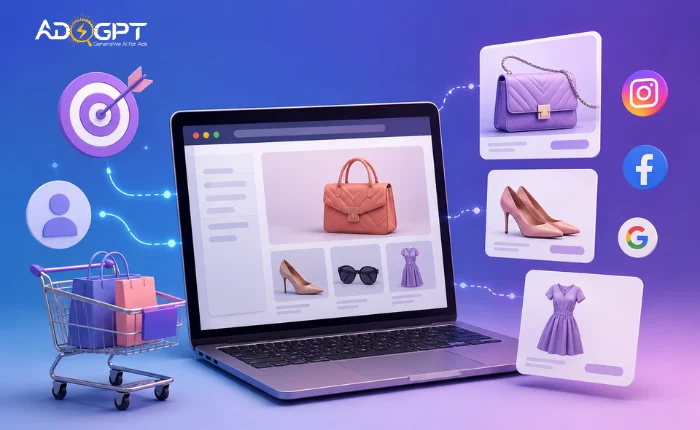
Digital advertising has evolved rapidly over the past few years. Traditional banner ads are no longer enough to capture customer attention in a competitive online environment. Businesses now require more personalized and data-driven strategies to improve engagement and conversions. This is where modern advertising has transformed.
To every user, the static ads show the same message. However, the content is based on audience behavior, interests, demographics, and browsing history, which is automatically customized. It helps businesses to deliver highly relevant experiences that improve click-through rate and increase ROI.
Smart dynamic display ads are essential for businesses that want to stay ahead of the competition. If you are new to online advertising or searching for an advanced method, this guide will explain the definition and provide a Google dynamic display ads example.
What Are Dynamic Display Ads?
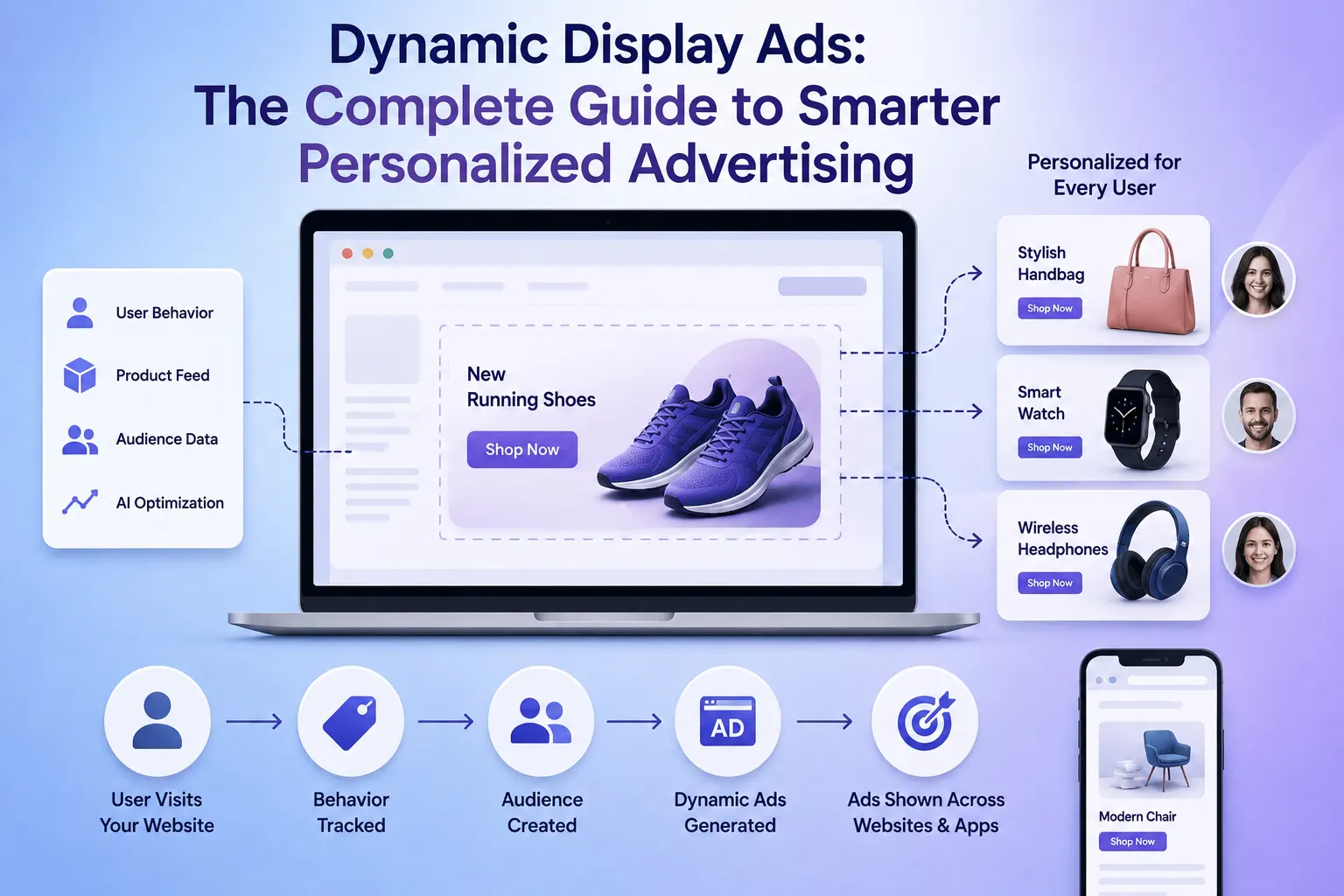
Simply put, they are automated advertisements that change their content in real time depending on user data and behavior. These ads can display personalized products, offers, images, or messages tailored to each viewer.
For example, if a customer visits an e-commerce website and browses running shoes without making a purchase, dynamic display ads can later show those same products while the user browses other websites or apps.
Smart dynamic displays are personalized. Instead of delivering a generic advertisement to everyone, businesses can create relevant ad experiences for different customer segments.
Today’s modern advertising methods are commonly used by e-commerce stores, travel businesses, SaaS companies, and online retailers because they significantly improve customer engagement.
Definition Explained: Dynamic Display Ads
The official definition refers to online advertisements that automatically generate personalized creative elements using audience signals, product feeds, and machine learning technology. In simpler terms, the definition focuses on automated ad customization. These ads use real-time information to display relevant products or services to users based on their previous online actions.
Businesses benefit from:
- Personalized messaging
- Better audience targeting
- Automated creative optimization
- Improved conversion rates
- Increased advertising efficiency
The popularity of smart dynamic display ads has grown because consumers now expect highly relevant online experiences. Personalized advertising feels more useful and less intrusive compared to traditional advertising formats.
How Dynamic Display Ads Work
Understanding what are becomes easier when you explore the technology behind them. The process usually involves:
- Collecting user behavior data
- Creating audience segments
- Connecting product or service feeds
- Automatically generating personalized ads.
- Displaying ads across websites and apps
When someone visits your website, tracking pixels or cookies collect browsing information. The advertising platform then uses this data to create content tailored to that user’s interests. For instance, Google Dynamic Display Ads examples often include remarketing campaigns where shoppers see products they previously viewed online.
How to Decide Who Sees the Dynamic Display?
Nowadays, the right audience is crucial for running a good or dynamic advertising campaign, while many visually appealing ads fail because they show products or services to people who are not interested in them. Therefore, the audience plays a critical role in dynamic display advertising.
Use the user’s behavior, interests, demographics, and online activity to deliver personalized ads to specific audiences. Instead of showing the same ad to everyone, businesses can target people who are most likely to engage and convert.
Below are the key ways to decide who should see your:
1. Target Website Visitors:
One of the most effective strategies is remarketing. This involves showing ads to users who have already visited your website. These users already showed interest in your business, making them more likely to convert. For example:
- Users who viewed a product page
- Customers who abandoned their shopping cart
- Visitors who spent significant time on your site
2. Use Audience Interests:
Advertising platforms allow businesses to target users based on their interests and online behavior. Interest-based targeting helps ensure your ads reach relevant audiences. For instance:
- Fashion brands can target people interested in clothing and accessories.
- Tech companies can target gadget enthusiasts.
- Travel businesses can target frequent travelers.
3. Segment by Demographics:
This improves ad relevance and prevents wasted ad spend. Demographic targeting helps businesses narrow audiences based on:
- Age
- Gender
- Location
- Income
- Language
For example, luxury fashion brands may target higher-income users, while local businesses may focus on specific geographic locations.
4. Analyze Customer Behavior:
Behavioral targeting uses data such as:
- Purchase history
- Browsing activity
- Search intent
- App usage
Become more effective when they reflect user actions and preferences. If someone recently searched for running shoes, they may later see ads featuring similar products.
5. Create Custom Audience Segments:
Businesses can create custom audience groups based on specific goals. Custom segmentation improves personalization and campaign performance. Examples include:
- Existing customers
- Repeat buyers
- Newsletter subscribers
- High-intent shoppers
- Users who watched videos or engaged on social media
6. Use Lookalike Audiences:
Lookalike audiences help advertisers reach new people who share similar characteristics with existing customers. Analyze the advertising platform to find your current audience and find users with similar interests and behaviours. This strategy helps businesses expand reach while maintaining targeting accuracy.
7. Exclude Irrelevant Audiences:
Audience exclusion is just as important as targeting. This helps reduce unnecessary spending and improves overall campaign efficiency. For example, businesses may exclude:
- Existing customers from acquisition campaigns
- Users who have already purchased a product
- Low-engagement audiences
8. Test and Optimize Continuously:
Audience behavior changes over time, so regular testing is essential. Adjust targeting settings based on campaign performance to improve results. Monitor metrics such as:
- Click-through rates
- Conversion rates
- Engagement
- Cost per acquisition
Benefits of Dynamic Displays
There are several reasons why businesses increasingly rely on digital marketing campaigns.
1. Personalized Customer Experience:
One major advantage of them is their ability to deliver personalized experiences. Customers are more likely to engage with ads that reflect their interests. Because smart ads adapt to individual preferences, they often achieve better engagement than traditional banner ads.
2. Higher Conversion Rates:
The relevance created by improves conversions. Users who see products they previously viewed are more likely to return and complete purchases. Many Google examples demonstrate how remarketing campaigns successfully recover abandoned carts.
3. Automated Ad Creation:
Another benefit highlighted in the display ads definition is automation. Marketers don’t need to manually create hundreds of separate ads. Instead, smart automatically generates creatives using product feeds and audience signals.
4. Better Audience Targeting:
Businesses can target users based on browsing behavior, demographics, purchase intent, and interests. Understanding what it is helps marketers realize how advanced targeting improves campaign efficiency.
Smart Dynamic Ads and AI Technology
Artificial intelligence plays a major role in smart, dynamic display ads. Machine learning algorithms analyze large amounts of data to determine:
- Which products to display
- Which audience segments to target
- Which layouts perform best
- Which bidding strategies maximize ROI
AI-driven dynamic displays continuously optimize campaigns based on performance data. The evolution has made advertising more intelligent, efficient, and scalable.
Google Dynamic Displays Examples:
One of the best ways to understand these campaigns is by reviewing these examples:
Example 1: E-Commerce Remarketing
An online fashion store uses to show customers the exact products they viewed earlier. This is one of the most common examples because it increases the chances of purchase completion.
Example 2: Travel Advertising
Travel companies use smart technology to promote hotels, flights, or vacation packages based on previous searches. For example, someone searching for beach resorts may later see personalized travel ads across websites.
Example 3: SaaS Retargeting
Software companies use to re-engage users who visited pricing pages but didn’t sign up. These Google Dynamic Display ads examples often include customized offers or free trial promotions.
Why Businesses Prefer Dynamic Display Ads?
Modern businesses prefer it because they combine automation with personalization. As more companies explore what are, adoption continues to rise across industries. Compared to traditional display advertising:
- They are more relevant.
- They improve engagement
- They increase ROI
- They save time
- They support large product catalogs.
Best Practices :
To maximize campaign performance, businesses should follow several best practices.
- Use High-Quality Visuals: Since they rely heavily on visuals, product images should be professional and appealing.
- Optimize Product Feeds: A well-structured product feed is essential for smart. Your feed should include: Accurate product names, clear descriptions, & Updated pricing, and high-quality images.
- Segment Your Audience: Understanding audience behavior improves personalization. Many successful Google examples rely on advanced audience segmentation.
- Test Different Creatives: Even though they are automated, testing still matters. Experiment with: Headlines, CTAs, Visual Styles & Promotions
Challenges :
Although highly effective, it also presents some challenges.
- Privacy Concerns: Data collection practices related to smart dynamic display ads must comply with privacy regulations. Businesses should maintain transparency regarding user tracking.
- Creative Fatigue: Showing the same ads repeatedly may reduce engagement. This is why many Google dynamic displays examples use rotating creatives and frequency caps.
- Technical Setup: Implementing requires a proper tracking setup, feed management, and audience segmentation. However, once configured, smart dynamic displays become easier to scale.
Future Trends in Dynamic Display Advertising
As advertising platforms evolve, smart dynamic displays will become even more sophisticated. Businesses that understand what today will be better prepared for the future of digital marketing. The future will likely include:
- More AI automation
- Improved personalization
- Voice-integrated advertising
- Privacy-first targeting
- Advanced predictive analytics
Dynamic Displays vs Traditional Display Ads
Traditional ads display the same content to everyone, while personalized content is displayed to each viewer. The difference becomes especially noticeable when reviewing Google examples, where personalization significantly improves performance. The biggest advantage of smart dynamic display ads is relevance. Consumers prefer ads tailored to their interests instead of generic promotions.
Industries :
Many industries successfully use, including:
- Fashion
- Electronics
- Travel
- SaaS
- Education
- Healthcare
- Real estate
Boost Your Performance with AdsGPT
Running dynamic display at scale is only half the challenge — creating the high-converting creatives behind them is where most teams lose time and budget. That is where AdsGPT becomes genuinely valuable.
AdsGPT is an AI-powered ad creation platform used by 10,000+ marketers to generate scroll-stopping creatives in under 60 seconds. For teams running dynamic display ad campaigns, it solves the hardest part: building a steady pipeline of fresh, on-brand creative assets without needing a designer.
Key features that directly support your dynamic display ad strategy:
- AI Ad Creatives — Generate image ads for every platform ratio (Google Display, Meta, LinkedIn, Pinterest) from a single prompt. Batch-create up to five variations at once, so your feed always has fresh options to rotate.
- Ad Factory — Upload your brand kit once and generate hundreds of on-brand ad variations across every format and placement in bulk. Perfect for feeding large, dynamic display ad campaigns with consistent creative.
- Product Shot Studio — Turn a single product photo into multiple studio-quality lifestyle images and hero shots. More image variety in your data feed directly improves dynamic ad relevance and performance.
- Competitor Intel — Search any brand and see every ad they are running across Meta, Google, LinkedIn, and TikTok from a 500M+ ad database. Identify what is working in your niche and generate similar creatives in one click.
- BrandIQ — Store your logo, colors, tone of voice, and tagline once. Every creative AdsGPT automatically generates and reflects your brand identity — no off-brand outputs, no manual corrections.
- UGC Video Ads — Authentic user-generated-style video ads that convert up to 4× better than polished brand content, with no casting or filming required.
Conclusion
The rise of personalized advertising has completely transformed digital marketing. Businesses can no longer rely solely on generic campaigns to capture attention and drive conversions. By understanding the definition, marketers can better appreciate how automation and personalization work together to improve customer experiences.
Learning what is essential for brands that want to stay competitive in today’s digital landscape. These ads allow businesses to deliver relevant messages, recover lost customers, and improve overall advertising performance. From remarketing strategies to AI-powered optimization, smart dynamic display ads continue to shape the future of online advertising.
The success of many Google display ads examples proves that personalized advertising is not just a trend—it’s becoming the standard for effective digital marketing. Businesses that invest in today will be better positioned to build stronger customer relationships, increase engagement, and achieve long-term growth in an increasingly competitive online world.
FAQs
Q1. Can it increase conversion rates?
Yes, personalized ads are more relevant to users, which often leads to higher engagement, better customer experiences, and improved conversion rates.
Q2. How do AI and automation help dynamic display advertising?
AI and automation analyze user behavior in real time to deliver the most relevant ad creatives, product recommendations, and offers automatically.
Q3. Why are they important for personalized marketing?
Dynamic display ads help brands create more personalized customer experiences, making advertising feel more relevant and increasing the chances of customer interaction and sales.
MOST POPULAR