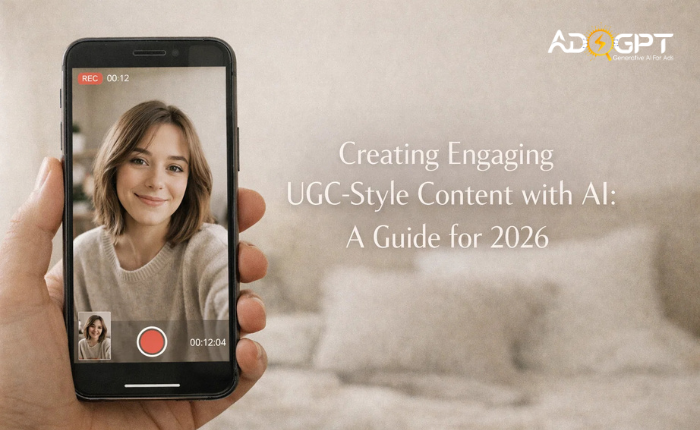
Scroll through any social feed in 2026 and you’ll notice something interesting.
The most persuasive ads don’t look like ads anymore.
They look like someone filming in their bedroom.
And, sound like a friend sharing an honest opinion.
They feel raw, slightly imperfect and real.
That’s the power of UGC style content.
But here’s the twist: a large percentage of these “real” videos aren’t filmed by customers at all. They’re created using AI.
In this guide, we’ll break down:
- What is UGC style content
- UGC style content meaning in modern marketing
- How AI is transforming UGC style content
- The best AI ad creator tools for UGC-style content
- And a step-by-step system to create authentic UGC with AI (without making it look robotic)
In a hurry? Listen to the blog instead!
Let’s dive in.
What Is UGC Style Content?

Before we talk about AI, let’s get clarity.
What is UGC style content?
Traditionally, user-generated content (UGC) is content created by real customers about a brand. Think:
- Product reviews
- Unboxing videos
- Testimonials
- Before-and-after transformations
- Instagram posts using branded hashtags
It’s authentic, unscripted, and created by users — not brands.
Now, UGC style content meaning has evolved.
Today, ugc style content refers to content that looks and feels like user-generated content, even if it’s created by a brand, paid creator, or AI.
It mimics:
- Casual phone-shot visuals
- Conversational tone
- POV storytelling
- Real-life scenarios
- Minimal editing
The goal isn’t polish.
The goal is trust.
And trust converts.
Why UGC Style Content Dominates in 2026
Consumers have developed ad blindness.
Highly produced studio ads? Scroll.
Over-scripted influencer promotions? Scroll.
Corporate voiceovers? Scroll.
But a video that starts with:
“Okay, I didn’t expect this to work but…”
That makes people pause.
UGC works because it:
- Builds instant credibility
- Feels relatable
- Blends into native feeds
- Delivers social proof
- Drives higher engagement
Brands across industries, from fashion to tech to SaaS, rely heavily on UGC-style content to increase conversions across the buyer journey.
And now AI has made it scalable.
The Rise of AI in UGC-Style Content
Creating traditional UGC at scale used to be expensive.
You had to:
- Find creators
- Negotiate contracts
- Wait for filming
- Revise content
- Reshoot if needed
Now? You can generate variations in minutes.
AI-powered UGC style content combines authenticity with automation.
Instead of hiring 10 creators, you can:
- Use AI avatars
- Generate natural scripts
- Add human-like voice-overs.
- Create multilingual versions
- Test multiple hooks instantly
It’s faster.
It’s cheaper.
And when done right, it’s nearly indistinguishable from real user content.
Organic vs Paid vs AI UGC
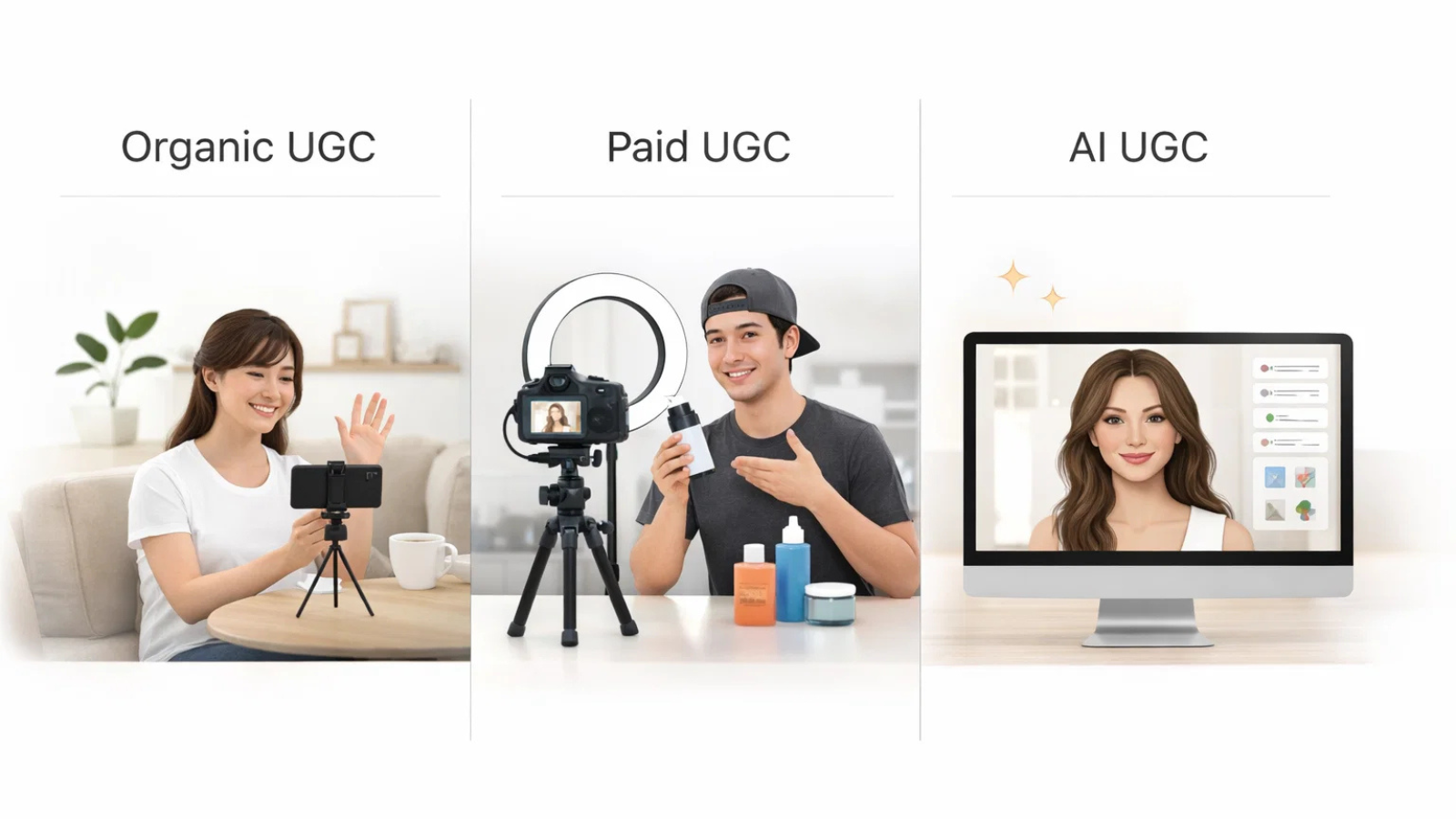
To understand where AI fits, let’s quickly break this down.
1. Organic UGC
Real customers posting voluntarily.
Most authentic. Hardest to control.
2. Paid UGC
Creators produce content in a UGC style.
More control. Still human.
3. AI UGC
AI acts as the creator.
Full control. Infinite scalability.
With AI UGC, brands reduce content production costs dramatically while increasing output volume. One concept can be turned into 20 variations — different hooks, tones, formats — without multiplying the budget.
The smart brands in 2026? They use all three.
AI fills the content gaps.
Benefits of Using AI for UGC Style Content
1. Speed and Scalability
You can generate:
- 10 hooks
- 5 different avatars
- 3 tone variations
- 4 language versions
All in one afternoon.
Traditional production simply can’t compete.
2. Cost Efficiency
Instead of paying thousands per creator per video, AI drastically reduces production costs.
You’re no longer limited by budget; you’re limited by creativity.
3. Brand Consistency
One challenge with human creators?
Every person interprets your brand differently.
With AI, you define:
- Tone
- Messaging
- Style
- Mood
And it stays consistent across campaigns.
4. Face-Free Content Creation
Not comfortable being on camera?
AI avatars allow you to create UGC style content without revealing your face.
You can choose from hundreds of realistic presenters or create custom avatars.
Best AI Ad Creator Tools for UGC-Style Content
Several platforms now specialize in AI-powered UGC video generation. These tools combine script writing, avatars, voiceovers, and editing into one workflow.
Look for tools that offer:
- Realistic digital avatars
- AI script generation
- Human-like voice synthesis
- Multi-language support
- Easy editing features
- Template-based UGC formats
The best AI ad creator tools for UGC style content allow you to:
- Paste a product URL
- Enter a short prompt
- Generate a testimonial-style video automatically
In minutes.
Beyond generic AI video tools, some platforms are now combining UGC-style creativity with performance-driven advertising intelligence.
For example, platforms like AdsGPT go beyond just generating avatars or scripts. Instead of only helping you create a video, they help you generate full-funnel, scroll-stopping ad creatives, visuals, copy, positioning, and even competitor-inspired concepts in seconds.
This is where ugc style content starts merging with conversion-focused ad strategy.
Because in 2026, authenticity alone isn’t enough.
Authenticity + performance data? That’s where scale happens.
AdsGPT: Turning UGC Style Content Into Performance-Driven Ads
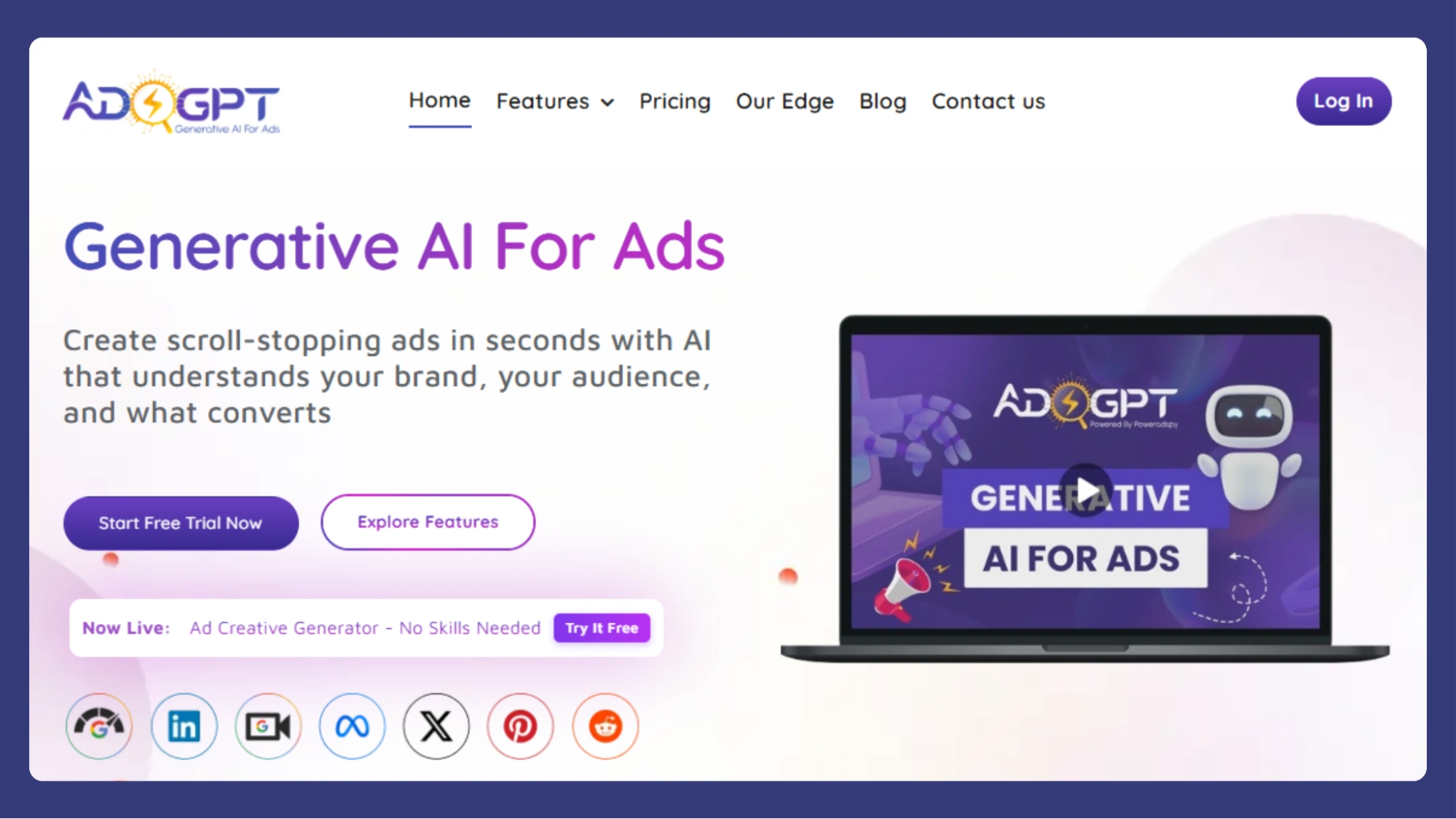
While most AI tools help you generate videos, AdsGPT focuses on turning your UGC-style content into high-converting ad creatives. It combines generative AI with advertising intelligence, so you’re not just creating content — you’re creating ads designed to perform.
Key Features:
- AI Ad Creative Generation:
Instantly create scroll-stopping visuals and optimized ad copy tailored to your product and audience. - Platform-Specific Optimization:
Generate creatives formatted and structured for Meta, Google, LinkedIn, Pinterest, and more. - Competitor-Inspired Variations
Analyze competitor ads and generate fresh, brand-aligned creative angles in seconds. - Multiple Creative Variants
Produce up to five ad variations at once for faster testing and iteration. - Built-In Performance Insights
Access analytics like ad popularity, CTA trends, and market comparisons to refine your UGC style content strategy.
In short, AdsGPT helps bridge the gap between authentic UGC-style storytelling and measurable ad performance.
Step-by-Step: How to Create Authentic UGC-Style Content Using AI
Now let’s get practical.
Here’s your 2026 blueprint.
Step 1: Define the UGC Concept
Don’t start with AI.
Start with psychology.
Ask:
- Is this a testimonial?
- A problem-solution story?
- A comparison?
- A first-impression review?
- A lifestyle demo?
Popular UGC formats:
- Product review
- Before-and-after
- “I tried this so you don’t have to”
- POV storytelling
- Tutorial/explainer
- Reaction video
Clarity first. Tools second.
Step 2: Write a Human-Sounding Script
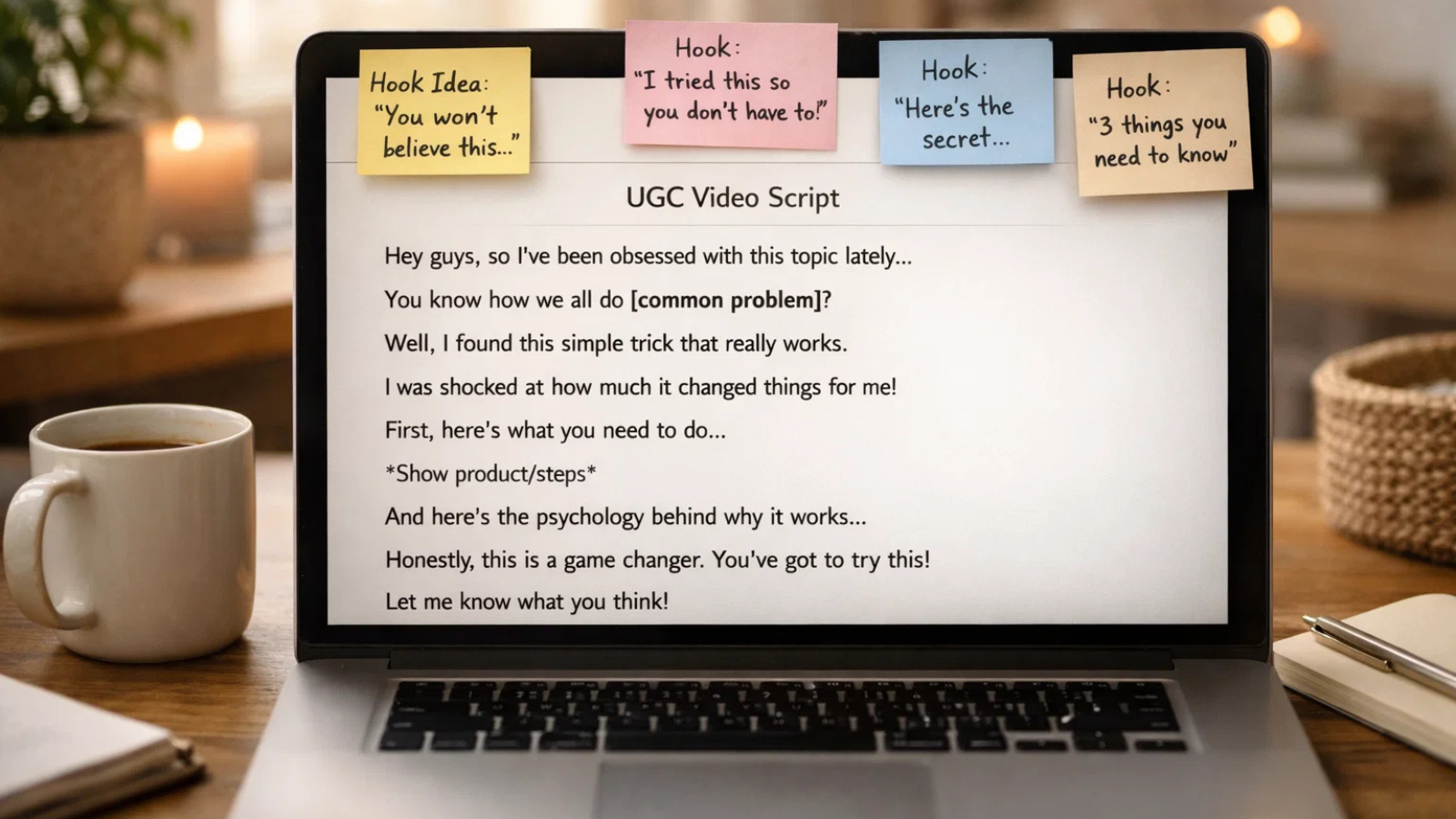
AI can generate scripts, but you must guide it.
Bad example:
“This revolutionary product will transform your life.”
Good example:
“I’ve been using this for 3 weeks and honestly… I didn’t expect to like it this much.”
Authentic UGC-style content sounds:
- Conversational
- Slightly imperfect
- Emotion-driven
- Experience-focused
Use:
- Short sentences
- Pauses
- Personal reactions
- Specific details
Avoid:
- Corporate language
- Buzzwords
- Overly polished phrasing
Remember, real people ramble slightly.
Step 3: Choose the Right AI Avatar
If you’re using AI presenters:
- Match the avatar to your target audience.
- Avoid overly glamorous models unless that fits your brand.
- Choose natural facial expressions.
Relatability > Perfection.
Some tools offer 500+ stock avatars and allow customization of:
- Gender
- Age
- Ethnicity
- Tone
- Voice style
Pick someone your audience could realistically trust.
You Might Also Like:
How To Make Viral Ugc Ads With The Power Of AI?
How AI UGC Reduces The Cost Of Ad Creation?
Step 4: Make It Feel Phone-Recorded
This is critical.
If it looks like a studio commercial, it defeats the purpose.
Tips:
- Use vertical 9:16 format
- Add subtle background noise
- Keep lighting natural
- Use home-like backgrounds
- Avoid heavy transitions
Imperfection increases believability.
Step 5: Add Natural Voiceovers
Modern AI voice tools support dozens of languages and accents.
Choose:
- Conversational tone
- Slight pacing variation
- Emotional inflection
Avoid robotic pacing or overly dramatic narration.
The voice should feel like someone talking to a friend, not reading a teleprompter.
Step 6: Create Multiple Variations
One of AI’s biggest advantages?
Iteration.
Test:
- 5 different hooks
- 3 emotional angles
- 2 CTA styles
- Different lengths (15s, 30s, 45s)
Scale what performs.
Kill what doesn’t.
Step 7: Edit for Authenticity, Not Perfection
Add:
- Subtle captions
- Natural pauses
- Minor filler words (“honestly,” “okay,” “so…”)
- Light background music
Remove:
- Robotic facial stiffness
- Overly perfect grammar
- Hard sales pitches
The moment it feels like an ad, you’ve lost.
Best Practices for AI UGC in 2026
1. Balance AI with Real UGC
AI is powerful.
But real user stories still build unmatched emotional trust.
Blend both.
2. Don’t Make It Too Salesy
UGC works because it doesn’t scream “BUY NOW.”
Instead:
- Focus on experience
- Highlight transformation
- Share honest pros and minor cons
Transparency builds credibility.
3. Align with Platform Culture
TikTok ≠ LinkedIn ≠ Instagram ≠ YouTube Shorts.
Adapt:
- Tone
- Video length
- Hook style
- Visual pacing
UGC that works on TikTok might feel out of place on LinkedIn.
4. Disclose When Necessary
If you’re using paid UGC or AI-generated presenters in regulated industries, follow platform advertising guidelines.
Transparency protects brand trust long-term.
The Future of UGC Style Content
In 2026, the question is no longer:
“Should we use AI?”
It’s:
“How do we use AI without losing authenticity?”
The brands winning today understand something simple:
People don’t connect with production quality.
They connect with emotion.
AI is not replacing authenticity.
It’s enabling brands to simulate it at scale.
And when used thoughtfully, UGC-style content becomes one of the most powerful tools in your marketing arsenal.
Final Thoughts
In 2026, attention is earned through authenticity, not polish. The brands that win are those that understand how to combine emotion, relatability, and smart automation. AI has made it possible to create scalable, high-performing content without sacrificing the human feel audiences crave.
When used strategically, UGC style becomes more than a trend; it becomes a performance engine. The real advantage lies in balancing creativity with data, testing relentlessly, and refining what resonates.
Authentic storytelling powered by intelligent tools is no longer optional; it’s the new standard for sustainable growth in digital advertising.
Frequently Asked Questions (FAQs) : –
1. What is UGC style content in simple terms?
UGC style content is content that looks and feels like it was created by a real customer, even if it’s produced by a brand, paid creator, or AI. It mimics casual phone-shot videos, conversational storytelling, and authentic experiences rather than polished, studio-style ads.
2. Does AI-generated UGC style content actually convert?
Yes — when executed properly, AI-generated UGC can convert at rates comparable to real user-generated content. The key is authenticity: natural scripts, relatable visuals, and emotional storytelling. The advantage of AI is speed, you can test multiple hooks, formats, and angles quickly to find what performs best.
3. What are the best AI tools for creating UGC-style content?
The best AI tools for UGC-style content typically offer:
- Realistic AI avatars
- Human-like voiceovers
- Script generation
- Multi-language support
- Fast creative testing
Some advanced platforms like AdsGPT go further by combining UGC-style creative generation with performance analytics and competitor-inspired ad variations, helping you optimize for conversions, not just aesthetics.
4. How do you make AI-generated UGC not look fake?
To keep AI UGC authentic:
- Use conversational, slightly imperfect scripts
- Avoid corporate or sales-heavy language
- Keep editing minimal
- Use natural lighting and everyday backgrounds
- Add subtle pauses and filler words
If it feels too polished, it feels like an ad, and that reduces trust.
5. Is UGC style content better than influencer marketing?
Not necessarily better, but often more scalable. Influencer marketing relies on audience trust within a specific creator’s community. UGC style content focuses on relatability and performance-driven storytelling. In 2026, the most effective brands combine influencer reach with AI-powered UGC variations for paid campaigns.
MOST POPULAR