
Modern marketing isn’t about reaching everyone; it’s about reaching the right people. A clearly defined target audience enables brands to deliver relevant messages, enhance engagement, and avoid wasted advertising spend.
Traditional marketing relied heavily on assumptions and broad demographics, often resulting in low conversion rates. Today, customers expect personalised experiences, and that’s where data and technology step in. With the growing role of AI in marketing, businesses can now analyse customer behaviour, preferences, and intent with far greater accuracy.
By using AI-driven insights, marketers can refine their target audience targeting, create more meaningful campaigns, and stay competitive in an increasingly digital landscape. This shift has made audience precision a core pillar of successful marketing strategies.
You can listen to this blog here.
What Is A Target Audience?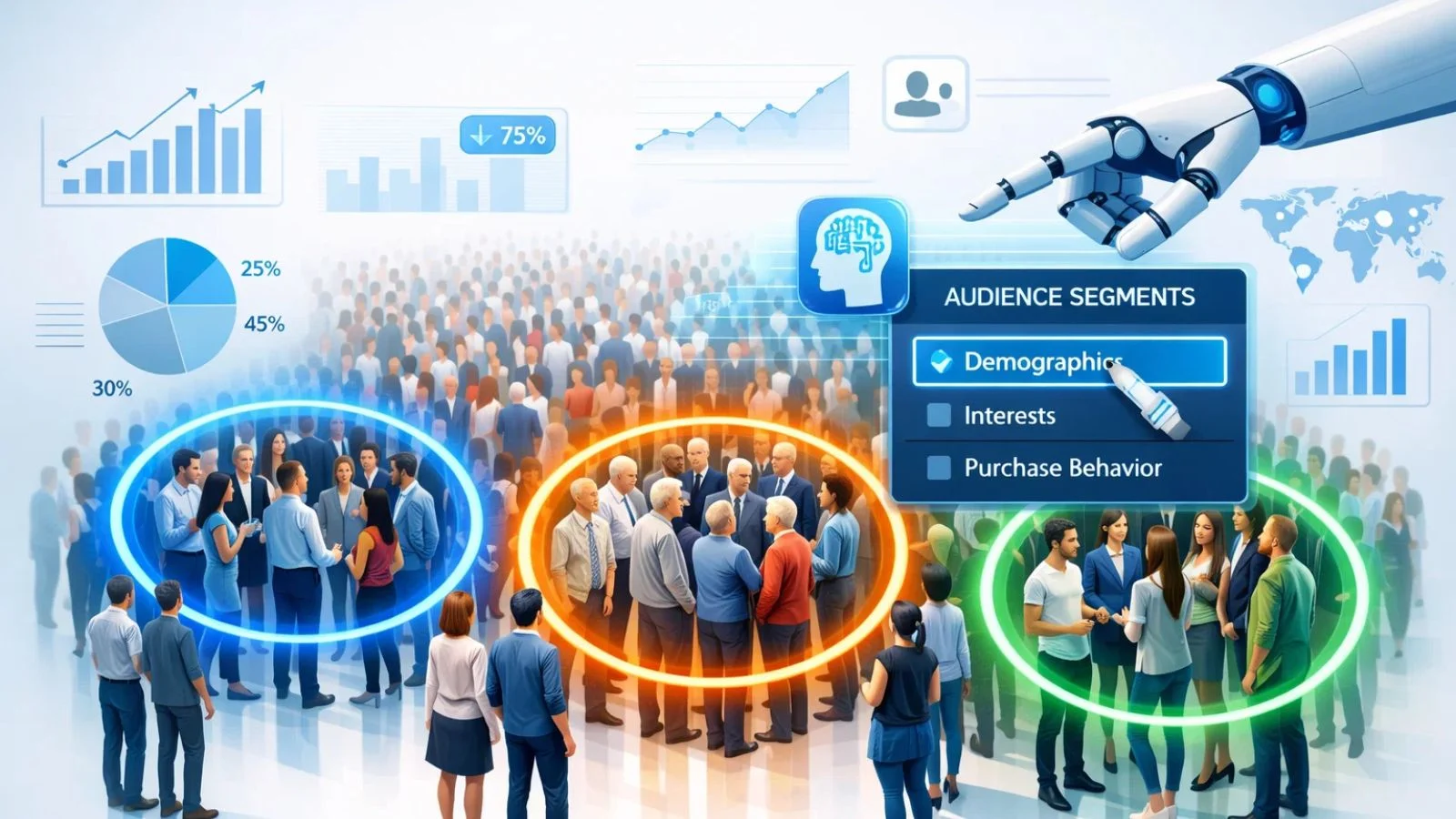
A target audience is a specific group of people most likely to be interested in your product or service. This group is defined by factors such as demographics, interests, behavior, needs, and buying intent. When identified correctly, it helps marketers craft messages that feel relevant rather than intrusive.
The problem is that many brands still define their target audience too broadly. Phrases like “everyone,” “young professionals,” or “online shoppers” may sound convenient, but they lack precision. Broad definitions make it difficult to personalize messaging, leading to lower engagement and weak conversions.
Another common mistake is relying only on surface-level data such as age, gender, or location. While these details matter, they don’t explain why people buy. Without understanding motivations, pain points, and behavior, even well-funded campaigns struggle to perform.
Audience targeting needs to go deeper. Businesses must move beyond assumptions and use data-backed insights to understand how people interact with content, ads, and brands across channels. This shift lays the foundation for smarter targeting strategies—especially when AI enters the picture.
Traditional Target Audience Targeting vs AI-Driven Targeting
Traditional target audience targeting relies on static segments. Marketers typically group people based on age, location, income, or job role and then deliver the same message to everyone within that group. While this approach is simple, it often fails to capture real buying intent or change customer behavior.
The biggest limitation of traditional targeting is its lack of flexibility. Audiences don’t update in real time, and insights are often based on historical data. As a result, campaigns can quickly become outdated, leading to lower engagement and inefficient ad spending.
AI-driven targeting takes a very different approach. Instead of fixed segments, AI analyzes live data such as browsing behavior, purchase history, engagement patterns, and content interactions. This allows marketers to understand not just who their audience is, but when and why they are most likely to convert.
With AI-powered systems, audience segments constantly evolve. Campaigns automatically adapt based on performance, making AI ads more relevant and timely. This shift helps brands reach the right users with the right message, at the right moment—something traditional targeting methods struggle to achieve.
The Role of Data in Defining the Right Target Audience
Accurate target audience targeting starts with data. Every interaction a customer has with a brand—visiting a website, clicking an ad, or making a purchase, creates valuable information that helps marketers understand preferences and intent.
Data typically falls into three categories: first-party data collected directly from customers, second-party data shared through partnerships, and third-party data sourced externally. When used correctly, these data sources provide a clearer picture of how a target audience behaves across different touchpoints.
AI plays a crucial role in processing this information. Instead of manually analyzing spreadsheets or reports, AI systems can evaluate massive datasets in real time, identifying patterns that humans might miss. This allows marketers to spot trends, predict behavior, and refine audience segments with greater accuracy.
By turning raw data into actionable insights, businesses can move beyond assumptions and create targeting strategies that are more precise, scalable, and aligned with real customer needs. This data-driven foundation is essential for effective AI-powered marketing.
How AI Improves Target Market Audience Identification?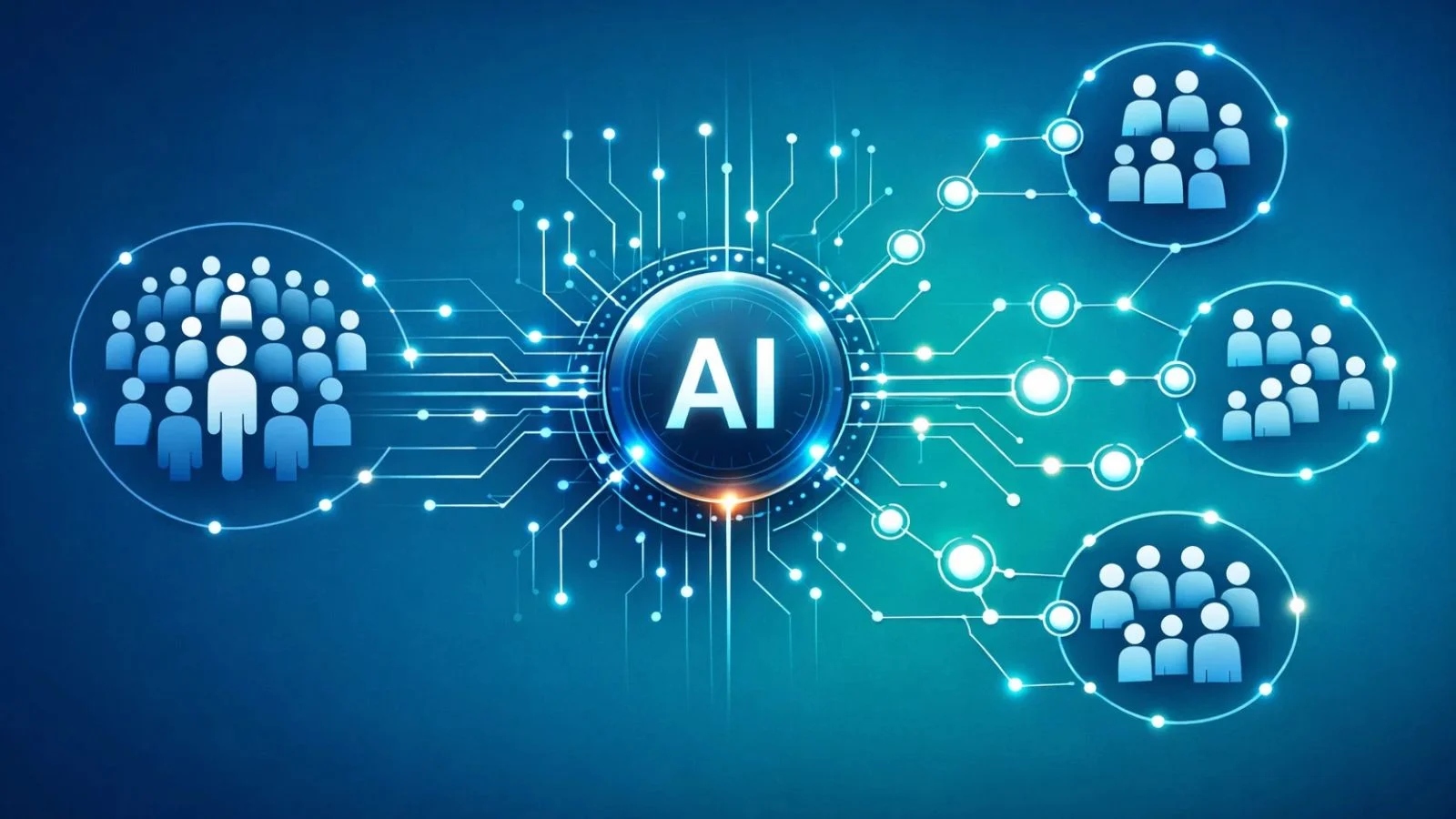
Identifying the right target market audience is one of the biggest challenges in modern marketing. Customer preferences change quickly, and manual segmentation often struggles to keep up. This is where AI brings a major advantage.
AI-powered systems use predictive analytics to analyze past behavior and forecast future actions. Instead of grouping users into broad categories, AI creates micro-segments based on interests, intent, and engagement patterns. This helps brands reach users who are most likely to respond positively.
Another key benefit is dynamic audience profiling. As users interact with content, websites, and ads, AI continuously updates audience segments. This means marketers are always working with fresh insights rather than outdated assumptions.
By improving accuracy and speed, AI enables businesses to focus their efforts on high-value users. The result is smarter campaigns, stronger engagement, and more effective targeting across digital channels.
AI-Driven Targeting for High-Performing Product Ads
Successful product ads depend heavily on showing the right message to the right audience at the right time. Even the best creative can fail if it reaches users who aren’t ready or interested. AI-driven targeting helps solve this problem by aligning ads with real customer intent.
AI analyzes how users interact with products, content, and previous campaigns to determine which audiences are most likely to convert. Based on this data, ad delivery, messaging, and timing are optimized automatically. This leads to higher click-through rates and more meaningful engagement.
Another advantage of AI-driven targeting is real-time optimization. If a particular audience segment stops responding, AI adjusts campaigns instantly instead of waiting for manual intervention. This flexibility makes advertising more efficient and reduces wasted spend.
By leveraging AI insights, businesses can create more relevant and personalized product ads that resonate with users, improve performance, and deliver stronger returns on investment.
Also read,
Key Benefits of AI-Powered Target Audience Targeting
AI-powered targeting delivers measurable advantages for businesses looking to connect with the right users. One of the biggest benefits is improved engagement. When campaigns are aligned with the actual interests and behavior of a target audience, users are more likely to interact and convert.
Another major benefit is efficiency. AI helps allocate budgets more effectively by prioritizing high-performing audience segments. This reduces wasted ad spend and ensures marketing resources are used where they matter most.
AI also enhances the overall customer experience. Personalized messaging, timely offers, and relevant content make interactions feel more natural rather than disruptive. Over time, this builds trust and strengthens brand relationships.
Finally, AI enables faster decision-making. Instead of waiting for weekly reports or manual analysis, marketers gain real-time insights that allow them to adapt quickly and stay competitive in fast-moving digital markets.
Challenges and Ethical Considerations in AI Audience Targeting
While AI brings powerful capabilities to target audience targeting, it also introduces important challenges that businesses must address. One of the biggest concerns is data privacy. As AI relies heavily on user data, marketers must ensure compliance with regulations and maintain transparency about how information is collected and used.
Another challenge is bias in AI models. If the data used to train AI systems is incomplete or skewed, targeting decisions may unintentionally exclude or misrepresent certain audience groups. This can impact campaign performance and damage brand credibility.
There is also the issue of over-automation. Relying entirely on AI without human oversight can lead to messaging that feels impersonal or misaligned with brand values. AI should support strategy, not replace thoughtful decision-making.
To use AI responsibly, businesses need clear guidelines, ethical data practices, and a balanced approach that combines technology with human judgment. This ensures targeting remains effective, fair, and trustworthy.
AdsGPT: Smarter AI-Driven Targeting for Better Ads
In an AI-driven marketing landscape, reaching the right target audience requires more than manual targeting and guesswork. AdsGPT is built to help marketers use AI effectively to improve audience precision, ad relevance, and overall campaign performance.
Key Features of AdsGPT
- AI-Powered Audience Insights
Analyzes user behavior, engagement patterns, and intent signals to identify high-potential audience segments. - Automated Ad Copy Generation
Creates tailored ad copy based on audience data, helping marketers deliver more relevant and engaging messages. - Smart Creative Suggestions
Recommends ad creatives aligned with audience preferences to improve click-through and conversion rates. - Real-Time Campaign Optimization
Continuously monitors performance and adjusts targeting, messaging, and delivery for better results. - Scalable Campaign Management
Enables marketers to manage and optimize multiple campaigns across platforms with minimal manual effort. - Data-Driven Performance Insights
Provides actionable analytics that support faster, more informed marketing decisions.
By combining intelligent automation with audience-focused insights, AdsGPT helps brands run smarter campaigns and consistently reach the right users in an increasingly competitive digital environment.
Best Practices for Using AI to Reach Your Target Audience
AI can significantly improve how brands connect with their target audience, but results depend on how well the technology is used. The most effective strategies combine AI capabilities with clear marketing goals and human oversight.
Start by defining your objectives clearly. Whether the goal is brand awareness, lead generation, or conversions, AI performs best when it has a clear direction. This ensures targeting decisions align with business outcomes rather than surface-level metrics.
It’s also important to balance automation with strategy. While AI can optimize campaigns in real time, human input is still needed to guide messaging, brand voice, and creative direction. This balance prevents campaigns from feeling generic or disconnected.
Regular testing and refinement are equally important. AI thrives on feedback, so continuously monitoring performance and adjusting inputs helps improve targeting accuracy over time. When used thoughtfully, AI becomes a powerful partner in building meaningful and effective audience connections.
Also read,
Smarter Targeting Starts with Smarter AI
Reaching the right target audience is crucial for marketing success. Broad, generic campaigns often miss the mark, while AI-powered targeting provides precise insights into customer behavior, preferences, and intent.
By leveraging AI, marketers can deliver relevant messages, optimize ad spend, and improve overall campaign performance. Tools like AdsGPT simplify the process with real-time audience insights, automated ad creation, and continuous performance optimization.
Combining human strategy with AI-driven intelligence enables brands to build stronger connections, increase conversions, and stay competitive in an increasingly digital marketing landscape. Companies that use AI thoughtfully and strategically will have a clear advantage in understanding and engaging their audience effectively.
FAQs
Q1: What is a target audience in digital marketing?
A target audience is a specific group of people most likely to be interested in a brand’s products or services, defined by factors like demographics, interests, behaviors, and buying intent.
Q2: How does AI improve target audience targeting?
AI processes large amounts of data to uncover patterns, predict customer behavior, and create dynamic audience segments, allowing marketers to deliver more personalized and effective campaigns.
Q3: Why are AI ads more effective than traditional ads?
AI-driven ads automatically optimize targeting, messaging, and timing, ensuring campaigns reach the right audience, reduce wasted spend, and achieve higher engagement and conversions.
MOST POPULAR