If you’re running paid campaigns, understanding Facebook ad pricing is the difference between profitable growth and wasted budget.
Many businesses jump into ads without fully knowing how costs are calculated. They set a daily budget, launch campaigns, and hope for conversions. But without clarity on bidding models, audience competition, and optimization strategy, your ad spend can quickly spiral.
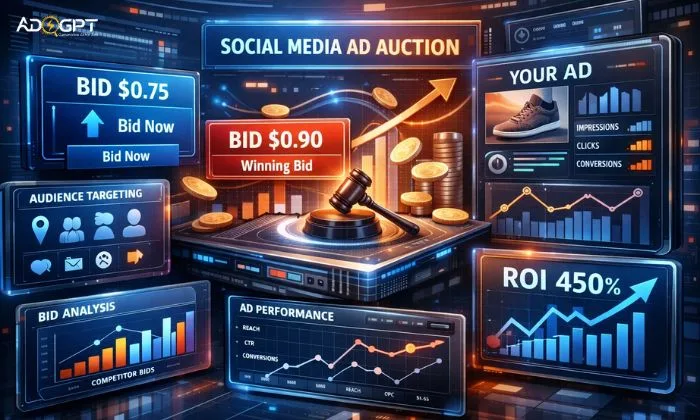
The reality is simple: Facebook advertising is an auction-based system. That means your costs are influenced by demand, targeting, quality, and timing.
Listen to this Podcast.
How Does Facebook Ad Pricing Work?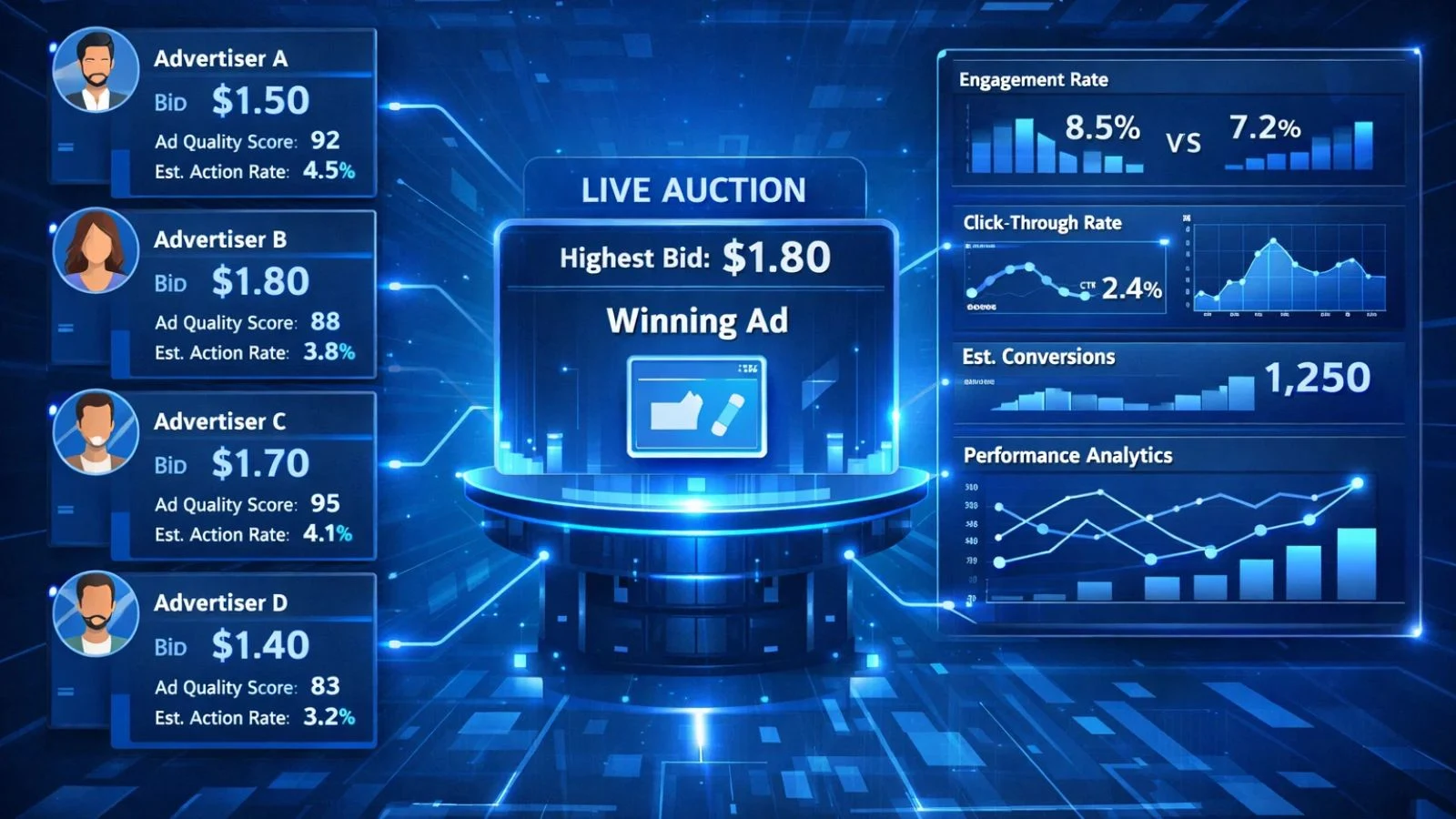
Many advertisers ask, how does Facebook ad pricing work exactly?
Facebook uses an auction system. Every time there is an opportunity to show an ad, advertisers compete in real time. But the highest bid does not always win.
Facebook considers three main factors:
- Your Bid – How much you’re willing to pay
- Estimated Action Rate – Likelihood of a user taking action
- Ad Quality & Relevance – Engagement and feedback
This means a highly relevant ad with a lower bid can outperform a poorly optimized ad with a higher bid.
That is why Facebook ad pricing is not fixed. Two businesses in the same industry can pay very different rates depending on campaign quality and strategy.
What Is the Average Facebook Ad Cost?
While costs vary, here are general benchmarks marketers often see:
- Cost Per Click (CPC): $0.50 to $2.00
- Cost Per 1,000 Impressions (CPM): $8 to $20
- Cost Per Lead: $5 to $50, depending on industry
Your actual Facebook ad cost depends on:
- Industry competition
- Audience targeting
- Geographic location
- Ad placement
- Campaign objective
Highly competitive niches like finance, SaaS, and eCommerce typically have higher Facebook advertising costs compared to local service businesses.
However, focusing only on cost is a mistake. ROI matters more than raw pricing.
Key Factors That Influence Facebook Ad Pricing
To control Facebook ad pricing, you must understand what drives it.
1. Audience Competition
The more advertisers targeting the same audience, the higher the cost. During peak seasons like Black Friday, prices often rise.
2. Ad Relevance Score
Engaging ads reduce costs. If users click, comment, and share, Facebook rewards you with lower CPM and CPC.
3. Campaign Objective
Conversion campaigns usually cost more than traffic campaigns because they require stronger intent signals.
4. Placement
Automatic placements often perform better cost-wise than manual selection.
5. Optimization Strategy
Campaigns optimized for value rather than clicks tend to improve long-term ROI.
Understanding these variables helps you predict fluctuations in Facebook ad costs more accurately.
Budgeting Strategies for Better ROI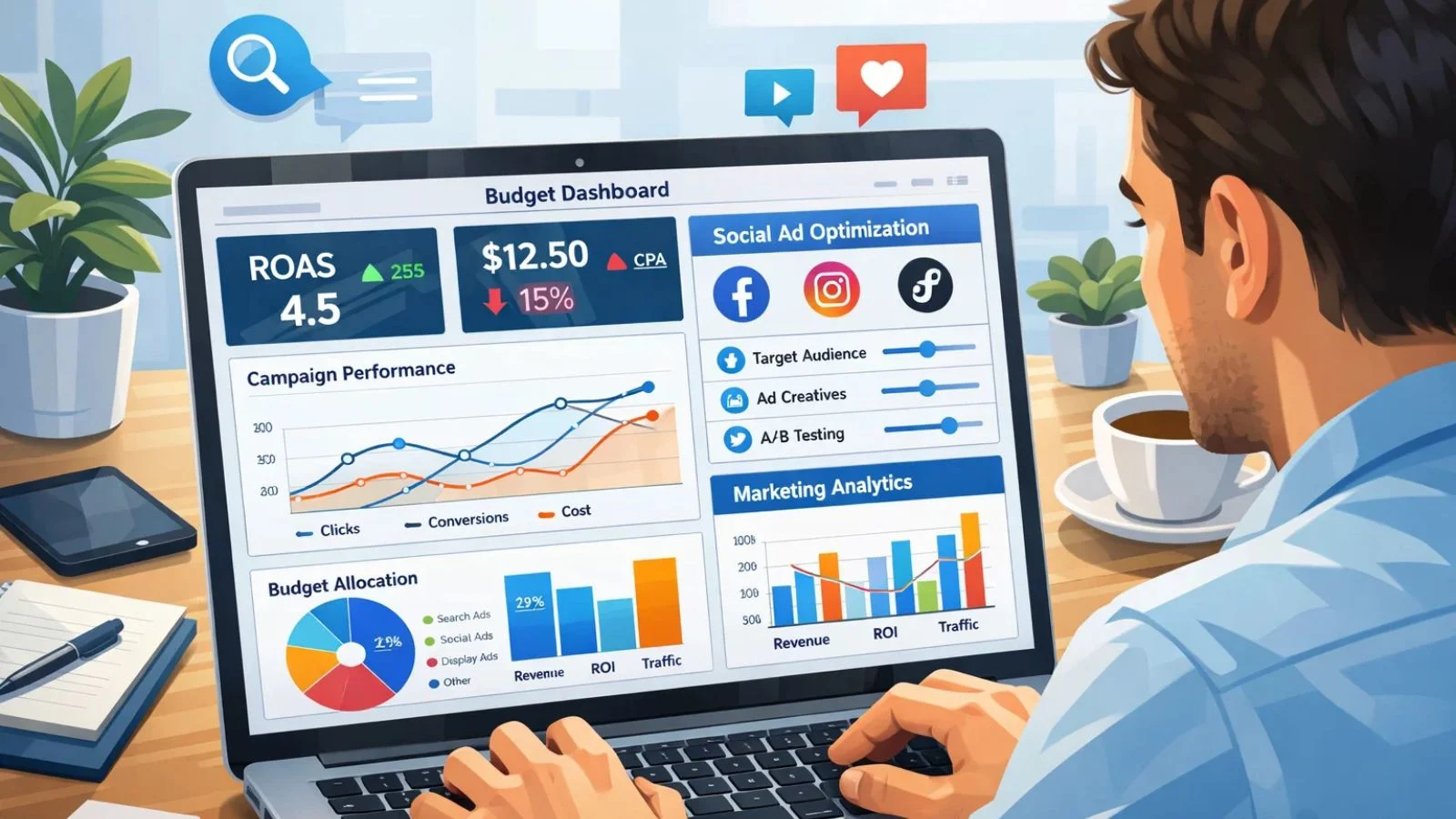
Smart budgeting is essential for controlling Facebook ad pricing.
Here are practical strategies:
Start with Testing Budgets
Allocate small budgets to test creatives, headlines, and audiences before scaling.
Use Campaign Budget Optimization (CBO)
Let Facebook distribute your budget across ad sets based on performance.
Monitor Frequency
High frequency increases costs and reduces performance. Refresh creatives regularly.
Focus on Conversion Metrics
Instead of obsessing over Facebook advertising cost, measure:
- Cost per acquisition (CPA)
- Return on ad spend (ROAS)
- Lifetime customer value
Profitability always matters more than cheap clicks.
Also Read,
Bidding Models Explained
Choosing the right bidding model impacts facebook ad pricing significantly.
Lowest Cost (Automatic Bidding)
Facebook sets bids automatically to get the most results within your budget. Ideal for beginners.
Cost Cap
You set a maximum cost per result. This gives more control but requires accurate data.
Bid Cap
You manually set the maximum bid in auctions. Best for experienced advertisers.
If you’re unsure how does facebook ad pricing works under different bid types, start with automatic bidding and analyze performance data before switching strategies.
Improving ROI: The Real Goal
Lowering Facebook ad pricing is helpful, but improving ROI is more important.
Here’s how to maximize returns:
- Improve landing page speed
- Optimize conversion tracking
- Use retargeting campaigns
- Segment warm and cold audiences
- Continuously test creatives
A slightly higher Facebook ad cost can still be profitable if conversion rates are strong.
How Predictive Analytics Improves Ad Performance
Modern marketers are increasingly using data models similar to predictive analytics for human resources, but applied to advertising performance.
Predictive tools analyze:
- Historical campaign data
- Audience behavior patterns
- Conversion trends
This helps forecast performance before scaling budgets.
When integrated into an ad strategy, predictive modeling reduces guesswork and improves efficiency in managing Facebook ad pricing.
How AdsGPT Helps Reduce Facebook Ad Costs
Managing campaigns manually can be overwhelming. That’s where AdsGPT becomes powerful.
AdsGPT helps you:
- Generate high-converting ad copy
- Analyze performance trends
- Optimize targeting suggestions
- Predict campaign outcomes
- Reduce wasted spend
Instead of guessing which creative will perform, AdsGPT uses intelligent insights to improve ad relevance and efficiency.
For businesses struggling with rising Facebook advertising costs, automation and data-driven optimization are game changers.
Common Mistakes That Increase Facebook Ad Pricing
Avoid these costly errors:
- Targeting audiences that are too broad
- Ignoring ad fatigue
- Not testing creatives
- Optimizing too early without data
- Focusing only on CPC instead of ROI
These mistakes silently inflate Facebook ad costs and reduce overall profitability.
Industry-Wise Facebook Ad Pricing Differences
Not all industries experience the same Facebook ad pricing. Competition, audience value, and conversion potential directly influence costs.
Here’s how pricing typically varies:
eCommerce
Moderate to high competition. Costs increase during seasonal sales. However, strong retargeting can lower the overall Facebook ad cost significantly.
SaaS
Higher Facebook advertising costs due to long sales cycles and competitive keywords. Lead generation campaigns often require strong optimization to remain profitable.
Real Estate
High cost per lead, but high customer lifetime value makes it sustainable.
Healthcare
Costs vary depending on service type and compliance requirements.
Local Services
Often lower competition, making it easier to control Facebook ad pricing with proper geo-targeting.
Understanding industry benchmarks helps set realistic expectations and prevents overreaction to temporary cost spikes.
Scaling Without Increasing Facebook Ad Pricing
One of the biggest challenges advertisers face is scaling campaigns without dramatically increasing Facebook ad pricing.
Here are proven strategies:
1. Expand Lookalike Audiences
Use high-quality customer data to create lookalikes instead of targeting broader cold audiences.
2. Creative Rotation
Ad fatigue drives costs up. Regularly refresh visuals and copy to maintain engagement.
3. Vertical Scaling Carefully
Increase budgets gradually (10–20% every few days) to avoid resetting the learning phase.
4. Horizontal Scaling
Duplicate winning ad sets and target new audience segments instead of only increasing the budget.
5. Improve Backend Conversions
Sometimes reducing Facebook ad cost isn’t about ads. Improving landing page performance increases ROI without touching bidding strategy.
Smart scaling ensures that even as spend increases, profitability remains stable.
Also Read,
Conclusion
Understanding Facebook ad pricing is not about chasing the lowest CPC. It’s about knowing how the auction works, what drives costs, and how to align your budget with measurable ROI.
From audience competition and bidding models to creative performance and scaling strategies, every factor influences your overall facebook ad cost. Businesses that test consistently, optimize strategically, and focus on profitability rather than vanity metrics see the best long-term results.
As competition increases, relying on guesswork becomes expensive. Using intelligent tools like AdsGPT to generate better creatives, predict outcomes, and optimize performance can significantly reduce wasted spend.
FAQs
1. How does Facebook ad pricing work?
Facebook uses an auction system. Advertisers compete for ad placements based on their bid, estimated action rate, and ad quality. The highest bid does not always win. A more relevant ad can achieve better placement at a lower cost.
2. What is the average Facebook ad cost?
The average Facebook ad cost varies by industry and objective. Many advertisers see CPC between $0.50 and $2.00 and CPM between $8 and $20. However, highly competitive industries may experience higher Facebook advertising costs.
3. Why is my Facebook advertising cost increasing?
Costs typically rise due to:
- Increased competition
- Poor ad relevance
- Audience fatigue
- Seasonal demand spikes
Improving creatives and refining targeting can help stabilize Facebook ad pricing.
4. Is a higher Facebook ad cost always bad?
Not necessarily. A higher Facebook ad cost can still be profitable if your conversion rate and customer lifetime value are strong. ROI matters more than raw CPC or CPM numbers.

MOST POPULAR