Strong ideas fuel every brand, product, campaign, and visual story. Designers and businesses grow when they shape thoughts with clarity, creativity, and structure. A powerful creative design process helps teams build designs with purpose, confidence, and direction. When designers rely only on inspiration, they often feel stuck. When they rely on a structured system, they unlock consistent creativity, better productivity, and innovation that actually delivers results.
A refined creative design process ensures smooth workflows, stronger ideas, and better execution. It guides designers from brainstorming to polished output with focus and discipline. Whether someone works as a solo designer or part of a creative team, an organized approach improves quality, speed, and impact.
This guide explains how the creative design process supports businesses and designers, how to refine it, how creative adaptability strengthens it, and how tools like AdsGPT support stronger ad creative outcomes.
Listen To The Podcast Now!
What Is The Creative Design Process And Why Does It Matter?

The creative design process acts like a roadmap. It helps designers turn rough concepts into meaningful visuals. It shapes imagination into real results. Without it, creative projects lack direction, become confused, and waste time.
A strong creative design process matters because it:
- Builds structure for creativity
- Supports clarity in every stage
- Reduces confusion and stress
- Ensures consistent performance
- Helps deliver results that match purpose
When teams refine the creative design process, they achieve better collaboration, efficiency, and creative confidence. Clients also trust designers more when they see clear planning, organization, and thoughtful execution.
Understanding The Graphic Design Process Step By Step
A successful graphic design process never relies on guesswork. It follows smart decision steps. Designers research, plan, visualize, refine, and finalize with intention. Businesses gain stronger branding, better communication, and professional identity when they trust a strategic approach.
The graphic design process builds clarity. It supports better concepts, smoother revisions, and structurally strong outcomes. When teams refine this method, they transform normal output into powerful creative communication.
Key Stages Of An Effective Design Process
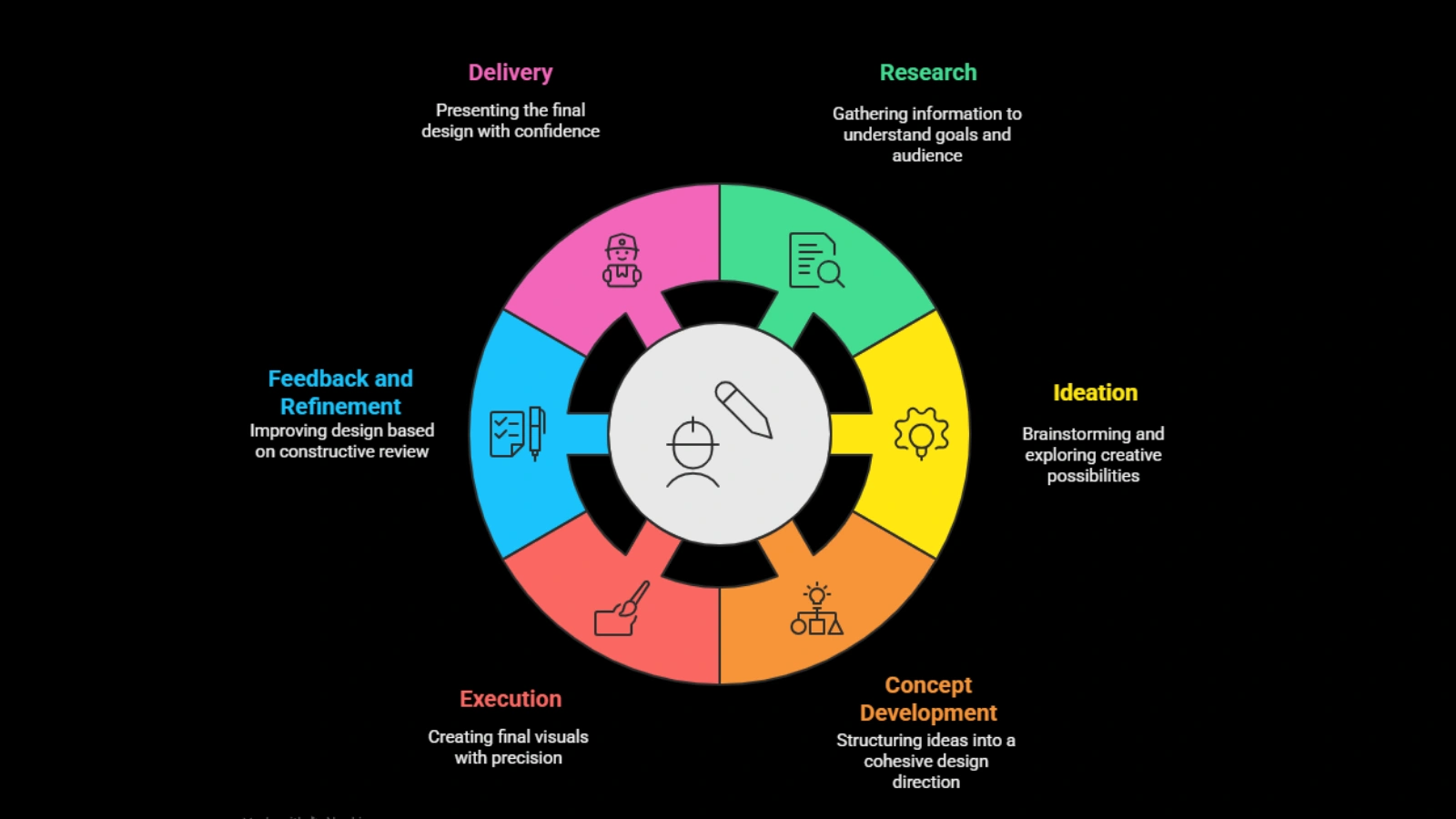
A strong design process follows a clear set of stages. Each stage supports better outcomes.
- Research
Designers study goals, audience, and expectations. Strong research builds the foundation of the creative design process. - Ideation
Ideas grow through brainstorming and exploration. Designers play with possibilities, directions, and visual styles. - Concept Development
Ideas turn into structured creative direction. Designers align tone, message, and design purpose. - Execution
Designers create final visuals with precision. This stage shapes the real output. - Feedback and Refinement
Constructive review strengthens results. Designers polish details, alignment, composition, tone, and clarity. - Delivery
The final design communicates purpose with confidence and impact.
Following each stage strengthens every creative design process and leads to better creative confidence.
Powerful Creative Design Ideas To Enhance Your Workflow
Great outcomes come from powerful, creative design ideas. Designers need inspiration, but they also need structure. Strong creative design ideas bring originality, purpose, and storytelling.
You can enhance the workflow with:
- Mind-mapping for fresh thoughts
- Mood boards for visual direction
- Daily idea practice for creativity growth
- Real-world observation to inspire ideas
Creative design ideas support innovation and authenticity. When designers apply them with an organized creative design process, they achieve stronger output and sharper creativity. Using creative design ideas alongside structure helps designers stay relevant, imaginative, and confident.
Creative Adaptability: The Secret To Improving Results
Success favors designers who adapt. Creative adaptability helps designers handle changes, shifting trends, client expectations, and evolving creative demands. It builds flexibility while protecting creativity.
Creative adaptability allows designers to:
- Adjust the design direction smoothly
- Respond to feedback with positivity.
- Improve output without frustration.
- Stay open to new inspiration.
With creative adaptability, the creative design process stays powerful instead of rigid. Teams respond to demands efficiently while maintaining creativity.
Using creative adaptability ensures designers never limit themselves. It creates space for learning, growth, and innovation.
Common Challenges In The Creative Design Process
Even a strong creative design process faces hurdles. Designers often struggle with:
- Lack of clarity
- Weak communication
- Creative block
- Time pressure
- Unclear expectations
- Unlimited revisions
- Resource limitations
These issues slow performance and reduce creative confidence. However, consistent refinement of the creative design process helps overcome every challenge. Structured systems remove confusion, strengthen workflows, and build reliability.
Businesses grow when they support designers with organization, respect for creativity, and clear planning.
Read More:
4 Powerful Digital Ad Creative Strategies For Your Campaigns
How To Create High Converting Ad Creatives With AI?
How Technology And AI Transform The Modern Design Process?

Technology reshapes creativity in powerful ways. Designers now access to tools that speed up ideation, execution, and creative thinking. AI helps reduce workload, support brainstorming, improve visual quality, and unlock smarter ideas.
A structured creative design process supported by technology leads to faster production, better experimentation, and improved outcomes. AI tools guide creative direction, help compare ideas, and support consistency across campaigns.
This technological evolution supports innovation while maintaining human creativity at the heart of every project.
How AdsGPT Improves Creative Design Ideas And Ad Creation?
AdsGPT supports designers, marketers, and brands by improving idea generation, ad creative development, and campaign strategy. It strengthens the creative design process when the focus lies on advertising and promotional visuals.
Here is how AdsGPT helps:
AI-Generated Ad Creatives
AdsGPT helps teams create powerful ad visuals quickly. Designers gain inspiration and strong creative direction. It supports multiple platforms such as Meta, Google, LinkedIn, and more. This improves the creative design process for marketing teams and saves hours of effort.
Platform-Specific Designs
Every platform requires unique ad formatting and visual style. AdsGPT helps optimize creatives for each platform, improving clarity and performance. Designers follow a smoother creative design process without stress.
Competitor-Inspired Creative References
AdsGPT allows users to reference competitor ads, analyze styles, and build better creative concepts. This supports creative design ideas and strengthens decision-making.
Brand Memory and Consistency
Teams can store brand colors, tone preferences, and visual identity. This helps maintain consistency across campaigns and improves the creative design process.
Bulk Creative Generation
AdsGPT creates multiple creative variations. Teams get options for testing, refinement, and selection. That supports stronger outcomes and smarter decisions.
Smart Copy and Visual Support
AdsGPT generates ad copy ideas and supports message clarity. When creative visuals align with powerful copy, the creative design process gains strength and precision.
AdsGPT helps designers improve workflow, enhance productivity, and deliver professional ad creatives with confidence.
Practical Tips To Improve Your Graphic Design Process
A refined graphic design process requires consistent practice and attention. Designers can improve their workflow with these tips:
- Set clear objectives before design work
- Understand audience needs deeply.
- Build structured steps for every project.
- Maintain strong communication with clients or teams.
- Keep research materials organized.
- Document every creative design process for growth
- Stay disciplined while staying creative.
A refined system always strengthens results.
Measuring Success: How To Track And Improve Your Design Process
Every creative design process deserves evaluation. Designers grow when they track improvement. Strong measurement leads to better creative adaptability and smarter creative direction.
Track success through:
- Client satisfaction
- Audience response
- Engagement levels
- Quality of final output
- Feedback improvement
- Time efficiency
When designers measure outcomes, they improve the creative design process with confidence and strategy.
Conclusion
Success in creativity does not come from random inspiration. It grows from structure, discipline, imagination, and adaptability. A strong creative design process supports innovation, clarity, and measurable growth. Designers and businesses thrive when they treat creativity as a strategic journey.
With powerful tools, thoughtful planning, creative adaptability, and innovation support from platforms like AdsGPT, every designer can shape stronger visuals, better communication, and lasting creative impact.
Strengthen your creative design process today and unlock your full creative potential.

FAQs
- Why does the creative design process matter?
It builds structure, improves clarity, strengthens communication, supports innovation, reduces confusion, saves time, and delivers consistent creative outcomes across projects. - How often should designers refine their creative design process?
Regular refinement helps designers grow skills, learn from feedback, streamline workflows, enhance creativity, increase efficiency, and achieve stronger results consistently. - Do businesses benefit from a structured creative design process?
Businesses gain clearer branding, faster delivery, fewer errors, improved teamwork, stronger customer trust, better communication, and higher long-term creative performance. - How does creative adaptability help designers?
Creative adaptability helps designers adjust direction, embrace feedback, respond to challenges, explore new ideas, maintain quality, and keep progress steady. - Can AI tools support the creative design process?
AI tools support the creative design process through faster ideation, clear insights, branding, higher productivity, reduced effort, and measurable outcomes.

MOST POPULAR