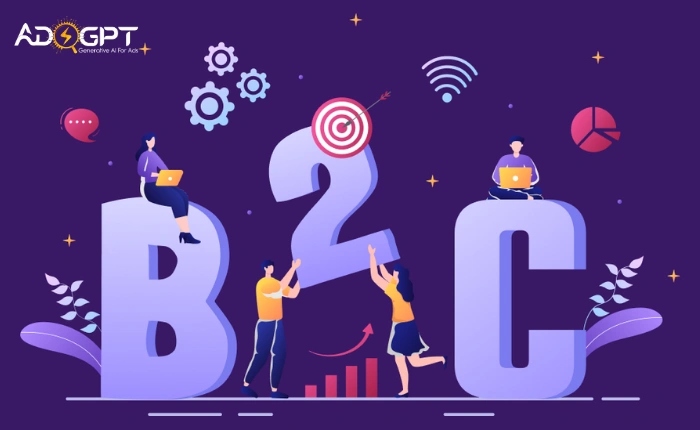
B2C advertising has completely changed the way brands communicate with their customers. In a marketplace filled with competition for consumer attention, traditional marketing resources simply aren’t enough anymore. Thanks to artificial intelligence (AI), businesses can create much more effective, precisely directed campaigns that result in conversion rates faster and higher than we have ever seen before.
With AI, brands are using a number of tools and capabilities to enhance the effectiveness and profitability of their marketing strategies. By analyzing consumer data in real-time and forecasting customer behaviour, brands can identify the right message to send to the right audience, at the right time. The upshot of this combination of analytics and AI-driven decision-making is not only increased consumer engagement — it is an unprecedented level of conversion growth that could not be achieved through traditional methods of advertising.
In addition to the opportunities that AI in B2C advertising offers businesses, AI provides brands with an opportunity to make a significant shift from using intuition to making decisions based on data. Brands that have embraced AI in B2C advertising are outperforming their competitors, optimizing their financial resources, and providing consumers with meaningful, resonant experiences.
In a hurry? Listen to the blog instead!
Understanding B2C Advertising in Today’s Market
B2C advertising refers to campaigns designed to influence individual consumers to purchase products or services. Unlike B2B advertising, B2C focuses on emotional triggers, lifestyle aspirations, and immediate needs. The goal is to create compelling messages that inspire quick action.
Challenges Brands Face in Reaching Modern Consumers
Consumers now demand personalized experiences. They skip generic ads, block pop-ups, and scroll past irrelevant content. B2C advertising must overcome attention scarcity, competition saturation, and ever-evolving consumer preferences.
Brands struggle with:
- Targeting the right demographic efficiently.
- Measuring ROI accurately across multiple channels.
- Keeping messaging consistent across touchpoints.
Importance of Personalization and Data-Driven Strategies
Data drives success in B2C advertising. Personalization ensures that messages resonate with the individual rather than a mass audience. AI in B2C advertising plays a crucial role by analyzing patterns, predicting behavior, and suggesting tailored content.
Personalized campaigns not only increase engagement but also build trust. Data-driven strategies allow marketers to identify high-value customers and focus resources where they generate maximum impact.
The Role of AI In B2C Advertising
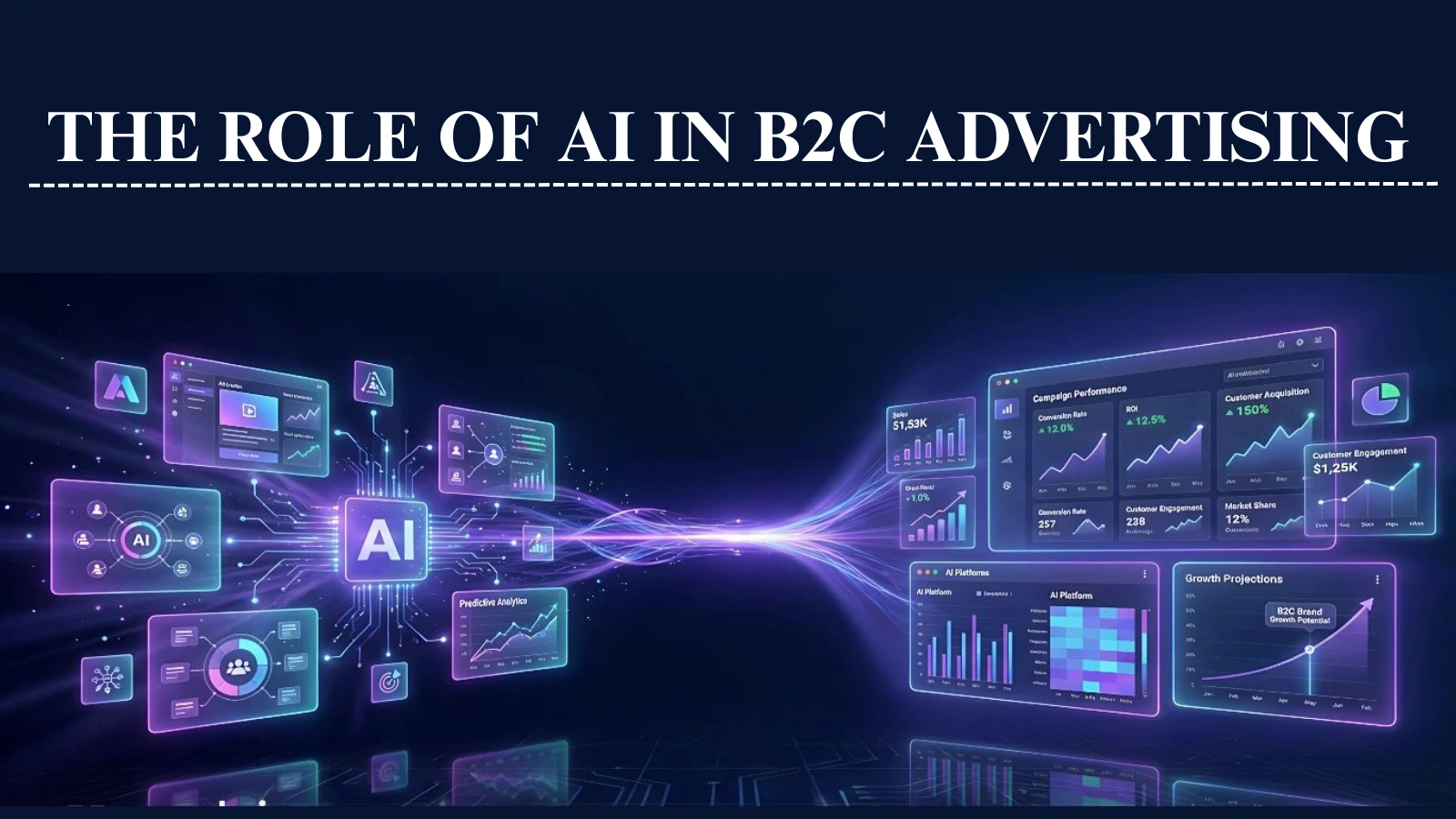
AI in B2C Advertising: How Artificial Intelligence is Reshaping Campaigns
AI transforms B2C advertising by automating analysis and enhancing decision-making. Brands can now:
- Identify target segments accurately.
- Predict the best timing for ads.
- Optimize messaging based on audience behavior.
AI algorithms monitor millions of data points, learning which campaigns perform best and continuously adjusting strategies. This reduces waste and maximizes returns.
Benefits: Improved Targeting, Predictive Analytics, Real-Time Adjustments
AI in B2C advertising brings measurable advantages:
- Improved targeting: Reach only those likely to convert.
- Predictive analytics: Forecast future customer actions.
- Real-time adjustments: Modify campaigns instantly for optimal results.
Brands can now launch campaigns that feel tailor-made for each consumer, driving higher conversion rates.
Case Studies/Examples of Brands Boosting Conversions with AI
Several brands have already seen dramatic results:
- A fashion retailer used AI in B2C marketing to recommend products based on browsing history, increasing sales by 35%.
- A food delivery service leveraged AI for personalized notifications, boosting conversions by 28%.
- E-commerce platforms use AI to automate ad creatives, cutting content creation time in half while increasing click-through rates.
AI In B2C Marketing: Transforming Customer Engagement
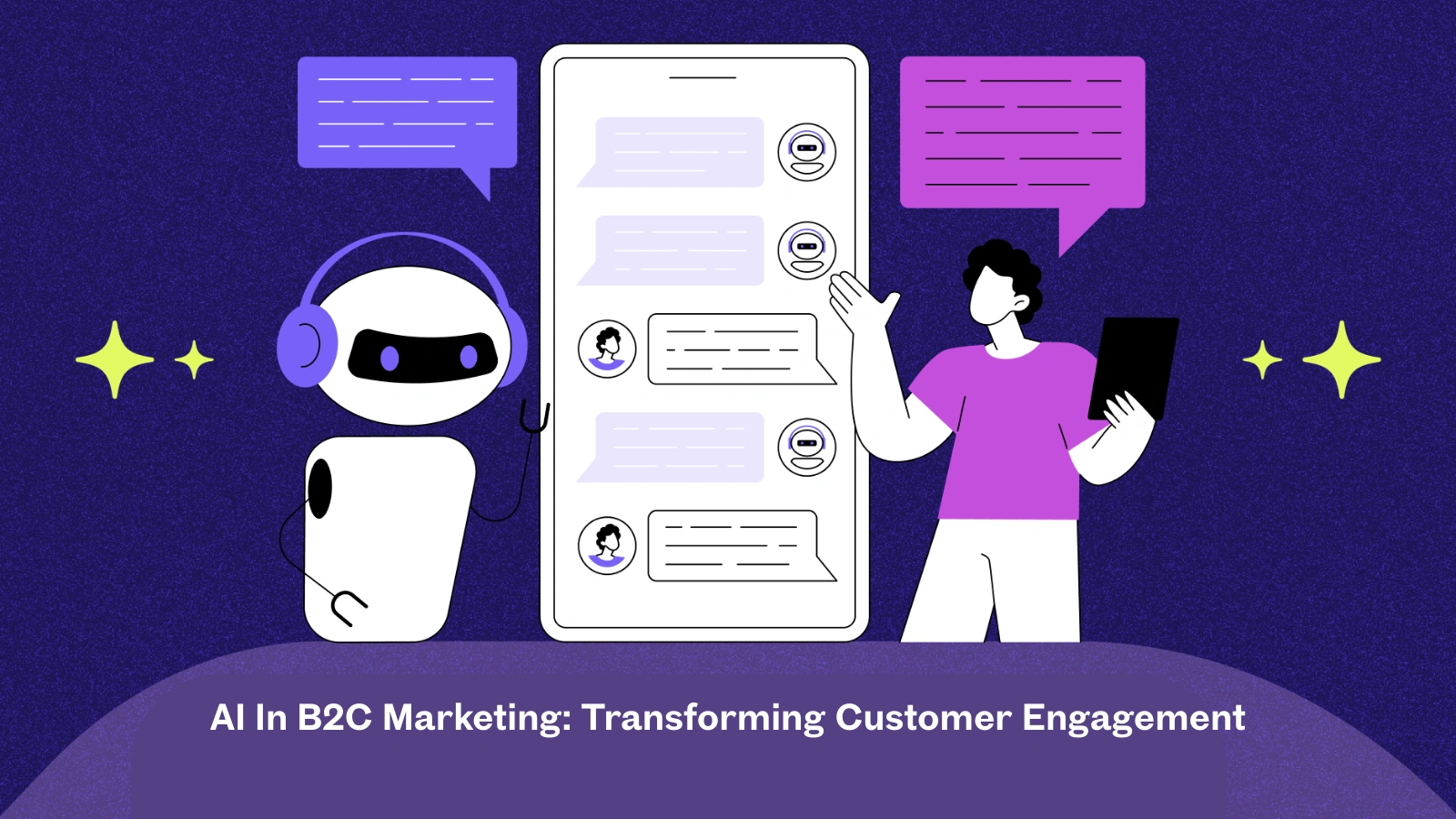
Difference Between AI in B2C Marketing and General Marketing AI
AI in B2C marketing focuses on individual consumers, while general AI in marketing often addresses broader business goals. B2C marketing emphasizes emotional connection, personalization, and immediate purchase intent.
How AI Helps Segment Audiences and Create Hyper-Personalized Campaigns
Segmentation allows brands to group consumers based on behavior, preferences, and demographics. AI enhances segmentation by identifying hidden patterns that humans might miss. Hyper-personalized campaigns make consumers feel understood, which significantly improves engagement and conversions.
Using AI to Predict Customer Behavior and Optimize Content
Predictive analytics enables brands to anticipate consumer actions before they happen. AI can suggest the most effective content, timing, and channel for each customer. This proactive approach ensures that every interaction contributes to conversion growth.
AI For B2C Marketing: Practical Applications
Tools and Technologies Driving AI for B2C Marketing Success
AI for B2C marketing includes:
- Machine learning algorithms to predict trends.
- Automated content creation platforms.
- Advanced customer segmentation tools.
These tools help brands operate efficiently while maintaining personalization at scale.
Chatbots, Recommendation Engines, and Automated Ad Creatives
AI-powered chatbots handle customer queries instantly, improving satisfaction and conversion rates. Recommendation engines suggest products based on behavior, boosting sales. Automated ad creatives generate visually appealing content that resonates with specific audiences without manual effort.
How AI Improves ROI and Reduces Human Error
By analyzing large datasets and automating repetitive tasks, AI minimizes errors and maximizes efficiency. Brands can allocate budgets more effectively and optimize campaigns continuously, resulting in a higher ROI for every dollar spent.
Also Read:
AdsGPT: Supercharging B2C Campaigns With AI
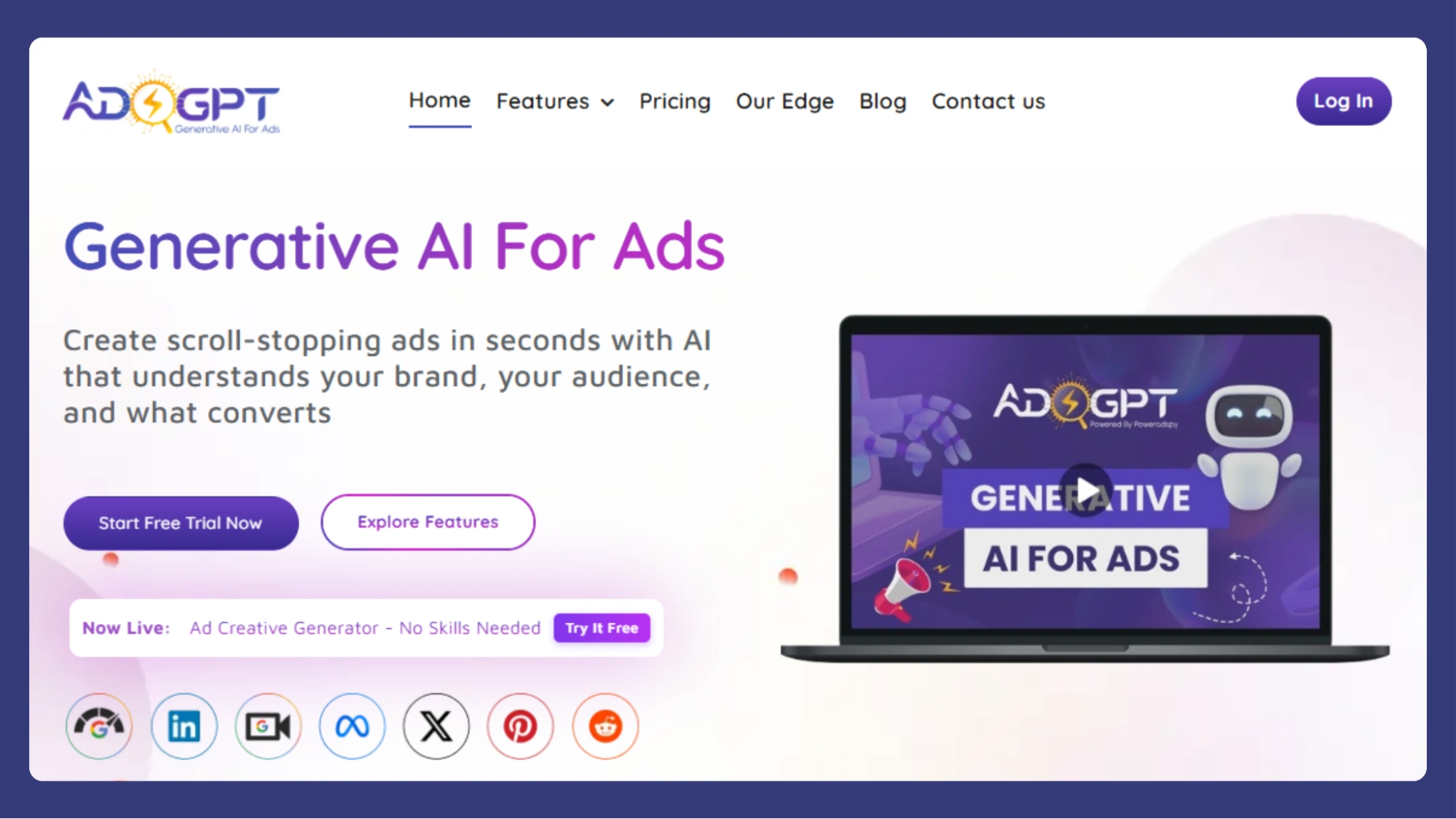
AdsGPT is an AI platform designed to create high-performing ad creatives and copy for B2C campaigns.
Features Relevant to B2C Advertising
- Competitor-inspired creatives: Generate ads that outperform competitors while staying unique.
- Analytics: Monitor engagement, conversion rates, and campaign performance.
- Multi-platform optimization: Create ads ready for Facebook, Instagram, Google, and more.
How AdsGPT Can Help Businesses Drive Insane Conversion Growth
By combining AI insights with automated content creation, AdsGPT reduces campaign launch time, ensures message consistency, and targets the right audience. Brands using AdsGPT have experienced faster conversions and increased ROI across multiple channels.
AI In Marketing: The Bigger Picture
Broader Impact of AI in Marketing Beyond B2C
AI influences all marketing aspects, including B2B campaigns, influencer collaborations, and content strategy. Its ability to process data and provide actionable insights ensures that every marketing effort becomes more efficient.
Cross-Channel Campaigns, Real-Time Analytics, and Predictive Strategies
AI enables cross-channel coordination, ensuring that consumers receive consistent messaging. Real-time analytics allow immediate adjustments, and predictive strategies help anticipate consumer needs before competitors do.
Why AI is Essential for Modern Marketers to Stay Competitive
Marketers who ignore AI risk falling behind. Automation, predictive insights, and personalization are no longer optional; they define successful campaigns and drive significant growth in B2C advertising.
AI For B2C: Key Strategies To Maximize Conversions
Leveraging AI for B2C to Personalize Customer Journeys
AI allows brands to map individual customer journeys, offering personalized experiences at every stage. Personalized emails, targeted ads, and dynamic website content increase engagement and encourage conversions.
Best Practices: Dynamic Creatives, Automated Testing, Segmentation
- Dynamic creatives: Automatically adapt visuals and messaging to audience preferences.
- Automated testing: Continuously evaluate performance to identify top-performing assets.
- Segmentation: Target the right audience with the right message.
Tracking Metrics to Continually Optimize Campaigns
AI tracks KPIs such as click-through rates, conversions, and customer lifetime value. Brands can adjust campaigns in real time, ensuring consistent performance and growth.
Overcoming Challenges in AI-Powered B2C Advertising
Address Data Privacy, Algorithm Bias, and Over-Reliance on AI
Brands must comply with data privacy regulations while using AI. Algorithm bias can lead to inaccurate targeting, and over-reliance on AI may reduce human creativity.
Tips for Integrating AI Without Losing the Human Touch
- Use AI to supplement human creativity, not replace it.
- Ensure diversity in datasets to minimize bias.
- Maintain a human review process for final campaign approval.
The Future of B2C Advertising with AI
Emerging Trends: Generative AI, Predictive Analytics, Voice & AR Ads
- Generative AI will create ad visuals and copy faster than ever.
- Predictive analytics will allow brands to anticipate demand and behavior.
- Voice-activated and AR ads will provide immersive experiences that drive engagement.
Preparing for AI-First Marketing Strategies
Brands must adopt AI early, invest in training, and integrate AI across marketing operations. Early adopters will gain a competitive advantage and dominate B2C advertising channels.
Why Businesses Embracing AI Will Dominate the B2C Space
AI empowers brands to deliver personalized, engaging campaigns at scale. Businesses that adopt AI in B2C marketing will attract more customers, retain loyalty, and achieve insane conversion growth.
Conclusion
B2C advertising has evolved dramatically, and AI now sits at the core of this transformation. From hyper-personalized campaigns to predictive insights and automated creatives, AI enables brands to reach the right audience with the right message. Tools like AdsGPT simplify content creation, optimize campaigns, and maximize ROI.
Brands that leverage AI in B2C advertising and marketing gain a measurable advantage. Those that fail to adopt risk losing relevance in a competitive landscape. Embracing AI today ensures growth, efficiency, and exceptional conversion rates tomorrow.
FAQs
- What is B2C Advertising?
B2C (Business to Consumer) advertising involves targeting individual consumers through personalized emotional messages in order to effectively influence their purchasing decisions and generate an immediate sale. - How Does AI Improve B2C Marketing?
AI is used to analyze large amounts of data related to potential customers to not only understand their behaviors but also to predict how they will act in the future. AI can also help businesses personalize content for each customer, as well as automate advertising campaigns. This ultimately leads to increased customer engagement and conversions. - Can AdsGPT Help Small Businesses?
Absolutely! AdsGPT will create high-quality professional creative assets and copywriting very quickly. This allows small businesses to have successful ad campaigns without having to hire as many employees for marketing purposes. - What are the Future Trends of AI-Powered B2C Advertising?
The future trends for B2C advertising using Artificial Intelligence will involve generative AI (like GPT-3), predictive analytics, and new types of advertising such as augmented reality or voice-enabled ads. All of these trends will allow for greater engagement with customers, which will result in higher conversion rates. - What Should Businesses Do to Overcome the Challenges Associated With AI? Businesses can overcome challenges associated with using artificial intelligence by utilizing a variety of data sets, having human oversight of data, regularly reviewing AI results, and ensuring compliance with all data privacy and compliance regulations.
MOST POPULAR