Ad creative has never been more critical or more challenging. As targeting tools become standardized across platforms, the real advantage no longer comes from who you reach, but from how well your message evolves. Yet many brands still treat creative like a one-and-done task instead of a living, adaptable system.
Here’s the reality: reach doesn’t stall because platforms fail. It stalls when creative iteration slows. When you test too few ideas, learning slows, and when learning slows, performance plateaus.
This is where AI ad creatives make a difference. By speeding up creative production and enabling continuous variation, AI transforms advertising from a static campaign into an adaptive, results-driven system.
In this article, we will show how AI creatives can boost reach, accelerate platform learning, and turn ongoing iteration into a real growth advantage.
Listen To The Podcast
What Is Ad Creative?
Ad creative refers to the elements of an advertisement that people actually experience. It includes visuals, messaging, format, and structure—everything that shapes whether someone pays attention and takes action.
Many people reduce creativity to design, but that definition is too narrow. Creativity is the expression of strategy. It translates positioning into something immediately understandable.
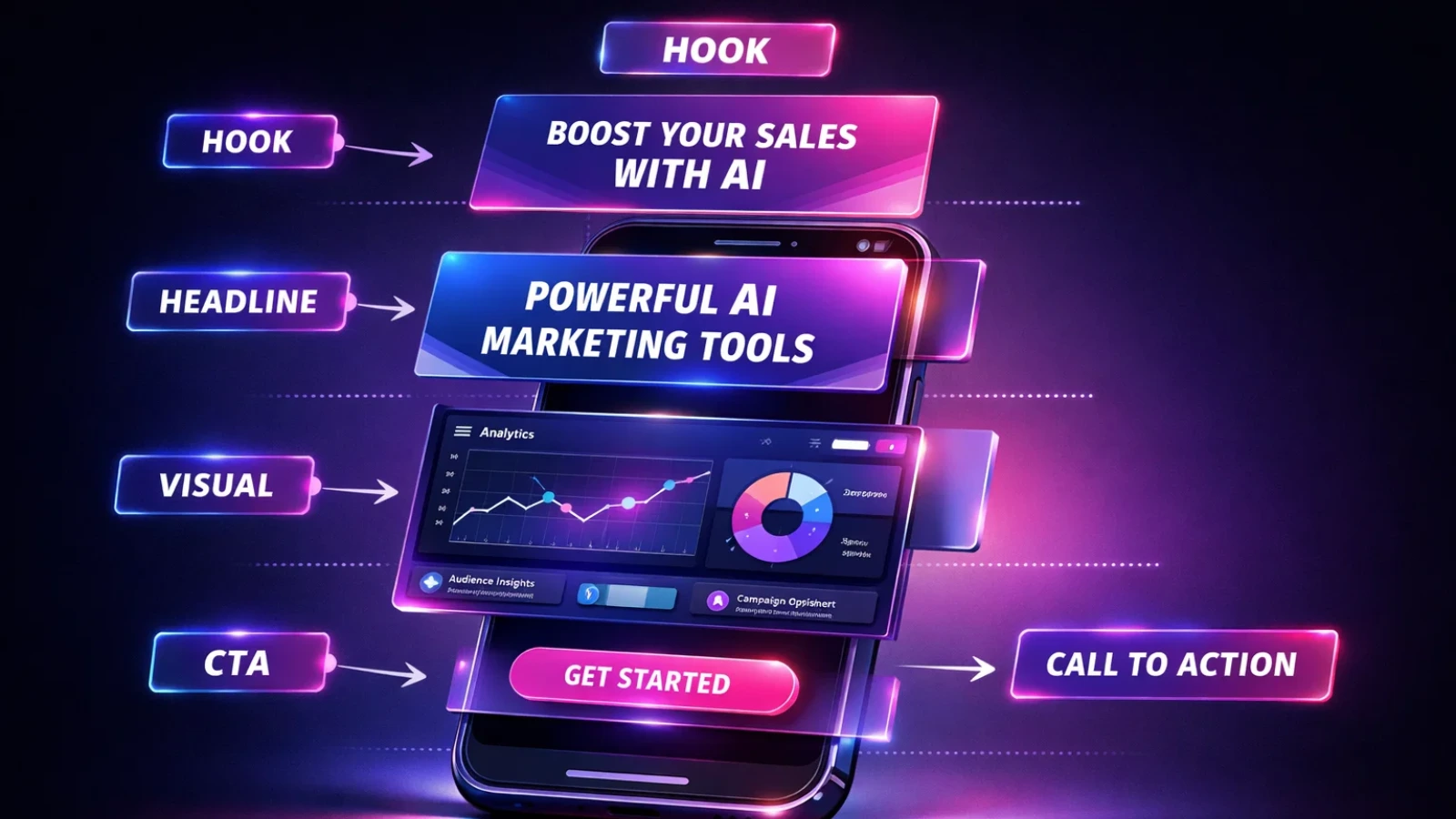
At its core, ad creative consists of four key components.
The visual captures attention. This might be a product shot, a person speaking to the camera, motion graphics, or a simple layout that stands out in a feed.
The copy explains relevance. It connects the viewer’s situation to the product’s value.
The hook determines whether the message gets consumed at all. Strong hooks create curiosity, urgency, or recognition within seconds.
The call to action guides the next step. Without direction, attention rarely converts into behavior.
Creativity influences performance because it shapes engagement, and engagement shapes distribution. Algorithms observe how people interact with ads, whether they watch, click, scroll past, or ignore, and adjust delivery accordingly.
In practical terms, creativity determines whether an ad expands or stalls.
Why Ad Creative Drives Reach
Reach is often assumed to be a function of budget. In reality, it’s heavily influenced by response.
When users engage with an ad, platforms interpret that behavior as a sign of relevance. Relevant ads are shown more widely because they improve user experience. Ads that fail to generate interaction are restricted, even if targeting is accurate.
This dynamic makes creativity a primary lever for growth.
Variation accelerates learning. When multiple creative angles run simultaneously, platforms can compare performance signals and identify patterns faster. Instead of guessing which message resonates, marketers observe real behavior across different executions.
Faster learning leads to broader distribution because winning creatives emerge sooner.
Creative fatigue works in the opposite direction. Repetition reduces attention. Engagement declines, frequency rises, and distribution narrows. Teams often react by changing audiences or budgets when the underlying issue is message exhaustion.
Sustainable reach requires sustained novelty. That doesn’t mean constant reinvention. It means evolving the expression of a consistent idea before audiences stop responding.
Types of Creative Ads Marketers Use
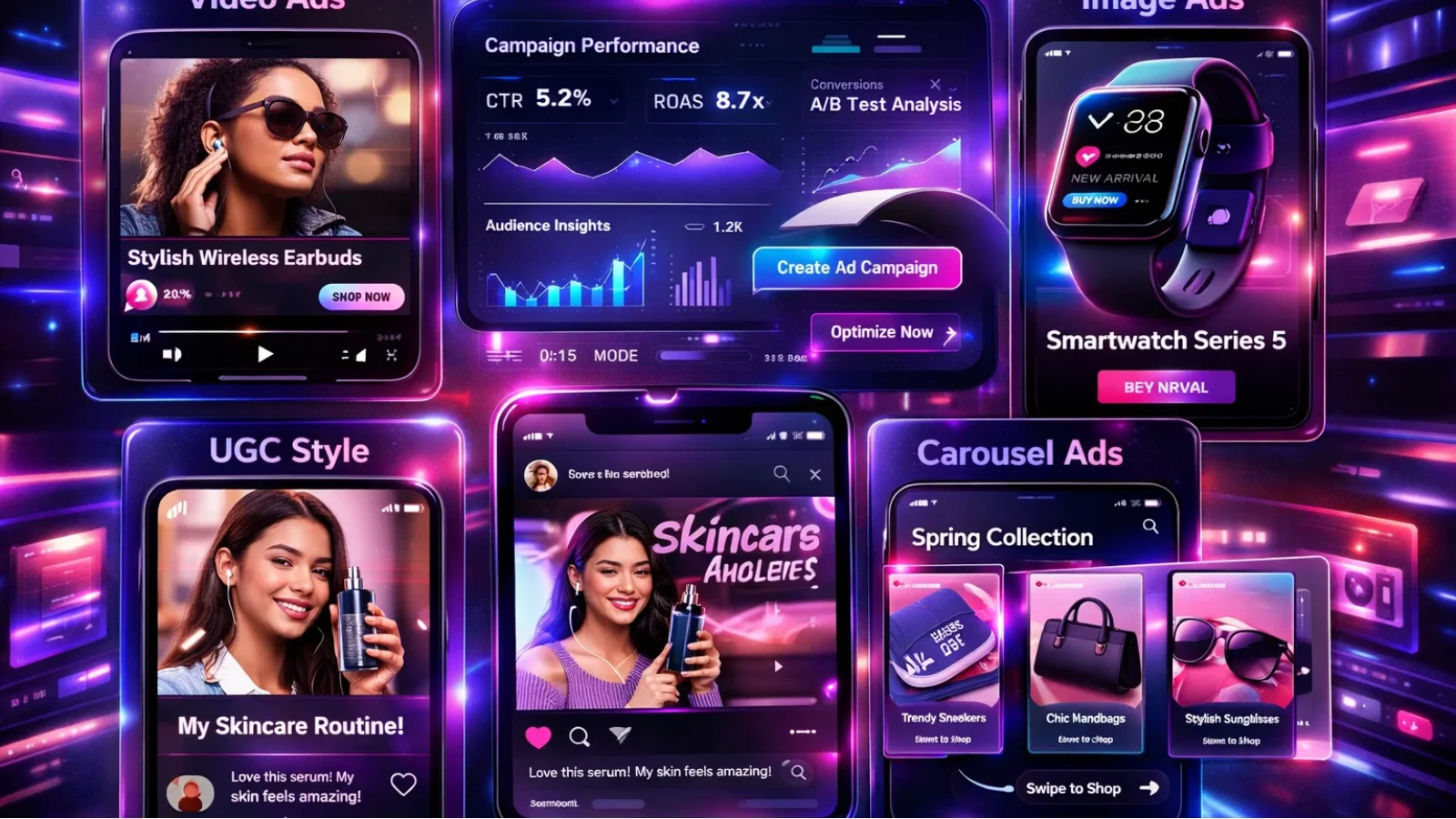
Marketers rely on several creative formats, each suited to different communication needs.
Image ads remain effective when clarity matters. They communicate offers quickly and are easy to iterate, which makes them useful for testing messaging.
Video ads provide context. They allow demonstrations, storytelling, and emotional framing that static formats can’t achieve. Video often produces stronger engagement signals, especially in discovery environments.
UGC-style creatives mimic organic content. Their strength lies in credibility. They feel less like advertising and more like recommendations, which can improve early attention and trust.
Carousel ads help explain complexity. They work well when multiple benefits, steps, or product variations need to be shown without overwhelming a single frame.
Dynamic creatives prioritize experimentation. Instead of selecting one version, platforms mix elements to identify effective combinations.
No format is universally superior. The most effective strategy is combining formats so each solves a different part of the attention problem.
What Are AI Ad Creatives?
AI ad creatives are advertising assets produced or expanded with the help of artificial intelligence. This includes generating copy variations, suggesting visual directions, adapting formats, and creating multiple executions from a single concept.
The defining characteristic is scalability.
AI enables teams to move from producing a few polished ads to maintaining a continuous flow of variations. Rather than searching for a perfect version, marketers test multiple interpretations of the same idea.
The process is iterative. A marketer defines messaging direction. AI generates variations around that direction. Performance data reveals which angles resonate. New creatives build on those insights.
Manual production emphasizes craftsmanship but is limited by time and resources. AI production emphasizes speed but depends on clear inputs to maintain quality.
The combination changes team roles. Designers focus more on direction and refinement. Marketers focus more on interpretation and strategy. Creative output becomes less constrained by capacity.
AI does not eliminate creative thinking. It shortens the distance between thinking and execution.
How AI Ad Creatives Improve Reach
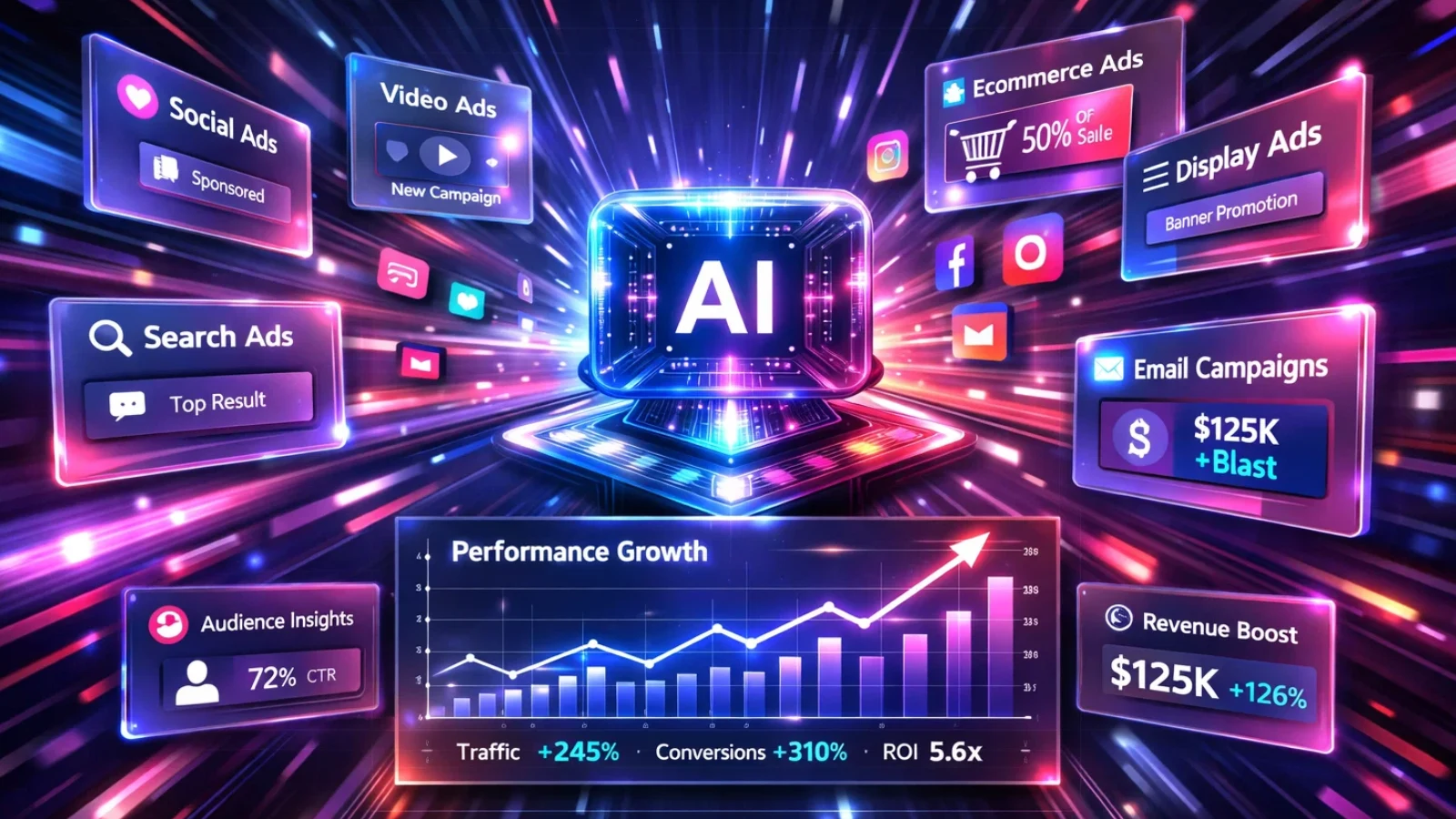
AI improves reach primarily by increasing creative velocity, the speed at which new ideas are tested in the market.
More creatives introduce more behavioral signals. Platforms learn faster when they observe multiple approaches rather than repeated exposure to one. This accelerates optimization and expands distribution.
Continuous testing becomes feasible because production friction decreases. Instead of waiting weeks for new assets, teams can introduce variations regularly, preventing fatigue from limiting performance.
Personalization has another impact. Messaging can shift based on audience segment, use case, or funnel stage without multiplying workload. This creates relevance without requiring entirely separate campaigns.
Operational bottlenecks also shrink. Approval processes evolve because variation becomes expected. Creative is treated as modular, meaning elements can be recombined instead of rebuilt.
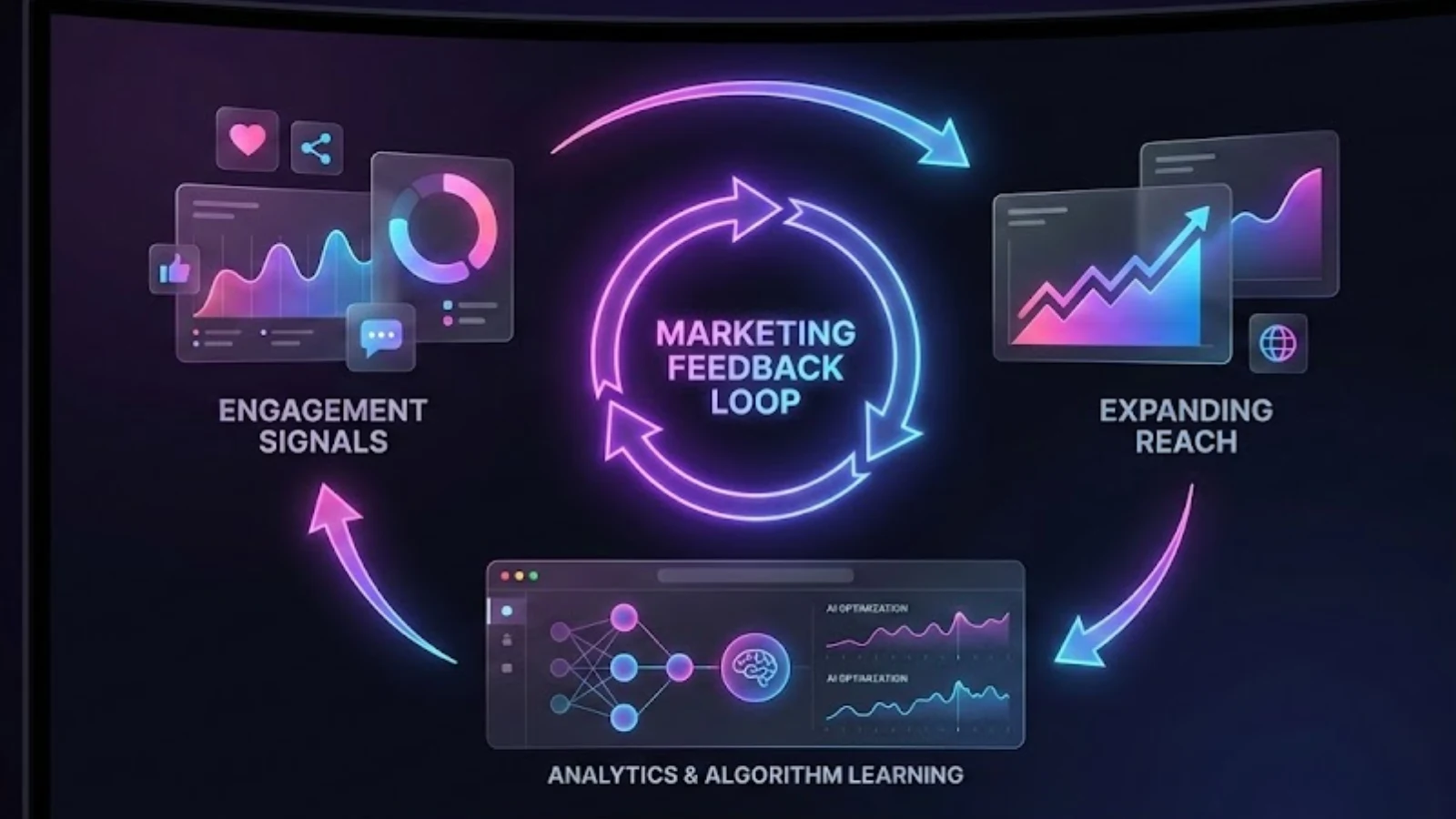
The effect compounds through a reinforcing loop: more creatives generate better engagement signals, better signals guide smarter delivery, and smarter delivery produces wider reach.
In this model, reach is not forced through spend. It emerges from iteration quality and speed.
A Simple AI Creative Workflow
A practical workflow keeps AI grounded in strategy.
The first step is defining messaging. Teams clarify the audience problem, the value proposition, and the emotional angle. Without this foundation, variation lacks coherence.
Next comes generating variations. Effective variation tests different perspectives, different hooks, narratives, and visual approaches rather than minor wording adjustments.
Structured testing follows. Grouping creatives by angle allows marketers to understand why something works, not just that it works.
Winners are then identified through multiple signals. Click-through rate provides direction, but retention, conversion behavior, and consistency across audiences offer deeper insight.
Finally, iteration expands successful ideas. Instead of abandoning concepts after one test, teams explore adjacent versions before fatigue appears.
This workflow transforms creativity from output into feedback infrastructure. AI reduces the delay between insight and execution, allowing teams to operate in shorter learning cycles.
Creative Infrastructure for Continuous Ad Production
As creativity becomes the main growth lever in paid media, the biggest issue is not a lack of ideas; it is how fast you can bring those ideas to the table. Testing a few ads manually is slow, and by the time you gather performance insights, audience attention may have already shifted.
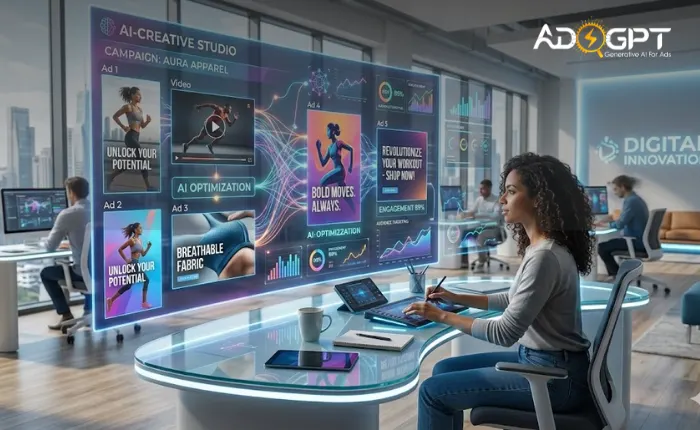
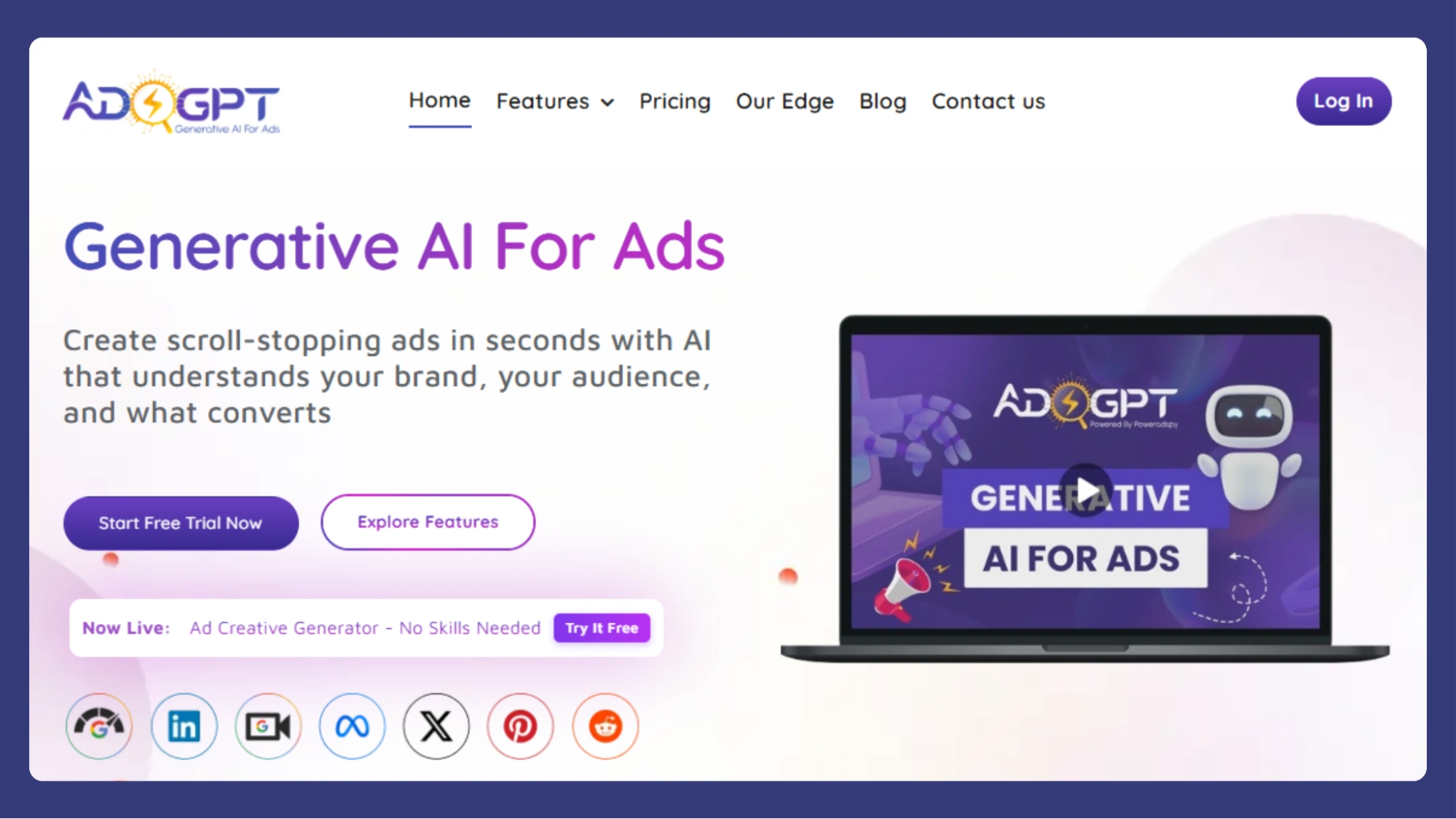
This is where AdsGPT comes in. It’s an AI-powered tool built to speed up ad creative production without sacrificing quality. Instead of relying on a handful of manual variations, AdsGPT allows teams to generate multiple angles, hooks, formats, and messaging variations from a single concept quickly.
How AdsGPT works:
1. Platform-Specific Customization
AdsGPT tailors your creatives for each advertising platform, including Meta, Google, LinkedIn, Pinterest, and more. This ensures every ad is perfectly formatted, optimized for placement, and designed to perform at its best on each channel.
2. Start With Existing Ad
You can kickstart your creative process by using a competitor ad as inspiration. AdsGPT then transforms it into a fresh, unique creative using your brand’s tone, messaging, and logo, saving time while maintaining originality.
3. Ready-To-Post Creatives
No more resizing or guessing layouts. AdsGPT delivers fully customized visuals that are platform-ready, styled correctly, and sized perfectly. Competitor-inspired, yet instantly unique, these ads are ready to launch.
4. Generate Multiple Creatives
Need variety fast? AdsGPT can produce up to five scroll-stopping ad creatives at once. This makes testing different messages, designs, and approaches easier, helping you find what resonates most with your audience.
5. Prompt To Personalize
Add short prompts to guide the creative’s style and tone. This lets you maintain your brand voice, ensure originality, and keep every output aligned with your marketing goals.
6. Smart Brand Memory
AdsGPT remembers your brand details—like logo, colors, and description—and applies them automatically across all creatives. This keeps your campaigns consistent while reducing repetitive setup work.
Conclusion
Advertising is shifting from static campaigns toward adaptive creative systems. As targeting becomes more standardized, differentiation increasingly comes from how messages are expressed and evolved.
AI makes continuous evolution practical. It allows teams to move faster, test more ideas, and respond to performance signals without overwhelming production capacity.
The result is a different mindset. Creative is no longer a deliverable completed before launch. It becomes an ongoing process that feeds insight back into execution.
Brands that embrace this approach treat creative as infrastructure, a system designed to learn. In that environment, reach expands naturally because the message keeps improving.
FAQ
What is ad creative in marketing?
Ad creative is the combination of visuals, messaging, and format that determines how audiences experience and respond to an advertisement.
Are AI ad creatives effective?
They are effective when used within a structured testing process. AI increases speed and variation, which improves learning, but strategy still determines direction.
How often should creatives be refreshed?
Refresh timing depends on spend and audience size, but many teams update creatives every few weeks to prevent fatigue.
How does creative AI improve ad reach?
Creative AI improves ad reach by generating multiple variations quickly, which gives ad platforms more engagement signals to learn from. Better engagement helps algorithms distribute ads to wider audiences while reducing creative fatigue.
MOST POPULAR