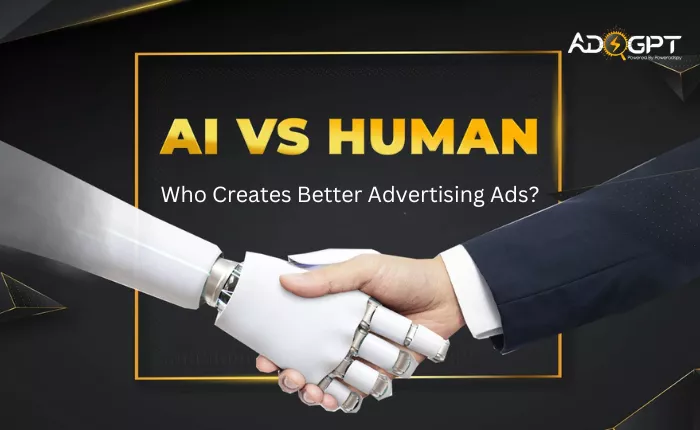
For years, crafting advertising ads has been an art—one that relies on human creativity, experience, and an understanding of emotions. But now, artificial intelligence is stepping into the scene, transforming how businesses develop and deliver their ads. AI can analyze vast amounts of data, generate ad variations in seconds, and optimize campaigns with precision.
This shift raises an important question: Can AI truly replace human creativity, or does the magic of advertising ads still depend on the human touch? The answer isn’t as simple as picking a side—it’s about understanding the strengths and limitations of both.
Before deciding who does it better, let’s break down how AI is changing ad creation and why human expertise still plays a crucial role.
In a hurry? Listen to the podcast now.
The Power Of AI In Advertising Ads
 Artificial intelligence has brought a revolution in advertising ads, making the process data-driven and highly personalized. Marketers no longer need to guess what works—AI analyzes user behavior, predicts trends, and optimizes ad performance with unmatched accuracy.
One of AI’s strongest capabilities is AI ad targeting, which ensures ads reach the right audience at the right time. Instead of relying on broad demographics, AI studies consumer behavior, browsing history, and engagement patterns to deliver hyper-personalized campaigns.
Another game-changer is AI-generated ads, where AI creates multiple versions of ad copy, images, and formats to test which performs best. This level of automation removes much of the trial and error, helping brands save time and resources.
While AI brings undeniable advantages, it still lacks something essential—human creativity. Data can be optimized, but can it truly innovate? That’s where humans step in.
The Human Touch: Why Creativity Still Matters?
 Numbers and algorithms can predict what has worked in the past, but they don’t always capture the emotional depth that makes ads truly memorable. Some of the most iconic advertising ads succeed not because they are perfectly optimized but because they tell a compelling story, evoke strong emotions, or tap into cultural moments that resonate with audiences.
While AI brings efficiency and data-driven insights, it still struggles with authentic storytelling and emotional intelligence—areas where human creativity thrives.
Why Data Alone Isn’t Enough
AI processes vast amounts of data to identify trends, predict performance, and optimize AI ad creative. It can analyze user behavior, engagement rates, and past ad performance to recommend the most effective elements. However, AI relies entirely on historical data, which means:
- It prioritizes what has worked in the past rather than what could break new ground.
- It lacks the ability to create something truly original that hasn’t been seen before.
- It may over-optimize ads, making them formulaic rather than fresh and exciting.
While AI-generated ads can be efficient, they often lack the spark that makes an ad stand out. It is where human intuition becomes indispensable.
The Power of Storytelling in Advertising Ads
A great ad isn’t just about getting clicks—it’s about creating a lasting impression. Human marketers bring narrative-driven creativity to campaigns, crafting messages beyond data-driven decisions. The best ads often:
- Evoke Emotion – People remember ads that make them feel something, whether it’s joy, nostalgia, or inspiration.
- Tap into Culture – Successful ads reflect current events, trends, and cultural shifts in a way that feels authentic.
- Build Brand Identity – While AI-generated ads can create variations, only humans can ensure that messaging aligns with a brand’s unique personality and voice.
For example, AI might suggest using a trendy phrase in an ad, but a human marketer knows whether it fits the brand’s tone and audience. Without human oversight, AI-created ads can sometimes feel robotic, out of touch, or even tone-deaf to cultural nuances.
Why AI And Human Creativity Should Work Together?
 Rather than choosing between AI and human creativity, the key is finding the right balance. AI can handle the technical side—such as AI ad targeting, A/B testing, and performance tracking—while humans refine the messaging to make it more relatable and engaging.
Successful brands blend AI’s efficiency with human intuition to get the best of both worlds:
- AI generates multiple ad variations, but humans select the one that best resonates with the audience.
- AI suggests high-performing keywords and headlines, but marketers ensure they align with the brand’s storytelling.
- AI personalizes ads at scale, but humans add the final creative touch to make them memorable.
AI is a powerful tool, but it still needs human oversight to make ads feel natural, emotionally engaging, and brand-appropriate. The challenge lies in integrating AI seamlessly into creative workflows without sacrificing the human touch that makes advertising ads truly impactful.
Let’s explore how brands can effectively combine AI-generated ads with human expertise to maximize efficiency and creativity.
AI vs. Human: Finding the Perfect Balance
 Instead of seeing AI and human creativity as competitors, the real opportunity lies in collaboration. AI takes care of AI ad targeting, data-driven insights, and large-scale content generation, while humans refine messaging, add emotional depth, and ensure brand consistency. When these two forces work together, advertising ads become more effective, reaching the right audience with content that feels both relevant and engaging.
Strengths of AI in Advertising Ads
AI brings speed, efficiency, and precision to advertising strategies:
- Massive Data Processing: AI can analyze consumer behavior, purchasing patterns, and engagement metrics faster than any human could. It allows brands to create highly targeted ads.
- AI-Generated Ads: AI can quickly generate multiple ad variations, including different visuals, headlines, and CTAs, making large-scale A/B testing possible.
- Predictive Analytics: AI-powered tools predict trends, helping brands adjust their ad strategies in real time to improve performance.
- AI Ad Targeting: By segmenting audiences based on interests, demographics, and online behavior, AI ensures that the right ad reaches the right person at the right time.
- Automation and Optimization: AI continuously monitors ad campaigns, adjusting bids, placements, and formats for the best possible results.
Why Humans Are Still Essential?
Despite AI’s advantages, human marketers bring creativity, intuition, and emotional intelligence to advertising ads:
- Brand Storytelling: While AI can generate ads, humans ensure alignment with the brand’s message and values. A brand’s unique voice cannot be replicated by algorithms alone.
- Emotional Connection: AI lacks the ability to understand human emotions deeply. People respond to humor, nostalgia, and relatability—elements that require human creativity.
- Crisis Management: AI doesn’t have a moral compass. A campaign might be technically optimized but socially insensitive. Humans assess cultural context and adjust messaging to avoid controversy.
- Originality & Trend Adaptation: AI relies on existing data, but it cannot create truly original ideas. Human marketers stay ahead by capitalizing on emerging trends, viral moments, and cultural shifts.
Striking the Right Balance
For brands to succeed, AI should be a powerful assistant rather than a replacement. Here’s how businesses can integrate AI while keeping human creativity at the forefront:
- Use AI for Repetitive Tasks: Let AI handle data-heavy tasks like ad placement, performance analysis, and bid optimization.
- Let Humans Lead Creative Direction: AI-generated ads provide options, but humans decide what aligns best with their brand identity.
- Test and Refine with AI Insights: Marketers can use AI’s analytics to improve campaign strategies, making adjustments based on performance metrics.
- Ensure Ethical and Cultural Sensitivity: AI lacks empathy, so humans must review ads to ensure they resonate with audiences appropriately.
It is exactly where AI-powered tools make a difference, allowing brands to scale their advertising ads while maintaining quality. The key is to strike the right balance—leveraging AI’s capabilities without losing the human touch that makes ads truly impactful.
Read More
Top 10 Static Ads To Inspire Your 2025 Campaigns
AdsGPT: The Future Of Advertising Ads
 AI is already transforming ad creation, but the real game-changer is how businesses use it to their advantage. It is where AdsGPT comes in, helping marketers maximize the potential of AI-generated ads without losing the human touch.
AdsGPT simplifies the process of ad creation, offering:
- Smart ad copywriting: AI-assisted text generation that maintains brand tone.
- Visual optimization: AI-driven recommendations for ad creatives that boost engagement.
- AI ad targeting: Advanced audience analysis for higher conversion rates.
- Performance tracking: Continuous learning and adjustments to improve ad effectiveness.
Rather than replacing creativity, AdsGPT enhances it—allowing businesses to craft better advertising ads at scale while still ensuring they connect with the audience.
Now that we’ve seen how AI and human collaboration shape the future, let’s wrap it up with what this means for the advertising industry moving forward.
Conclusion
AI is not here to take over—it’s here to make advertising ads more efficient, personalized, and scalable. However, human creativity remains irreplaceable, bringing emotional intelligence and storytelling to the forefront.
The best results come from blending AI-generated ads with human insight. While AI handles data-driven precision, AI ads still need the touch of human creativity to ensure they feel authentic and emotionally engaging. Businesses that master this combination will stay ahead, creating ads that not only perform well but also connect with their audience.
For marketers looking to refine their ad strategy, AI tools like AdsGPT provide the perfect balance—leveraging automation without losing creativity. The future of advertising ads isn’t about choosing between AI and humans. It’s about using both to craft ads that engage, convert, and inspire.
FAQs
- Can AI help reduce the cost of producing advertising ads?
Yes. AI speeds up tasks like research, testing, and content creation. When these steps take less time, the overall cost of running ads drops. - Do AI-generated ads work for every type of business?
Most businesses can use them, but results vary. AI helps the most when a brand already has data to learn from. New brands may still need more human-led ideas at the start. - Can AI help improve ads after they go live?
Yes. AI can track performance in real time and adjust things like placements, formats, or targeting. This helps the ad perform better even while the campaign is running. - Will using AI make all ads look similar?
It can happen if you depend only on AI. That’s why human input matters. Humans bring originality and emotional depth that AI can’t create on its own. - Is it safe to rely on AI tools for ad decisions?
It’s safe as long as you review the output. AI is great for suggestions and optimization, but humans should approve the final message to avoid mistakes or tone issues.
MOST POPULAR