
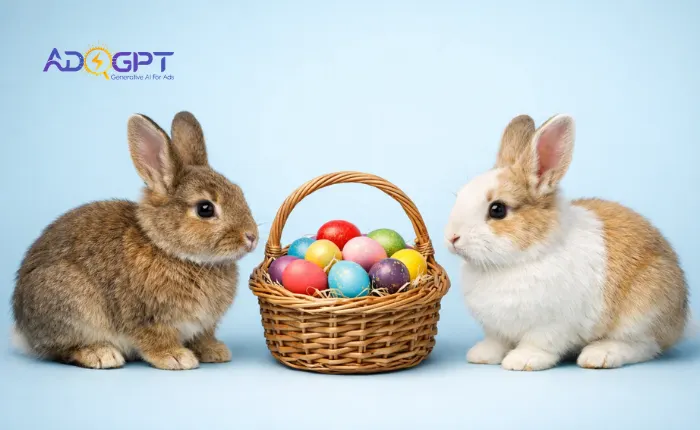
Easter is one of the shortest high-spend holidays of the year, and when it comes to Easter creative ads, most brands completely miss it.
Not because they forget it’s coming. Because they treat it like a quick update: swap in some pastels, drop in a bunny, hit publish. The creative looks seasonal but feels like nothing. And in a feed full of pink and yellow, “feels like nothing” means nobody stops scrolling.
Here’s what that costs: Americans spent over $22 billion on Easter in 2024. That money goes to the brands with the sharpest Easter creative ads and the clearest message. This guide shows you what those brands actually do, how to build your own campaign using AI tools, and the exact prompts and timing that turn a seasonal ad into real results.
Whether this is your first Easter campaign or you’re trying to improve on last year, you’ll walk away with something you can actually use today.
In a hurry? Listen to the podcast now
What Are Easter Creative Ads?

Easter creative ads are seasonal campaigns that combine Easter imagery, eggs, bunnies, pastel colors, and spring themes with a brand’s product in a way that feels intentional, not just decorated as a strong ad creative. The best ones don’t just look seasonal. They connect one emotional idea to a clear reason to act, whether that’s a limited-time offer, a collectible product, or an effective Easter creative ad for a shoppable spring moment.
What Makes An Easter Ad Creative And Why It Matters

Most Easter creative ads fail at the same point. They describe the season without doing anything interesting with it. A pastel banner that says “Happy Easter! 20% off” is an easter creative ad. It is just not a creative one.
What separates high-performing Easter creative ads from seasonal filler is one thing: a point of view. The ad uses the holiday as a backdrop for something visually or emotionally surprising, not just as a reason to change the color palette.
The good news is that the challenge here is smaller than people think. You don’t need an agency or a big budget. You need one clear idea, executed well.
What The Best Easter Ads Of 2024 And 2025 Actually Did
Looking at real campaigns that drove results, three examples are worth studying closely. Each one used a different hook, and each one teaches a lesson you can apply directly to your own Easter creative ads.
Lindt And The Gold Bunny
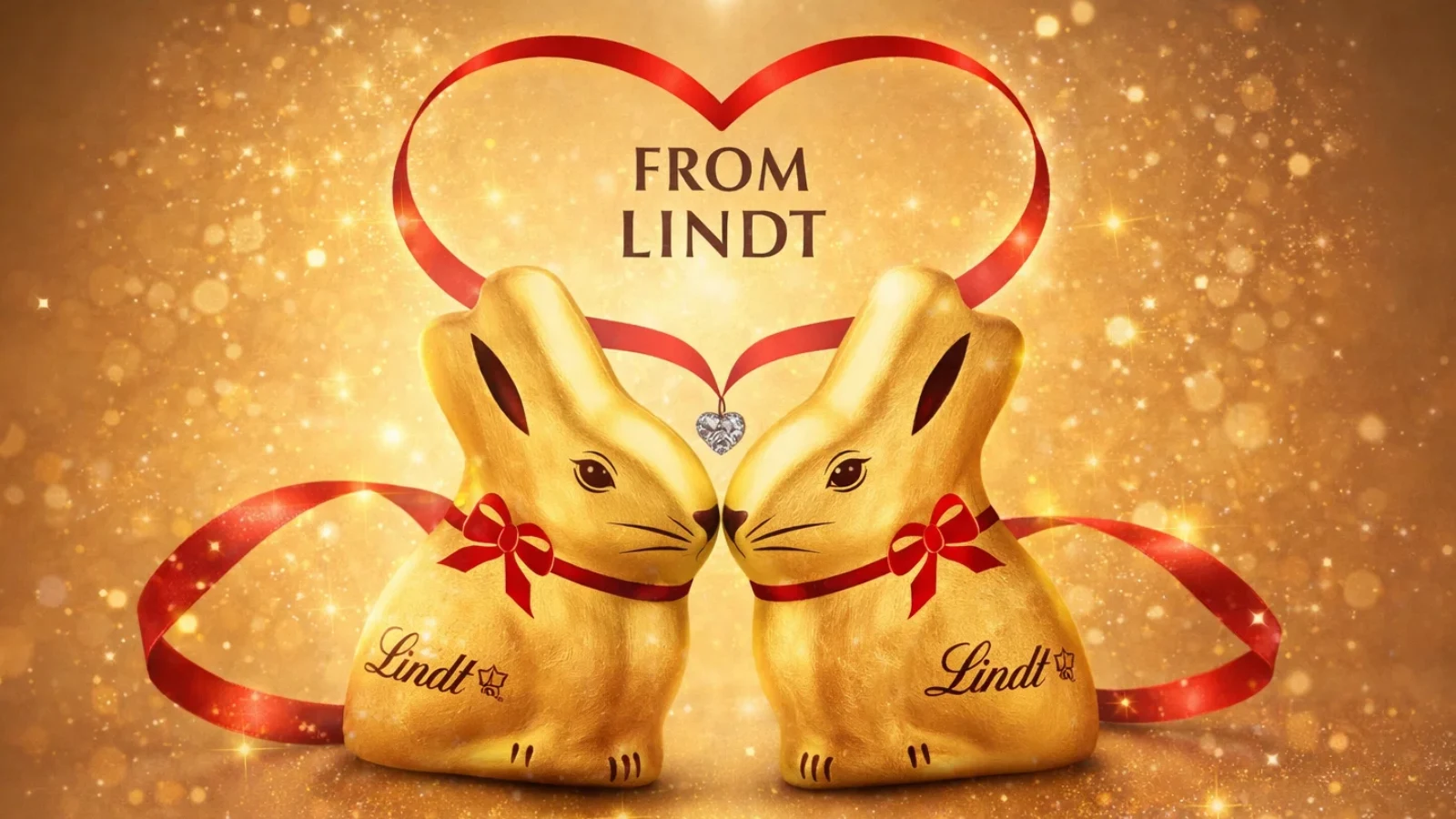
Lindt did not run a complicated Easter campaign. They ran the same one they have been refining for years. The Gold Bunny appeared in TV commercials, social media videos, shop windows, and out-of-home placements. The creative was consistent everywhere. The color, the character, and the warmth of the imagery are all identical across every channel in their easter creative ads.
What most brands get wrong is thinking that different platforms need different creative concepts. Lindt proves the opposite. One strong visual idea, repeated consistently, builds the kind of recognition that pays off at the exact moment someone is standing in a shop deciding what to buy. By the time Easter arrived, the Gold Bunny was not just an ad. It was the cultural shorthand for Easter chocolate itself.
Your takeaway: identify the one visual or character that best represents your brand this Easter. Put it everywhere. Do not give each platform a different theme. Repetition is not lazy; it is how memory works.
Cadbury And The Worldwide Hide

Cadbury’s campaign did something genuinely different. Instead of promoting Easter eggs through traditional advertising, they created an experience around the act of giving one. Using Google Maps and Street View, people could hide a virtual Easter egg in any location in the world, a place that meant something to the person they were giving it to. A favourite street, a holiday destination, a childhood home. The recipient then had to find it.
The product was barely mentioned. What Cadbury sold was the feeling of giving a thoughtful, personal gift. And because the campaign lived on Google Maps, people talked about it, shared their hidden egg locations, and engaged with the brand in a way a standard Easter promotion never could have achieved, making it one of the best easter ads.
What makes this relevant to you is not the technology. It is the thinking behind it. Cadbury asked, “What does the person buying our product actually care about?” The answer was not chocolate. It was making someone they love feel remembered. Build your campaign around that moment; the giving, the gesture, the feeling, and the product takes care of itself.
Your takeaway: if your product is bought as a gift, shift your creative focus from the product to the person giving it. Show what the act of giving feels like, not just what is being given.
IKEA And The Flat-Pack Bunny

IKEA sells furniture. Easter is about chocolate eggs and a spring celebration. There is no obvious connection between the two. IKEA made one anyway.
They created a 3D paper Easter bunny that came flat-packed in an envelope, complete with IKEA-style assembly instructions, pictogram diagrams, and all. It was immediately recognizable as IKEA and immediately funny because of the contrast. The bunny required no explanation. Anyone who has assembled an IKEA wardrobe understands the joke within seconds.
The campaign earned widespread press coverage and social sharing not because IKEA spent heavily on media, but because the idea itself was worth sharing. It took the brand’s most familiar, most human characteristic, the slightly absurd ritual of flat-pack assembly, and applied it to an unexpected context.
The broader lesson here is that Easter is an occasion, not a category. You do not need to sell seasonal products to participate in it meaningfully.
Your takeaway: do not force your product into Easter. Find the angle where Easter naturally reveals something true and interesting about your brand. Even if that angle feels unexpected, it will be more memorable than a generic seasonal promotion.
How To Generate Easter Creative Ads With AI Art Tools
Creating high-quality Easter ads no longer requires a full creative team or a large budget. With modern AI tools, brands and solo marketers can produce professional visuals, compelling copy, and platform-ready ads in minutes. The key is not just using AI but choosing the right tool for each task and guiding it with clear inputs.
Read More
How To Create High Converting Ad Creatives With AI?
How To Use AI Tools For Advertising & Smarter Ad Creation?
Best AI Tools for Easter Creative Ad Visuals (Compared)
Here’s a structured look at the most effective tools for building Easter ad creatives:
AdsGPT
- Generates complete ads (visuals, copy, CTA, and sizing) in one step
- Supports multiple platforms like Meta, Google, LinkedIn, and Pinterest
- Offers brand memory and multiple creative variations
- Free trial available
Canva AI Magic Studio
- Ideal for quick, branded social media creatives
- Easy to use with fast visual iteration
- Free plan available, paid plans start around $15/month
Adobe Firefly
- Best for teams already using Adobe tools
- Focuses on commercially safe, brand-compliant visuals
- Included with Adobe Creative Cloud
Midjourney
- Produces high-quality, cinematic-style visuals
- Requires prompt refinement for best results
- Plans start around $10/month
Which Tool Should You Choose?
Each tool serves a different purpose depending on your workflow and goals:
- AdsGPT stands out as an all-in-one solution, generating complete Easter ads, including visuals, copy, and platform optimization—in a single step. It’s especially useful for marketers who want ready-to-publish creatives without switching between tools.
- Canva AI Magic Studio is ideal for small businesses that need fast, branded social content with minimal effort.
- Midjourney delivers the highest-quality visuals but requires more experimentation with prompts.
- Adobe Firefly is best suited for teams already working within the Adobe ecosystem who need commercially safe assets.
- AdCreative.ai provides full ad outputs but lacks deeper features like competitor insights and brand memory.
When To Launch Your Easter Day Ads And What To Say Each Week
Easter has a buying window of roughly three to four weeks, and what works in week one is very different from what works in the final two days for Easter creative ads.
| 4 weeks out | Spring-adjacent content, no direct Easter sell yet | Focus on renewal, fresh starts, spring energy |
| 2 to 3 weeks out | Introduce Easter explicitly, gift, and occasion framing | Perfect for Easter, early gifting angle |
| 1 week out | Product-forward with urgency, retargeting turned on | Order before Easter, delivery cutoff dates |
| Final 2 to 3 days | Last-chance creative | Still time to order, pick up today |
| Easter Day and after | Celebration content and post-holiday clearance | Celebrate today, Easter clearance now live |
The biggest timing mistake is going too hard on Easter branding too early. Leading with spring energy and gradually layering in explicit Easter messaging creates a more natural audience journey and produces cheaper early-campaign ad costs. Let the season build rather than announcing it on day one for better easter creative ads performance.
Advanced Easter Creative ads strategy: what top performers do differently

Once the basics are in place, the gap between a decent campaign and a genuinely strong one usually comes down to three things most brands skip.
Segmenting by motivation, not demographics. The me-buyer is treating themselves to something seasonal. The gifter needs ease and personalization. The host wants products that make a family gathering work. The last-minute buyer needs speed above everything. Each group responds to a different creative angle, a different offer, and a different message. Campaigns built around motivation consistently outperform those that treat all Easter shoppers as one audience.
Pre-scoring AI creative variants before committing budget. AdCreative.ai’s creative scoring tool predicts which assets are likely to outperform based on data from real campaigns. Even without a specialist tool, testing two or three variants in the first 48 hours with a modest budget gives you a directional signal before you spend at scale. This is how the best easter creative ads get made. Not by guessing, but by letting early data make the call.
Using sustainability as a creative angle. Brands that build easter creative ads around digital egg hunts instead of plastic ones, eco-friendly packaging, or charitable partnerships earn stronger organic sharing and press coverage. Beyond the values signal, it simply looks different in a category saturated with chocolate and pastel graphics.

Conclusion
Easter moves fast. The brands that win aren’t the ones who show up early; they’re the ones who show up with something worth noticing.
The difference between forgettable and high-performing Easter creative ads is rarely budget or tools. It’s clarity. One strong idea, one clear emotional hook, and execution that feels intentional instead of decorative.
AI has lowered the barrier completely. You no longer need a full creative team to produce high-quality campaigns. What you need is direction, knowing what to say, when to say it, and how to translate that into visuals and messaging that actually connect.
If you take one thing from this guide, let it be this: don’t try to do more. Do one idea better.
Pick your angle. Use the right tools. Test early. Scale what works.
Because in a season where everyone is using the same colors, the same symbols, and the same offers, the brands that stand out are the ones that make people feel something and give them a reason to act on it.
Frequently Asked Questions
1. What ad formats work best for Easter campaigns?
Short-form video and carousel ads tend to perform best for Easter. Videos help tell a quick story or emotion (like gifting or celebration), while carousels showcase multiple products or steps (perfect for bundles or egg collections).
2. How much budget should I allocate for Easter creative ads?
There’s no fixed number, but a good approach is to start with a small testing budget (10–20% of your total) in the first week, then scale spend on the top-performing creatives during the final 7–10 days when buying intent is highest.
3. Should I run Easter ads on all platforms or focus on one?
It’s better to focus on 1–2 platforms where your audience already engages (like Instagram or Facebook) rather than spreading thin. Strong creative repetition on fewer channels performs better than inconsistent messaging across many.
4. How can small businesses compete with big brands during Easter?
Small businesses can win by being more specific and personal. Instead of broad campaigns, focus on niche angles, local gifting, handmade products, or personalized experiences that larger brands can’t replicate easily.
5. Can I reuse Easter ad creatives for other campaigns?
Yes, but with adjustments. Visual assets like spring themes, pastel palettes, and lifestyle shots can be reused for seasonal or sale campaigns. However, remove direct Easter references and update messaging to keep it relevant.

MOST POPULAR